Artwork
Ce qu'on appelle, aller jouir a la campagne ...
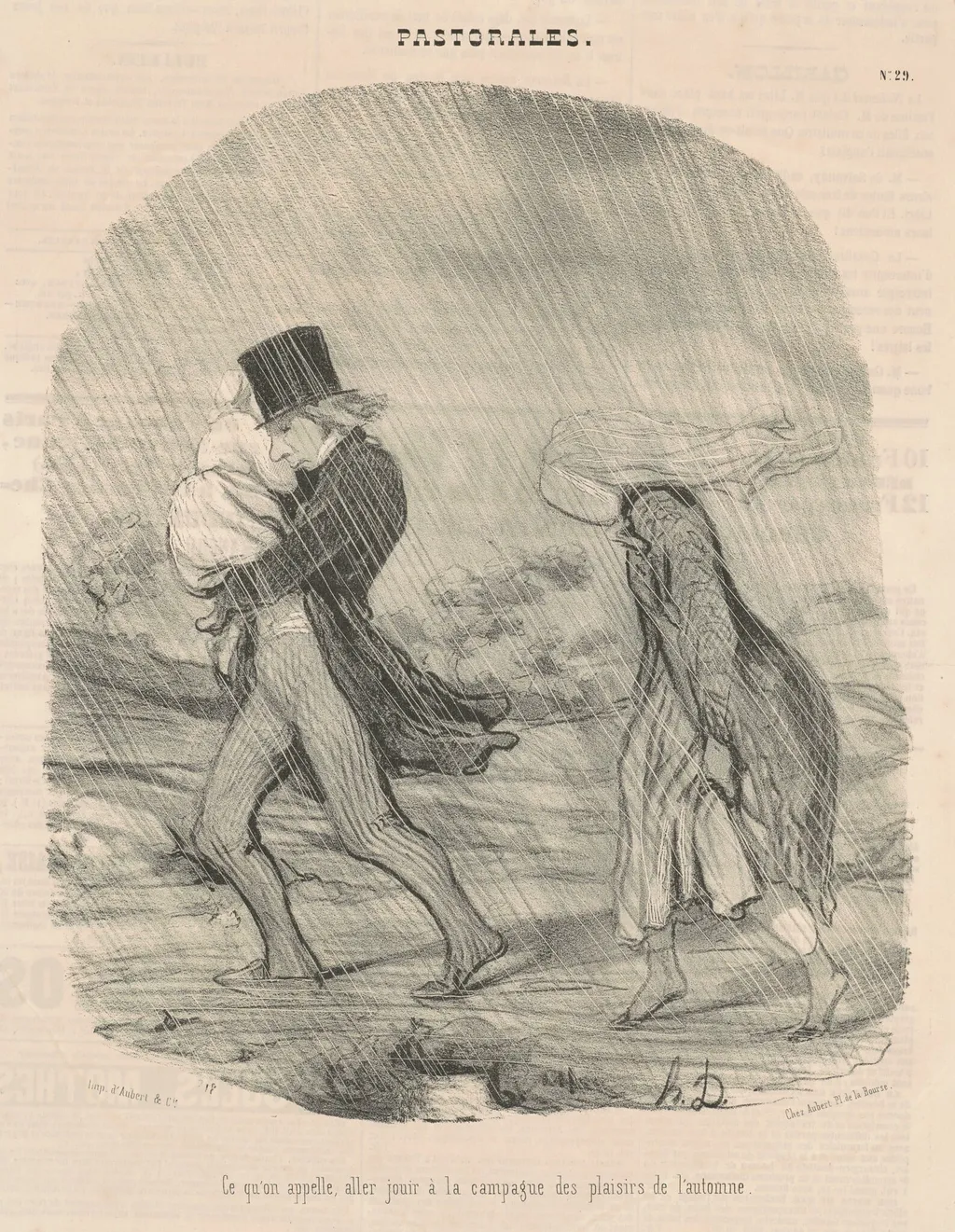
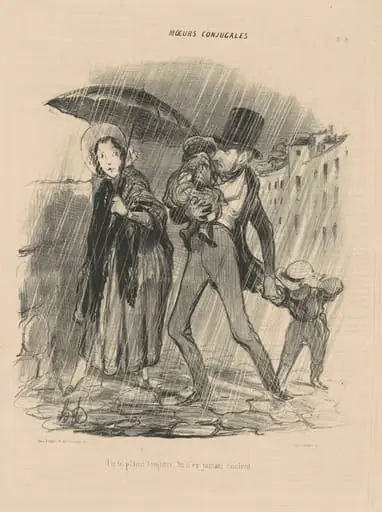
Ce qu'on appelle, aller jouir a la campagne ... is an ink print by the Romanticist artist Honoré Daumier. It dates from 1845 and is held in the collection of the National Gallery of Art.
About this work
Honoré Daumier shows two men hunched under a single umbrella in pouring rain. The smaller man looks tired. The bigger one strides ahead, ignoring him.
It’s a lithograph from 1845, cheap and fast to print. Daumier used this method to mock everyday life and power imbalances.
See how his sharp lines make the scene feel real. Want to try it yourself? Look up lithography.
Overview
Honoré Daumier’s 1845 lithograph, titled “Ce qu’on appelle, aller jouir à la campagne,” presents a rainy street scene in which two men share a single umbrella. The composition captures a moment of tension as the larger figure moves forward while the smaller companion appears fatigued, both confronting a downpour that dominates the visual field.
Subject & Meaning
The work juxtaposes the physical strain of navigating inclement weather with an implied social commentary. The disparity between the two figures—one pressing ahead, the other lagging—suggests an imbalance of power or responsibility, reflecting broader concerns about societal expectations and the hardships of everyday life.
Technique & Style
Executed as a lithograph, the image relies on crisp, decisive lines that convey the immediacy of the storm and the figures’ posture. Lithography’s relatively low cost and rapid production allowed Daumier to disseminate satirical observations widely, and the medium’s tonal range enhances the bleak atmosphere of the scene.
History & Provenance
Created in 1845, the print emerged during a prolific period when Daumier produced numerous caricatures and social sketches. Its modest production method aligns with his practice of issuing affordable images that could reach a broad audience, reinforcing his reputation as a commentator on contemporary urban life.
Context
The lithograph belongs to a body of work in which Daumier turned his attention to the ordinary citizen, often highlighting the strain of modern existence. The rainy setting reflects the 19th‑century Parisian environment, where public spaces and weather served as backdrops for exploring class dynamics and human endurance.
Artist & collection
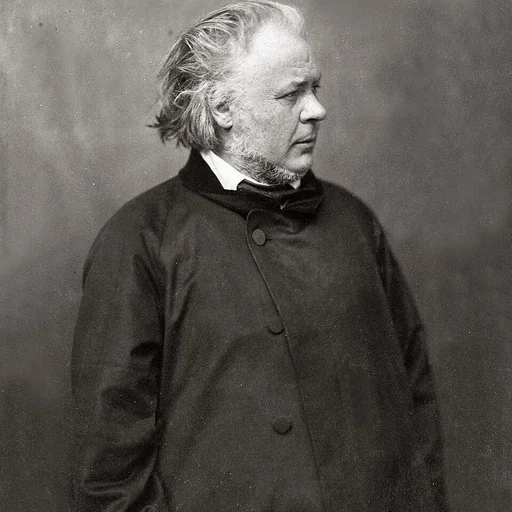
Artist
Honoré-Victorin Daumier was a French painter, sculptor, and printmaker, whose many works offer commentary on the social and political life in France, from the Revolution of 1830 to the fall of the Second French Empire in 1870.