Artwork
Ce qui nous prouve ... que ce colosse ...
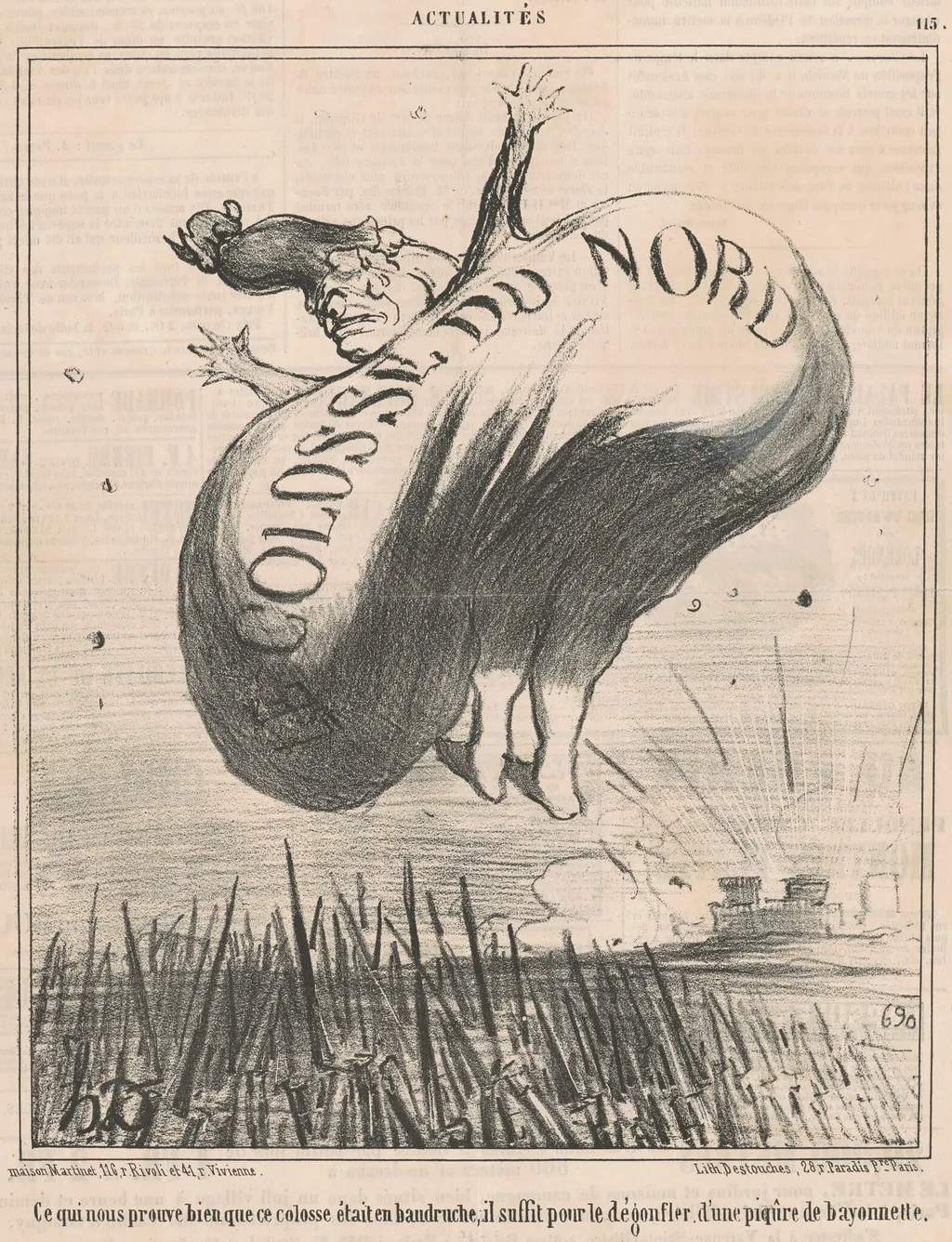
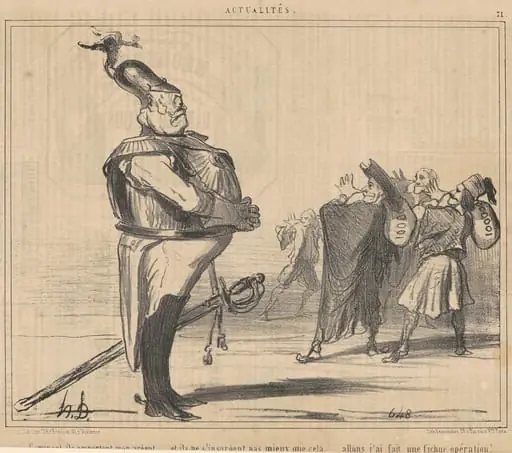
Ce qui nous prouve ... que ce colosse ... is an ink print by the Impressionist artist Honoré Daumier. It dates from 1854 and is held in the collection of the National Gallery of Art.
About this work
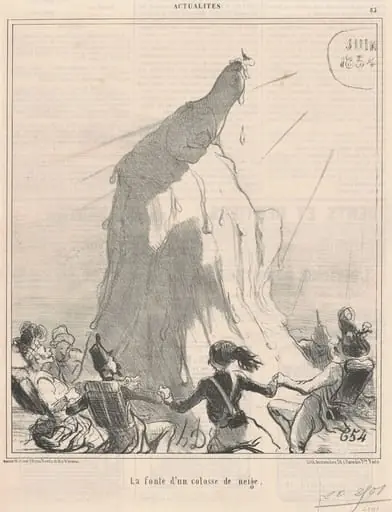
This lithograph shows a bloated figure labeled "COLOSSE DU NORD" floating above a field of sharp bayonets.
Daumier made this in 1854. Back then, people feared France’s neighbor, Prussia. The oversized, wobbly figure hints at fragile power. The smoke and forts make the scene tense.
It’s a sharp political joke in print form. See how lithography lets him carve bold lines.
Look up lithography next.
Overview
The work belongs to a series of political commentaries Daumier produced in response to European power dynamics under Napoleon III.
Created in 1854 by Honoré Daumier, this lithograph presents a satirical vision of political power through the image of a bloated, unstable figure labeled 'COLOSSE DU NORD.' Rendered in bold, expressive lines, the print uses caricature to critique perceived threats from Prussia during a period of heightened Franco-Prussian tensions. The work belongs to a series of political commentaries Daumier produced in response to European power dynamics under Napoleon III.
Subject & Meaning
The inflated figure represents Prussia as an overblown, precarious force—its bloated form suggesting both arrogance and vulnerability. Suspended above a field of bayonets, it implies imminent danger and the fragility of dominance. The surrounding smoke and fortifications evoke a landscape on the brink of conflict, reinforcing the idea that military posturing masks underlying weakness. The label 'Colossus of the North' mocks the notion of Prussian invincibility.
Technique & Style
Daumier employed lithography to achieve sharp, fluid lines and dramatic contrasts, allowing rapid reproduction and wide circulation. His style leans into caricature, exaggerating proportions and simplifying forms to heighten satirical impact. The coarse texture of the print and the stark black-and-white palette amplify the urgency of the message, turning the medium into a tool for public critique rather than mere illustration.
History & Provenance
Produced in 1854, the print emerged during a time of French anxiety over Prussian military expansion under King Frederick William IV. Daumier, long critical of authoritarianism, used his position as a political cartoonist to respond to state propaganda. The work was likely distributed in periodicals or as standalone sheets, reaching urban audiences familiar with the political climate but unaccustomed to such direct visual satire.
Context
In mid-19th century Europe, France viewed Prussia’s growing industrial and military strength with suspicion, especially under Napoleon III’s regime, which sought to assert dominance while suppressing dissent. Daumier’s print reflects public unease, channeling fears of foreign aggression into symbolic imagery. Lithography’s accessibility made it ideal for disseminating such critiques, bypassing official censorship through visual wit.
Legacy
Daumier’s lithograph stands as an early example of political visual journalism, influencing later satirical and editorial illustration. Its fusion of caricature and social commentary helped establish print media as a space for public critique. Though not widely exhibited in his lifetime, the work is now recognized for its prescient depiction of how inflated national pride can mask systemic fragility.
Artist & collection
Artist
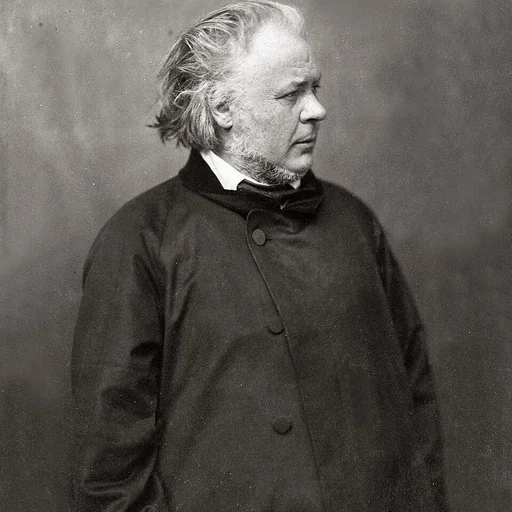
Honoré-Victorin Daumier was a French painter, sculptor, and printmaker, whose many works offer commentary on the social and political life in France, from the Revolution of 1830 to the fall of the Second French Empire in 1870.