Artwork
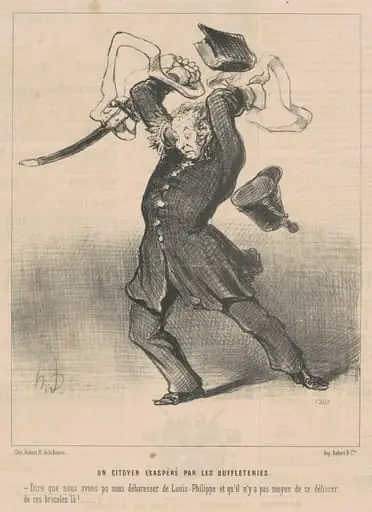
Un citoyen exaspéré par les buffleteries
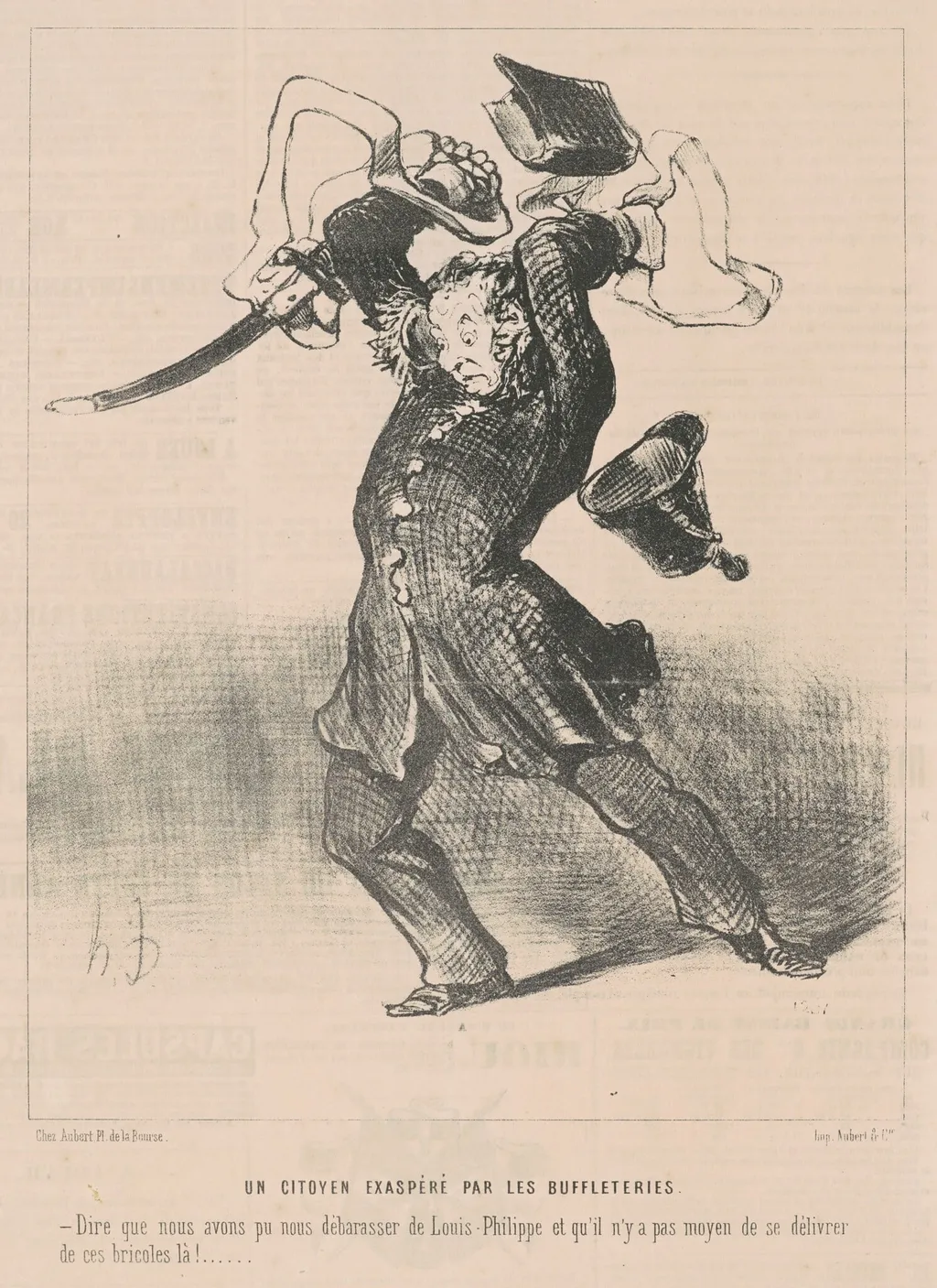
Un citoyen exaspéré par les buffleteries is an ink print by the Romanticist artist Honoré Daumier. It dates from 1848 and is held in the collection of the National Gallery of Art.
About this work
Overview
Un citoyen exaspéré par les buffleteries is a lithograph created by Honoré Daumier in 1848, featuring a figure in a state of exasperation, conveying societal commentary through humorous and exaggerated depiction.
Subject & Meaning
The subject, a man in a long coat, stands precariously on one foot, expressing surprise or frustration while holding a decorative object aloft. This pose critiques the absurdities of contemporary social and political life.
Technique & Style
Daumier employed lithography to produce this work, leveraging the medium's capabilities to accentuate expressive lines and exaggerated facial expressions, hallmark of his satirical style.
History & Provenance
Created in 1848, the lithograph reflects the tumultuous social and political climate of its time. Provenance details are not specified in available information.
Context
The work is characteristic of Daumier's 19th-century satirical output, targeting the everyday frustrations and absurdities faced by the common citizenry amidst France's political upheaval.
Legacy
As part of Daumier's body of satirical lithographs, 'Un citoyen exaspéré par les buffleteries' contributes to the artist's enduring legacy of using art as social commentary, influencing subsequent generations of satirists and printmakers.
Own this work as a print
Artist & collection

Artist
Honoré-Victorin Daumier was a French painter, sculptor, and printmaker, whose many works offer commentary on the social and political life in France, from the Revolution of 1830 to the fall of the Second French Empire in 1870.