Artwork
Dieu de Dieu! mais c'est un pppolisson...
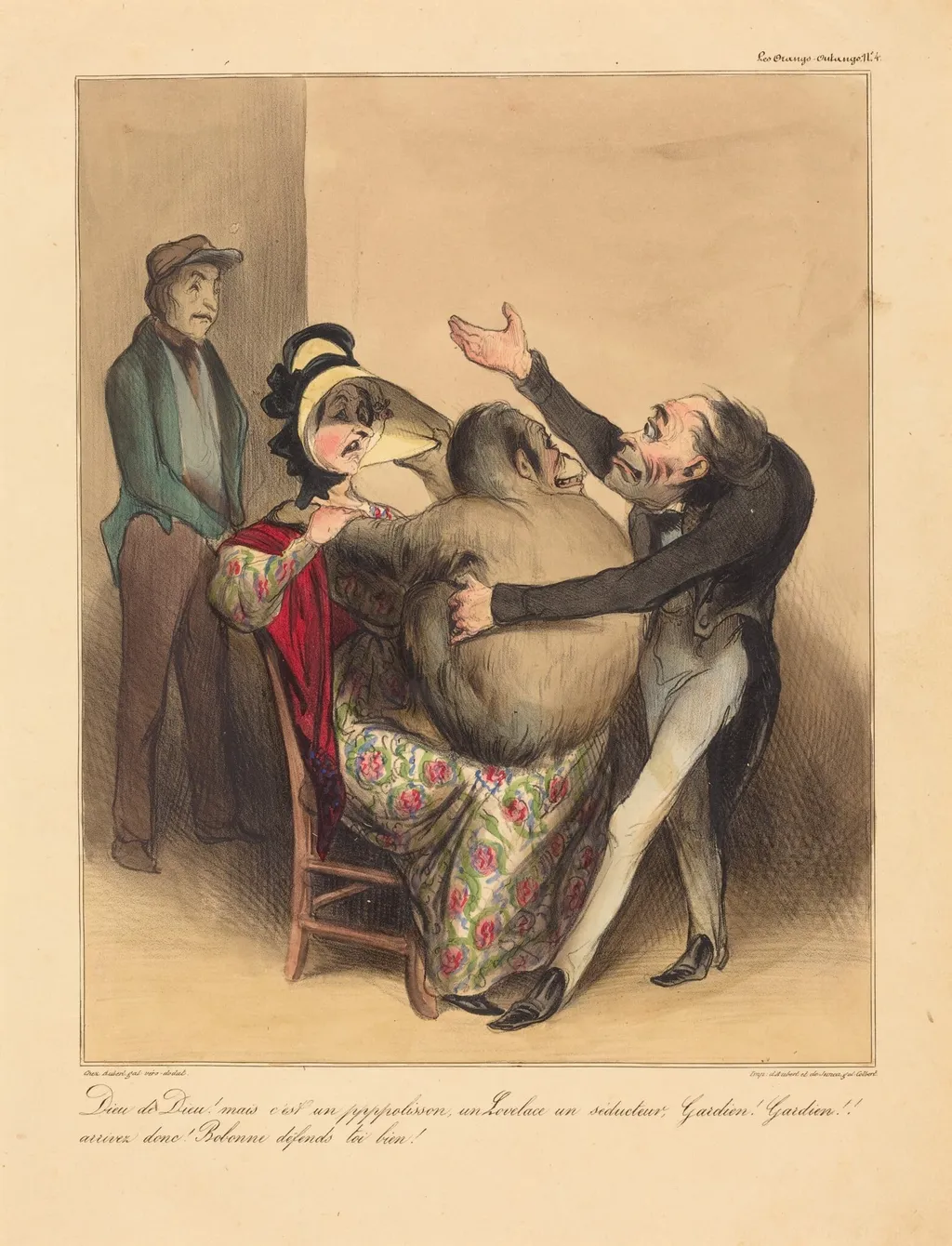
Dieu de Dieu! mais c'est un pppolisson... is an ink print by the Romanticist artist Honoré Daumier. It dates from 1836 and is held in the collection of the National Gallery of Art. Dieu de Dieu!
About this work
Overview
Dieu de Dieu! mais c'est un pppolisson... is a hand-colored lithograph created by Honoré Daumier in 1836, characteristic of his satirical commentary on French society during the July Monarchy.
Subject & Meaning
The print depicts a tense, intimate scene with a man appearing to threaten a woman, observed by a third figure. While the exact narrative is ambiguous, the work aligns with Daumier's broader critique of social hierarchies and abuses of power, reflecting his republican democratic sympathies.
Technique & Style
Executed as a hand-colored lithograph, the piece showcases Daumier's mastery of printmaking for satirical effect, combining bold lines with selective coloring to emphasize the drama and tension of the scene.
History & Provenance
Created in 1836, the lithograph was likely distributed through satirical publications like *La Caricature* or *Le Charivari*, outlets for Daumier's prolific critiques of the July Monarchy. Specific provenance details are not provided.
Context
The work is set against the backdrop of the July Monarchy (1830-1848), a period of political and social upheaval in France. Daumier's satire targeted the monarchy, aristocracy, and clergy, resonating with republican sentiments of the time.
Legacy
Dieu de Dieu! mais c'est un pppolisson... contributes to Daumier's legacy as a pioneering satirical artist, influencing future generations of caricaturists and social commentators through his use of printmaking for political critique.
Artist & collection
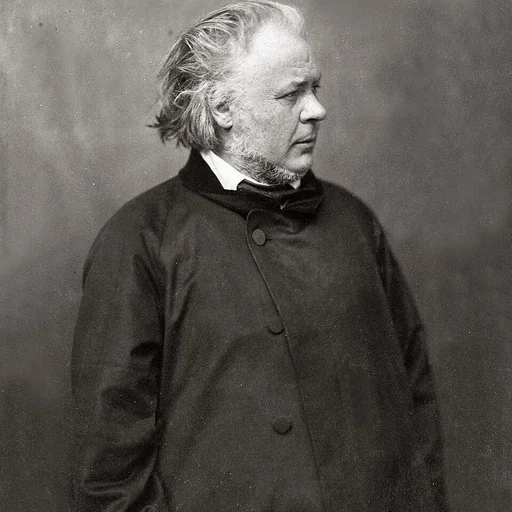
Artist
Honoré-Victorin Daumier was a French painter, sculptor, and printmaker, whose many works offer commentary on the social and political life in France, from the Revolution of 1830 to the fall of the Second French Empire in 1870.

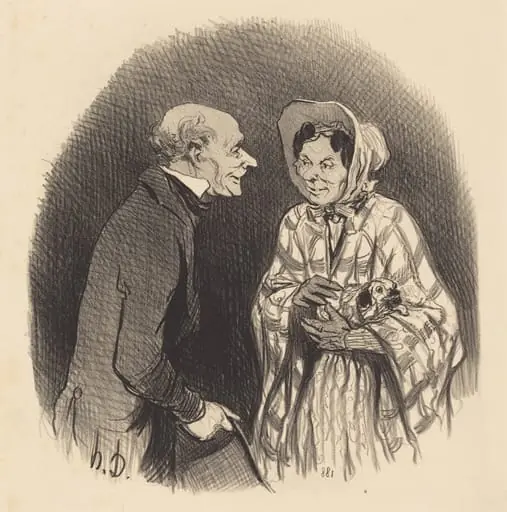 Une Nouvelle connaissance
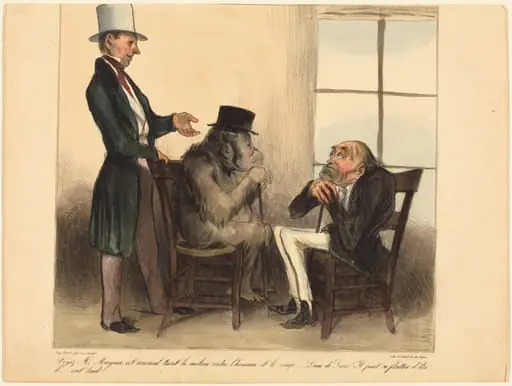 Voyez, Mr. Mayeux, cet animal...
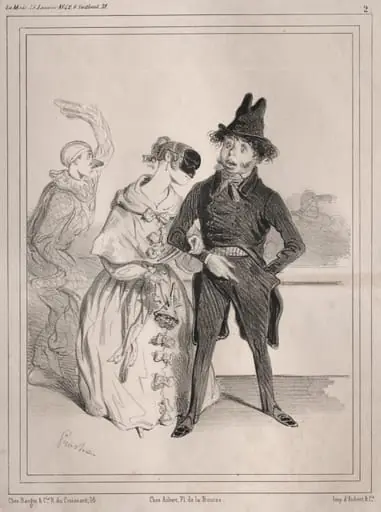 Pochades de carnaval: C'est singulier! elle me dit que je suis Philibert Désormeaux, et que je passe pour un imbecile!! ....où diable à-t-elle sù cela?
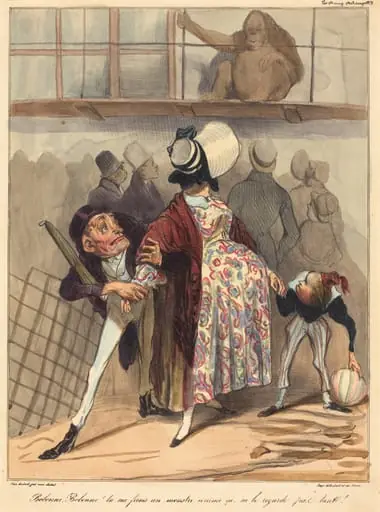 Bobonne... ne le regarde pas tant!
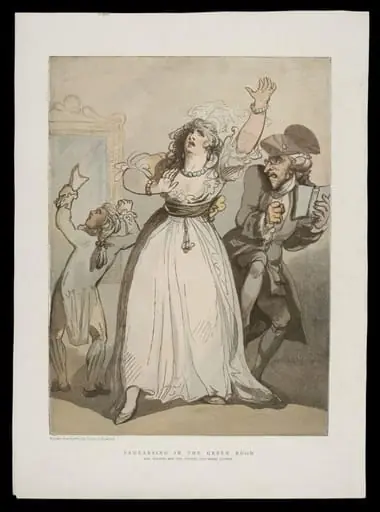 H Beard Print Collection
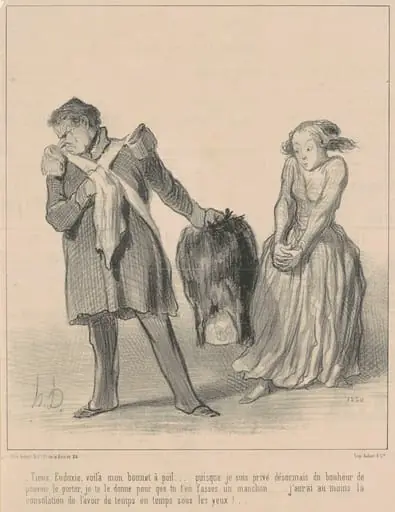 Tiens, Eudoxie, voila mon bonnet a poil ...
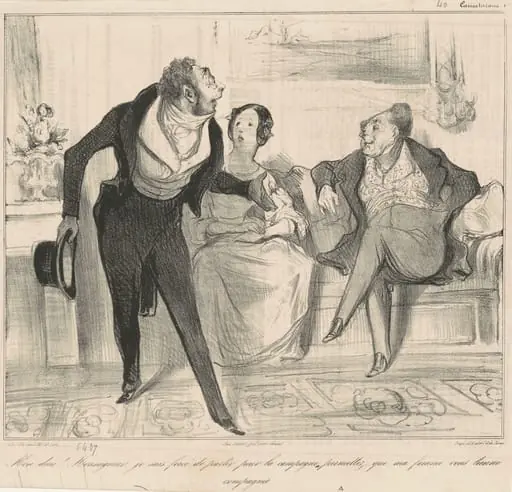 Mon Dieu! Monseigneur, je suis...
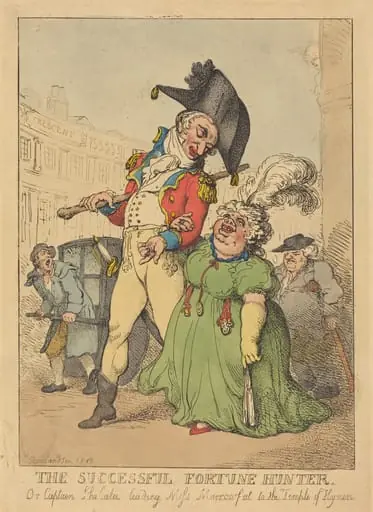 The Successful Fortune Hunter
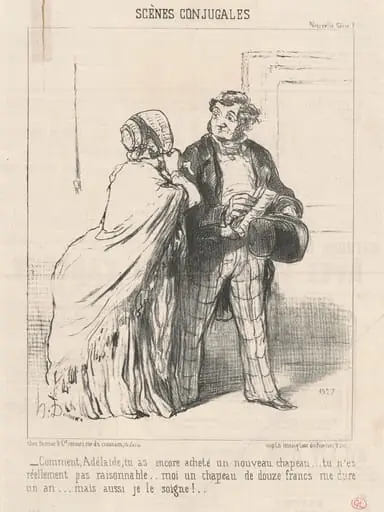 Comment ... tu as encore acheté un ... chapeau ...
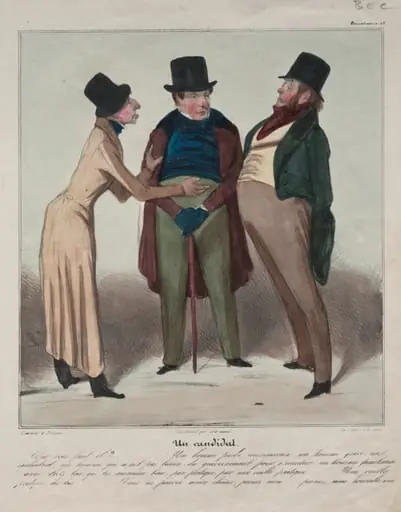 A Candidate