Artwork
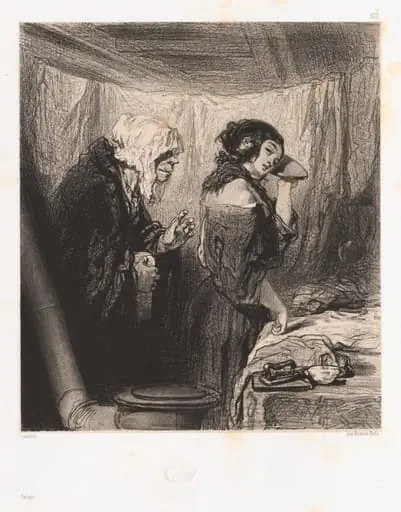
Dis donc, Bichette... a quoi songes-tu donc...
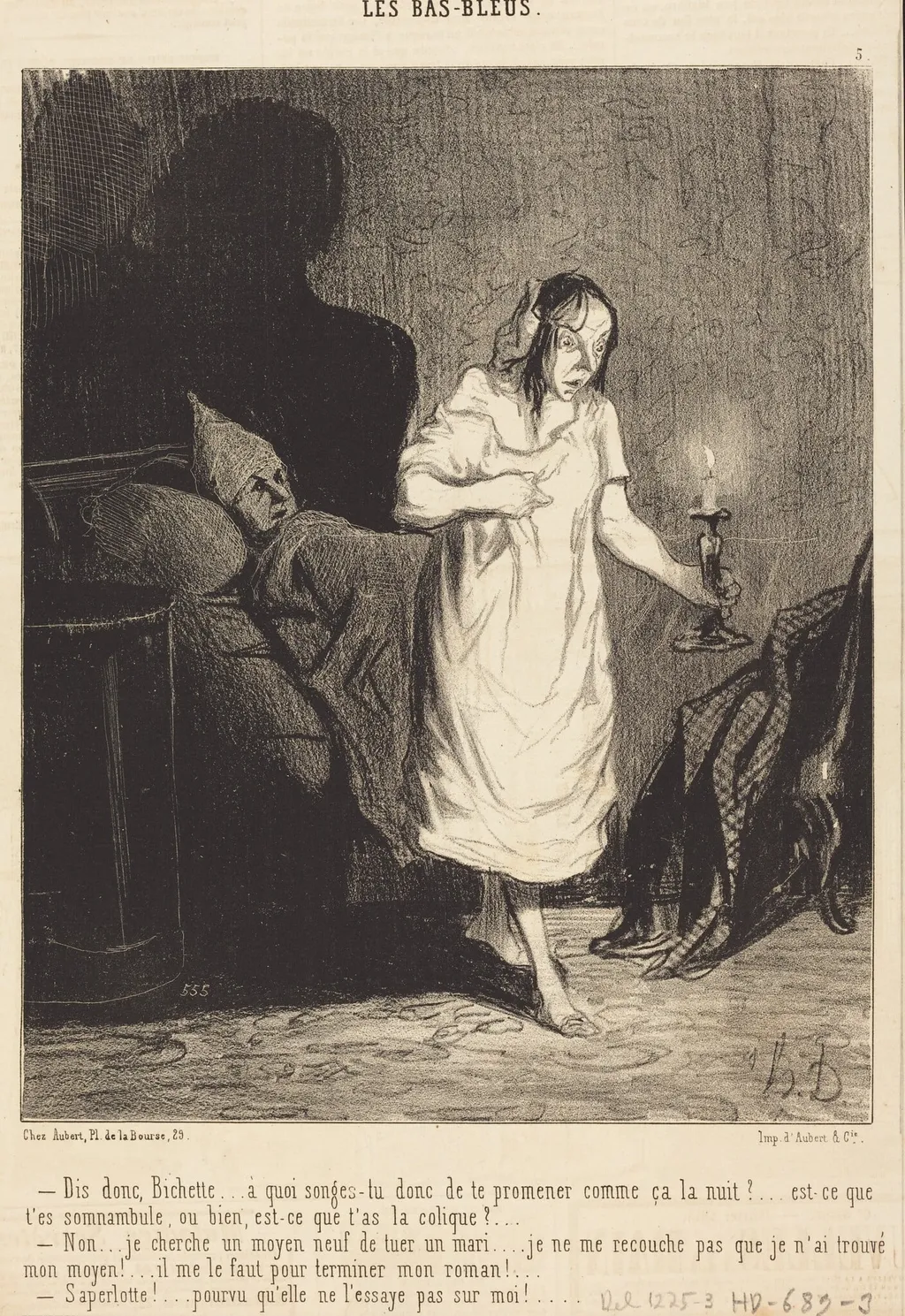
Dis donc, Bichette... a quoi songes-tu donc... is an ink print by the Romanticist artist Honoré Daumier. It dates from 1844 and is held in the collection of the National Gallery of Art. In 1844, Honoré Daumée created a lithographic print titled *Dis donc, Bichette… a quoi songes‑tu donc…*.
About this work
Overview
In 1844, Honoré Daumée created a lithographic print titled *Dis donc, Bichette… a quoi songes‑tu donc…*. Executed on inexpensive newsprint, the work belongs to his prolific output of satirical images that circulated widely in the French press of the mid‑nineteenth century.
Subject & Meaning
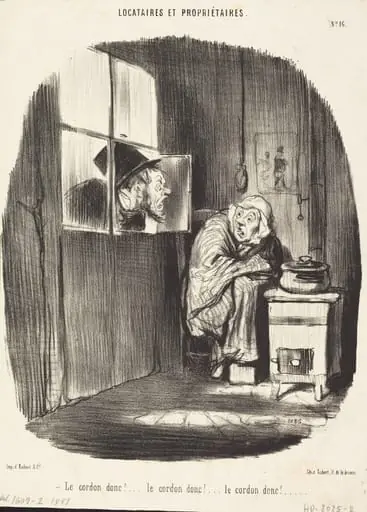
The composition depicts a startled woman in a loose nightgown, clutching a candle in a dimly lit interior. Behind her, a cloaked figure leans forward, arm outstretched, suggesting an imminent threat. The disordered floor, a spilt substance, and a partially hidden piano heighten the sense of chaos, serving as a visual metaphor for social instability and the vulnerability of the lower classes.
Technique & Style
Daumée employed rapid, sketch‑like lines characteristic of his lithographic practice, allowing the image to convey movement and emotion with immediacy. The choice of cheap newsprint underscores his intent to reach a broad audience, while the lithographic process enabled swift, reproducible distribution of the satirical scene.
History & Provenance
The print emerged during the July Monarchy, a period marked by heightened political tension in France. Daumée, already known for his contributions to satirical journals such as *La Caricature* and *Le Charivari*, used this work to critique prevailing social hierarchies and to align himself with republican, democratic ideals.
Context
Within the broader landscape of nineteenth‑century French print culture, the image reflects the era’s reliance on visual satire as a tool for public discourse. By presenting a dramatic, everyday tableau, Daumée tapped into contemporary anxieties about class relations and the precariousness of domestic life.
Legacy
The lithograph exemplifies Daumée’s approach to accessible, mass‑produced commentary, influencing later generations of political cartoonists who similarly employed inexpensive media to disseminate critical viewpoints to a wide readership.
Artist & collection

Artist
Honoré-Victorin Daumier was a French painter, sculptor, and printmaker, whose many works offer commentary on the social and political life in France, from the Revolution of 1830 to the fall of the Second French Empire in 1870.









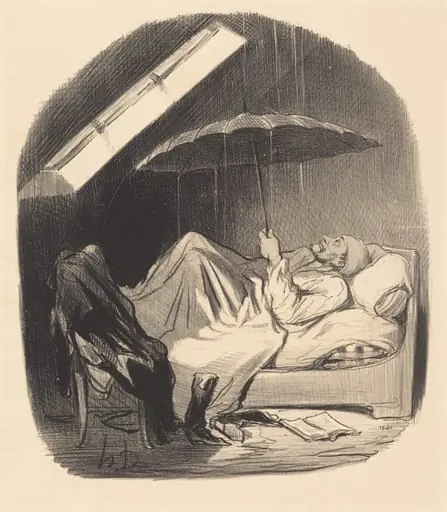 Brigand de propriétaire...
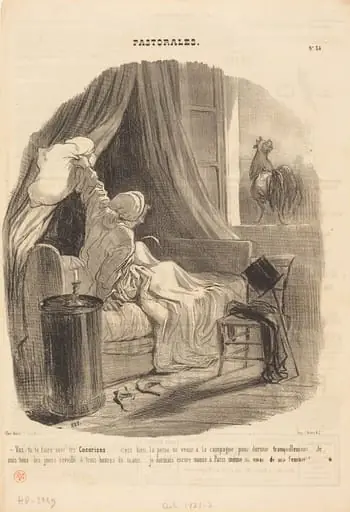 Vas-tu te taire avec tes Cocoricos...
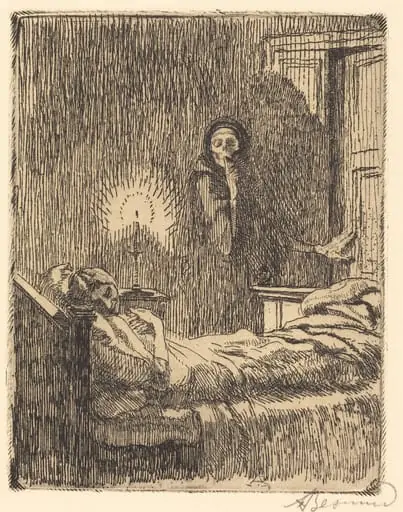 Discreet (Discrète)
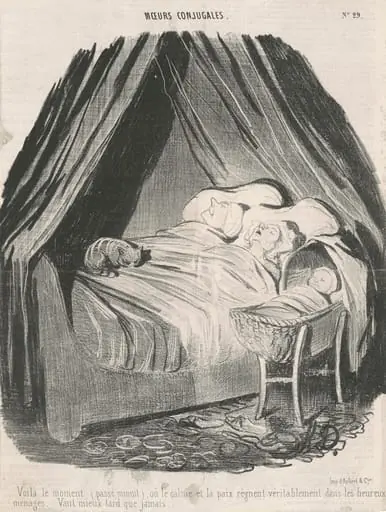 Voilà le moment (passé minuit) o∙ le calme et la paix règnent véritablement dans les heureux ménages. Vaut mieux tard que jamais.
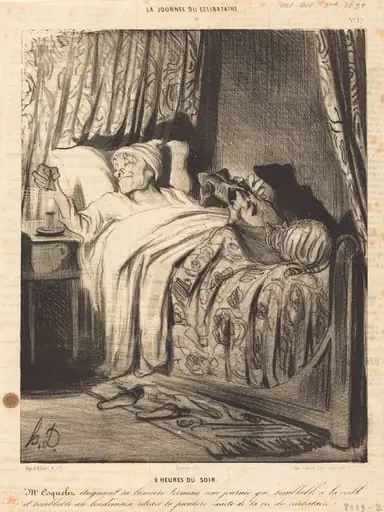 9 heures du soir
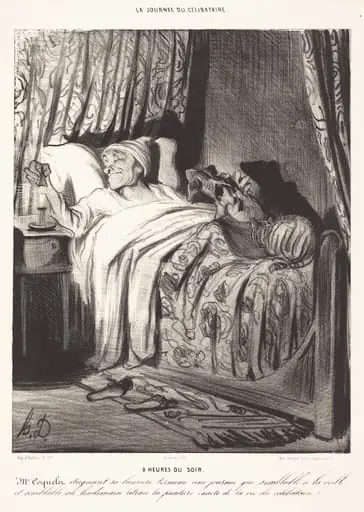 9 heures du soir
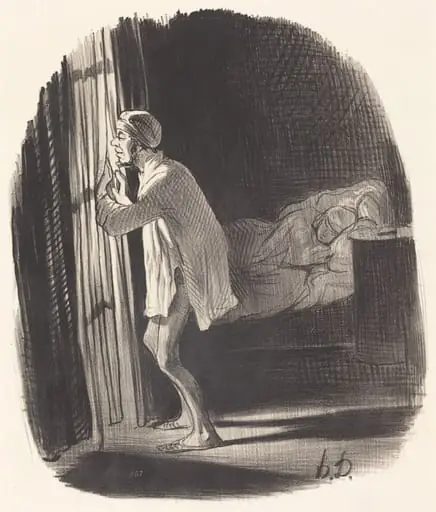 Je crois que j'ai entendu chanter un hibou...
 Satan
Satan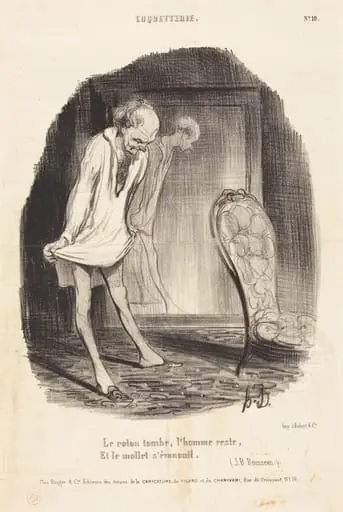 Le coton tombe, l'homme reste...
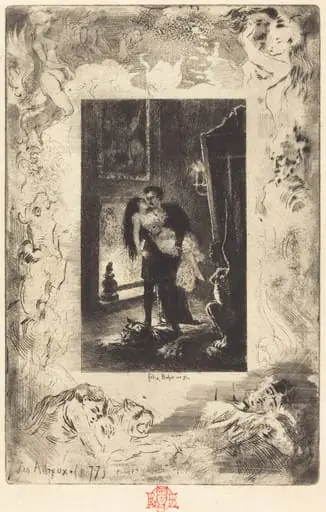 Les Adieux (The Parting)
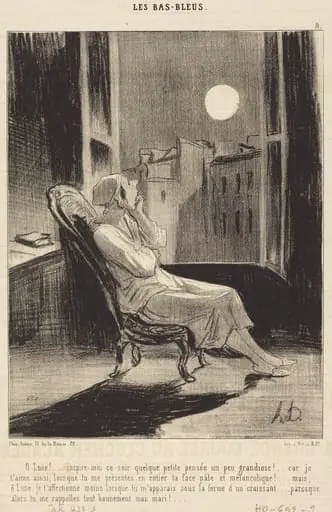 O Lune!... inspire-moi ce soir quelque petite pensée...
 Le Cordon donc!...