Artwork
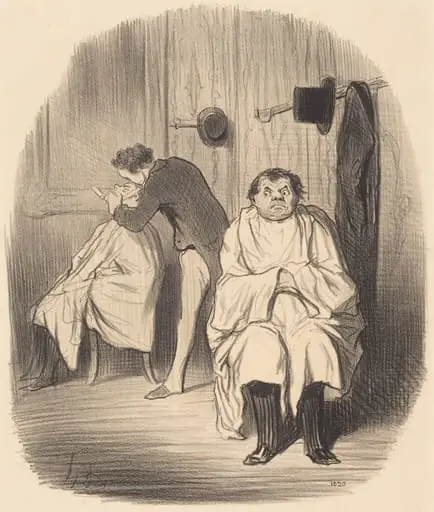
Le coton tombe, l'homme reste...
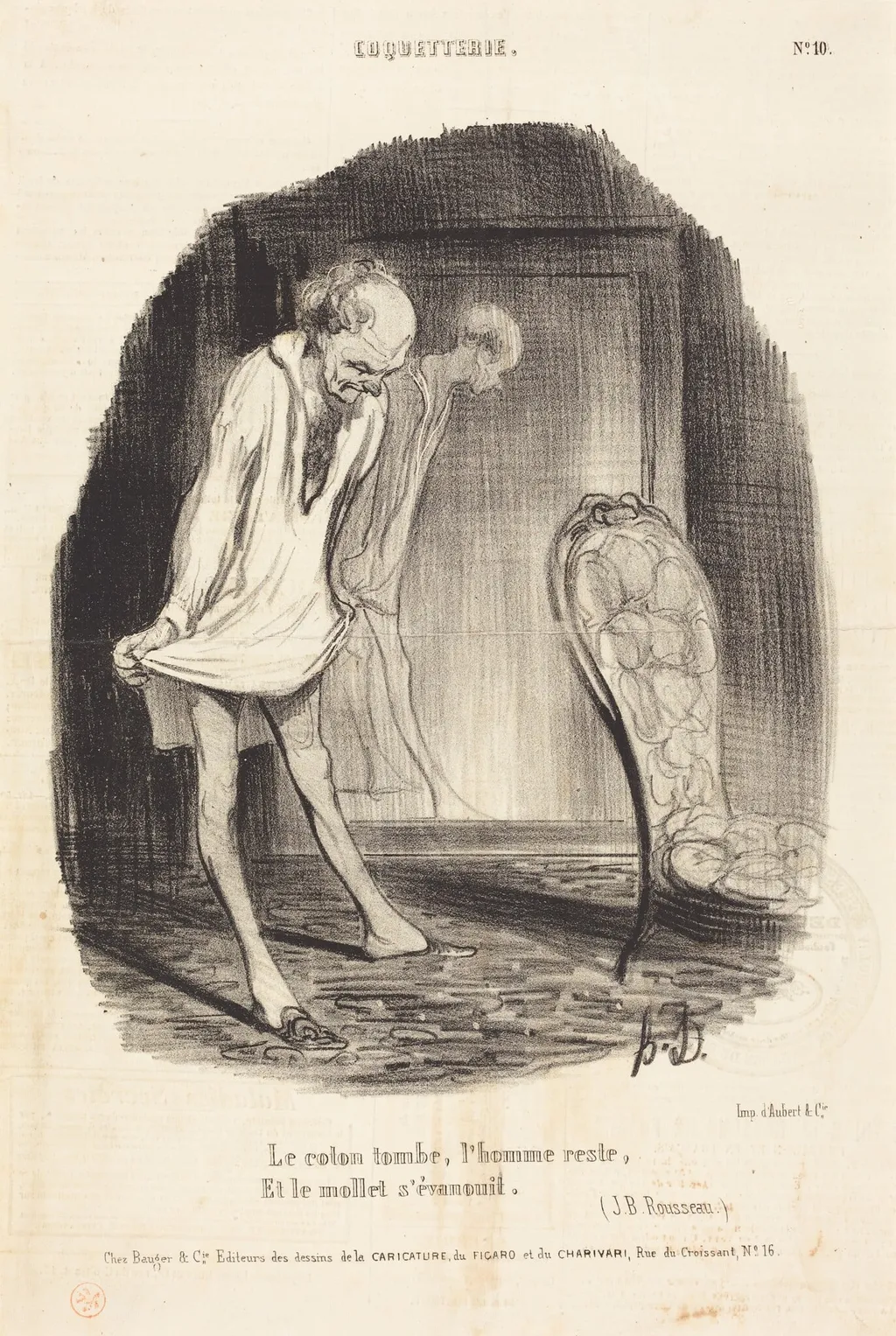
Le coton tombe, l'homme reste... is an ink print by the Romanticist artist Honoré Daumier. It dates from 1840 and is held in the collection of the National Gallery of Art.
About this work
Overview
Created in 1840, this lithograph by Honoré Daumier belongs to the body of work he produced for the politically charged period of the July Monarchy. Distributed through satirical newspapers such as La Caricature and Le Charivari, the print exemplifies Daumier’s engagement with contemporary social critique.
Subject & Meaning
The image presents a solitary worker burdened by a heavy sack of cotton, yet standing resolutely. The juxtaposition of the overloaded figure with the collapsing garment behind him serves as a visual allegory for the strain of industrial capitalism on the lower classes, suggesting that material hardships may fall away while human endurance persists.
Technique & Style
Executed in lithography, the work employs bold line work and stark contrasts typical of Daumier’s caricatural approach. The simplified composition, limited tonal range, and exaggerated proportions emphasize the satirical tone while retaining a degree of realism in the figure’s posture and the surrounding interior space.
History & Provenance
Daumier, a self‑identified republican democrat, used this medium to target the monarchy, aristocracy, and clergy during a time of political tension. The print circulated widely in the mid‑19th‑century French press, reaching a broad audience and reinforcing his reputation as a leading social commentator.
Context
The lithograph reflects the broader anxieties of France’s early industrial era, when rapid economic change heightened class disparities. By portraying a laborer encumbered by cotton—a key commodity in the textile industry—Daumier connects personal hardship to the larger forces reshaping French society.
Artist & collection

Artist
Honoré-Victorin Daumier was a French painter, sculptor, and printmaker, whose many works offer commentary on the social and political life in France, from the Revolution of 1830 to the fall of the Second French Empire in 1870.









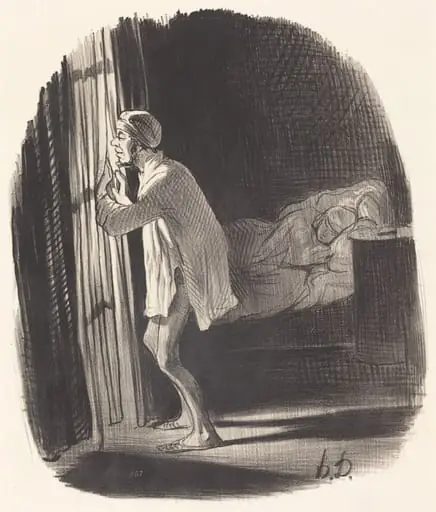 Je crois que j'ai entendu chanter un hibou...
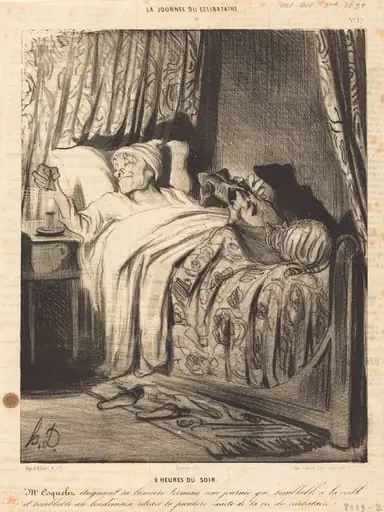 9 heures du soir
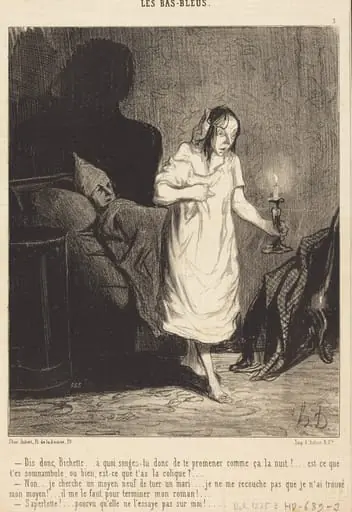 Dis donc, Bichette... a quoi songes-tu donc...
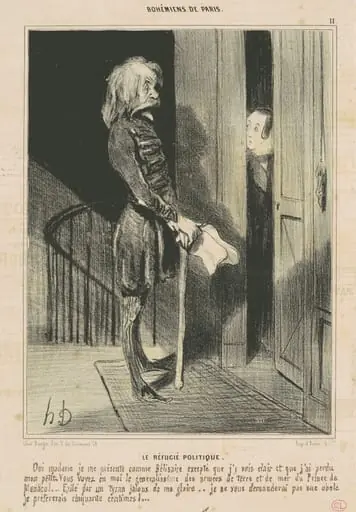 Le réfugié politique
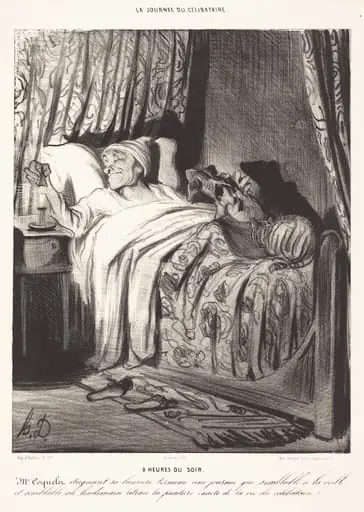 9 heures du soir
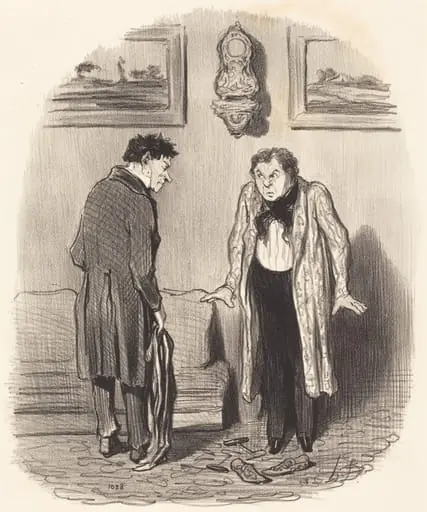 Mais quand je vous dis que je ne peux pas remuer les pieds...
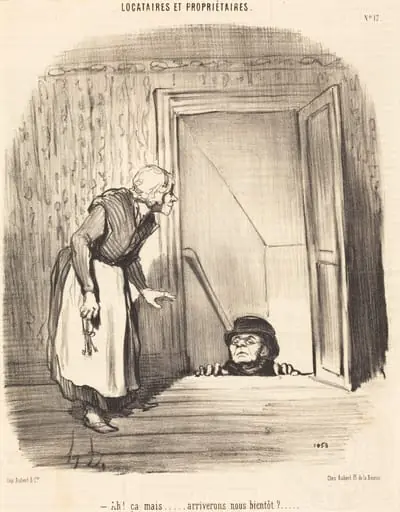 Ah! ça mais... arriverons-nous bientôt?
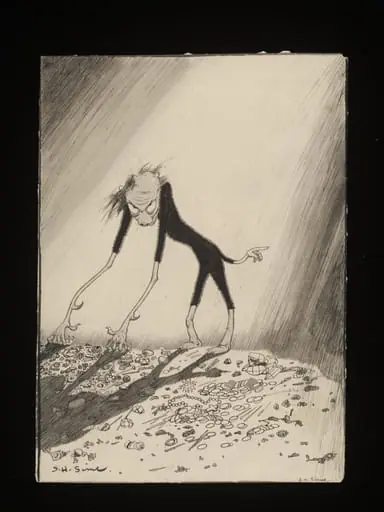 The Snide
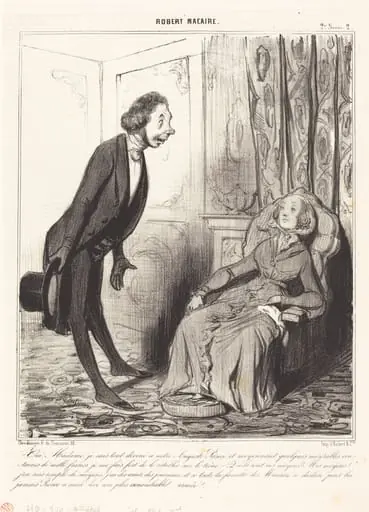 Oui, Madame, je suis tout dévoué a notre... Prince...
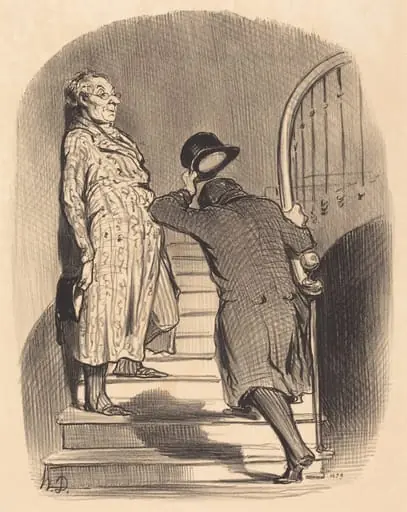 Un Locataire qui paie exactement son terme
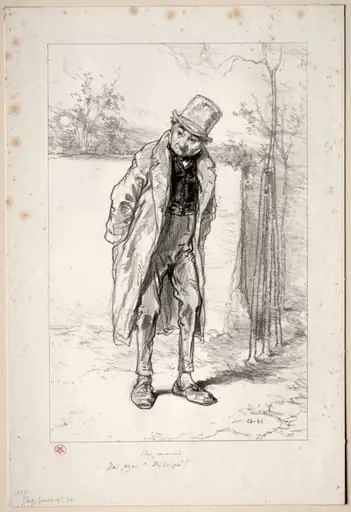 Physionomies Parisiennes: Au Marais. Ici, Azor! ici!
 Diable!... il parait que le rasoir n'est guère bon...