Artwork
En train de charmer toute une société ...
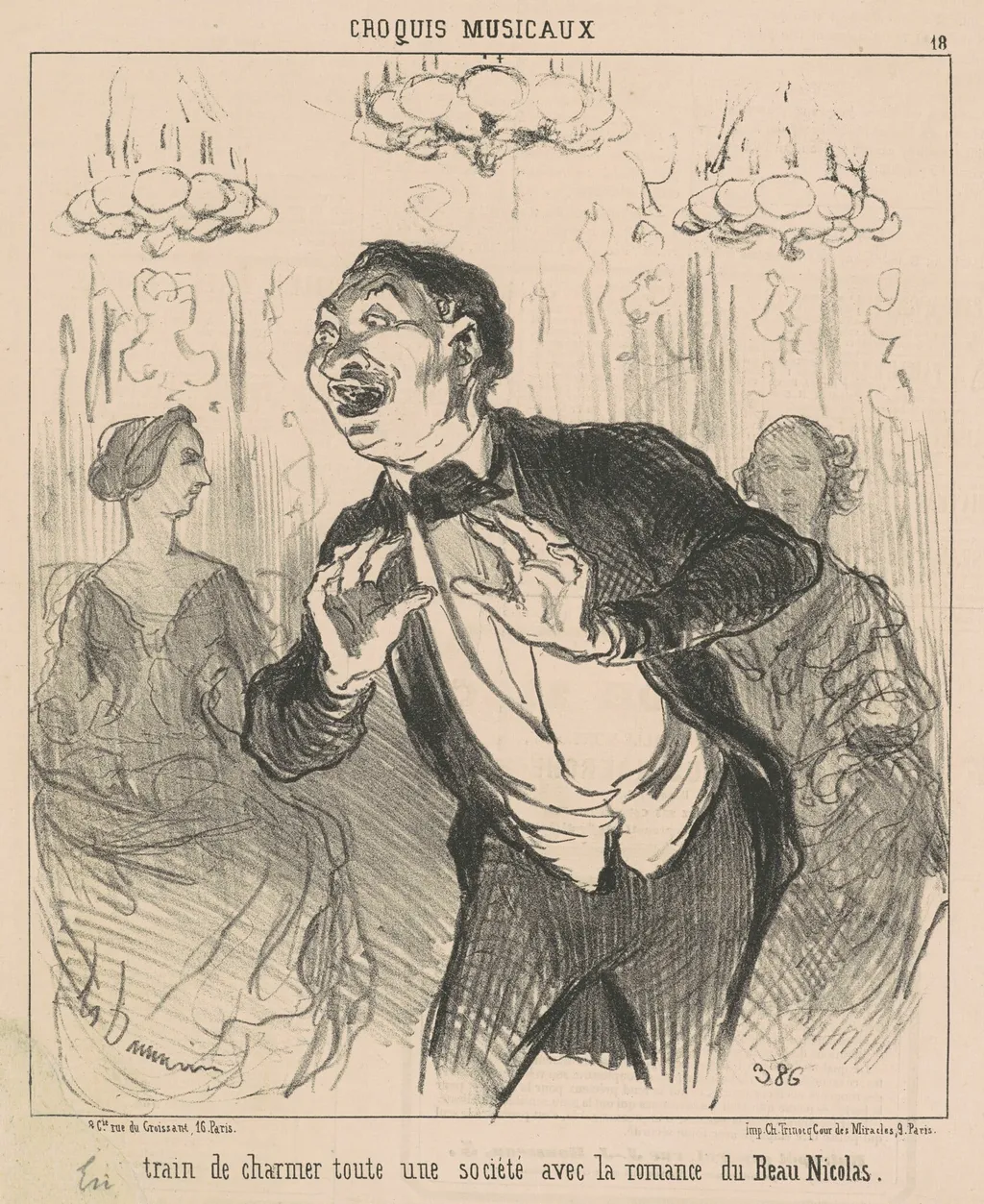
En train de charmer toute une société ... is an ink print by the Impressionist artist Honoré Daumier. It dates from 1852 and is held in the collection of the National Gallery of Art.
About this work
Overview
This lithograph by Honoré Daumier depicts a public performance in which a formally dressed individual addresses a gathering.
This lithograph by Honoré Daumier depicts a public performance in which a formally dressed individual addresses a gathering. The composition focuses on the performer’s exaggerated gestures and the quiet attentiveness of select audience members, capturing a slice of urban social life in mid-19th century France. The work belongs to Daumier’s broader series of satirical prints examining bourgeois customs and public spectacle.
Subject & Meaning
The scene portrays a performer attempting to captivate a social circle, likely a singer or orator in a salon or public venue. Daumier highlights the performative nature of social engagement, contrasting the individual’s theatricality with the restrained responses of the audience. The two seated women, absorbed yet unsmiling, suggest skepticism or emotional detachment, subtly critiquing the artificiality of refined social rituals.
Technique & Style
Executed in lithography, the image employs fluid, expressive lines and tonal contrasts to define form without detail. The performer is rendered with sharp clarity, while the crowd dissolves into loose, shadowed smudges, directing focus to the central figure. Daumier’s use of the medium allowed rapid production and wide circulation, aligning with his intent to reach a broad public through accessible print media.
History & Provenance
Created during the 1840s or 1850s, this print emerged from Daumier’s prolific output for satirical journals like La Caricature and Le Charivari. It was likely published as a standalone plate, distributed among middle-class readers familiar with Parisian cultural life. Its survival in museum collections reflects its status as a representative example of his social commentary in print.
Context
In post-revolutionary France, public performance and social display became key markers of class identity. Daumier observed how the bourgeoisie used etiquette and entertainment to assert status. This print reflects a society increasingly aware of its own performances, where genuine connection was often obscured by ritualized behavior, a theme recurring in his work across media.
Legacy
Daumier’s lithographs, including this one, influenced later realist and modernist artists by demonstrating how everyday scenes could carry critical weight. His ability to distill social tension into a single image helped redefine printmaking as a vehicle for cultural analysis. The work remains a reference point for studies of 19th-century visual satire and the psychology of public behavior.
Own this work as a print
Artist & collection
Artist
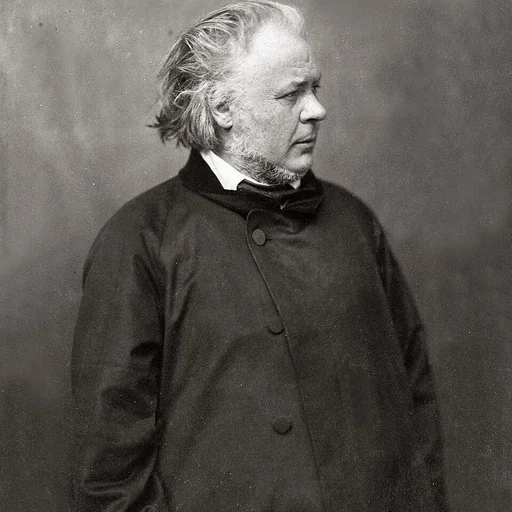
Honoré-Victorin Daumier was a French painter, sculptor, and printmaker, whose many works offer commentary on the social and political life in France, from the Revolution of 1830 to the fall of the Second French Empire in 1870.

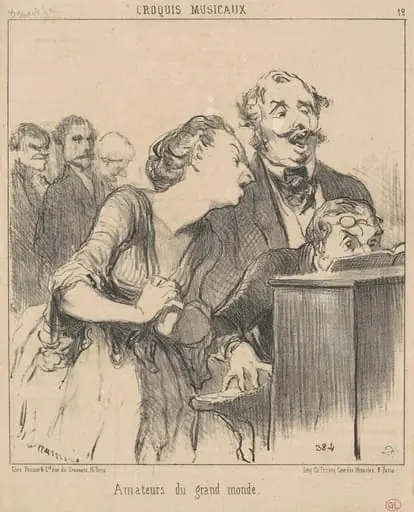 Amateurs du grand monde
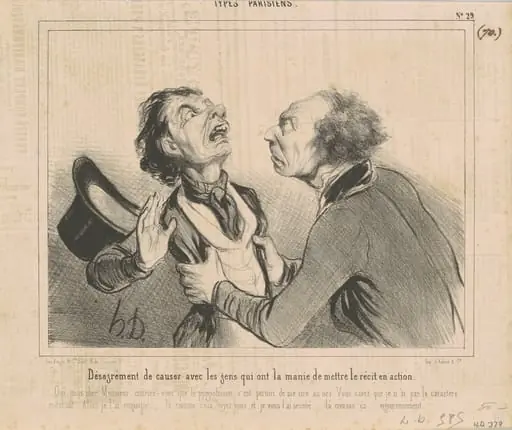 Désagrément de causer avec les gens...
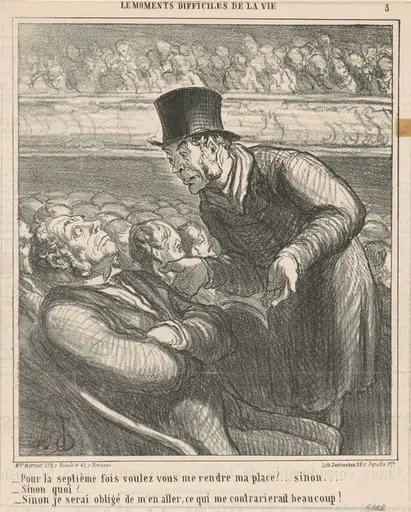 Pour la septième fois voulez-vous me rendre ...
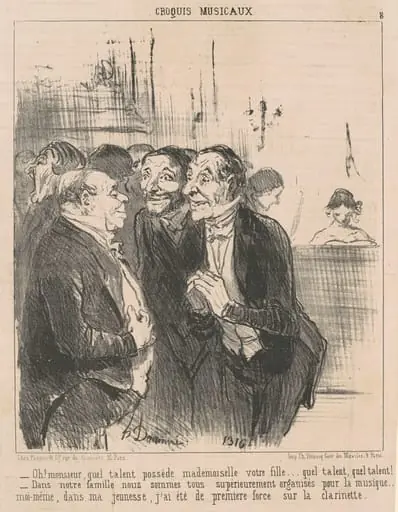 Oh! Monsieur, quel talent possède ...
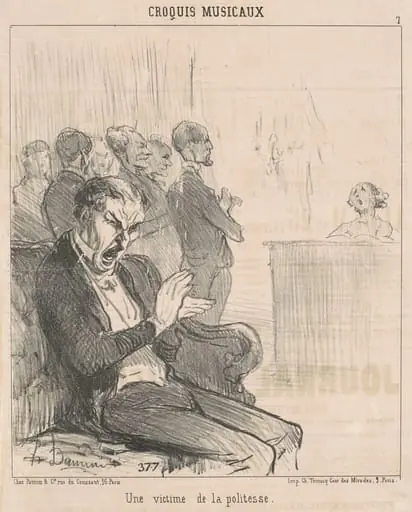 Un victime de la politesse
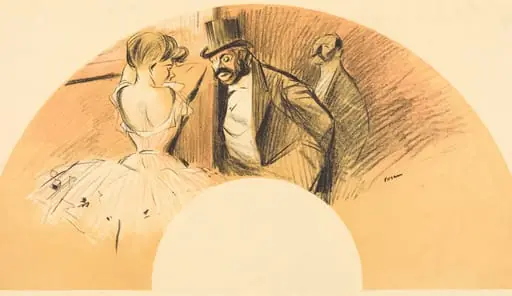 Eventail (pour le bal Gavarni) (Fan (for the Gavarni Ball))
 Bal Gavarni Fan
 Un monsieur tenant a prouver qu'il peut ...
 Tendresse conjugale
 Les maris ne sont pas ce qu'un vain peuple pense!