Artwork
Un victime de la politesse
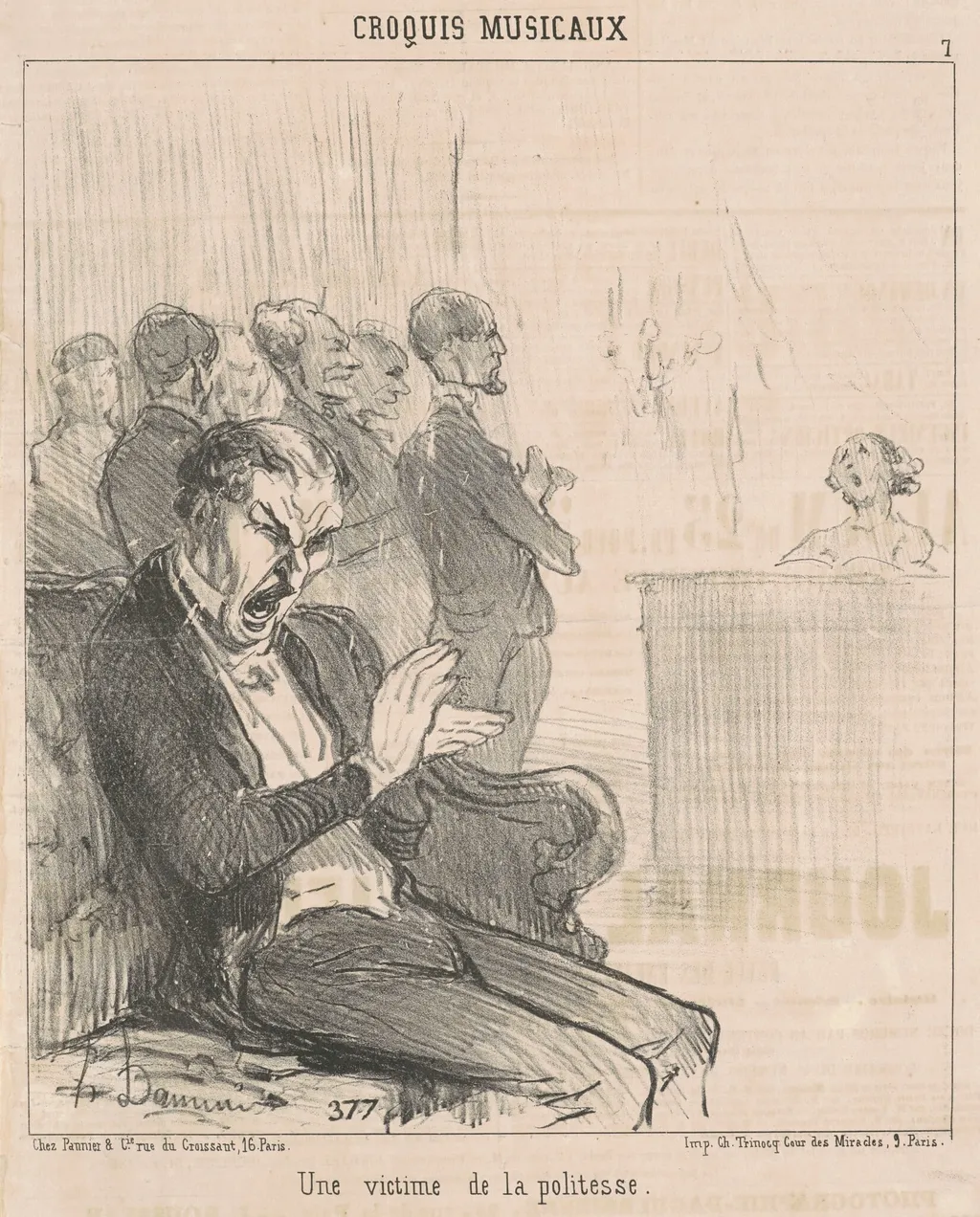
Un victime de la politesse is an ink print by the Impressionist artist Honoré Daumier. It dates from 1852 and is held in the collection of the National Gallery of Art.
About this work
Overview
It portrays a single figure yawning openly at a formal gathering, while others sit or stand around him, maintaining composed postures.
Un victime de la politesse is a lithograph by Honoré Daumier, created in the mid-19th century. It portrays a single figure yawning openly at a formal gathering, while others sit or stand around him, maintaining composed postures. The image captures a quiet moment of social rupture, using humor to expose the strain of performing propriety in bourgeois settings. Daumier’s work often targeted the rituals of everyday life with sharp, understated irony.
Subject & Meaning
The central figure’s uncontrolled yawn contrasts with the restrained demeanor of those around him, revealing the gap between outward politeness and inner fatigue. Rather than depicting overt conflict, the scene suggests the emotional toll of conformity. The yawning man becomes an unwilling rebel—not through action, but through an involuntary gesture that exposes the artificiality of social norms. Daumier frames this as a quiet tragedy of civility.
Technique & Style
Daumier employed lithography to achieve rapid, expressive lines with tonal variation, allowing him to convey movement and mood with minimal detail. His figures are rendered with loose, sketch-like strokes, emphasizing gesture over precision. The background is deliberately muted, focusing attention on the yawning man’s posture and the subtle reactions of onlookers. This technique suited his journalistic approach, enabling quick production and wide circulation.
History & Provenance
Created around 1860, the print was likely produced for publication in a periodical, as was common for Daumier’s social satires. It circulated among Parisian middle-class audiences familiar with the rituals depicted. Though not signed or dated on the plate, its attribution is consistent with his known body of work from this period. No major private collections or institutional records indicate an early provenance beyond its original print run.
Context
Daumier worked during a time of rising bourgeois influence in France, when social codes became increasingly rigid and performative. His prints frequently mocked the pretensions of urban life, from legal proceedings to domestic gatherings. This image aligns with his broader critique of class performance, where etiquette functions as a mask for alienation. Lithography allowed him to reach a broad public, making his observations part of everyday discourse.
Legacy
The print endures as a quiet exemplar of social observation in 19th-century printmaking. Daumier’s ability to convey psychological tension through minimal means influenced later satirists and realist artists. While not widely exhibited today, it remains a touchstone for understanding how visual art could interrogate social norms without overt rhetoric. Its power lies in its restraint, inviting viewers to recognize their own complicity in unspoken rules.
Artist & collection

Artist
Honoré-Victorin Daumier was a French painter, sculptor, and printmaker, whose many works offer commentary on the social and political life in France, from the Revolution of 1830 to the fall of the Second French Empire in 1870.









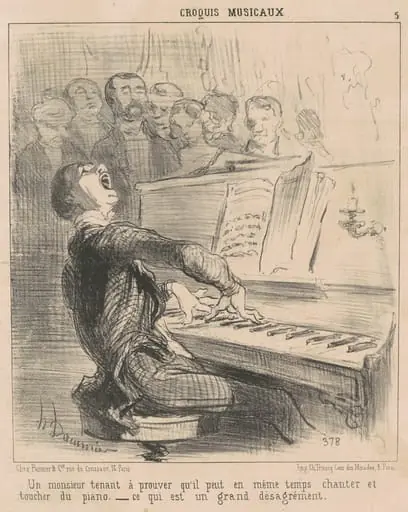 Un monsieur tenant a prouver qu'il peut ...
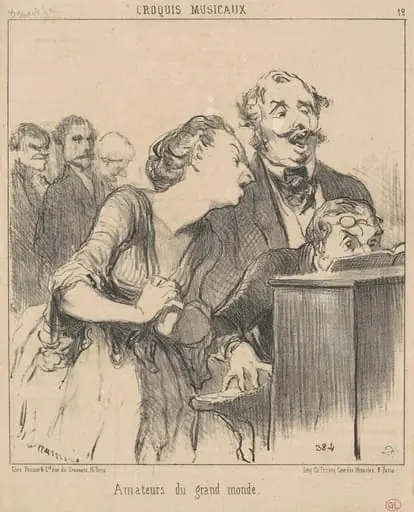 Amateurs du grand monde
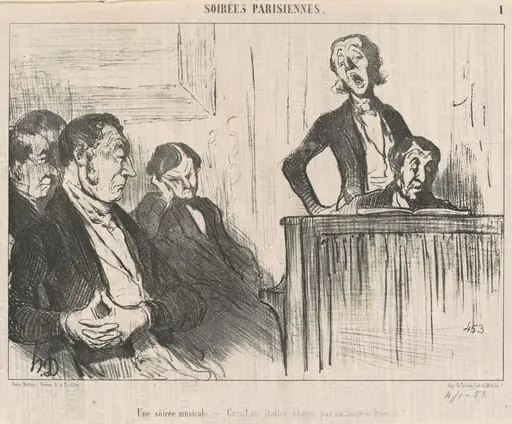 Une soirées musicale
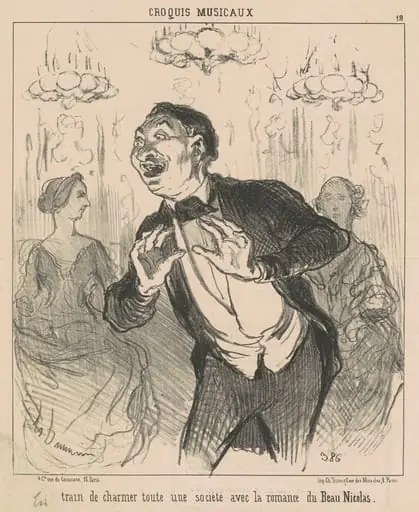 En train de charmer toute une société ...
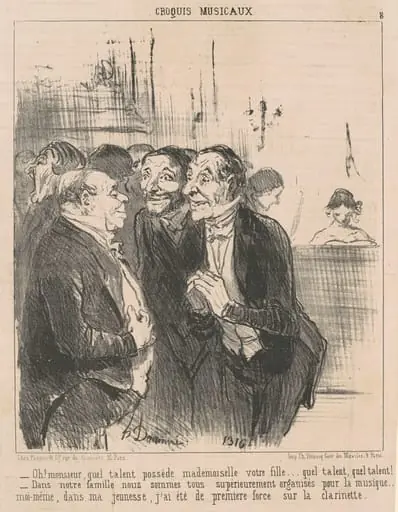 Oh! Monsieur, quel talent possède ...
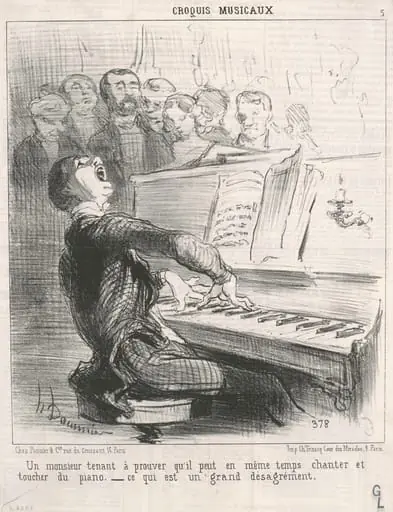 Un Monsieur tenant à prouver qu'il peut...
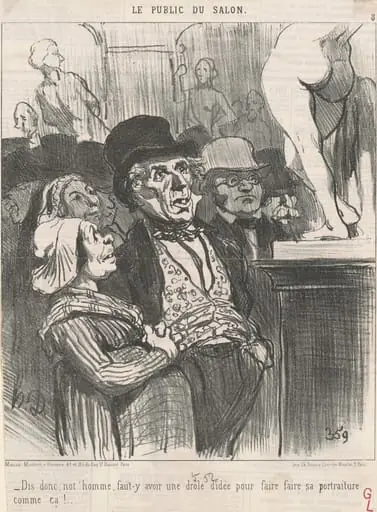 Dis donc, not'homme, faut-y ...
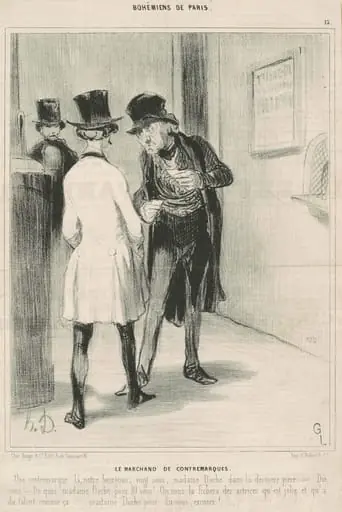 Le marchand de contremarques
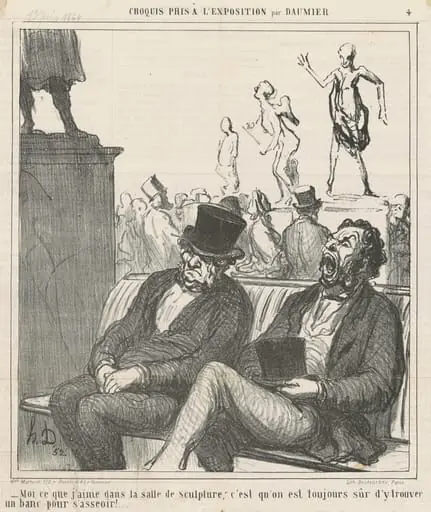 Moi ce que j'aime dans la salle de sculpture ...
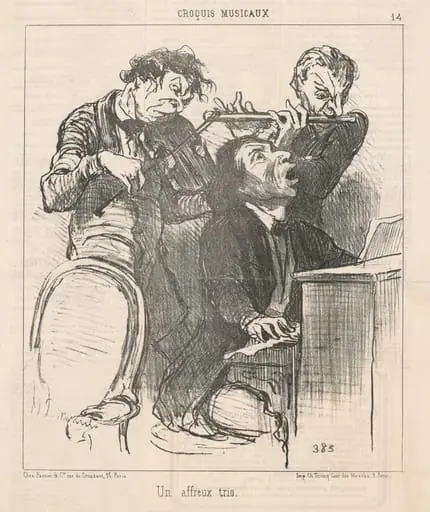 Un affeux trio