Artwork
Est-il permis d'être maigre comme ca! ...
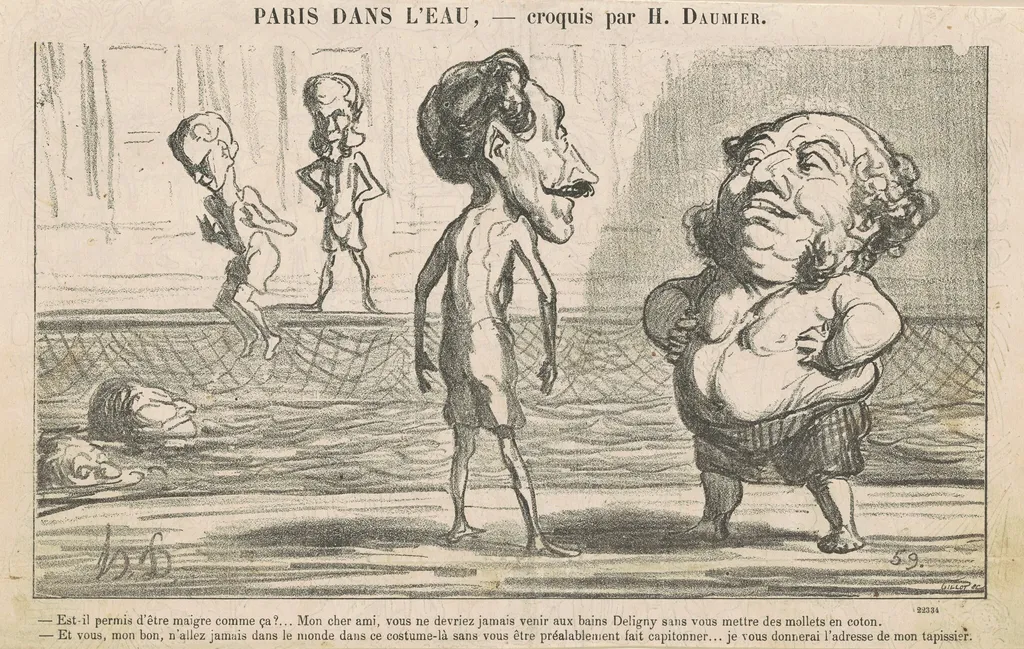
Est-il permis d'être maigre comme ca! ... is an ink print by the Impressionist artist Honoré Daumier. It dates from 1864 and is held in the collection of the National Gallery of Art.
About this work
Daumier made this in 1864, not with paint but with ink on stone.
A man in a top hat floats in a pool. His body is skinny, his head huge. Two other men in the water point and laugh.
Daumier made this in 1864, not with paint but with ink on stone. That trick is called lithography. The stone holds ink where crayon touches it. Then it prints like a stamp. This lets artists draw fast, like a cartoon.
Look up lithography. Watch how the ink spreads on the stone before it prints.
Overview
Created in 1864, this lithograph by Honoré Daumier captures a satirical moment in a public swimming pool. The work uses the lithographic process—drawing with greasy crayon on stone—to produce a sharply defined, rapidly executed image. Its humor stems from exaggerated physical forms and social awkwardness, typical of Daumier’s approach to everyday life in mid-19th century France.
Subject & Meaning
The scene centers on a slender man in a top hat, floating awkwardly while two others point and laugh. The disproportion between his oversized head and frail body mocks societal obsessions with appearance and status. Daumier critiques the performative nature of public behavior, suggesting that self-consciousness and ridicule are woven into the fabric of bourgeois social rituals.
Technique & Style
Daumier employed lithography, a method that allowed him to draw directly onto a limestone surface with greasy ink. The stone’s chemical properties retained the drawing, enabling multiple prints. His loose, expressive lines and bold contrasts reflect a cartoonist’s immediacy, prioritizing wit and gesture over detail. This technique suited his journalistic output, blending art with social observation.
History & Provenance
Produced during Daumier’s prolific period for illustrated periodicals, the print likely appeared in a French newspaper or satirical journal. Though its exact first publication is unrecorded, it aligns with his broader body of work targeting middle-class mores. The image circulated widely, reinforcing his reputation as a visual critic of French society.
Context
In 1860s France, public bathing became a growing social phenomenon, especially among the urban middle class. As swimming pools emerged as spaces of leisure and display, they also became arenas for judgment and performance. Daumier’s image taps into this cultural shift, exposing the vulnerability beneath outward composure.
Legacy
This lithograph exemplifies Daumier’s influence on modern graphic satire. His ability to distill social tension into a single, resonant image paved the way for later cartoonists and illustrators. The work remains a quiet but pointed commentary on body image and social conformity, enduring as a document of everyday human absurdity.
Artist & collection
Artist
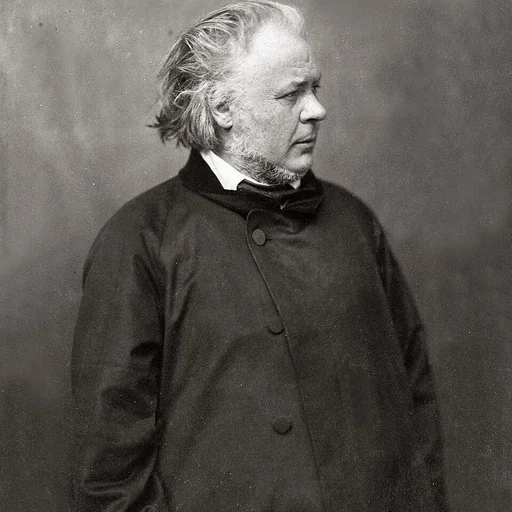
Honoré-Victorin Daumier was a French painter, sculptor, and printmaker, whose many works offer commentary on the social and political life in France, from the Revolution of 1830 to the fall of the Second French Empire in 1870.

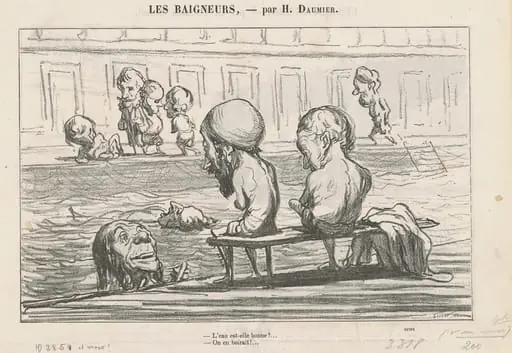 L'eau est-elle bonne? ...
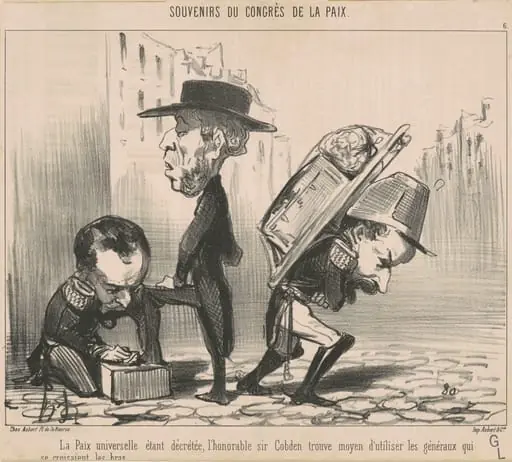 La paix universelle étant décrétée ...
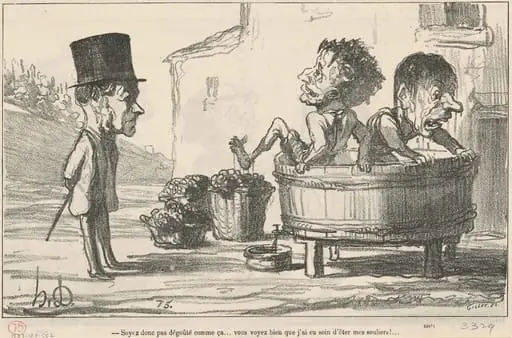 Soyez donc pas dégouté comme ca ...
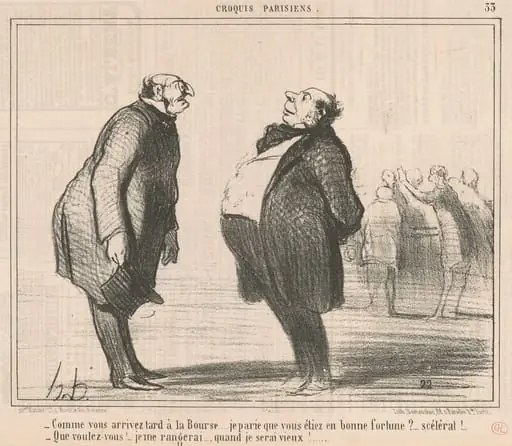 Comme vous arrivez tard a la bourse ...
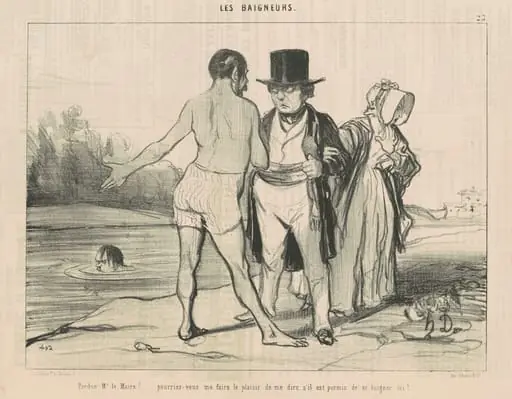 Pardon, Mr Le Maire! ... pourriez-vous ...
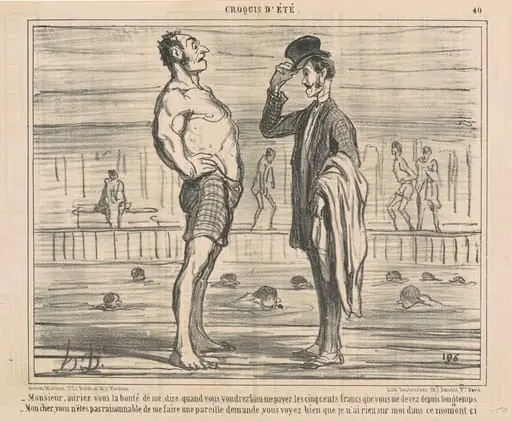 Monsieur, Auriez-vous la bonté de me dire ...
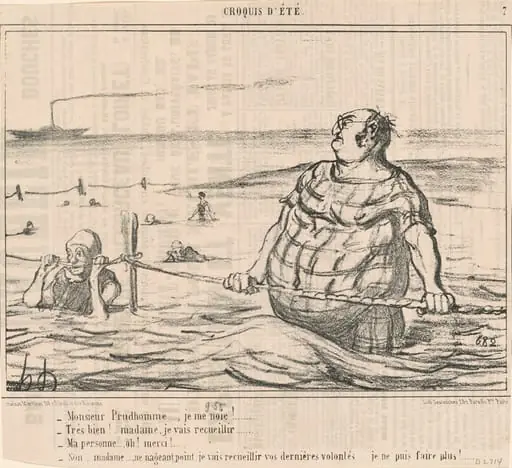 Monsieur Prudhomme ... Je me noie! ...
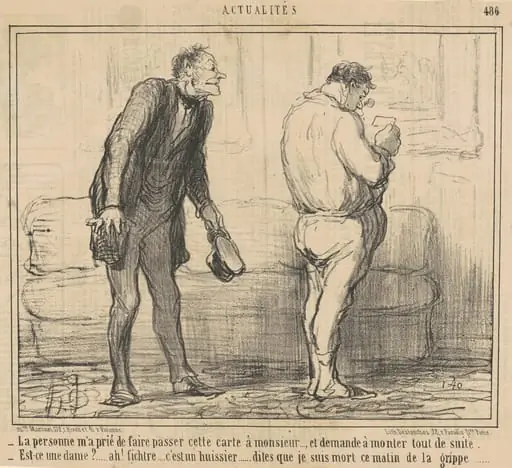 La personne ... demande a monter tout de suite ...
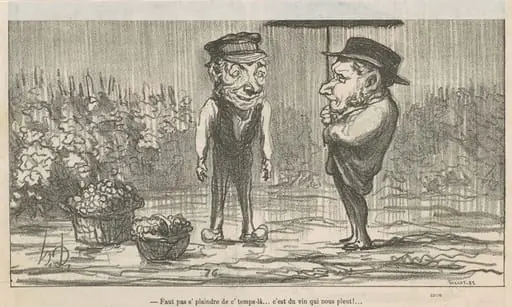 Faut pas s'plaindre de c'temps-la ...
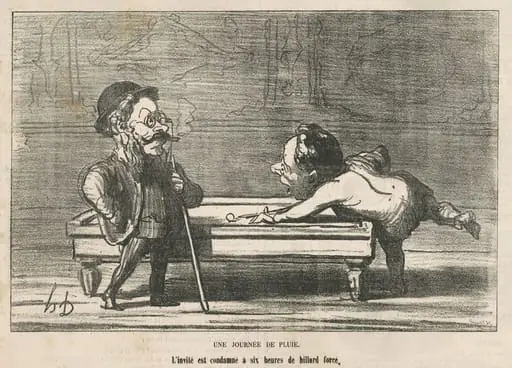 Une journée de pluie