Artwork
Monsieur, Auriez-vous la bonté de me dire ...
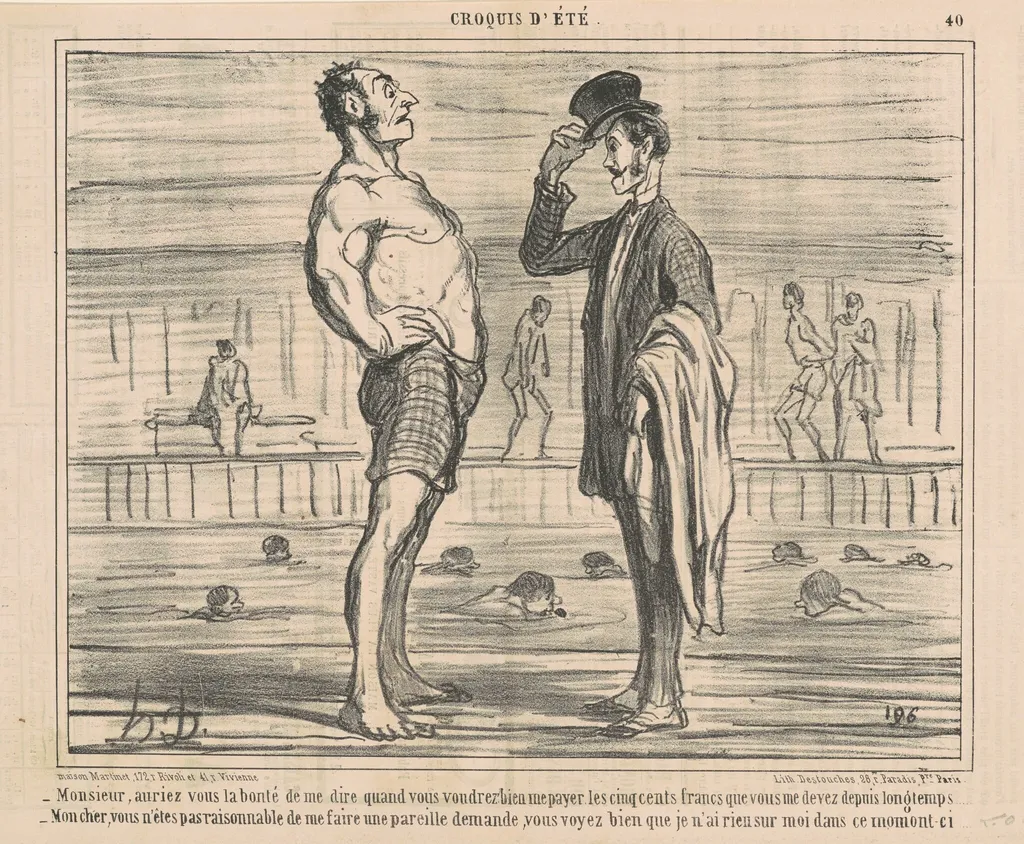
Monsieur, Auriez-vous la bonté de me dire ... is an ink print by the Impressionist artist Honoré Daumier. It dates from 1858 and is held in the collection of the National Gallery of Art.
About this work
You see two men in a pool setting, one in swimming trunks and the other in formal attire.
The man in formal clothes looks out of place, which highlights the contrast between them. This contrast shows how people from different backgrounds spent their free time during the 19th century.
Check out the work of artist: Daumier, Honoré to learn more about his social commentary.
Overview
Honoré Daumier’s lithograph titled “Monsieur, Auriez‑vous la bonté de me dire …” presents a brief scene at a public swimming area. The image captures two male figures positioned side by side: a robust swimmer in loose trunks, and a formally dressed gentleman who lifts his hat. The composition is rendered in the crisp black‑and‑white line work characteristic of Daumier’s printmaking.
Subject & Meaning
The juxtaposition of a confident, muscular bather with a sartorially overdressed observer creates a visual commentary on 19th‑century leisure practices. By placing a gentleman in formal attire within a setting normally reserved for casual recreation, Daumier highlights the social distance between classes and the evolving attitudes toward public recreation and propriety.
Technique & Style
Executed as a lithograph, the work relies on the medium’s capacity for fine tonal variation and rapid reproduction.
Executed as a lithograph, the work relies on the medium’s capacity for fine tonal variation and rapid reproduction. Daumier’s line work is economical yet expressive, delineating the figures’ posture and attire with a few decisive strokes, while the contrast between the smooth, flowing lines of the swimmer and the rigid, angular rendering of the dressed man underscores their differing social roles.
History & Provenance
Created during Daumée’s prolific period of social satire in the mid‑1800s, the print was circulated among the artist’s contemporaries as part of his broader commentary on Parisian life. It later entered public collections, appearing in several exhibitions that focus on the intersection of sport, public space, and class in nineteenth‑century France.
Context
The image reflects a time when public baths and swimming pools were becoming popular venues for recreation, yet still largely dominated by working‑class patrons. The presence of a formally attired gentleman suggests the gradual infiltration of middle‑ and upper‑class individuals into these spaces, a shift that Daumier observed and subtly critiqued through his work.
Legacy
Daumier’s lithograph continues to be cited in studies of visual culture for its concise yet pointed critique of social stratification. It exemplifies how print media could disseminate nuanced observations about everyday life, influencing later artists who explored the relationship between public leisure and class identity.
Artist & collection
Artist
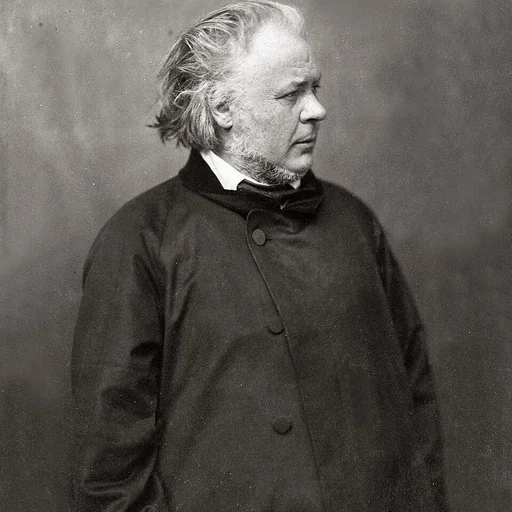
Honoré-Victorin Daumier was a French painter, sculptor, and printmaker, whose many works offer commentary on the social and political life in France, from the Revolution of 1830 to the fall of the Second French Empire in 1870.









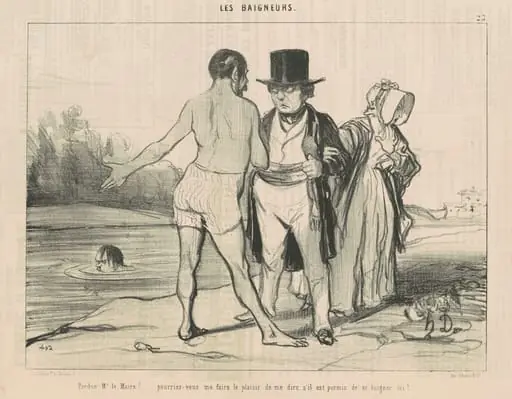 Pardon, Mr Le Maire! ... pourriez-vous ...
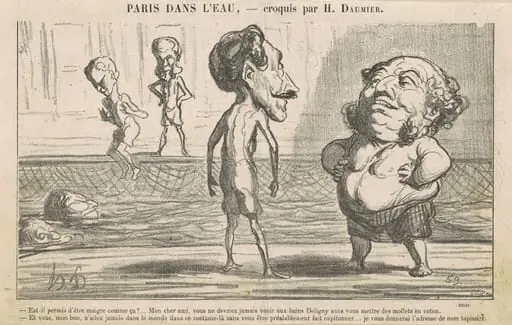 Est-il permis d'être maigre comme ca! ...
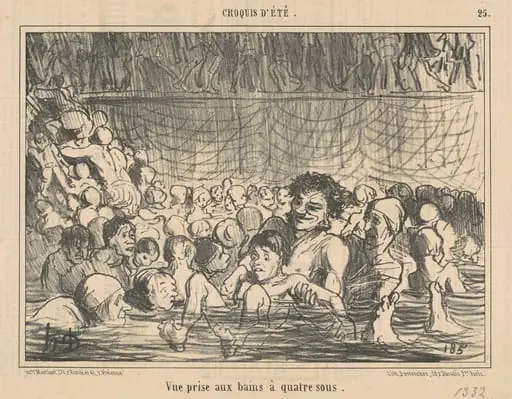 Vue prise aux bains a quatre sous
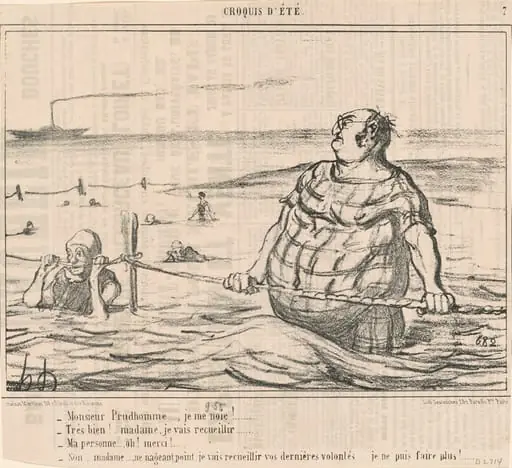 Monsieur Prudhomme ... Je me noie! ...
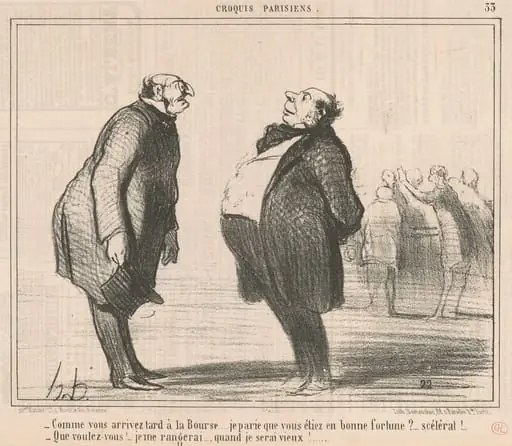 Comme vous arrivez tard a la bourse ...
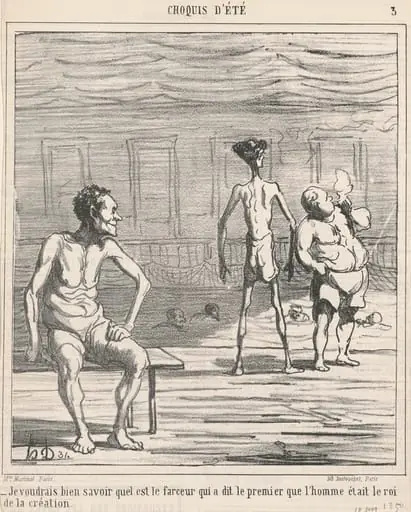 Je voudrais bien savoir quel est ...
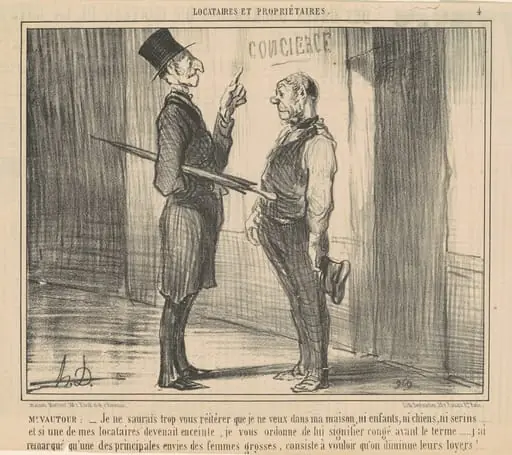 M. Vautour: Je ne saurais trop ...
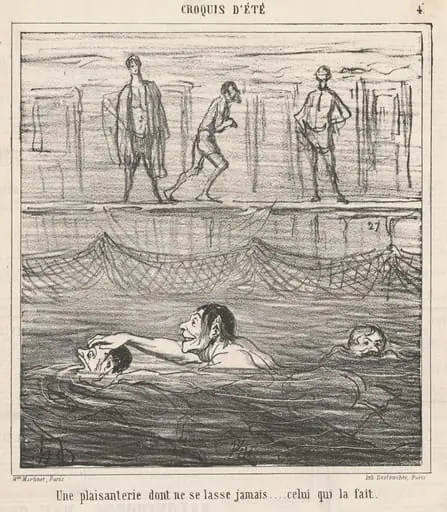 Une plaisanterie dont ne se lasse ...
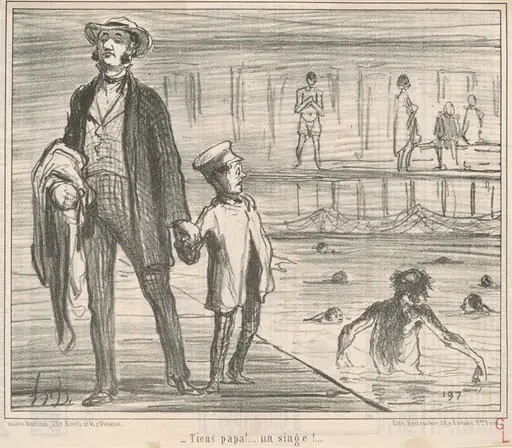 Tiens papa! ... un singe! ...
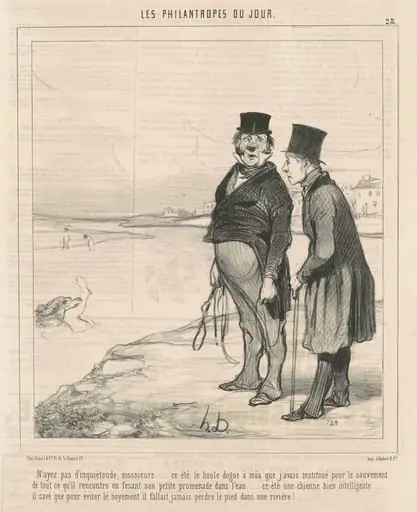 N'ayez pas d'inquiètoude ...
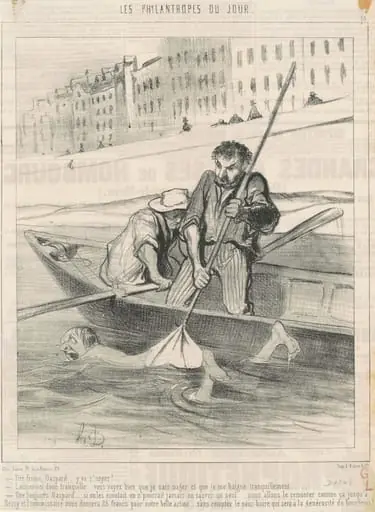 Tire ferme, Gaspard ... y va s'neyer ...
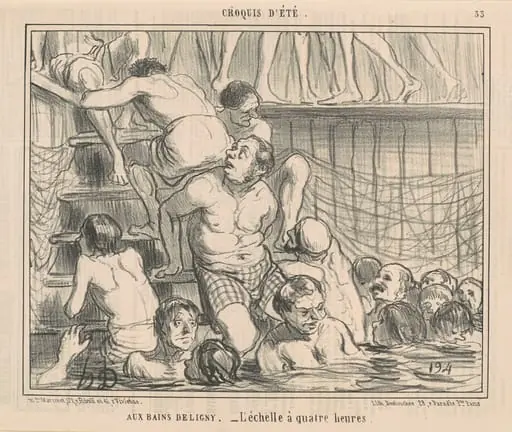 Aux bains Deligny