Artwork
Faudra que je vous fasse faire un jour...
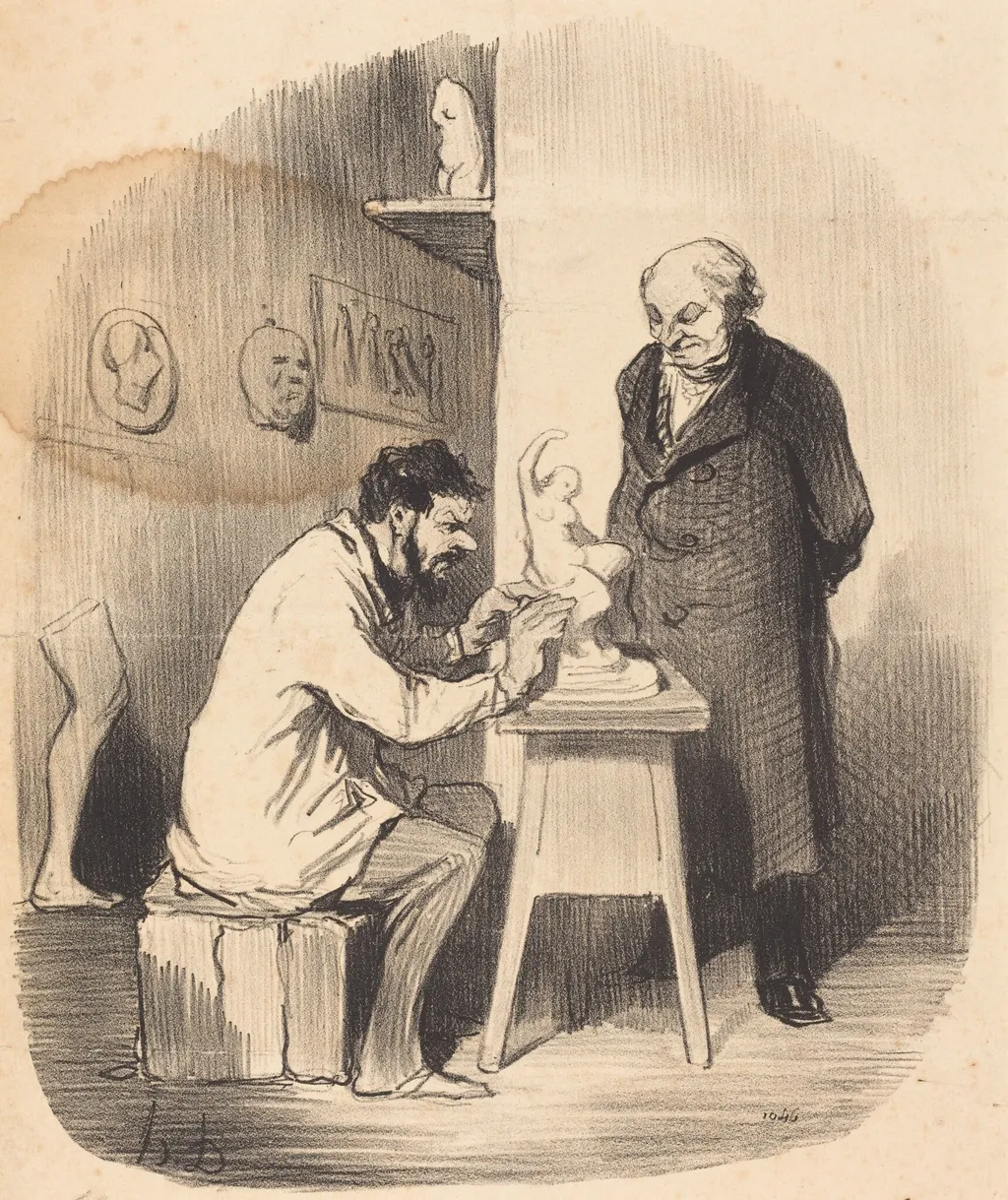
Faudra que je vous fasse faire un jour... is an ink print by the Romanticist artist Honoré Daumier. It dates from 1848 and is held in the collection of the National Gallery of Art.
About this work
Overview
The work belongs to a series of prints that observe artisans and intellectuals, revealing his empathy for those engaged in manual and intellectual craft.
Created in 1848, this lithograph by Honoré Daumier captures a sculptor at work in his studio, rendered with the immediacy and tonal range characteristic of the medium. Though often associated with political satire, this piece shifts focus to the quiet labor of artistic creation, reflecting Daumier’s broader interest in the lives of ordinary professionals. The work belongs to a series of prints that observe artisans and intellectuals, revealing his empathy for those engaged in manual and intellectual craft.
Subject & Meaning
The figure is a sculptor, absorbed in shaping a clay human form, his posture and gaze conveying deep concentration. The cluttered studio—tools, a vase, scattered materials—suggests a working space shaped by daily practice rather than idealized grandeur. Unlike Daumier’s more overt political cartoons, this image avoids mockery; instead, it honors the dignity of labor, subtly contrasting the sculptor’s quiet dedication with the spectacle of power he often critiqued elsewhere.
Technique & Style
Daumier employed lithography to achieve subtle gradations of gray and expressive line work, using the stone’s surface to build texture in fabric, stone, and wood. His brushwork on the stone captures the weight of the sculptor’s shirt, the roughness of tools, and the smooth curve of the unfinished figure. The composition is tightly framed, focusing attention on the hands and the evolving form, while the background recedes into muted tones, enhancing the sense of intimate focus.
History & Provenance
Produced during the early years of the Second Republic, the print was likely published in a periodical such as *Le Charivari*, where Daumier regularly contributed. Though not as widely circulated as his political caricatures, this image aligns with his growing interest in depicting the working class after the 1848 revolutions. Its survival in museum collections reflects its status as a representative example of his non-political, observational prints from this period.
Context
In 1848, France experienced political upheaval that reshaped artistic expression. While many artists turned to grand historical themes, Daumier continued documenting everyday life—artisans, clerks, lawyers—with unembellished realism. This lithograph fits within a broader trend among French printmakers to elevate the mundane, influenced by emerging social awareness and the democratization of art through mass-produced imagery.
Legacy
This print exemplifies Daumier’s ability to convey psychological depth without overt narrative. Later artists, including the Realists and early Modernists, drew inspiration from his unidealized portrayals of labor. His use of lithography to capture texture and mood influenced generations of printmakers who sought to merge social observation with technical innovation, cementing his role as a bridge between 19th-century satire and modern artistic introspection.
Artist & collection

Artist
Honoré-Victorin Daumier was a French painter, sculptor, and printmaker, whose many works offer commentary on the social and political life in France, from the Revolution of 1830 to the fall of the Second French Empire in 1870.









 One of theses day you have to do my portrait in this style
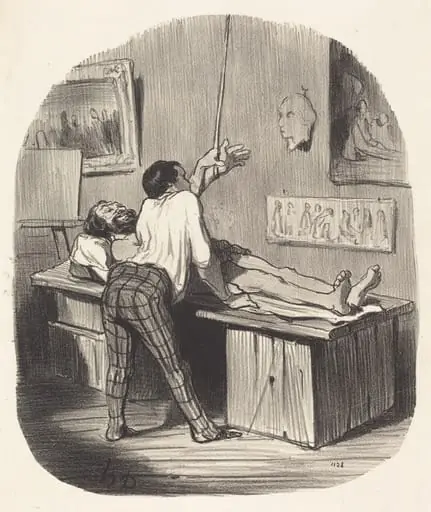 Comment, Saint-Gervais a pris cette...
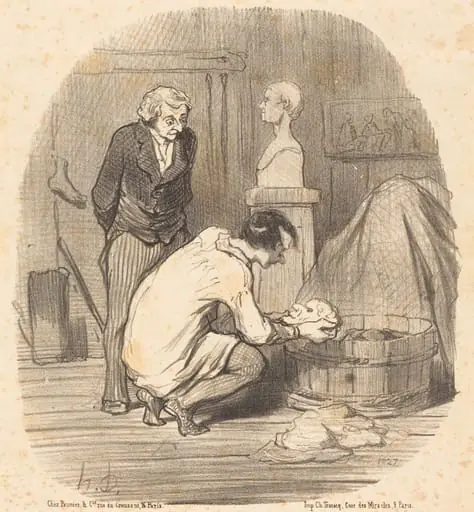 L'Artiste - Voila qui est terminé!...
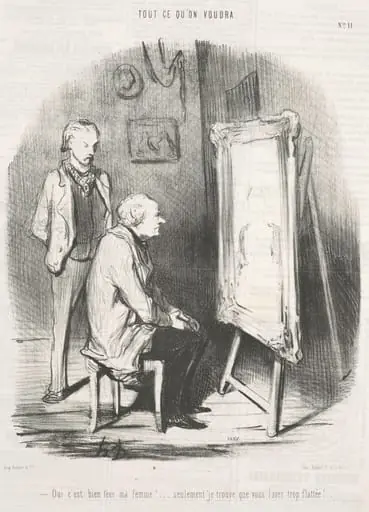 Oui c'est bien feue ma femme! ...
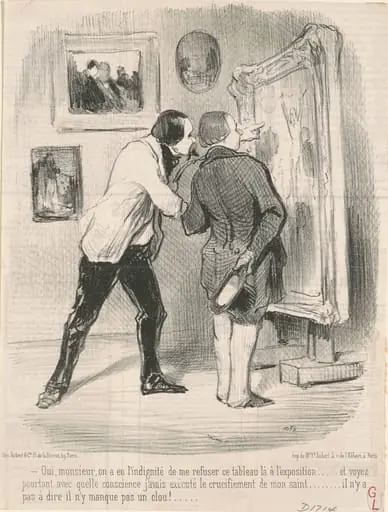 Oui ... on a eu l'indignité de me refuser ce tableau ...
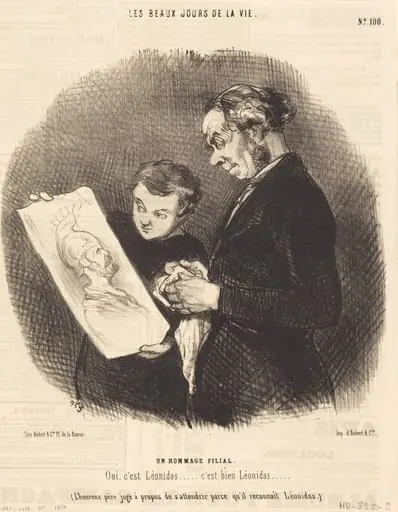 Un Hommage filial
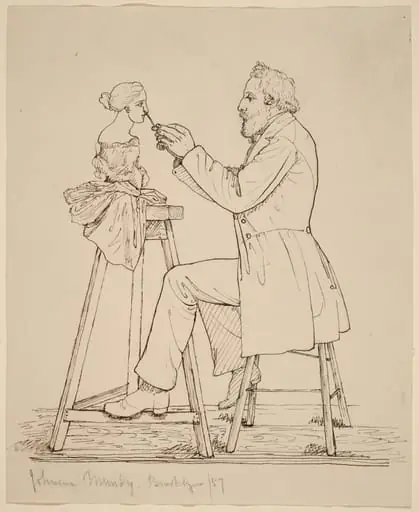 Johnson Mundy, Sculptor
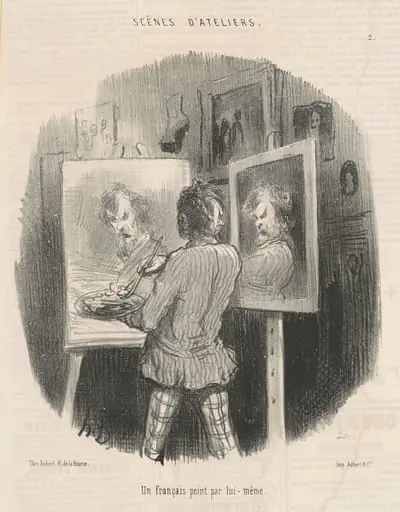 Un français peint par lui-même
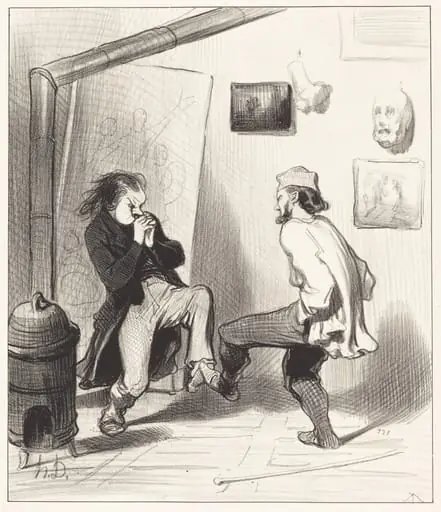 Quand on a brulé son dernier chevalet!
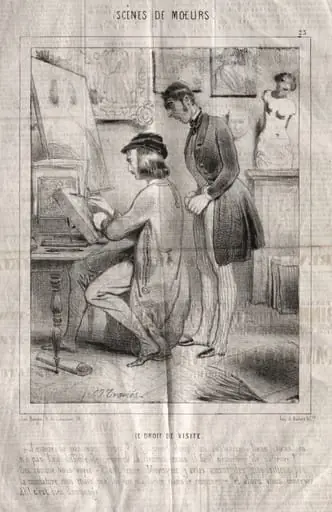 Scènes de moeurs: La Droit de visite. J'espère ne pas vous gener?...