Artwork
In convénient de se batir une maison de campagne ...
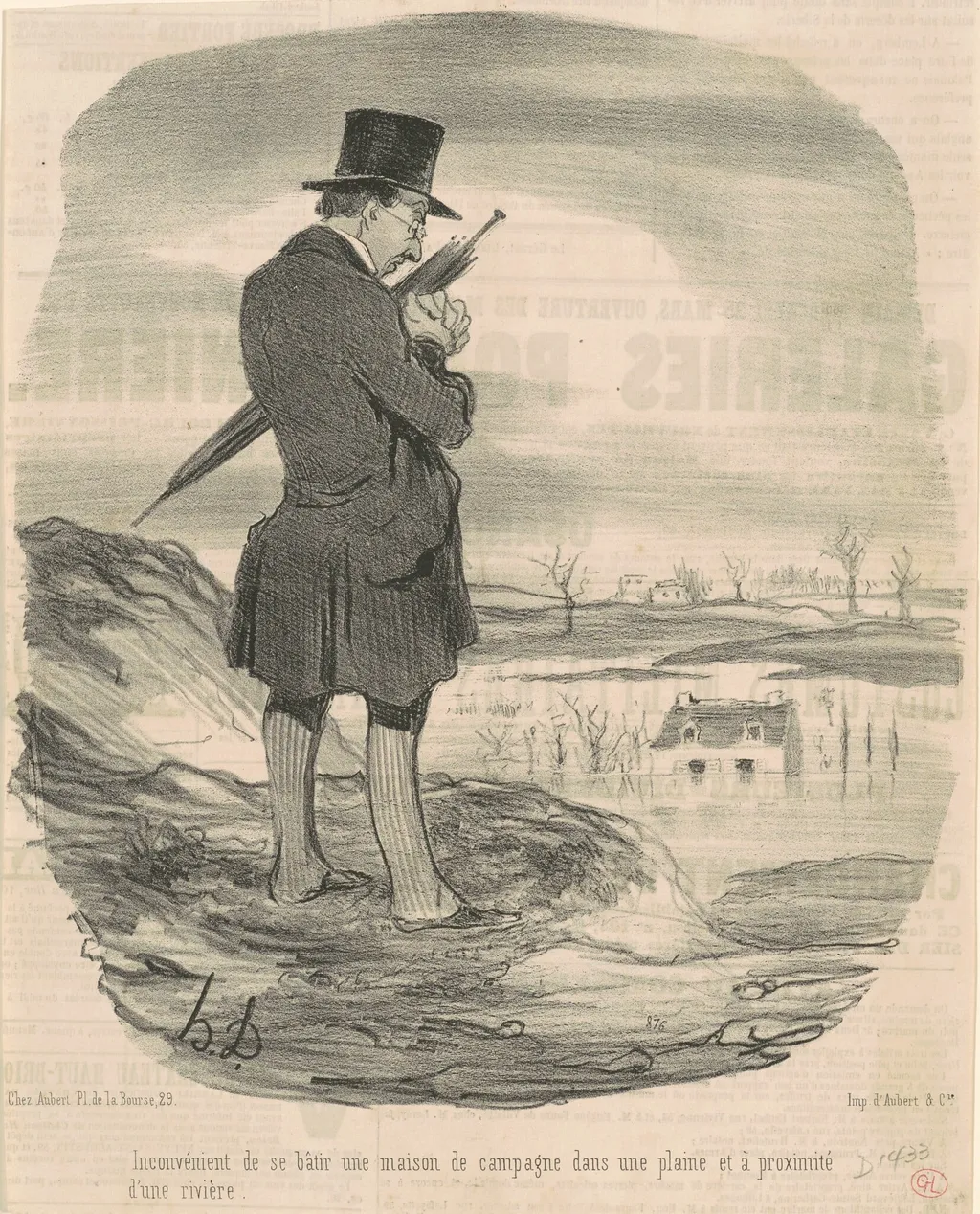
In convénient de se batir une maison de campagne ... is an ink print by the Romanticist artist Honoré Daumier. It dates from 1846 and is held in the collection of the National Gallery of Art.
About this work
Overview
Honoré Daumier’s lithograph titled *Convénient de se batir une maison de campagne* portrays a solitary figure on a tiny island of dry ground, encircled by rising water. The gentleman, attired in formal clothing and clutching an umbrella, stands amid a floodplain, suggesting an ill‑advised attempt to erect a rural dwelling in a precarious setting.
Subject & Meaning
The composition juxtaposes the elegance of the man’s dress with the inhospitable, water‑logged environment, underscoring the absurdity of constructing a country house where floodwaters dominate. Daumier’s visual irony critiques the folly of ignoring natural hazards, inviting viewers to consider the futility of human ambition against environmental constraints.
Technique & Style
Executed in monochrome lithography, the print relies on precise line work and tonal contrast to delineate the water’s encroachment and the figure’s crisp silhouette. Daumier’s economical use of shading accentuates the starkness of the scene, while the medium’s capacity for fine detail enhances the narrative’s subtle humor.
Context
Created during Daumier’s prolific period of social commentary, the work reflects 19th‑century concerns about urban expansion and land use. While primarily known for caricature and satire, this lithograph extends his critique to rural planning, aligning with contemporary debates on the suitability of building in flood‑prone zones.
Legacy
The print remains a reference point for discussions of environmental awareness in art, illustrating how lithography can convey complex social messages with minimal visual means. It continues to be cited in studies of 19th‑century French printmaking and the broader discourse on human interaction with natural landscapes.
Artist & collection

Artist
Honoré-Victorin Daumier was a French painter, sculptor, and printmaker, whose many works offer commentary on the social and political life in France, from the Revolution of 1830 to the fall of the Second French Empire in 1870.









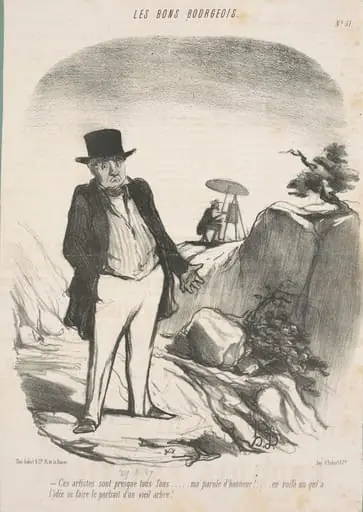 Ces artistes sont presque tous fous . . . Ma parole d'honneur! . . . En voilà un qui a l'idée de faire le portrait d'un vieil arbre!
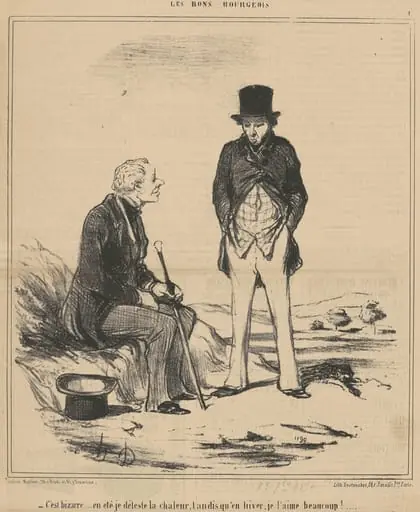 C'est bizarre ... été
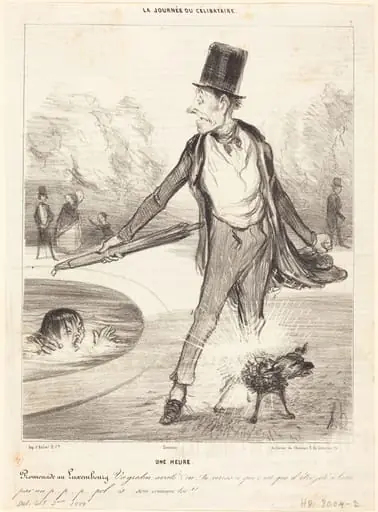 Une heure - Promenade au Luxembourg
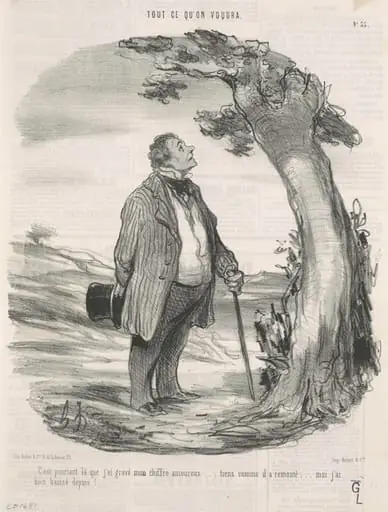 C'est pourtant la que j'ai gravé mon chiffre ...
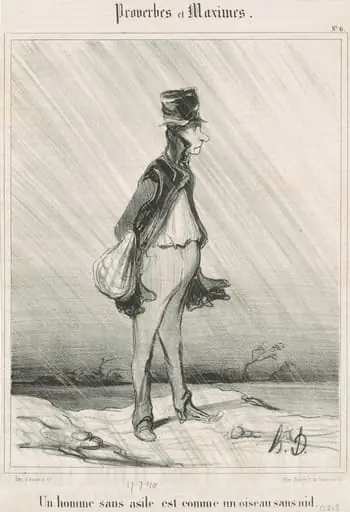 Un homme sans asile ...
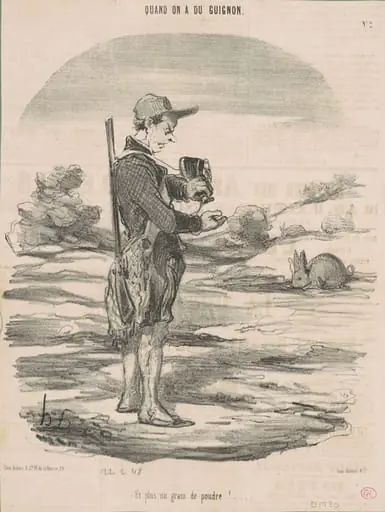 Et plus un grain de poudre! ...
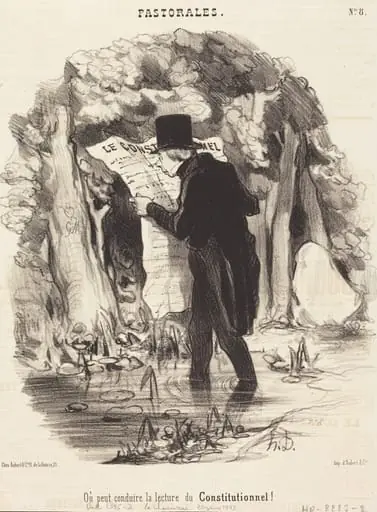 Ou peut conduire la lecture du Constitutionnel!
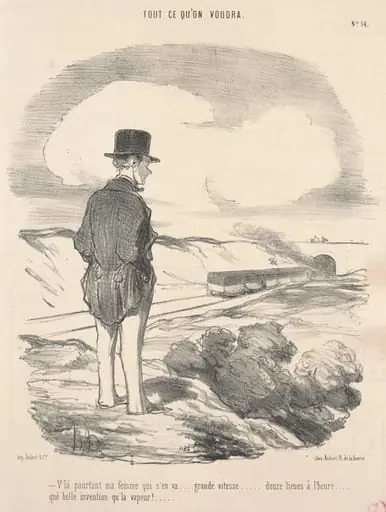 V'la pourtant ma femme qui s'en va ...
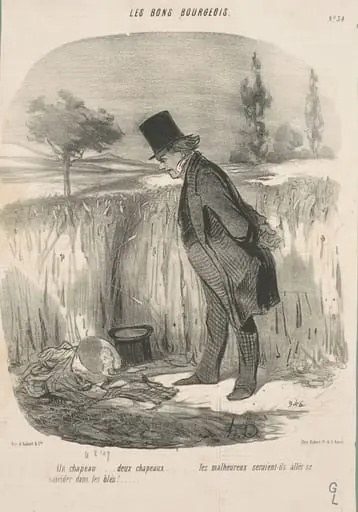 Un chapeau ... deux chapeaux ... les malheureux ...