Artwork
V'la pourtant ma femme qui s'en va ...
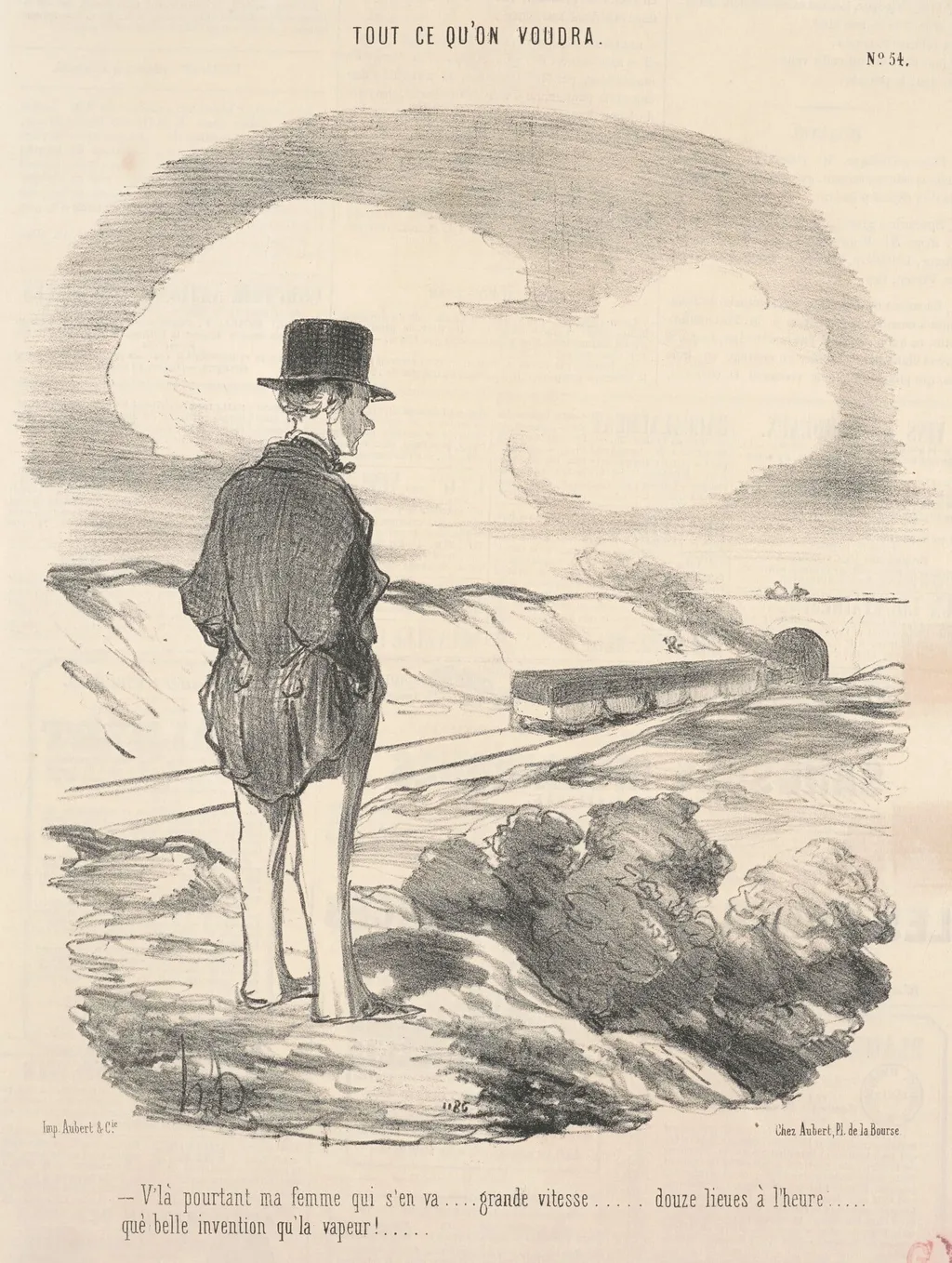
V'la pourtant ma femme qui s'en va ... is an ink print by the Impressionist artist Honoré Daumier. It dates from 1850 and is held in the collection of the National Gallery of Art.
About this work
Overview
Honoré Daumier’s lithograph presents a lone individual standing on a broad plain, his gaze fixed on a steam locomotive racing across the horizon. Rendered in stark black and gray tones, the image captures a moment of quiet observation amid the expansive, textured landscape, emphasizing the juxtaposition of stillness and motion.
Subject & Meaning
The solitary figure serves as a stand‑in for the observer of a rapidly changing world, while the advancing train embodies the surge of industrial technology. By placing the static watcher opposite the dynamic engine, Daumier highlights the cultural and societal tensions that accompanied the rise of modern transportation in the nineteenth century.
Technique & Style
Executed in lithography, the work relies on the medium’s capacity for fine line work and tonal variation. Daumier employs vigorous, sweeping strokes to suggest the terrain’s undulations, while the dense, layered shading creates depth within the limited monochrome palette, reinforcing the contrast between the stationary and the moving elements.
Context
Created during a period when railways were reshaping European life, the print reflects contemporary fascination and ambivalence toward mechanized progress. Daumier, known for his social commentary, uses this scene to comment on the broader impact of industrialization on everyday experience, situating the work within the artistic discourse on modernity.
Artist & collection
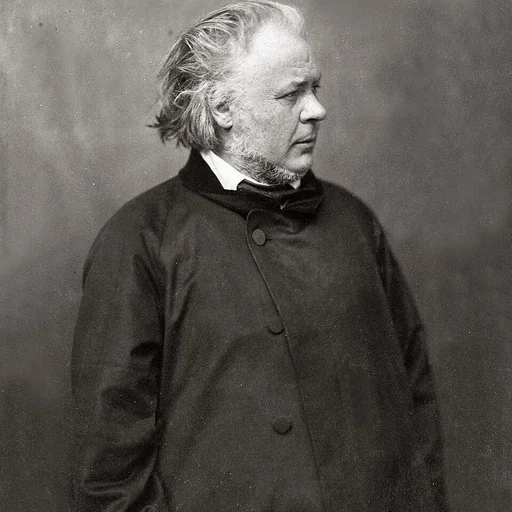
Artist
Honoré-Victorin Daumier was a French painter, sculptor, and printmaker, whose many works offer commentary on the social and political life in France, from the Revolution of 1830 to the fall of the Second French Empire in 1870.









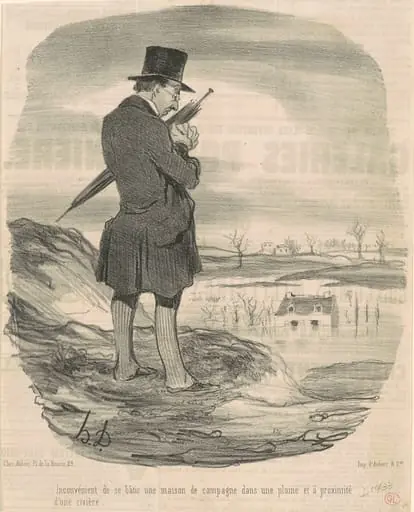 In convénient de se batir une maison de campagne ...
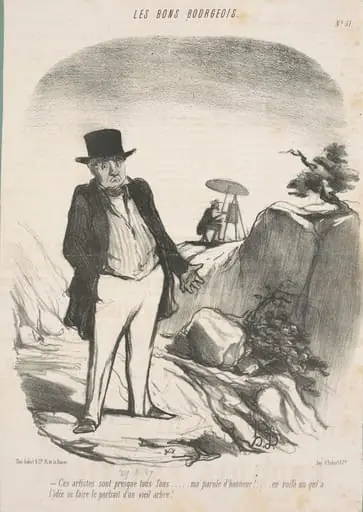 Ces artistes sont presque tous fous . . . Ma parole d'honneur! . . . En voilà un qui a l'idée de faire le portrait d'un vieil arbre!
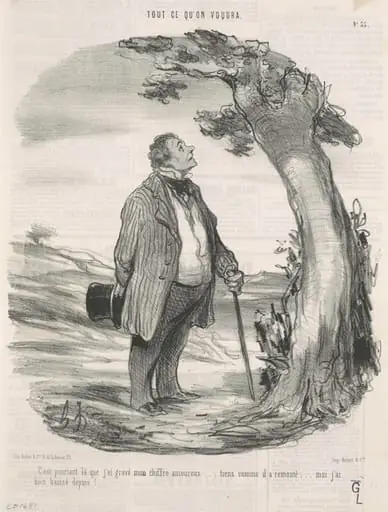 C'est pourtant la que j'ai gravé mon chiffre ...
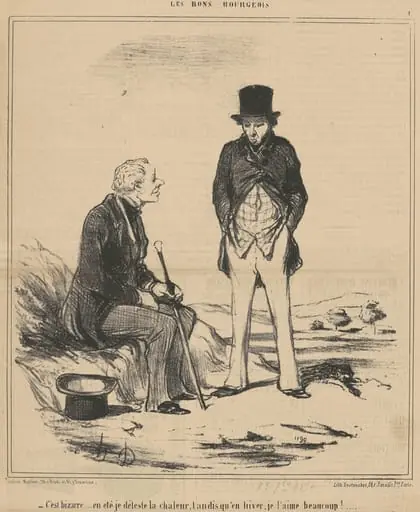 C'est bizarre ... été
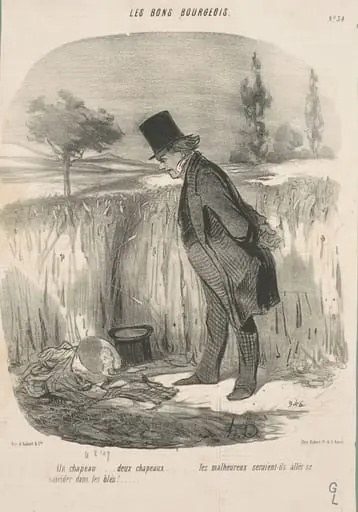 Un chapeau ... deux chapeaux ... les malheureux ...
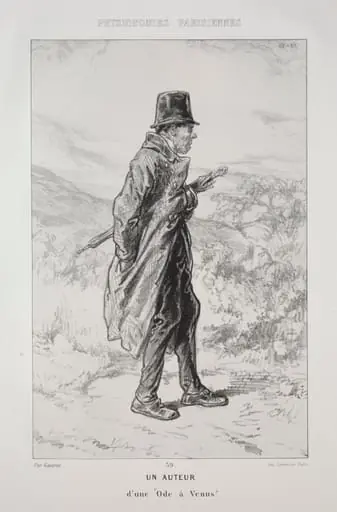 Un Auteur
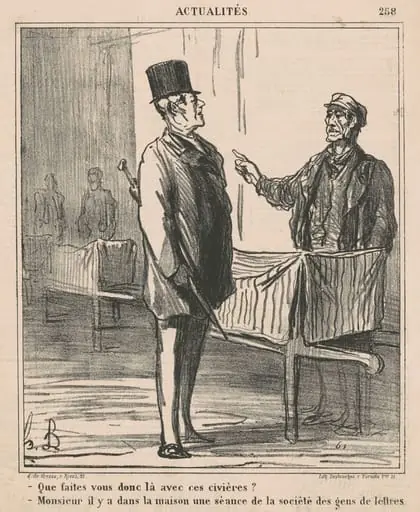 Que faites-vous donc la avec ces civières
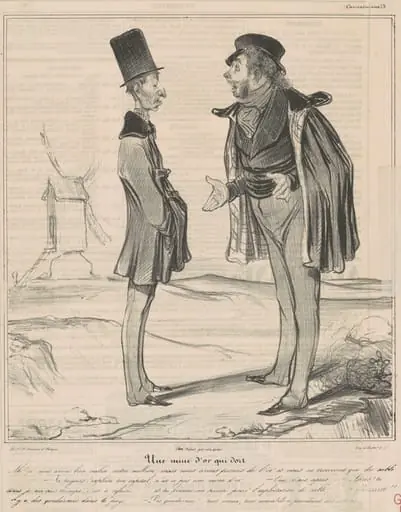 Une mine d'or qui dort
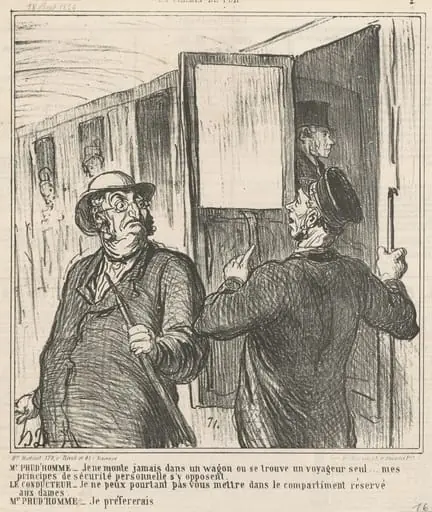 M. Prud'homme: Je ne monte jamais ...
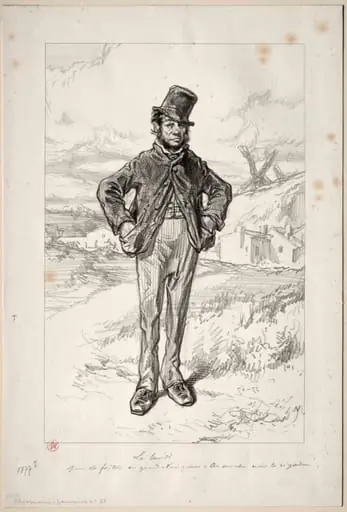 Physionomies Parisiennes: Le Lundi
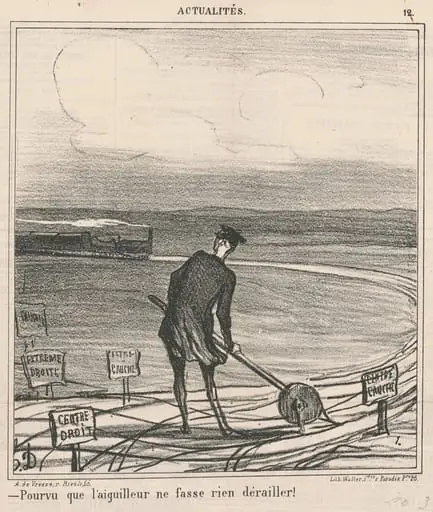 Pourvu que l'aiguilleur ne fasse rien dérailler!
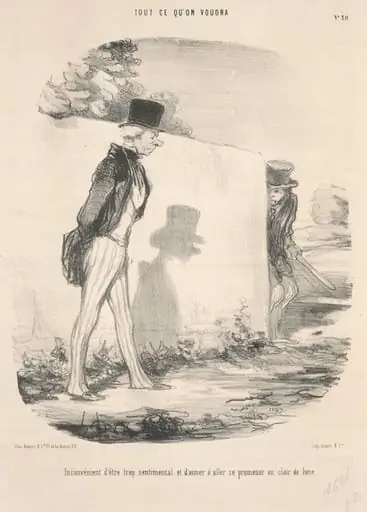 Inconvènient d'être trop sentimental ...