Artwork
Inconvénient... des domestiques qui ont servi chez M. Duprez
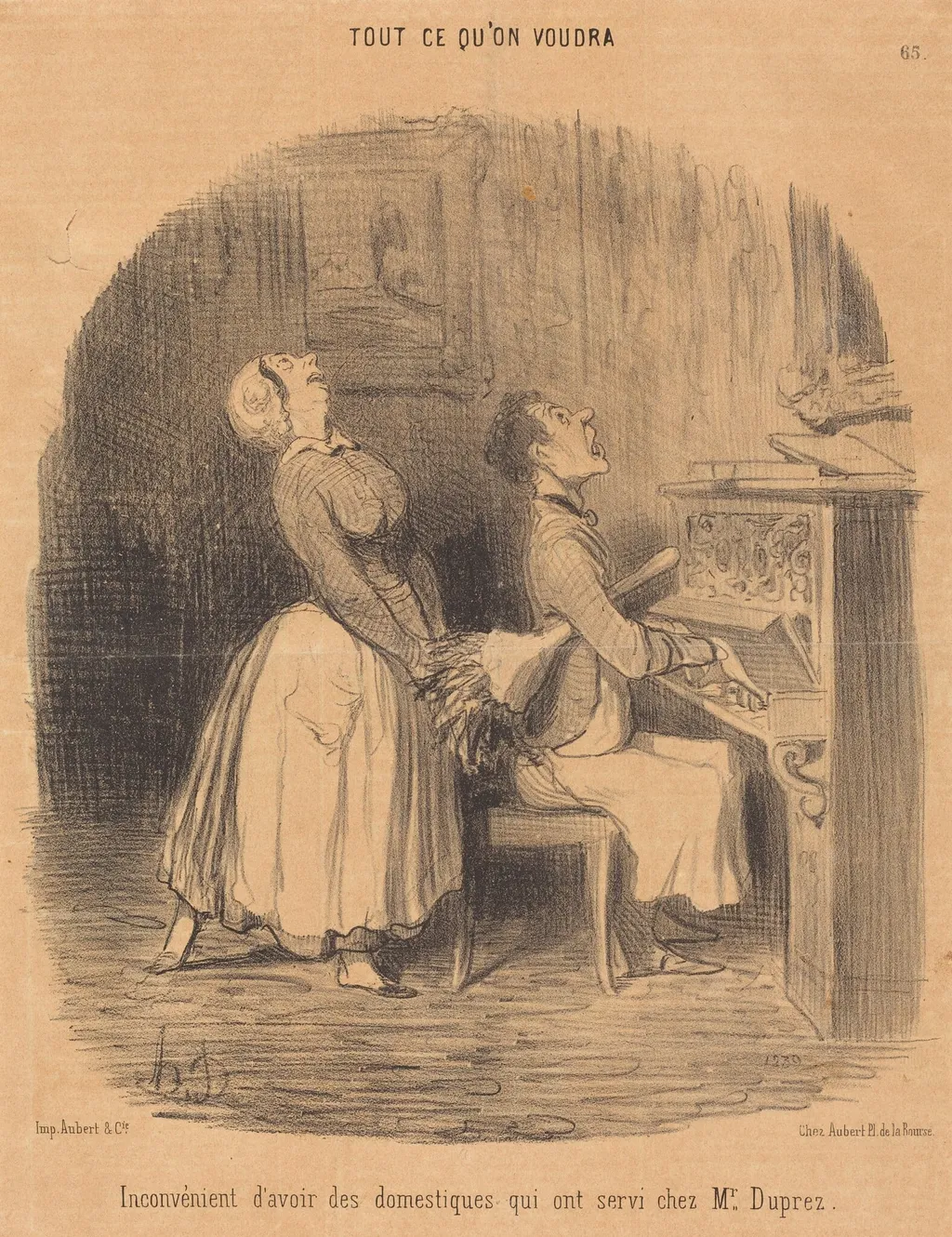
Inconvénient... des domestiques qui ont servi chez M. Duprez is an ink print by the Impressionist artist Honoré Daumier. It dates from 1850 and is held in the collection of the National Gallery of Art.
About this work
Overview
It belongs to a series of satirical works Daumier produced for French periodicals, using accessible print media to comment on everyday social behaviors.
Created in 1850, this lithograph by Honoré Daumier appears on newsprint, reflecting its origin as a mass-produced image for public consumption. It belongs to a series of satirical works Daumier produced for French periodicals, using accessible print media to comment on everyday social behaviors. The piece captures a moment of domestic irony, framed by a dry caption that invites the viewer to read between the lines of its seemingly simple scene.
Subject & Meaning
The image depicts a man at a piano with a woman standing beside him, her hands resting over his. The title, 'Tout ce qu’on voudra,' and the reference to servants of M. Duprez suggest a wry observation about former household staff who, after leaving service, now mimic the cultural pretensions of their employers. The scene subtly mocks the aspiration to refined leisure among the lower classes, revealing class dynamics through quiet, unspoken tension.
Technique & Style
Daumier employed lithography to achieve rapid, expressive lines that mimic the spontaneity of a sketch. The black ink on coarse newsprint enhances the immediacy of the image, with minimal detail and no shading to distract from the figures' gestures. The rough, energetic strokes convey movement and emotion, prioritizing narrative clarity over polish—a hallmark of Daumier’s approach to social satire in print.
History & Provenance
The work emerged during a period of political instability in France, when Daumier was actively contributing to satirical journals like La Caricature and Le Charivari. Though not politically charged in the manner of his earlier critiques of the monarchy, this piece continues his focus on the bourgeoisie and service class. Its survival on fragile newsprint underscores its original function as ephemeral commentary rather than fine art.
Context
In mid-19th century France, domestic service was a defining feature of urban life, and the aspirations of former servants to emulate their employers’ cultural habits were a common subject of public amusement. Daumier’s print taps into this social observation, aligning with broader literary and journalistic trends that used humor to expose the contradictions of social mobility and pretension in a rapidly changing society.
Legacy
Though less famous than Daumier’s overtly political prints, this work exemplifies his enduring interest in the quiet absurdities of daily life. Its informal style and topical subject matter influenced later generations of cartoonists and social commentators who saw in his work a model for using simplicity and wit to reveal deeper societal truths.
Artist & collection
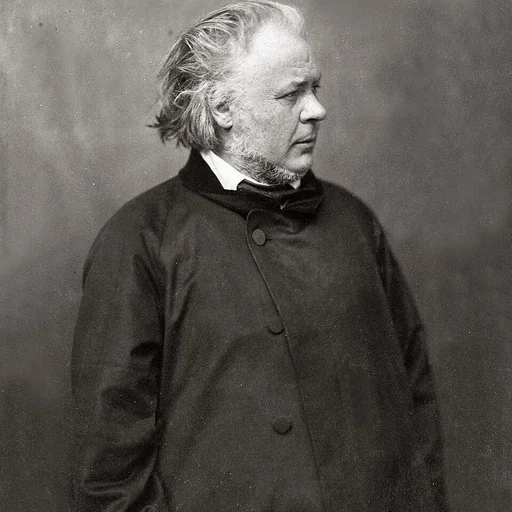
Artist
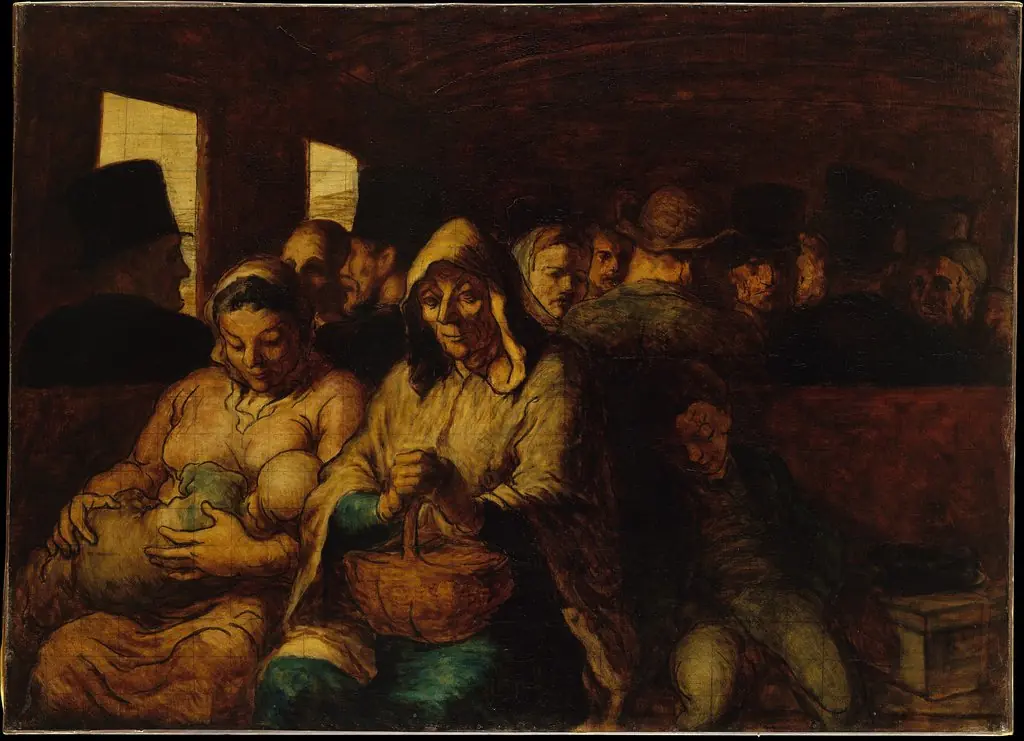
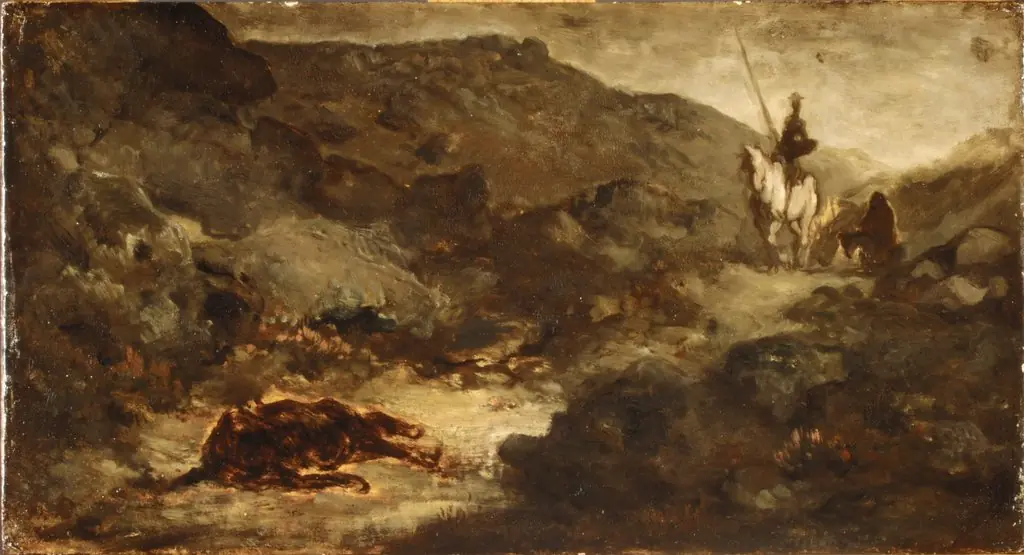
Honoré-Victorin Daumier was a French painter, sculptor, and printmaker, whose many works offer commentary on the social and political life in France, from the Revolution of 1830 to the fall of the Second French Empire in 1870.

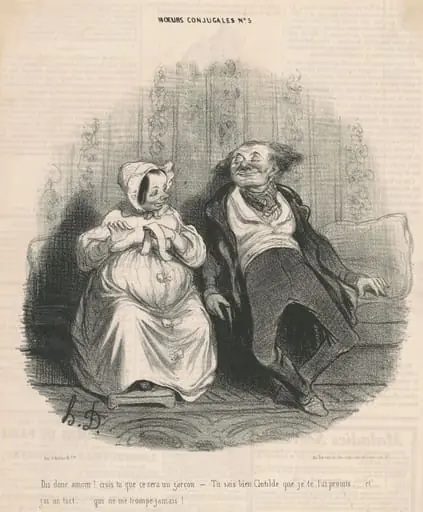 Dis donc amour! Crois-tu que ce sera un garçon. -Tu sais bien Clothilde que je te l'ai promis . . . Et j'ai un tact . . . Qui ne me trompe jamais!
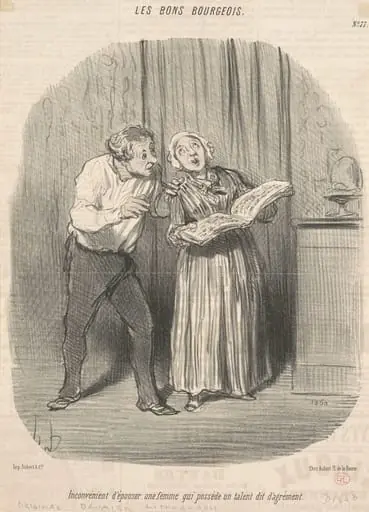 Inconvénient d'épouser une femme qui possède un talent d'agrément
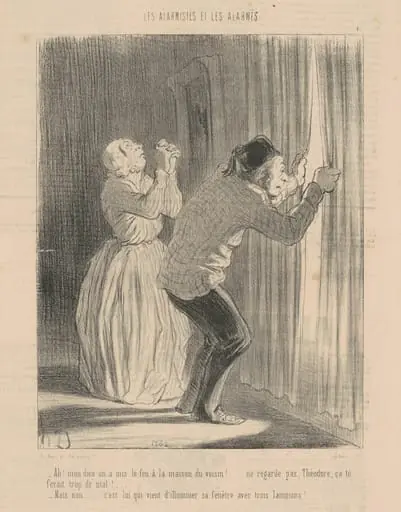 Ah! Mon dieu on a mis le feu a la maison du voisin ...
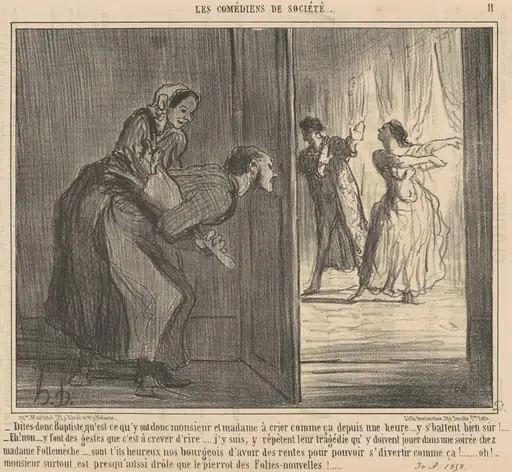 Dites-donc Baptiste ...
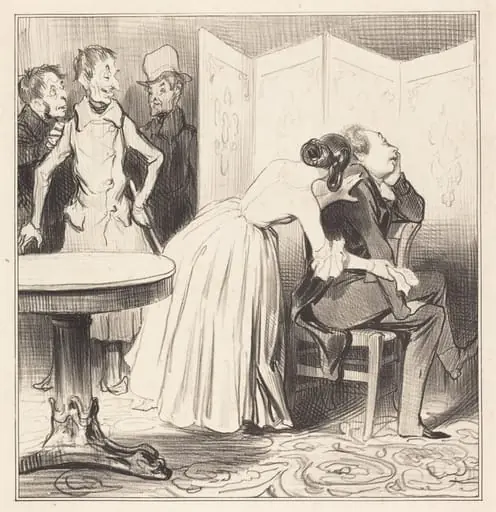 Le Chevalier des Adrets est l'amant...
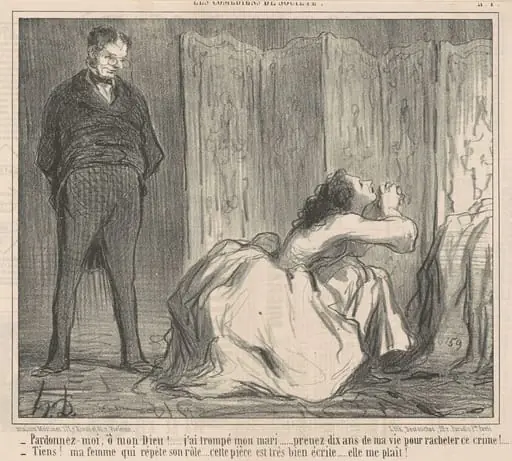 Pardonnez-moi, o mon dieu! ...
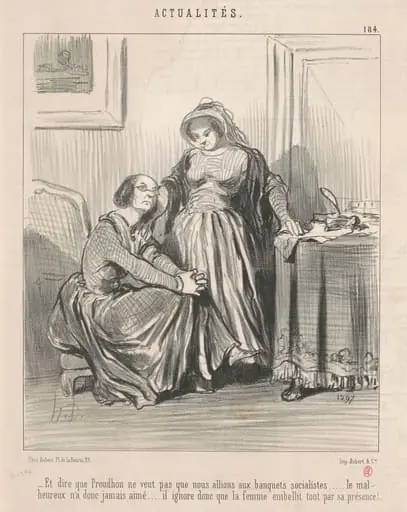 Et dire que Proudhon ne veut pas ...
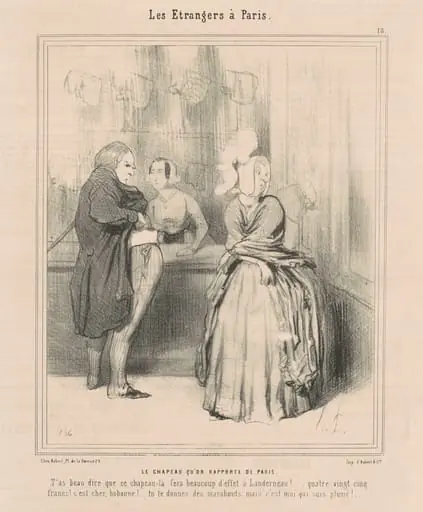 Le chapeau qu'on rapporte de Paris
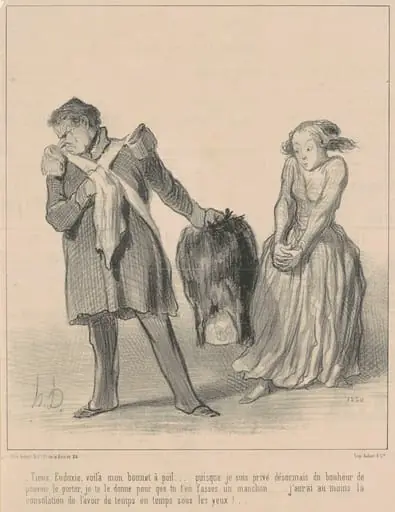 Tiens, Eudoxie, voila mon bonnet a poil ...
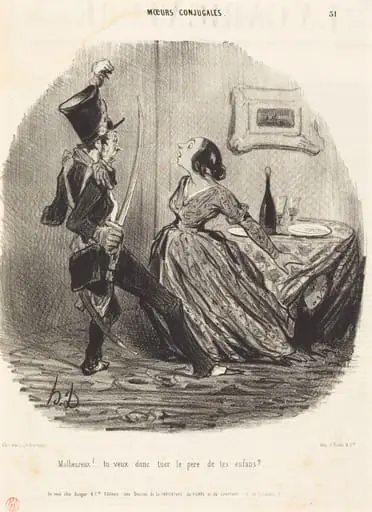 Malheureux! tu veux donc tuer le père de tes enfants?
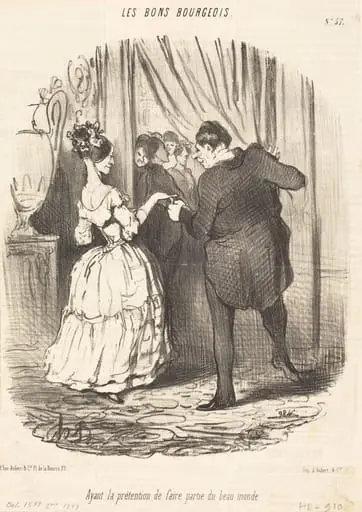 Ayant la prétention de faire partie du beau monde
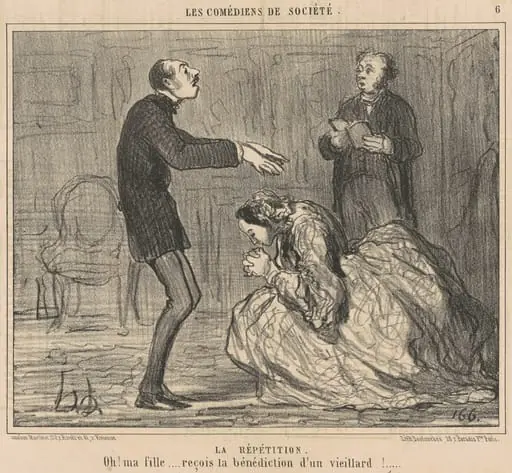 La répétition