Artwork
Intérieur d'un omnibus
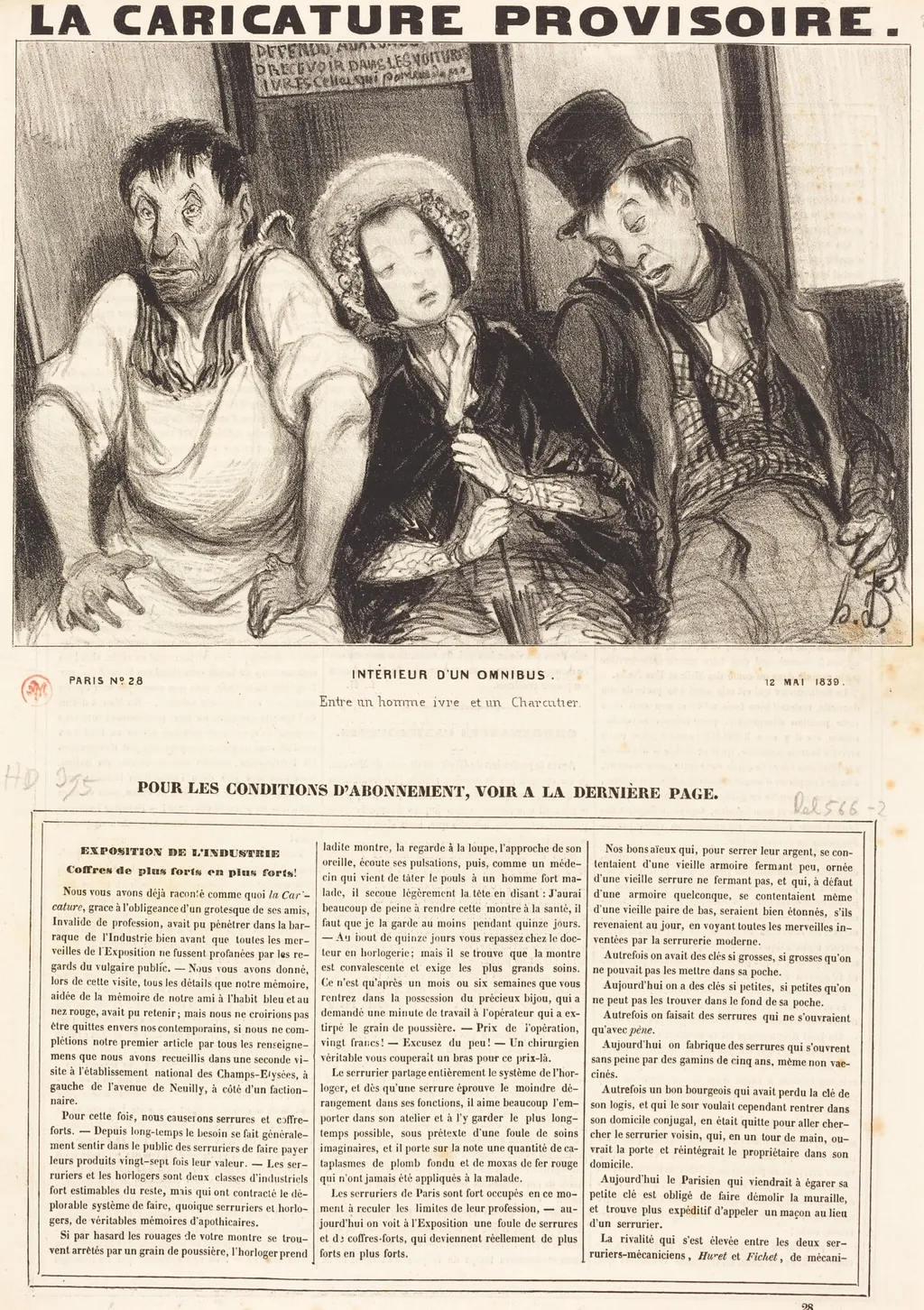
Intérieur d'un omnibus is an ink print by the Romanticist artist Honoré Daumier. It dates from 1839 and is held in the collection of the National Gallery of Art.
About this work
Overview
Honoré Daumier’s *Intérieur d’un omnibus* (1839) is a lithograph printed on newsprint, capturing a fleeting moment of Parisian urban life under the July Monarchy. Part of his broader satirical output, the work appeared in publications such as *Le Charivari*, where it reached a wide audience. The image distills the tensions of public transport into a single, tightly composed scene.
Subject & Meaning
One figure slouches, exhausted or indifferent, while the other leans forward, possibly engaged in conversation or confrontation.
The print depicts two men seated in an omnibus, their proximity forcing an uneasy interaction. One figure slouches, exhausted or indifferent, while the other leans forward, possibly engaged in conversation or confrontation. The cramped setting and the presence of a newspaper—symbolizing both literacy and distraction—hint at the social dynamics of 19th-century Paris, where class and anonymity collided in shared spaces.
Technique & Style
Daumier employed lithography, a medium well-suited to mass reproduction, to render the scene with loose, expressive lines. The background remains deliberately indistinct, focusing attention on the figures’ postures and gestures. The use of newsprint underscored the work’s immediacy, aligning its production with the rapid circulation of contemporary commentary. His style balances caricature with observation, heightening the scene’s realism without sacrificing its satirical edge.
History & Provenance
Originally published in *Le Charivari*, *Intérieur d’un omnibus* was part of a series critiquing daily life in Paris. As a lithograph, it was printed in multiple editions, though surviving impressions vary in condition due to the fragility of newsprint. The work entered museum collections as an example of Daumier’s social commentary, often preserved alongside other prints from the same period.
Context
The omnibus, introduced in Paris in 1828, became a symbol of modernity, democratizing urban mobility while exposing social inequalities. Daumier’s depiction reflects the era’s tensions—crowded public spaces, the rise of print culture, and the blending of classes in transit. His work resonated with audiences familiar with the discomforts and absurdities of shared travel, framing mundane experiences as subjects worthy of artistic scrutiny.
Legacy
The lithograph exemplifies Daumier’s role in elevating everyday scenes to the realm of social critique. Its focus on urban anonymity and physical proximity foreshadows later artistic explorations of public life. As part of his broader oeuvre, the work reinforces the significance of printmaking as a tool for commentary, influencing subsequent generations of satirists and realists.
Artist & collection

Artist
Honoré-Victorin Daumier was a French painter, sculptor, and printmaker, whose many works offer commentary on the social and political life in France, from the Revolution of 1830 to the fall of the Second French Empire in 1870.









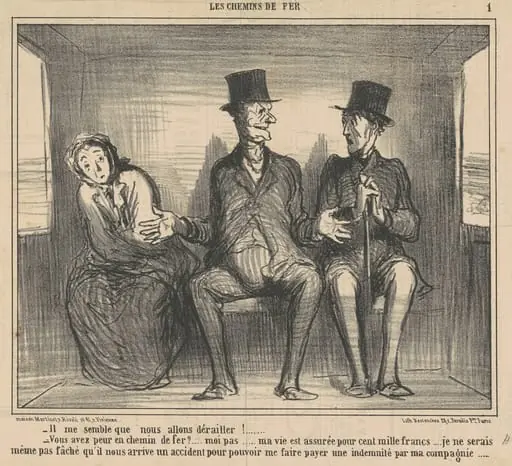 Il me semble que nous allons dèrailler ...
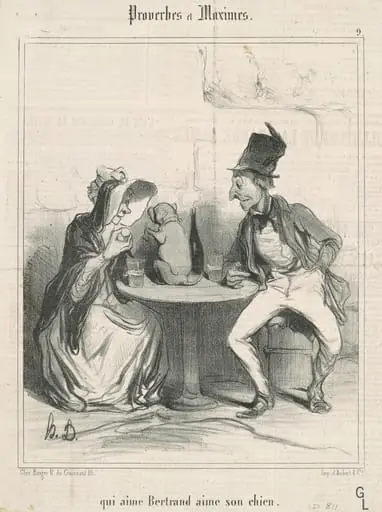 Qui aime Bertrand aime son chien
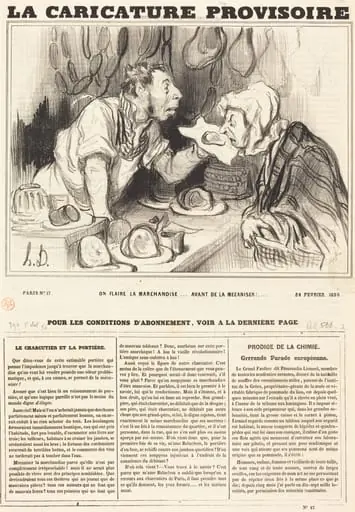 On flaire la marchandise... avant de la mécaniser!...
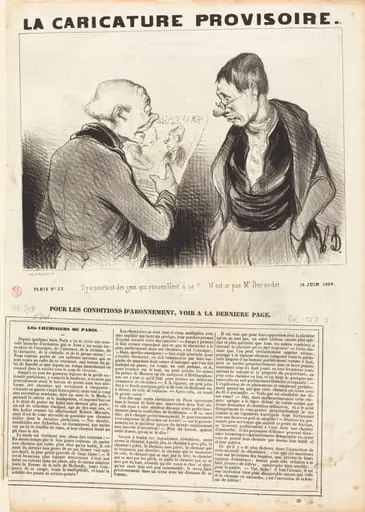 Il y a pourtant des gens qui ressemblent a ça!
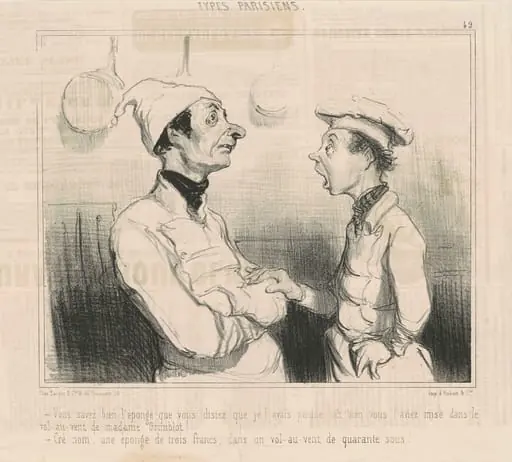 Vous savez bien l'éponge que vous disiez...
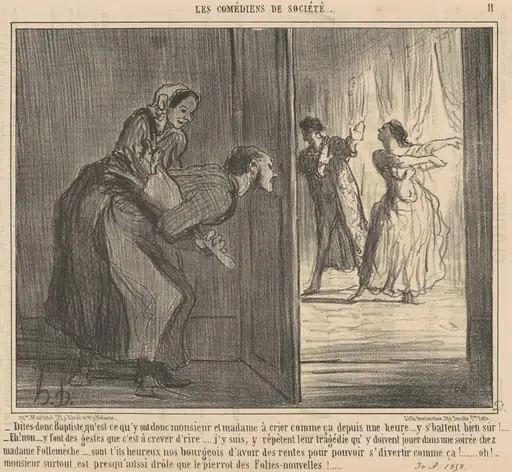 Dites-donc Baptiste ...
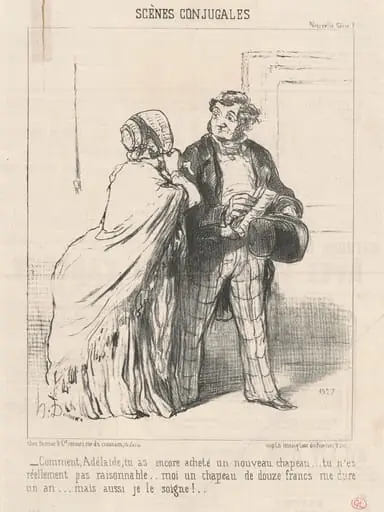 Comment ... tu as encore acheté un ... chapeau ...
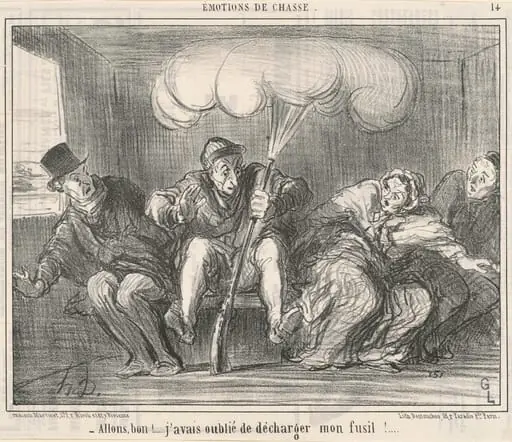 Allons Bon! J'avais oublié de décharger mon fusil!
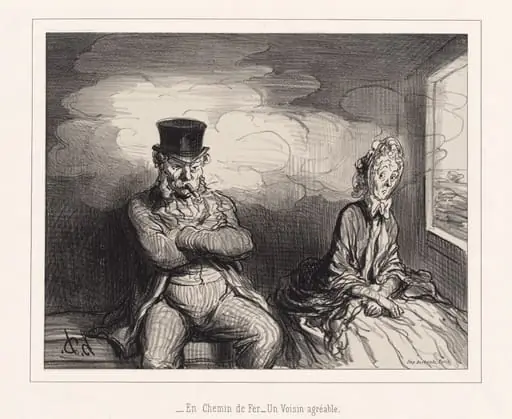 En Chemin de fer... un voisin agréable (On the Railroad: A Pleasant Neighbor)
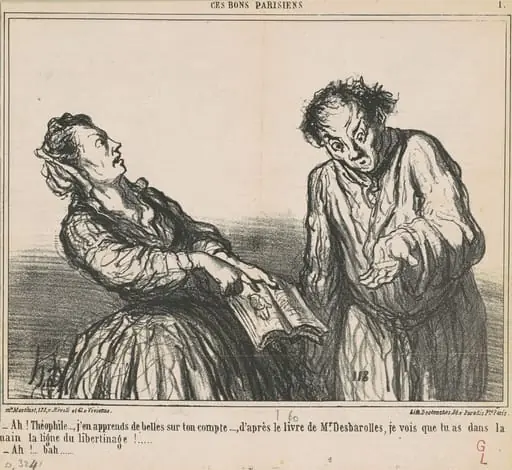 Ah! Théophile ... j'en apprends de belles ...