Artwork
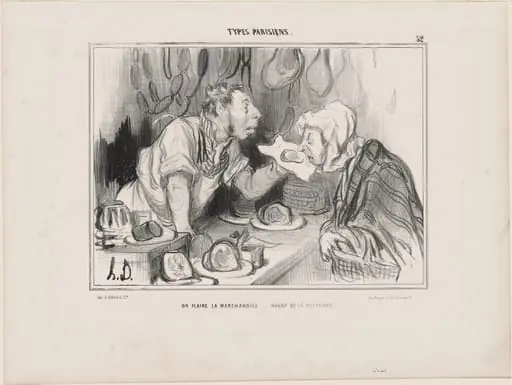
On flaire la marchandise... avant de la mécaniser!...
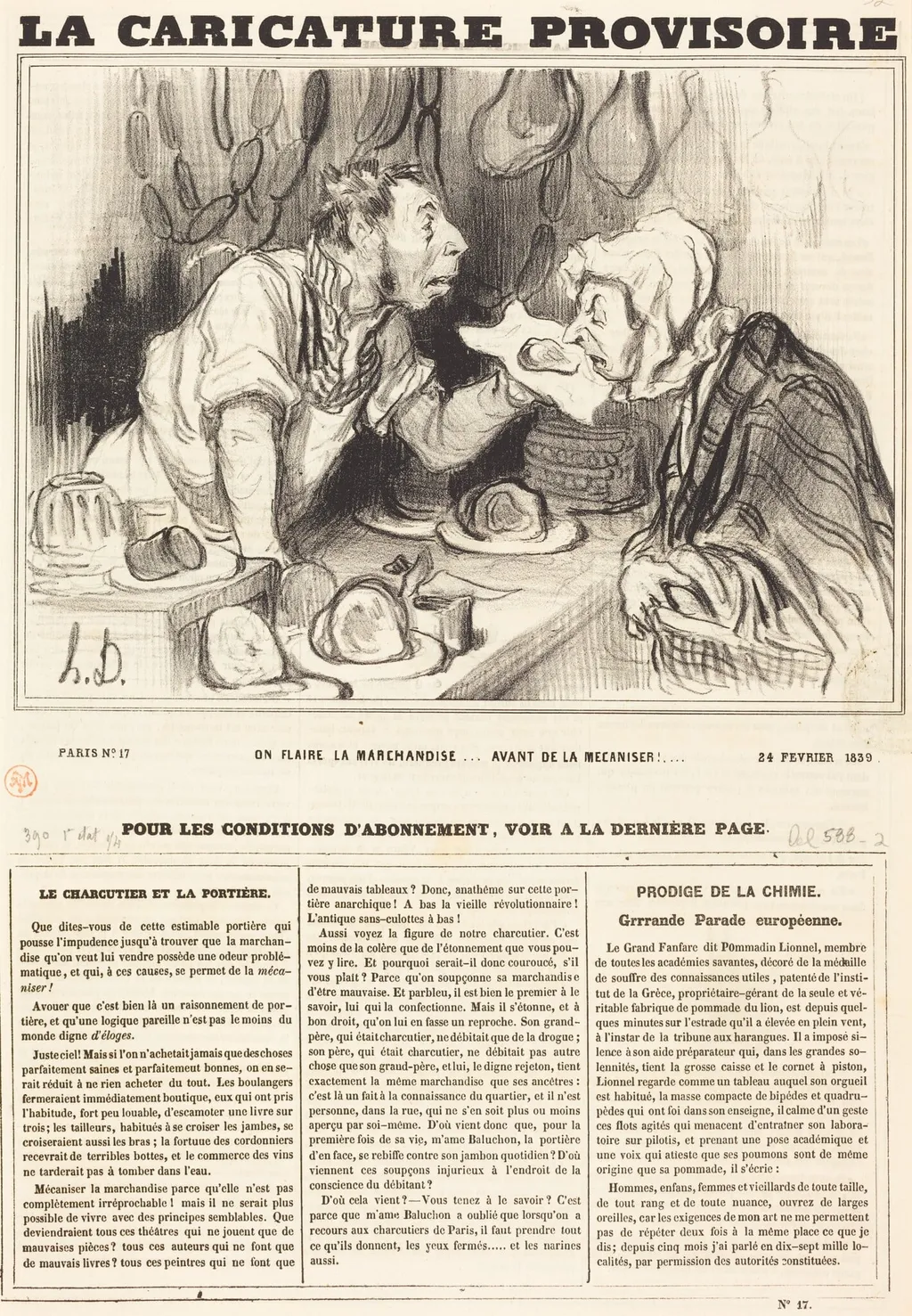
On flaire la marchandise... avant de la mécaniser!... is an ink print by the Romanticist artist Honoré Daumier. It dates from 1839 and is held in the collection of the National Gallery of Art.
About this work
Overview
* presents a cramped interior where a butcher, his hands stained with blood, leans over a meat‑laden counter opposite a displeased woman with a basket.
Honoré Daumier’s 1839 lithograph *On flaire la marchandise… avant de la mécaniser!* presents a cramped interior where a butcher, his hands stained with blood, leans over a meat‑laden counter opposite a displeased woman with a basket. Executed on newsprint, the image employs exaggerated facial features—an oversized nose and tiny eyes for the butcher, a tight‑lipped expression for the woman—to amplify its satirical tone.
Subject & Meaning
The work lampoons the commercial exchange of goods, suggesting a moral critique of greed and exploitation in everyday transactions. By portraying the butcher’s grotesque visage and the woman’s judgmental stare, Daumier underscores the tension between profit‑driven sellers and wary consumers, reflecting broader anxieties about the commodification of society in mid‑19th‑century France.
Technique & Style
Created through lithography on cheap newsprint, the print relies on bold, gestural lines and stark contrasts to convey immediacy. Daumier’s caricatural exaggeration—distorted anatomy, simplified forms, and limited shading—allows the scene to convey narrative and satire without elaborate detail, a hallmark of his printmaking practice during his prolific period of newspaper illustration.
History & Provenance
The lithograph emerged while Daumier was a regular contributor to satirical journals such as *La Caricature* and *Le Charivari*, where his republican sympathies found a public outlet. Produced for a mass‑market audience, the work circulated widely on inexpensive paper, reinforcing Daumier’s reputation as a visual commentator on the monarchy, aristocracy, and clergy.
Context
In the turbulent years following the July Revolution of 1830, French society grappled with rapid industrialization and shifting class structures. Daumier’s image reflects contemporary concerns about mechanization and the dehumanizing effects of market forces, positioning the butcher’s grotesque figure as a symbol of unchecked commercial ambition.
Artist & collection
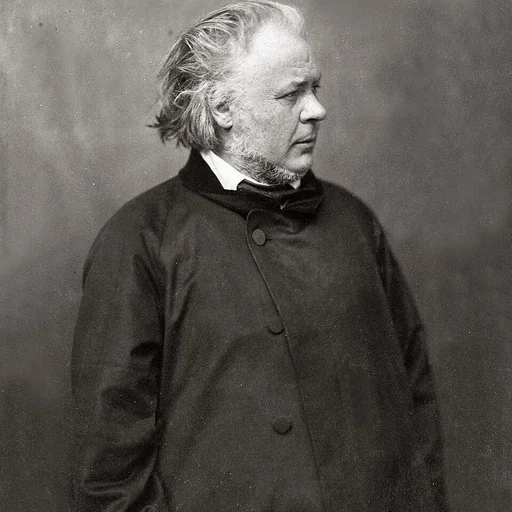
Artist
Honoré-Victorin Daumier was a French painter, sculptor, and printmaker, whose many works offer commentary on the social and political life in France, from the Revolution of 1830 to the fall of the Second French Empire in 1870.

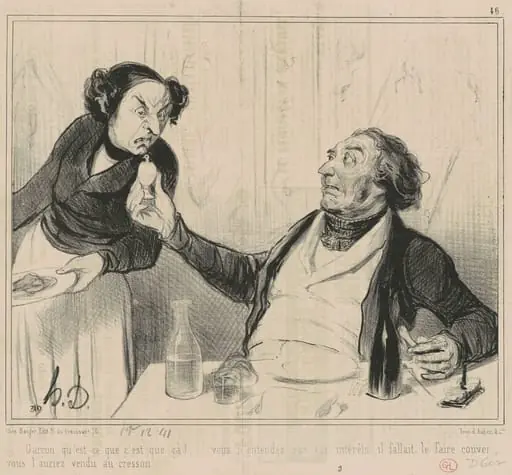 Garçon, qu'est-ce que c'est que ça?...
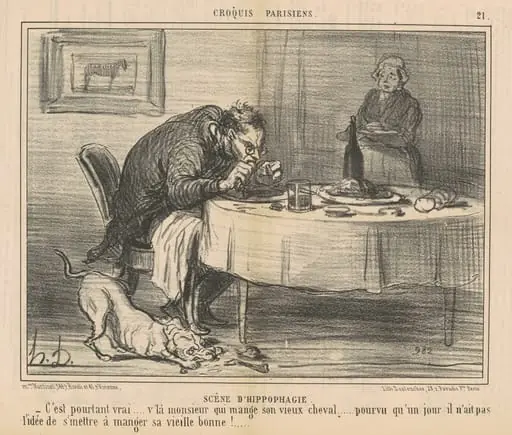 Scène d'Hippophagie
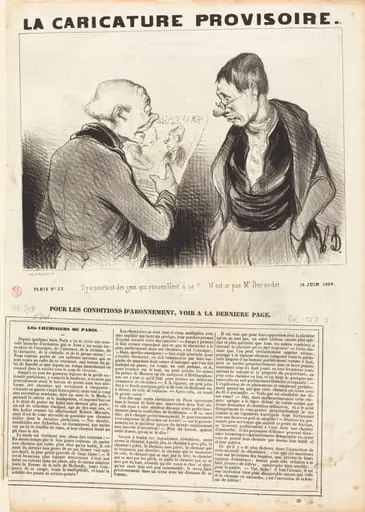 Il y a pourtant des gens qui ressemblent a ça!
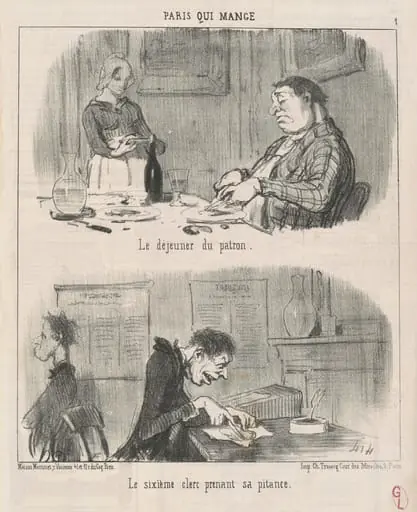 Le déjeuner du patron le sixiéme clerc ...
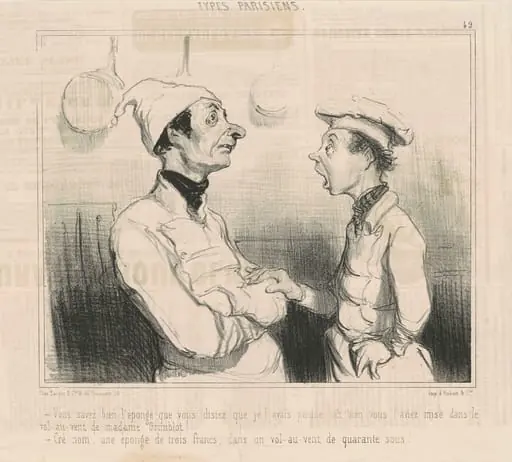 Vous savez bien l'éponge que vous disiez...
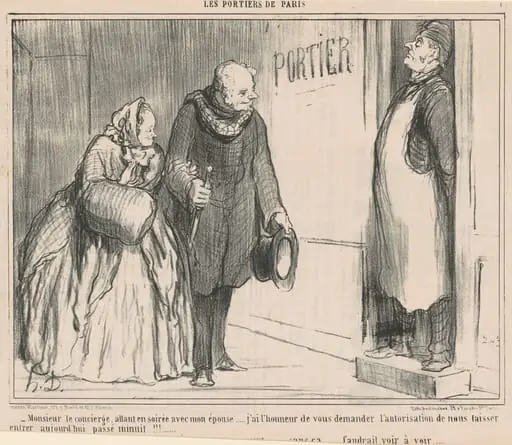 Monsieur le concierge, allant en soirée
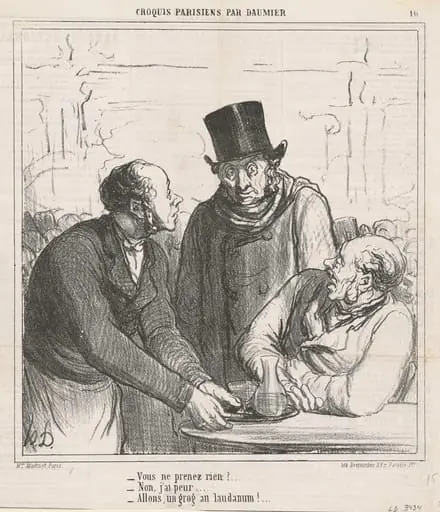 Vous ne prenez rien?
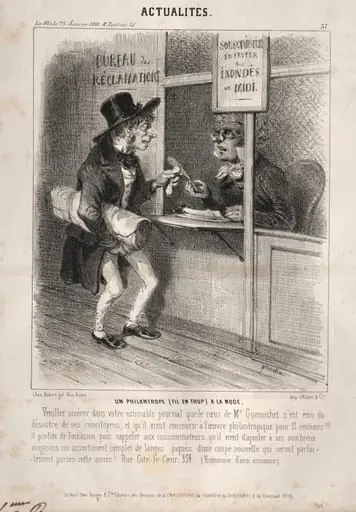 Actualités: Un Philantrope à la mode
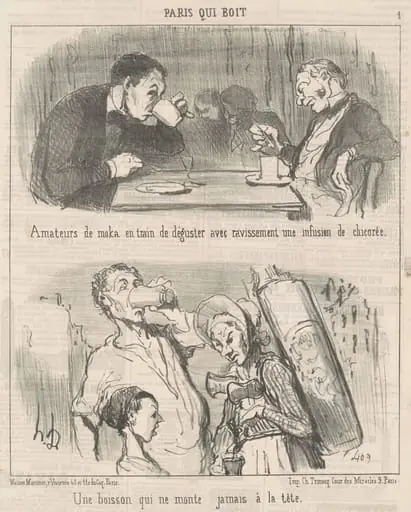 Une boisson qui ne monte jamais à tête
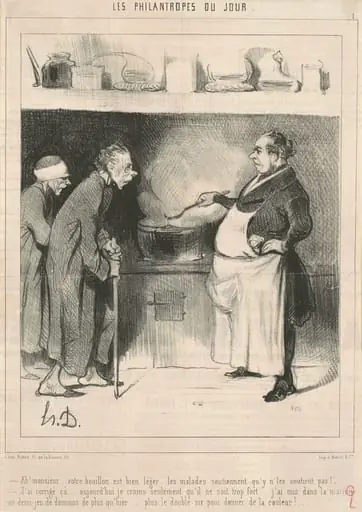 Ah! Monsieur ...votre bouillon est ...
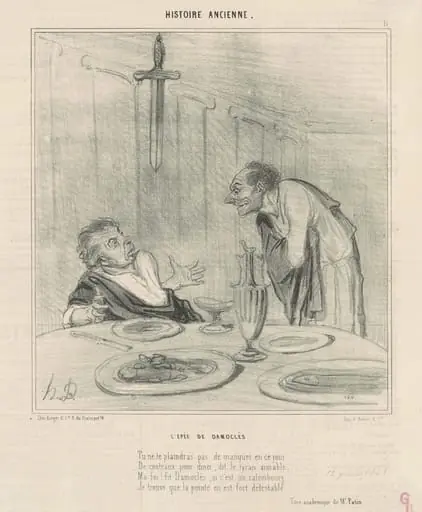 L'épée de Damoclès
 On flaire la marchandise... avant de la mécaniser!...