Artwork
J'veux a boire! Mais puisque j'vous dis ...
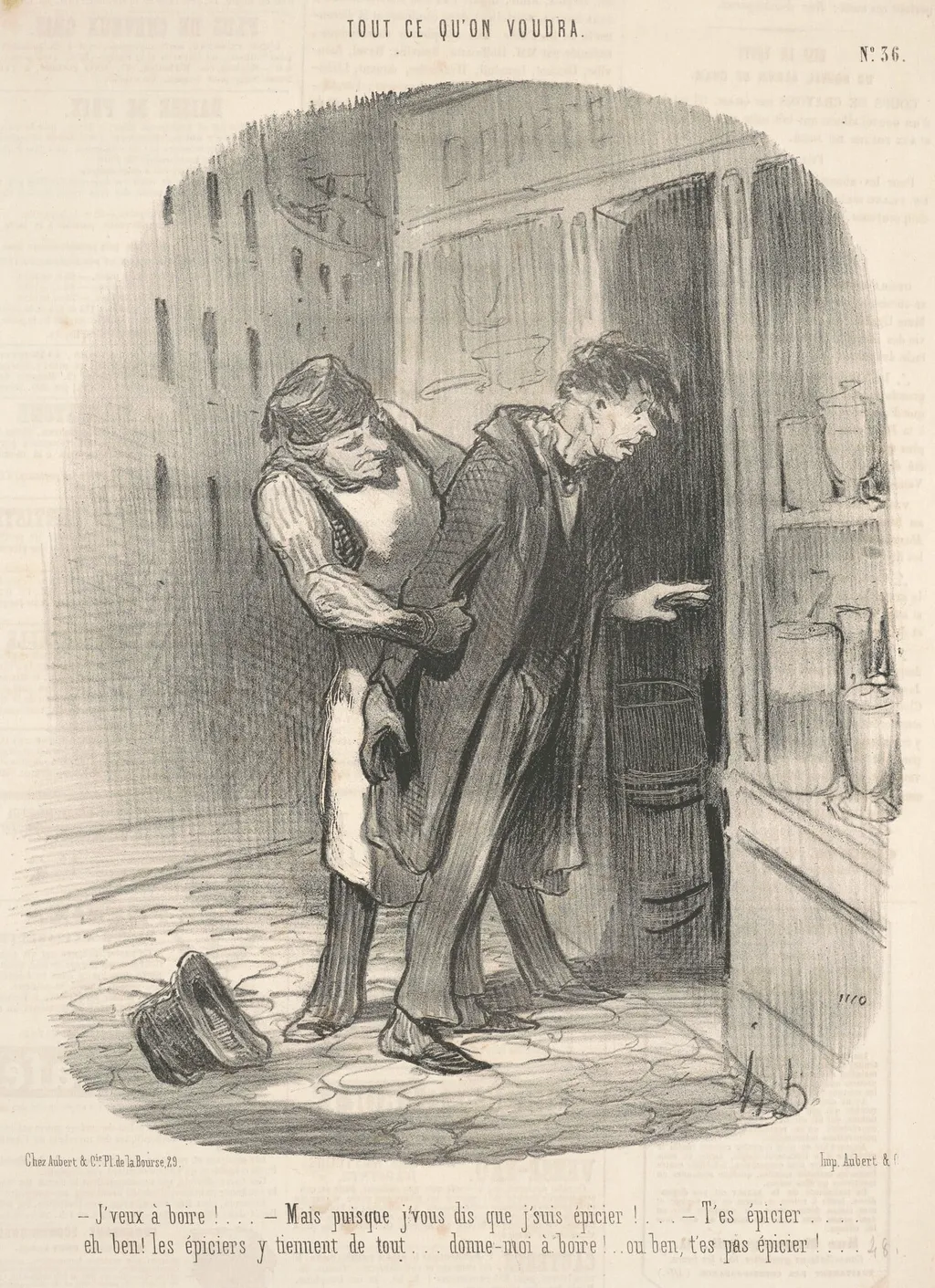
J'veux a boire! Mais puisque j'vous dis ... is an ink print by the Romanticist artist Honoré Daumier. It dates from 1849 and is held in the collection of the National Gallery of Art.
About this work
Overview
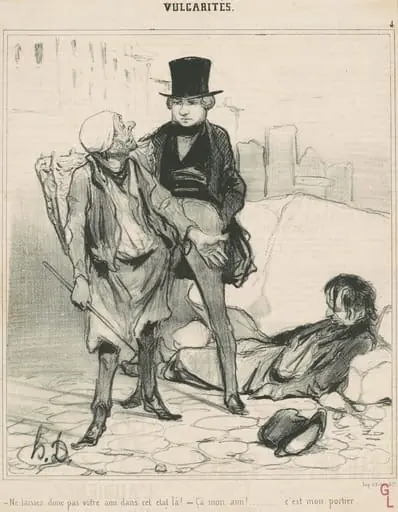
Created in 1849, this lithograph by Honoré Daumier depicts a brief encounter on a Parisian street corner. A well‑dressed gentleman in a top hat grips a cane while a disheveled beggar reaches toward him, pleading for a drink. The contrast between the two figures is sharply rendered, emphasizing the social gap that Daumier frequently explored in his work.
Subject & Meaning
The image juxtaposes wealth and poverty in a single, everyday moment.
The image juxtaposes wealth and poverty in a single, everyday moment. The affluent man's rigid posture and startled expression suggest a mixture of surprise and discomfort, while the beggar’s ragged attire and outstretched hand convey desperation. Through this direct visual opposition, Daumier comments on the precariousness of the lower classes and the indifferent attitudes of the bourgeoisie toward their plight.
Technique & Style
Daumier employed the lithographic process, allowing him to produce bold, incisive lines quickly for publication. The stark delineation of the gentleman’s crisp coat against the beggar’s tattered garments heightens the visual disparity. Fine hatching defines texture, while the limited tonal range focuses attention on gesture and expression rather than decorative detail.
History & Provenance
The print was originally issued for a daily newspaper, reaching a broad readership shortly after its creation. Its rapid dissemination reflects the 19th‑century demand for socially engaged imagery. Over time, the work entered private collections before being acquired by museum holdings, where it now serves as a document of both artistic practice and urban life in mid‑century Paris.
Artist & collection

Artist
Honoré-Victorin Daumier was a French painter, sculptor, and printmaker, whose many works offer commentary on the social and political life in France, from the Revolution of 1830 to the fall of the Second French Empire in 1870.