Artwork
Jules Bastide
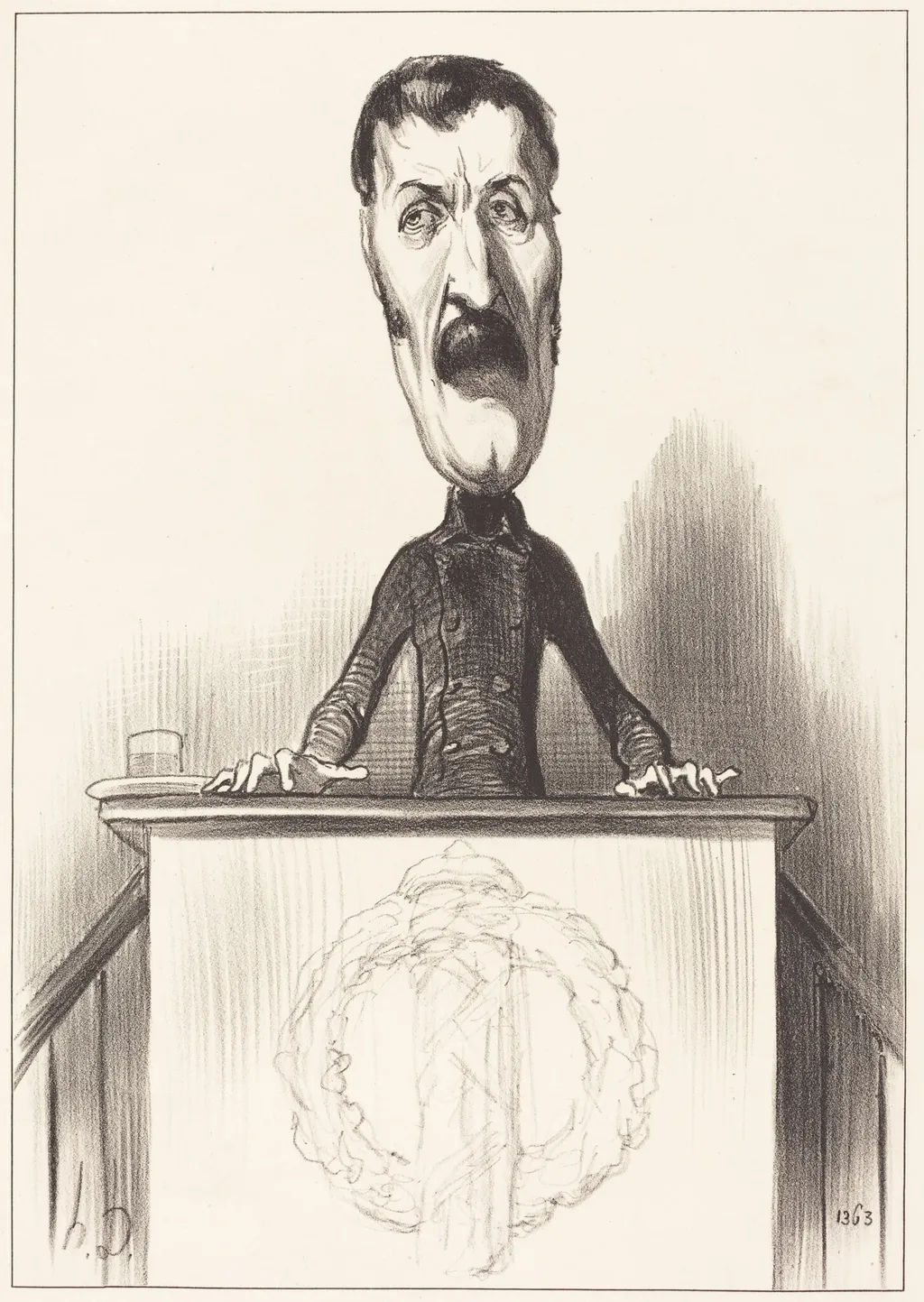
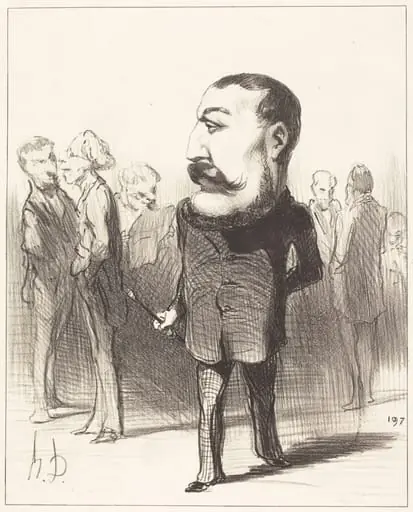
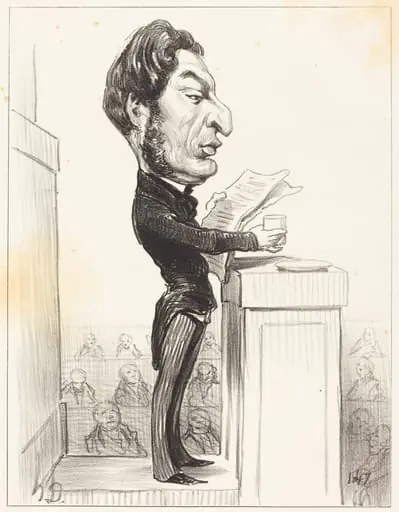
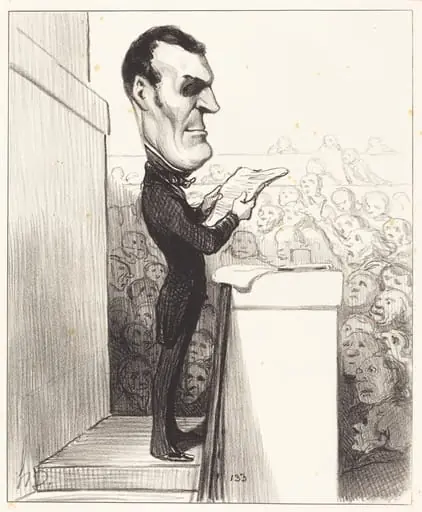
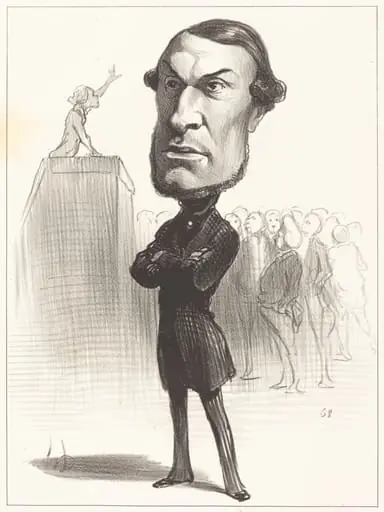
Jules Bastide is an ink print by the Romanticist artist Honoré Daumier. It dates from 1849 and is held in the collection of the National Gallery of Art.
About this work
Overview
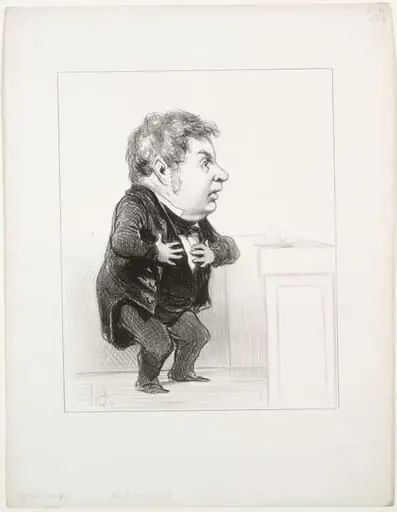
Jules Bastide is a lithograph created by Honoré Daumier in 1849, exemplifying his satirical commentary on mid-19th century French politics.
Subject & Meaning
The print depicts a figure with a disproportionately large head and tiny body, standing behind a podium. The subject’s serious, angry expression, accentuated by a prominent mustache and deep frown, suggests a caricature of a prominent political figure, likely critiquing perceived self-importance or annoyance.
Technique & Style
Daumier employs exaggeration, a common satirical device in French caricature of the time, to convey his message. The simple background, reduced to a few lines suggesting a curtain, focuses attention on the subject, while the pose—hands resting on the podium’s edge—adds to the sense of oratory gravity.
History & Provenance
Created during Daumier’s period of republican democratic activism, *Jules Bastide* was likely published in a satirical journal such as *La Caricature* or *Le Charivari*, though specific publication details for this work are not provided.
Context
This lithograph reflects Daumier’s broader critique of French political and social hierarchies during the mid-19th century, targeting the excesses of monarchy, aristocracy, and clergy through satire.
Artist & collection
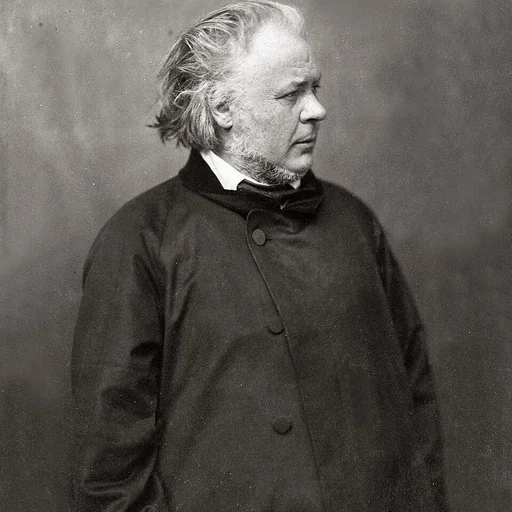
Artist
Honoré-Victorin Daumier was a French painter, sculptor, and printmaker, whose many works offer commentary on the social and political life in France, from the Revolution of 1830 to the fall of the Second French Empire in 1870.