Artwork
Eugène Rouher
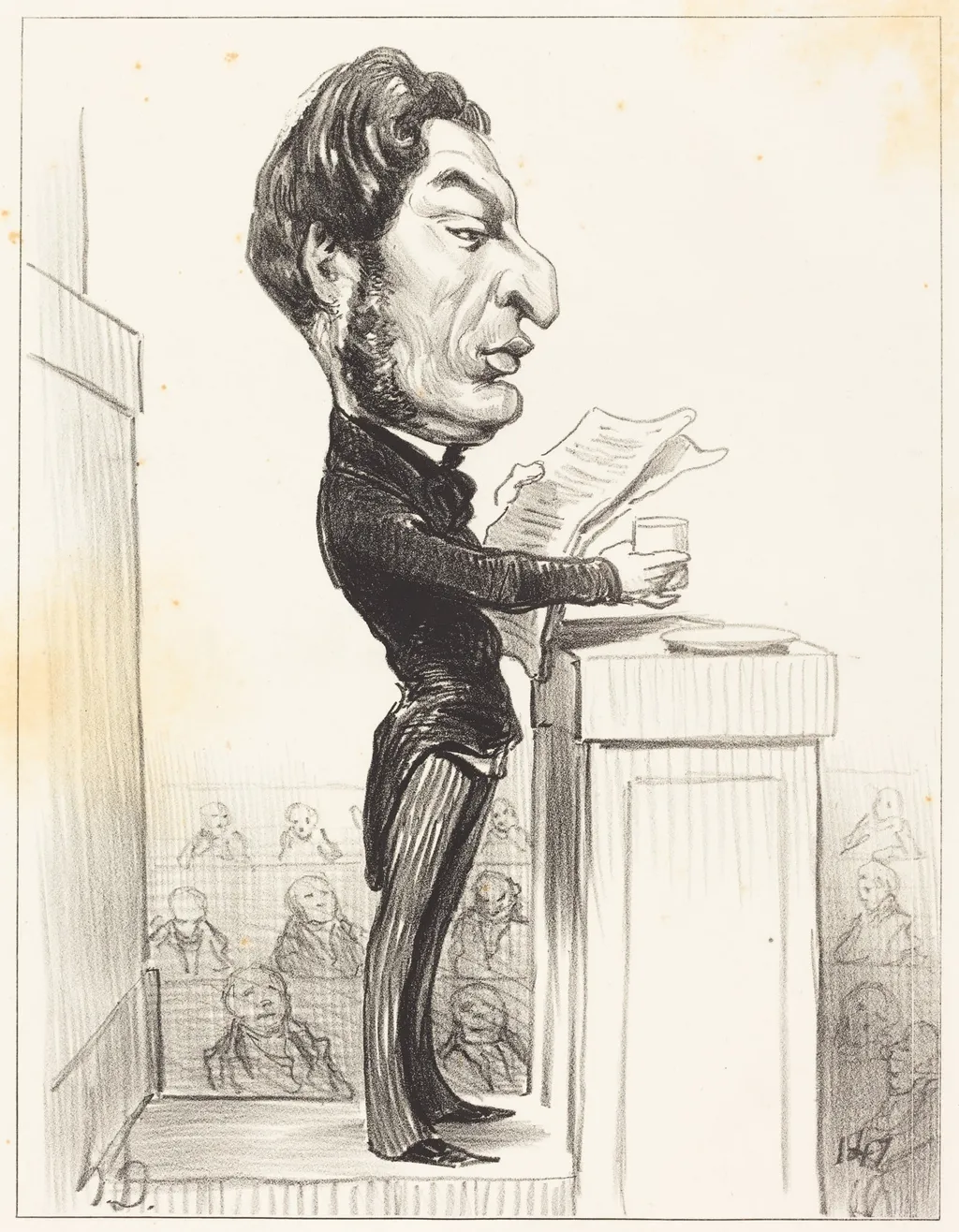
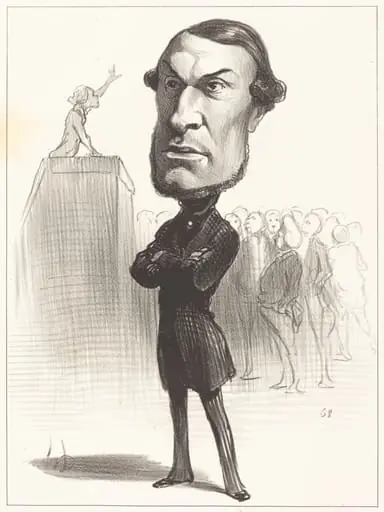
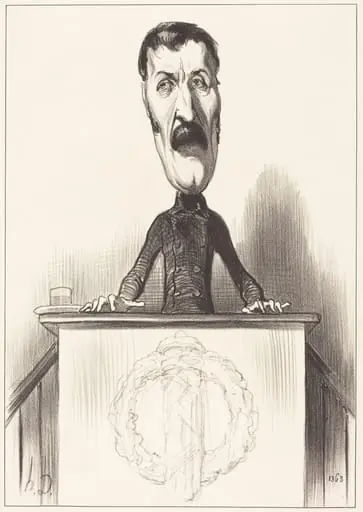
Eugène Rouher is an ink print by the Impressionist artist Honoré Daumier. It dates from 1850 and is held in the collection of the National Gallery of Art.
About this work
Overview
Eugène Rouher is a lithograph by Honoré Daumier, created in 1850 as part of his sustained engagement with French political life.
Eugène Rouher is a lithograph by Honoré Daumier, created in 1850 as part of his sustained engagement with French political life. Executed in the medium of lithography, the work captures a public figure of the Second Empire through sharp visual shorthand. Daumier, known for his incisive prints in republican journals, used this technique to circulate critical imagery widely, turning newspaper illustrations into tools of social observation.
Subject & Meaning
The figure depicted is Eugène Rouher, a prominent minister under Napoleon III, portrayed mid-speech at a public podium. His exaggerated features—prominent ears, enlarged head, and rigid posture—signal Daumier’s satirical intent, framing Rouher as a self-important bureaucrat. The small, distant crowd behind him underscores the performative nature of political authority, suggesting detachment between leader and populace.
Technique & Style
Daumier employed rapid, fluid lines and tonal washes typical of lithographic sketching to convey immediacy. The figure looms large against a sparse background, with minimal detail in the crowd to emphasize the subject’s dominance. Shading is economical, used to model volume rather than realism, reinforcing the caricature’s expressive, almost theatrical quality. The work reads as a visual note, captured in the moment.
History & Provenance
Created during Daumier’s prolific period for publications like *Le Charivari*, the print was likely distributed as a standalone sheet or in a periodical. Though not as widely reproduced as his earlier republican satires, it reflects his continued focus on imperial officials after the 1848 revolution. Its survival in museum collections attests to its status as a document of political visual culture in mid-19th-century France.
Context
Daumier produced this work amid the consolidation of Louis-Napoléon Bonaparte’s regime, when press freedoms were curtailed and political caricature faced increasing censorship. Despite these pressures, he persisted in depicting state figures with mocking precision. Rouher, as a key administrator of the empire’s bureaucracy, became a natural target for critique, embodying the centralized power Daumier distrusted.
Legacy
The lithograph stands as an example of how printmaking served as a democratic medium for political dissent. Daumier’s ability to distill complex figures into instantly recognizable caricatures influenced later generations of editorial illustrators. Though not celebrated in his time as fine art, such works are now recognized for their role in shaping public perception of power through visual satire.
Artist & collection
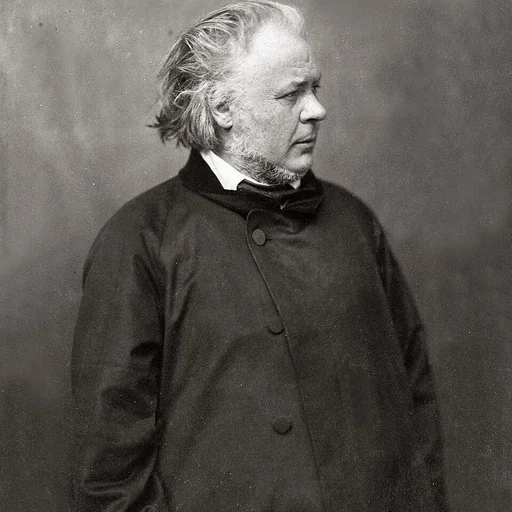
Artist
Honoré-Victorin Daumier was a French painter, sculptor, and printmaker, whose many works offer commentary on the social and political life in France, from the Revolution of 1830 to the fall of the Second French Empire in 1870.