Artwork
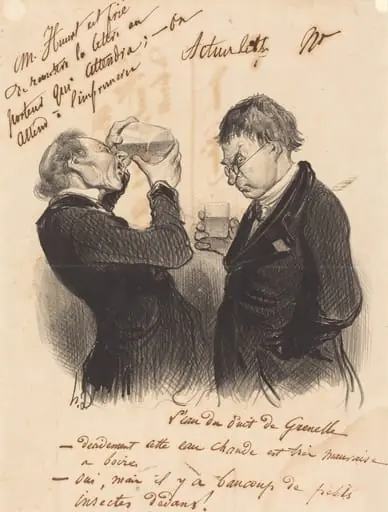
L'Eau du puits de Grenelle
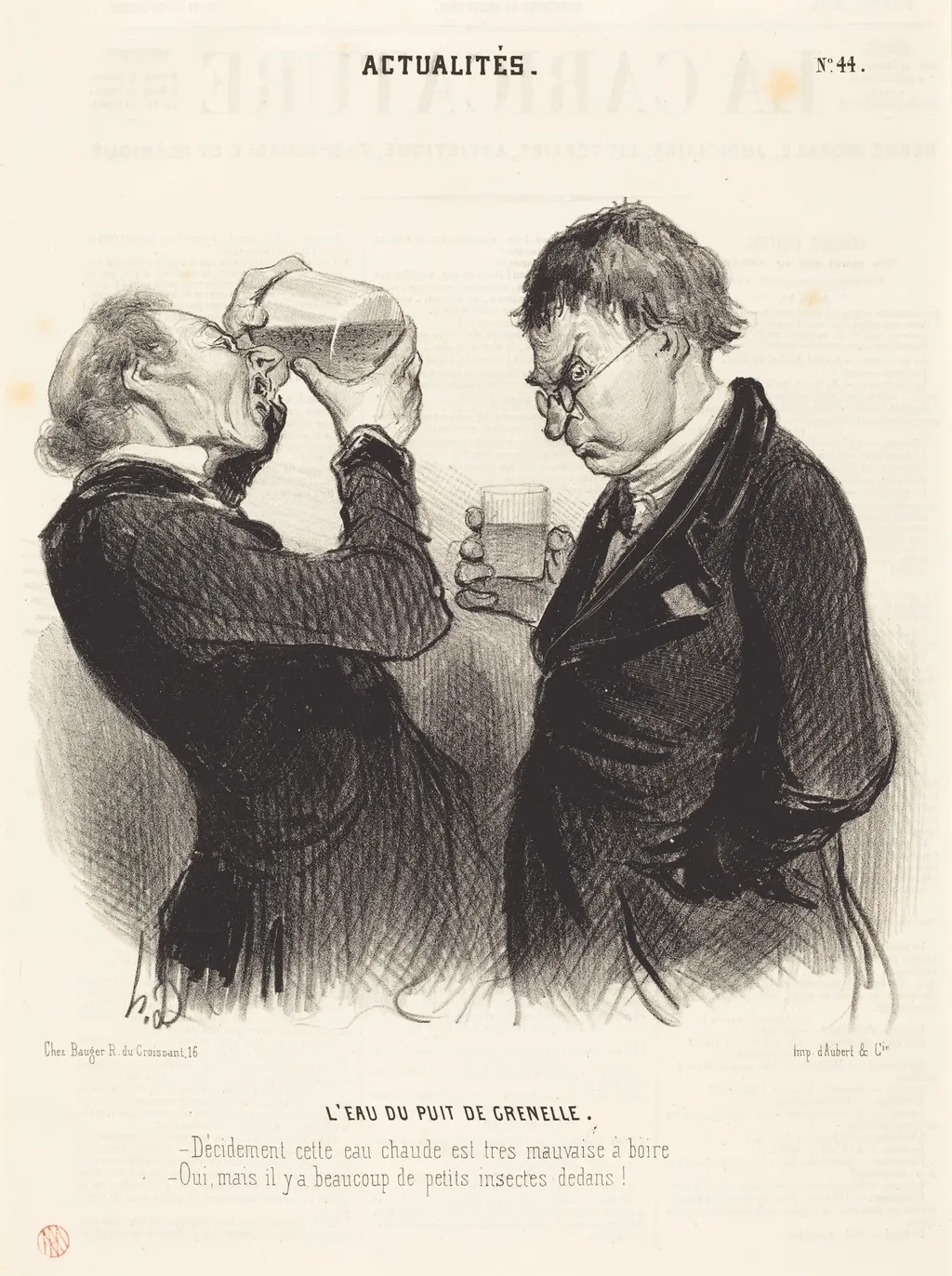
L'Eau du puits de Grenelle is an ink print by the Romanticist artist Honoré Daumier. It dates from 1841 and is held in the collection of the National Gallery of Art.
About this work
Overview
Created in 1841, *L'Eau du puits de Grenelle* is a lithographic print by Honoré Daumier. Executed on low‑grade newsprint, the work exemplifies the artist’s prolific output of socially charged images that circulated widely in the press of the era. Its modest size and inexpensive material underscore its function as a quickly produced commentary rather than a formal artwork.
Subject & Meaning
The composition depicts a gentleman wearing a top hat bending to drink from a Parisian well. The figure’s ordinary activity is rendered with a hint of irony, inviting viewers to consider the everyday realities of urban life and the disparities between the bourgeois façade and the underlying social conditions of the time.
Technique & Style
Daumery employed a lithographic process that left the ink’s lines deliberately rough and sketch‑like, contrasting with the smoother prints typical of the period. The use of cheap newsprint and a seemingly hasty hand conveys a sense of immediacy, as if the image were a snapshot taken on the spot, reinforcing its satirical intent.
Context
At the time of its production Daumier was a prominent contributor to satirical journals such as *La Caricature* and *Le Charivari*. His republican sympathies drove him to target the monarchy, clergy, and other authority figures, using the accessible medium of print to reach a broad, politically engaged readership.
History & Provenance
The lithograph entered the collection of the National Gallery of Art in Washington, D.C., where it is displayed among other works that illustrate Daumier’s engagement with 19th‑century French political life. Its presence in a major museum highlights the enduring relevance of his incisive visual commentary.
Own this work as a print
Artist & collection

Artist
Honoré-Victorin Daumier was a French painter, sculptor, and printmaker, whose many works offer commentary on the social and political life in France, from the Revolution of 1830 to the fall of the Second French Empire in 1870.









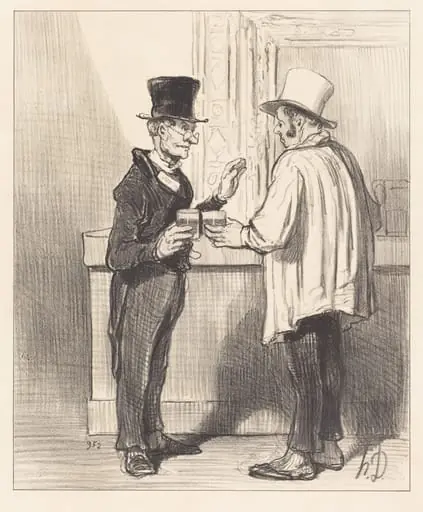 Un Défenseur... causant... dans son cabinet habituel
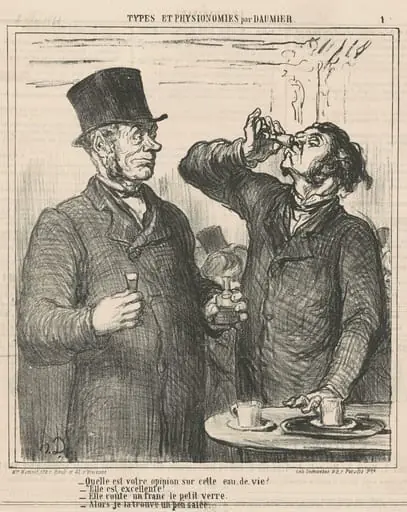 Quelle est votre opinion sur ...
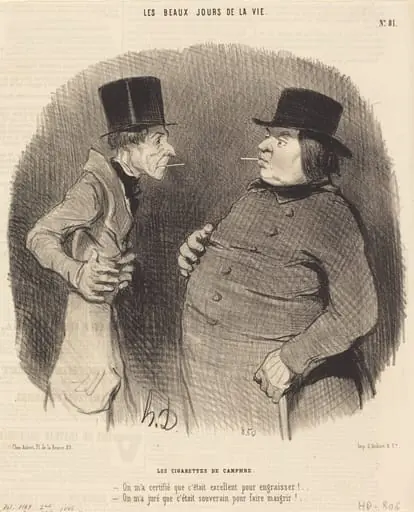 Les Cigarettes de camphre
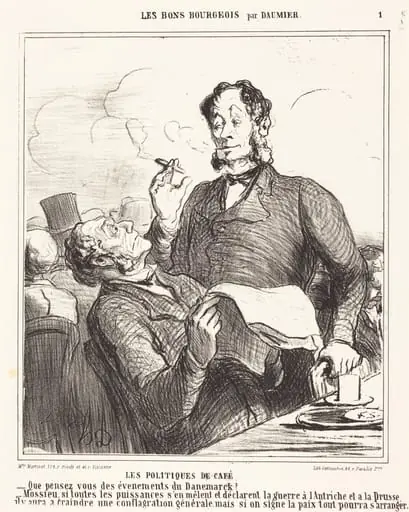 Les Politiques de café
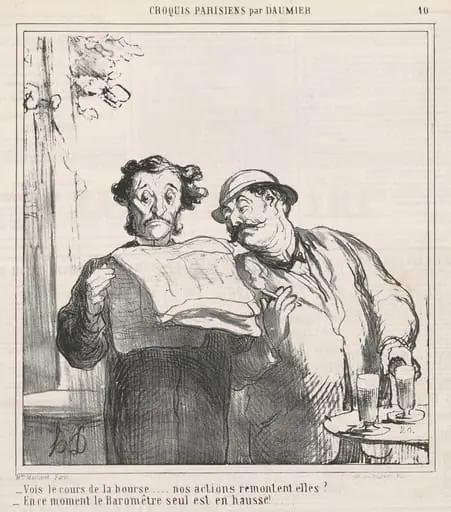 Vois le cours de la bourse
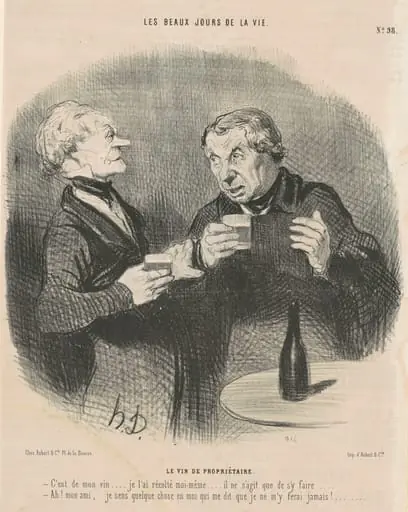 Le vin de propriétaire
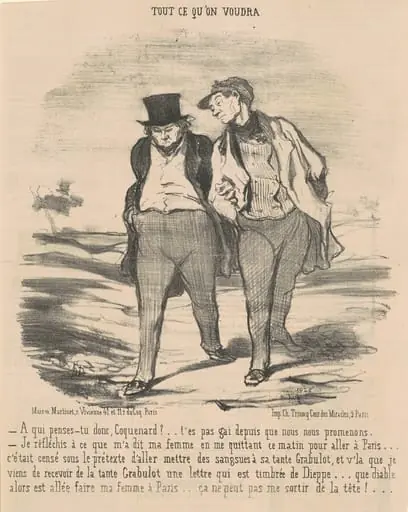 A qui penses-tu donc, coquenard? ...
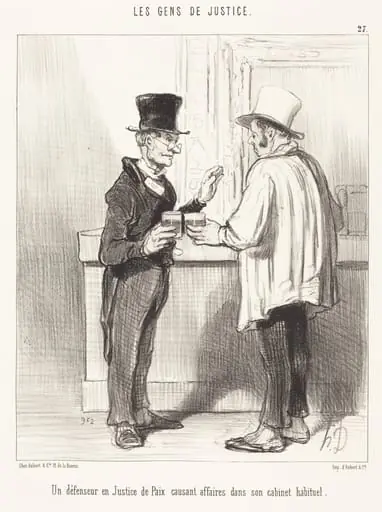 Un Défenseur... causant... dans son cabinet habituel
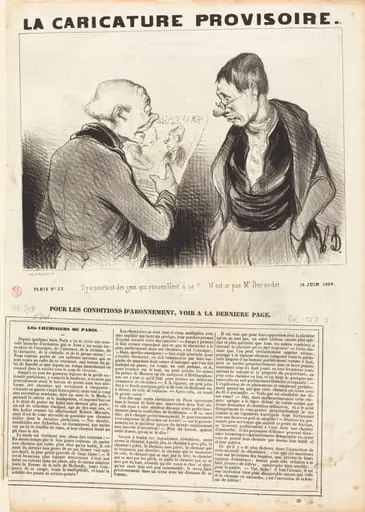 Il y a pourtant des gens qui ressemblent a ça!
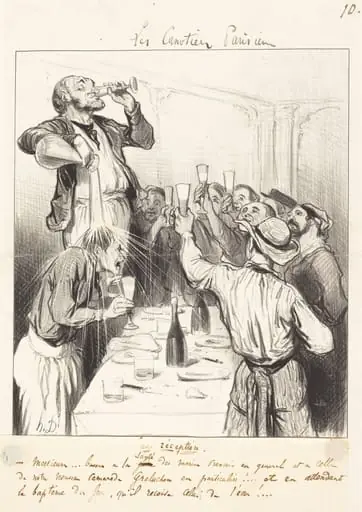 Une Réception
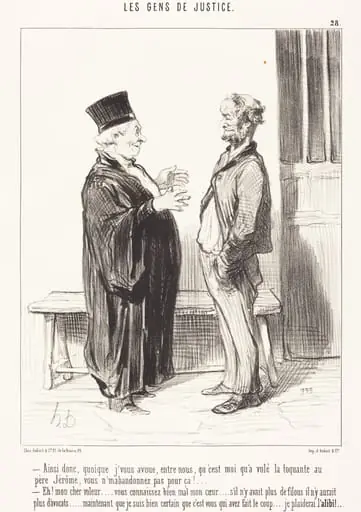 Ainsi donc, quoique j'vous avoue...
 L'Eau du puits de Grenelle