Artwork
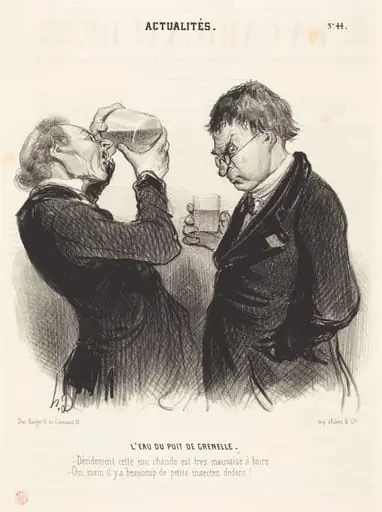
L'Eau du puits de Grenelle
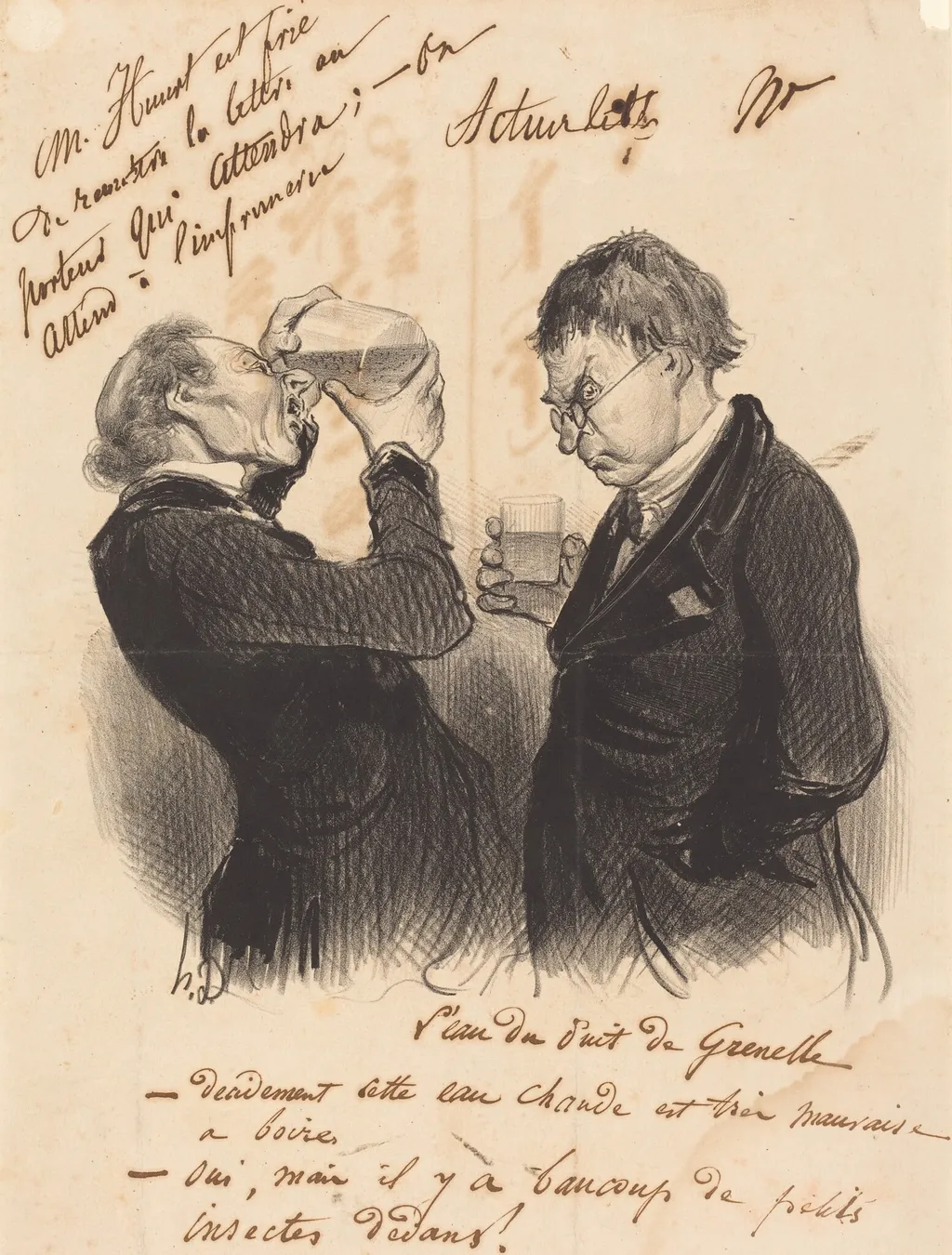
L'Eau du puits de Grenelle is an ink print by the Romanticist artist Honoré Daumier. It dates from 1841 and is held in the collection of the National Gallery of Art.
About this work
This lithograph shows Daumier’s sharp eye for everyday scenes and his knack for quick, bold lines.
A man in a top hat carries a bucket across a sunlit Paris street.
This lithograph shows Daumier’s sharp eye for everyday scenes and his knack for quick, bold lines.
He often mocked city life in newspapers.
Look for the hat’s shadow stretching long under the midday sun.
Daumier made this image around 1841, long before color printing took off.
It’s a snapshot of a moment, not a grand scene.
Check out Daumier, Honoré next.
Overview
Created in 1841, *L'Eau du puits de Grenelle* is a lithograph by Honoré Daumier that captures a quiet urban moment in Paris. As part of his prolific output for satirical journals, the print reflects his focus on ordinary life rather than grand historical narratives. Executed in black ink on paper, it relies on line and contrast to convey meaning, typical of lithographic techniques before color printing became common.
Subject & Meaning
The image depicts a man in a top hat carrying a bucket of water through a sunlit street, a routine task that underscores the daily labor of city dwellers. The hat, a symbol of bourgeois status, contrasts with the physical effort of the task, subtly critiquing social pretensions. Daumier frames this mundane act with irony, inviting viewers to consider the gap between appearance and reality in urban society.
Technique & Style
Daumier employed bold, fluid lines and strong tonal contrasts to render the scene with immediacy. The long shadow cast by the hat emphasizes the midday sun and adds depth to the composition. His rapid, expressive draftsmanship, honed through newspaper illustration, prioritizes observation over detail, capturing motion and character in minimal strokes typical of lithographic speed and spontaneity.
History & Provenance
The print was produced during Daumier’s most active period for political satire, published in *Le Charivari* around 1841. Though not signed or dated by the artist, its style and context align with his known work from that year. It entered public collections in the late 19th or early 20th century, preserved as an example of 19th-century French graphic satire rather than as a fine art object.
Context
In early 1840s Paris, lithography was the dominant medium for mass-circulated illustrations. Daumier’s work responded to the growing urban middle class and the tensions of the July Monarchy. His images, often censored, documented the rhythms of city life — water carriers, street vendors, commuters — revealing social hierarchies through unembellished observation rather than overt political imagery.
Legacy
Daumier’s lithographs, including this one, influenced later realist and modernist artists by demonstrating how everyday scenes could carry social weight. His ability to distill complex societal observations into single, unadorned images helped redefine printmaking as a vehicle for critical commentary, paving the way for 20th-century graphic journalism and documentary art.
Artist & collection

Artist
Honoré-Victorin Daumier was a French painter, sculptor, and printmaker, whose many works offer commentary on the social and political life in France, from the Revolution of 1830 to the fall of the Second French Empire in 1870.









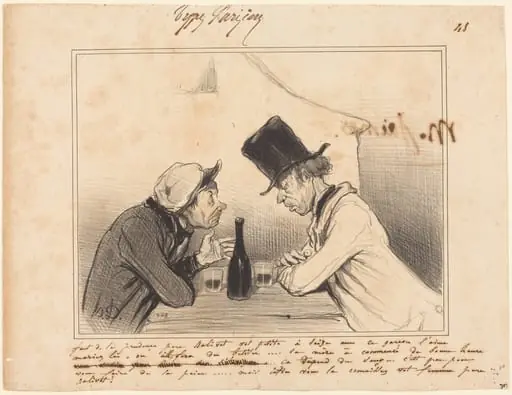 Faut de la prudence père Balivot, vot petite a seize ans...
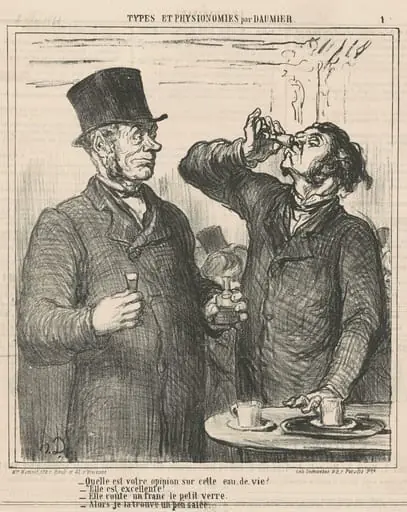 Quelle est votre opinion sur ...
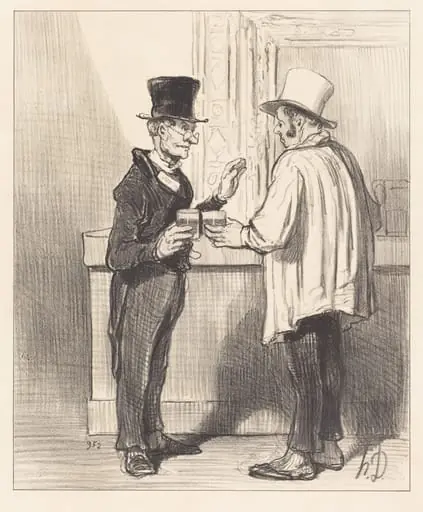 Un Défenseur... causant... dans son cabinet habituel
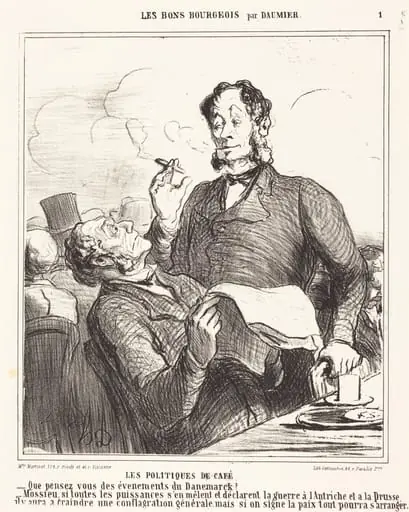 Les Politiques de café
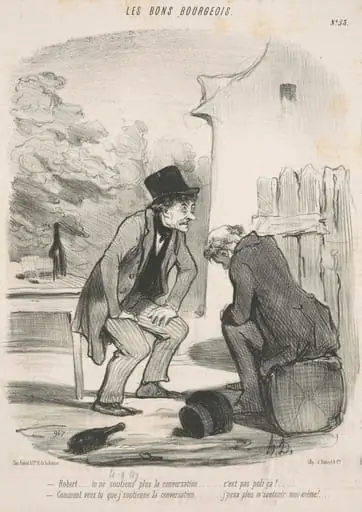 Robert ... tu ne soutiens plus la conversation ...
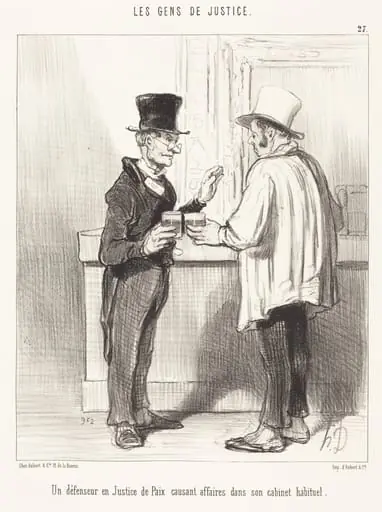 Un Défenseur... causant... dans son cabinet habituel
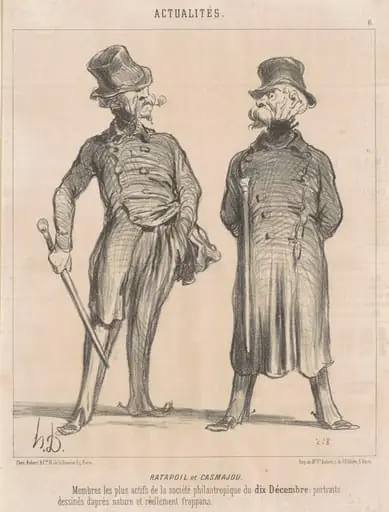 Ratapoil et Casmajou
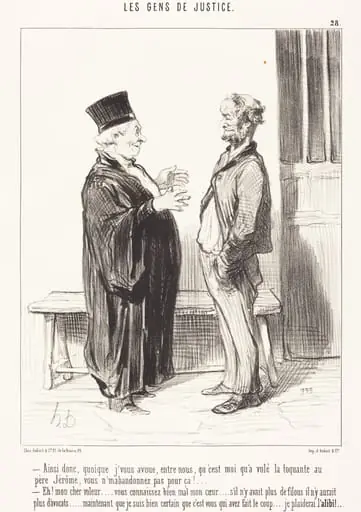 Ainsi donc, quoique j'vous avoue...
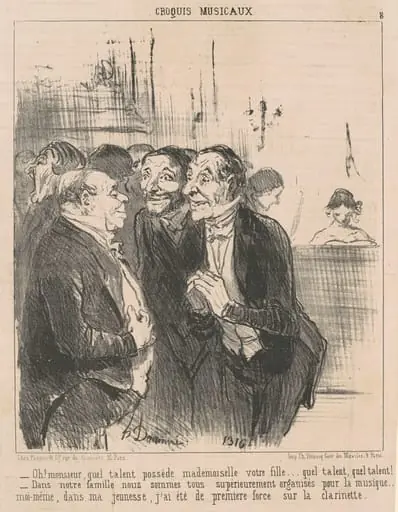 Oh! Monsieur, quel talent possède ...
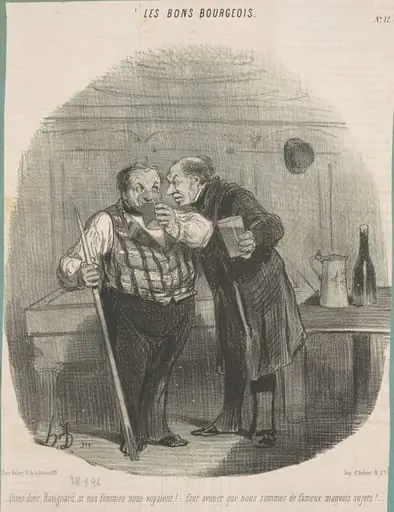 Dis donc, ravignard, si nos femmes nous voyaient! ...
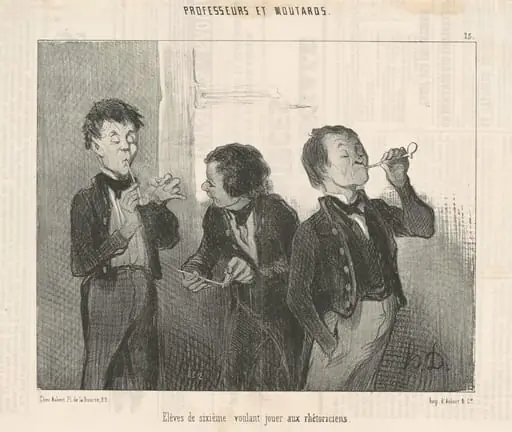 Eléves de sixième voulant jouer aux rhétoriciens
 L'Eau du puits de Grenelle