Artwork
La femme doit suivre son mari ...
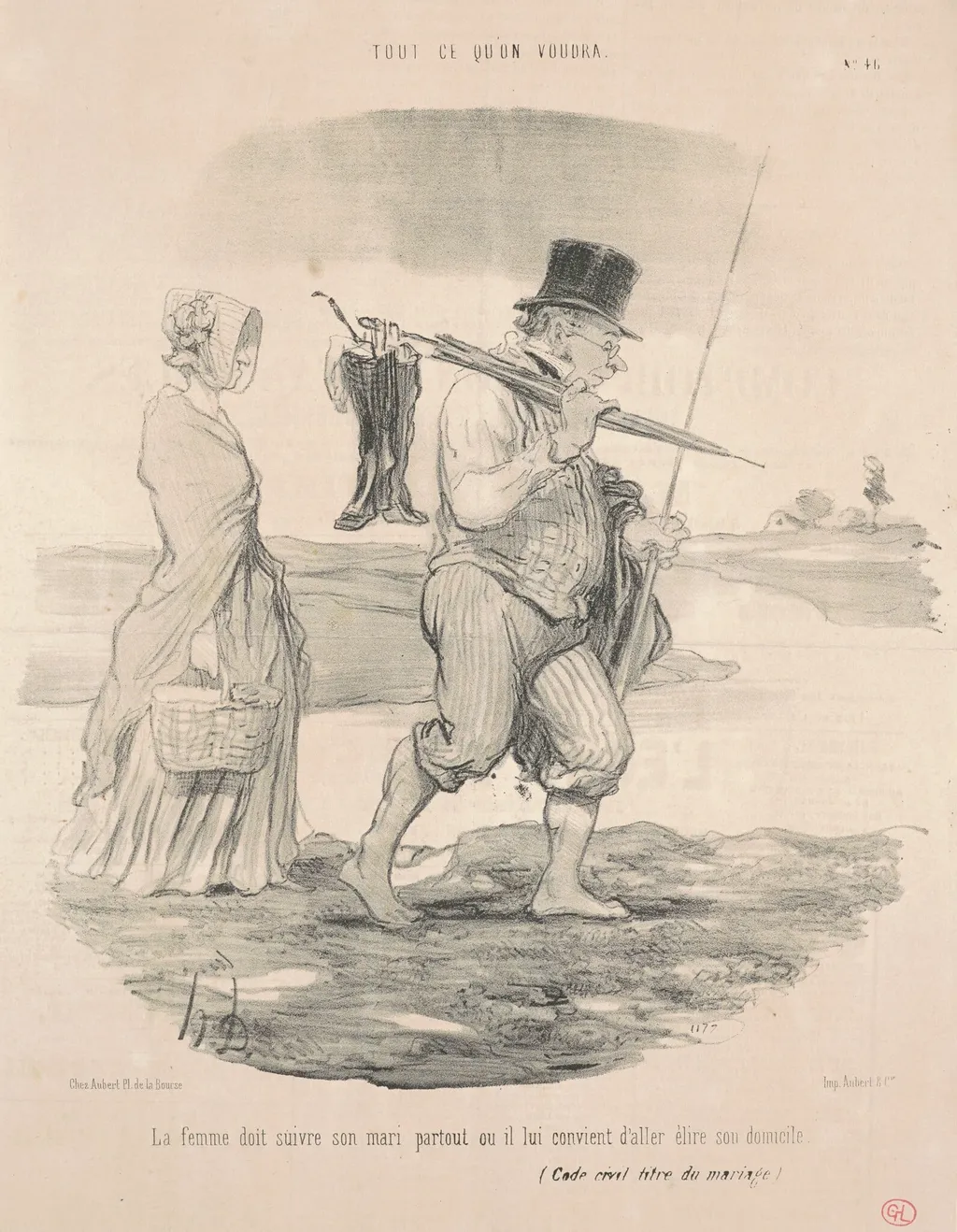
La femme doit suivre son mari ... is an ink print by the Romanticist artist Honoré Daumier. It dates from 1848 and is held in the collection of the National Gallery of Art.
About this work
Overview
La femme doit suivre son mari is a lithograph by Honoré Daumier, dated 1848, portraying a couple navigating a muddy path, with the man leading and the woman following, her gaze downward.
Subject & Meaning
The work illustrates the societal hierarchy of 19th-century France, where men held superior power in relationships. The contrast between the man's confident stride and the woman's downcast, trailing figure emphasizes the gender dynamics of the era.
Technique & Style
Executed in lithography, the piece showcases Daumier's use of this medium to convey nuanced social commentary through simple yet expressive lines and contrasting postures.
History & Provenance
Created in 1848, the lithograph reflects the social realities of its time. Provenance details are not specified in available information.
Context
Emerging amidst 19th-century French societal norms, the work critiques the expected roles of men and women, aligning with Daumier's broader themes of social observation and commentary.
Legacy
La femme doit suivre son mari contributes to Daumier's legacy as a keen observer of social dynamics, influencing subsequent artists in depicting everyday life with underlying commentary on societal structures.
Artist & collection
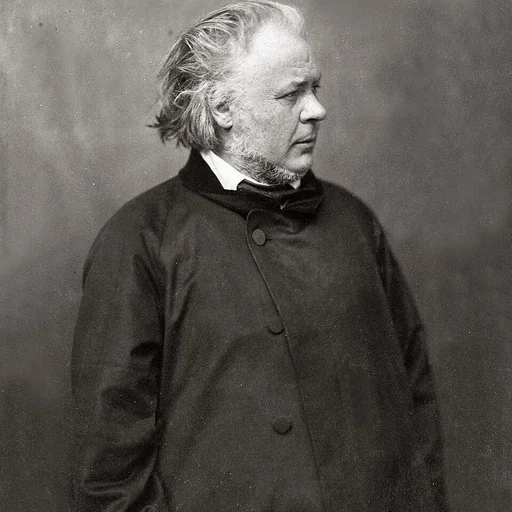
Artist
Honoré-Victorin Daumier was a French painter, sculptor, and printmaker, whose many works offer commentary on the social and political life in France, from the Revolution of 1830 to the fall of the Second French Empire in 1870.

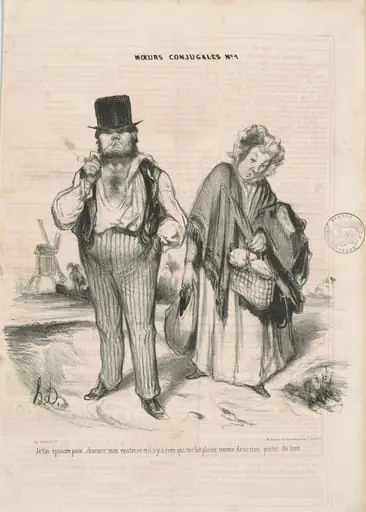 Je t'ai épousé pour charmer mon existence...
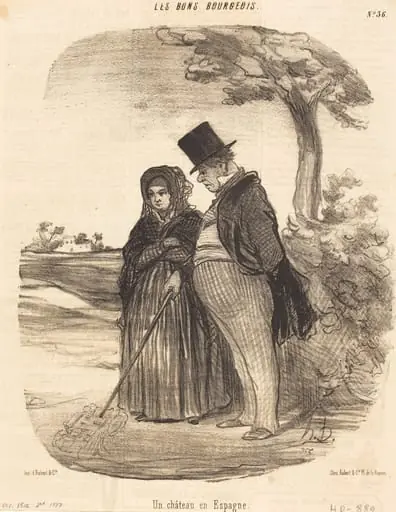 Un Chateau en Espagne
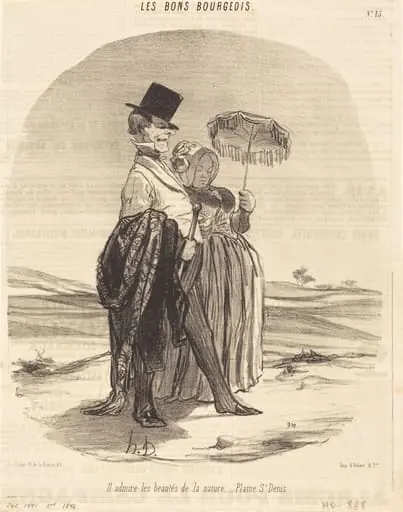 Il admire les beautés de la nature - Plaine St. Denis
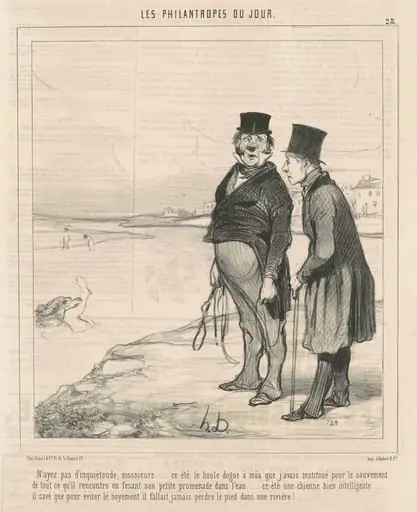 N'ayez pas d'inquiètoude ...
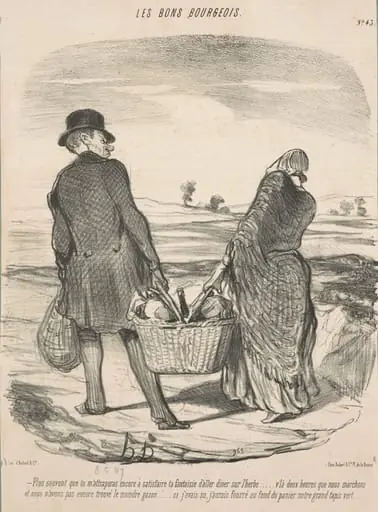 Plus souvent que tu m'attraperas encore à satisfaire ta fantaisie d'aller dîner sur l'herbe . . . V'là deux heures que nous marchons et nous n'avons pas encore trouvé le moindre qazon . . . Si j'avais su, j'aurais fourré au fond du panier notre grand tapis vert.
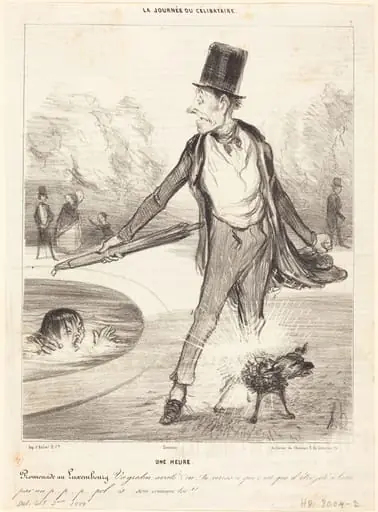 Une heure - Promenade au Luxembourg
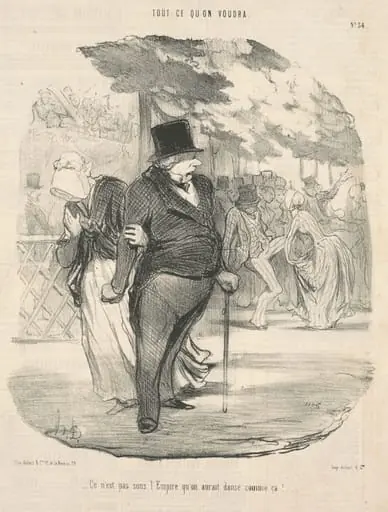 Ce n'est pas sous l"empire qu'on aurait dansé comme ca! ...
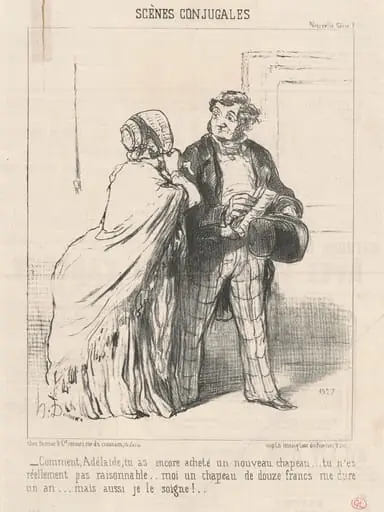 Comment ... tu as encore acheté un ... chapeau ...