Artwork
Je t'ai épousé pour charmer mon existence...
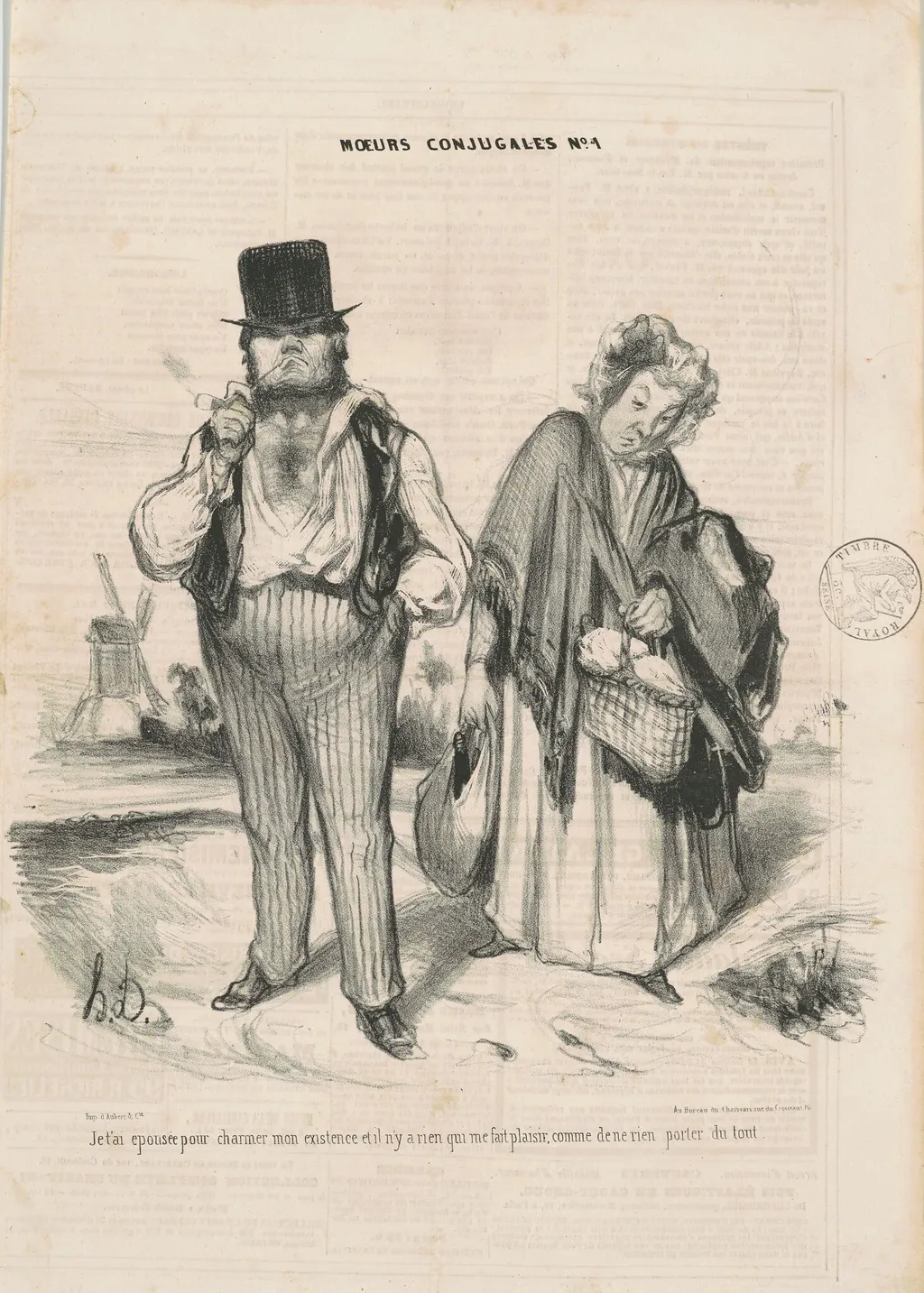
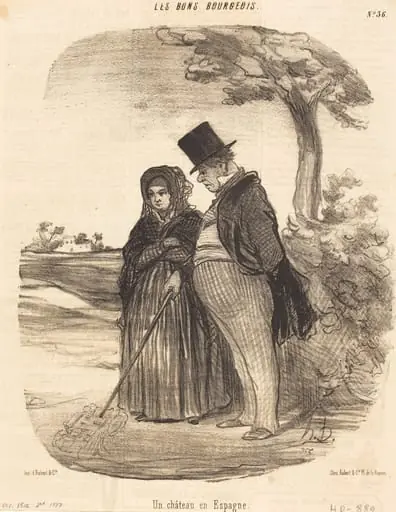
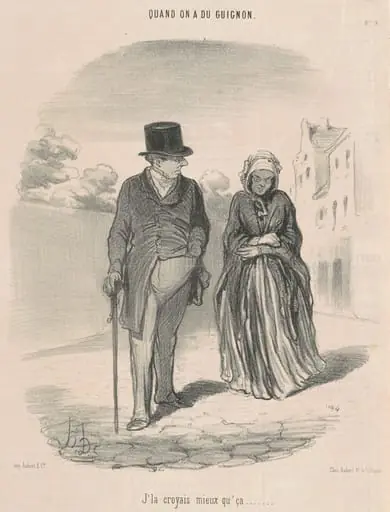
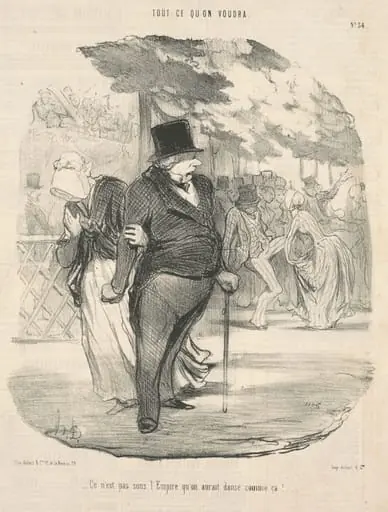
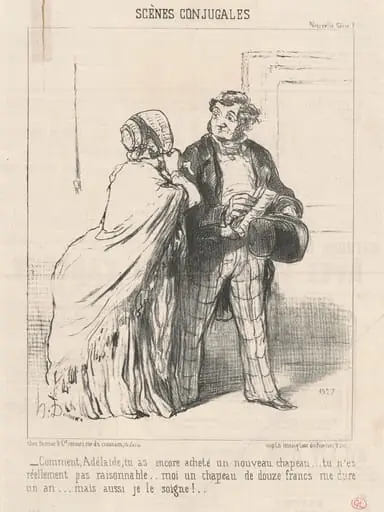
Je t'ai épousé pour charmer mon existence... is an ink print by the Romanticist artist Honoré Daumier. It dates from 1839 and is held in the collection of the National Gallery of Art.
About this work
Overview
This lithograph by Honoré Daumier depicts a rural couple in a quiet, unidealized moment. The work is part of his broader series of social observations, rendered in the accessible medium of print. Its title, a wry French phrase, suggests irony in domestic union, framing the image as both intimate and critical.
Subject & Meaning
The man, relaxed with a pipe, appears detached from labor, while the woman bears a heavy basket, her posture tense with exertion. Their contrasting postures highlight gendered divisions in rural labor. The title’s ironic tone underscores the disparity between marital promise and lived reality, reflecting Daumier’s quiet critique of social norms.
Technique & Style
Daumier employed lithography to achieve expressive, fluid lines with minimal detail. His figures are rendered with economical strokes, emphasizing gesture over realism. The tonal contrasts and rough textures enhance the sense of weariness, aligning with his commitment to capturing everyday life without embellishment.
History & Provenance
Created during the mid-19th century, this print likely appeared in a periodical or album, common outlets for Daumier’s social commentary. It circulated among urban audiences familiar with rural life through migration or literature, reinforcing his reputation as a chronicler of French society beyond the elite.
Context
Daumier worked amid rising industrialization and persistent rural hardship. His prints often contrasted urban and rural experiences, challenging romanticized depictions of peasant life. This image fits within a broader tradition of French realism that prioritized truth over idealism, aligning with contemporaries like Courbet.
Legacy
The lithograph remains a quiet but enduring example of Daumier’s ability to convey social tension through subtle visual contrasts. It influenced later generations of printmakers and social realists who sought to depict labor and domestic life without sentimentality, preserving its relevance in studies of 19th-century visual culture.
Artist & collection

Artist
Honoré-Victorin Daumier was a French painter, sculptor, and printmaker, whose many works offer commentary on the social and political life in France, from the Revolution of 1830 to the fall of the Second French Empire in 1870.