Artwork
Le déjeuner du patron le sixiéme clerc ...
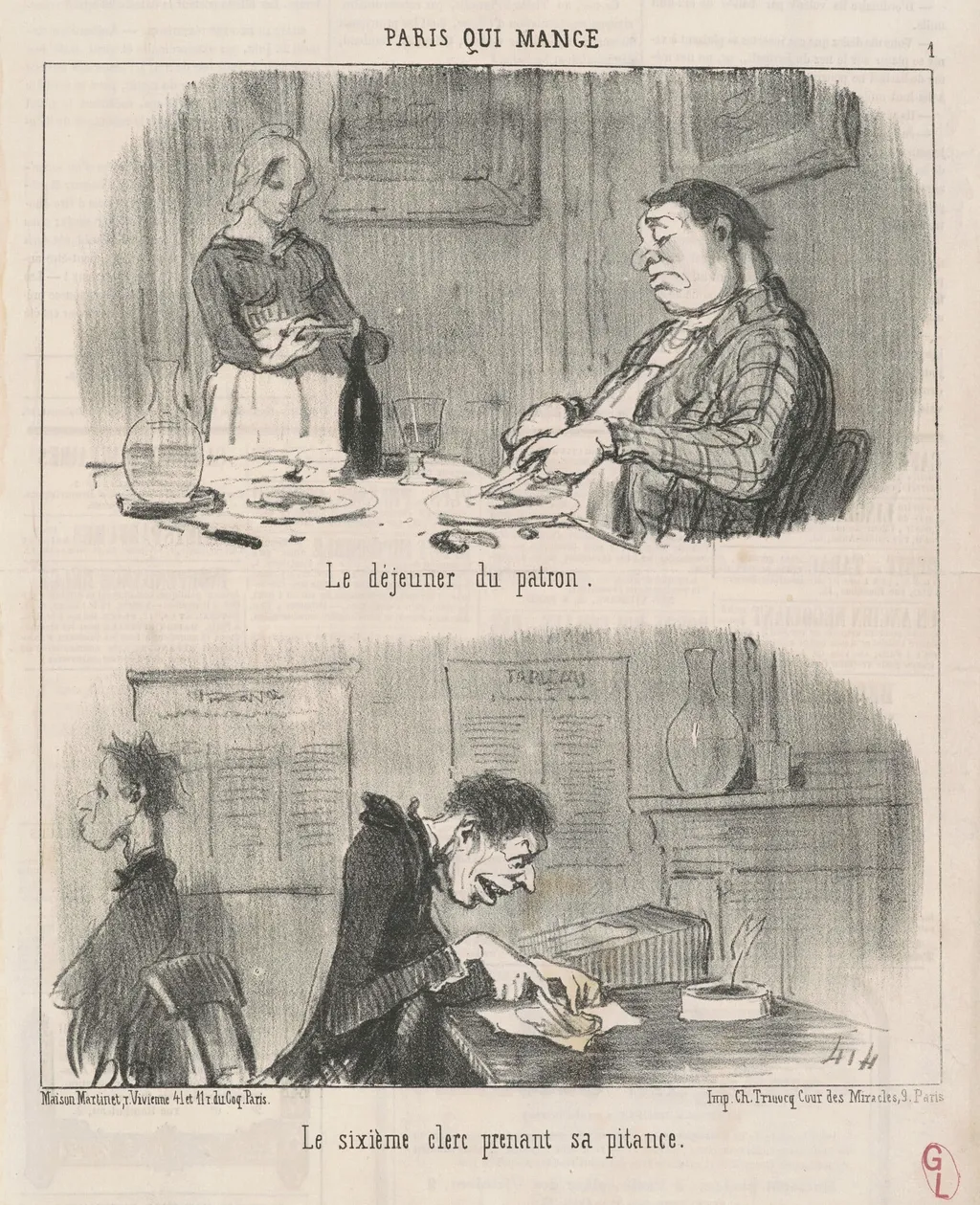
Le déjeuner du patron le sixiéme clerc ... is an ink print by the Impressionist artist Honoré Daumier. It dates from 1852 and is held in the collection of the National Gallery of Art.
About this work
Overview
The composition splits vertically: above, the supervisor feasts amid abundance; below, the clerk consumes a nearly empty plate.
This lithograph by Honoré Daumier depicts a sharp division between employer and employee during a midday meal. The composition splits vertically: above, the supervisor feasts amid abundance; below, the clerk consumes a nearly empty plate. Daumier uses the lithographic process to amplify social tension through exaggerated physical forms and minimal background detail, turning a routine scene into a silent critique of class inequality.
Subject & Meaning
The image contrasts the corpulence of the employer with the gauntness of the clerk, symbolizing systemic economic imbalance. The boss, surrounded by full dishes and wine, embodies privilege; the clerk, hunched and hollow-eyed, represents exploitation. No dialogue is needed—their physical states alone convey the imbalance of power and sustenance in 19th-century workplace hierarchies.
Technique & Style
Daumier employed rapid, incisive lines typical of lithography to model form with minimal strokes. The boss’s bulk is rendered in thick, rounded contours; the clerk’s frame is defined by sharp, angular grooves that emphasize ribs and hollows. The rough texture of the stone surface enhances the rawness of the scene, reinforcing the immediacy and urgency of the social commentary.
History & Provenance
Created in the 1840s, this print emerged during a period of rising labor unrest in France. Daumier regularly published such images in satirical journals, targeting bourgeois hypocrisy and bureaucratic indifference. Though originally circulated in periodicals, the work later entered public collections as part of broader recognition of his role in documenting urban class dynamics.
Context
In mid-19th-century Paris, clerks were low-paid white-collar workers, often overworked and undernourished, while their supervisors enjoyed relative comfort. Daumier’s imagery reflects the growing visibility of economic disparity in industrializing cities. His prints resonated with urban audiences familiar with such daily injustices, offering visual solidarity to the marginalized.
Legacy
Daumier’s use of lithography to convey social critique influenced later generations of political illustrators and realist artists. The stark visual contrast in this work became a template for depicting inequality without text, demonstrating how graphic simplicity could carry profound moral weight. Its enduring relevance lies in its unadorned portrayal of power and deprivation.
Artist & collection

Artist
Honoré-Victorin Daumier was a French painter, sculptor, and printmaker, whose many works offer commentary on the social and political life in France, from the Revolution of 1830 to the fall of the Second French Empire in 1870.









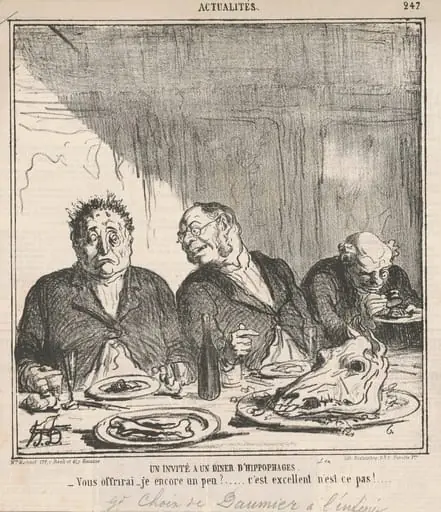 Un invité à un dîner d'hippophages: Vous offrirai-je encore un peu? C'est excellent, n'est-ce pas?
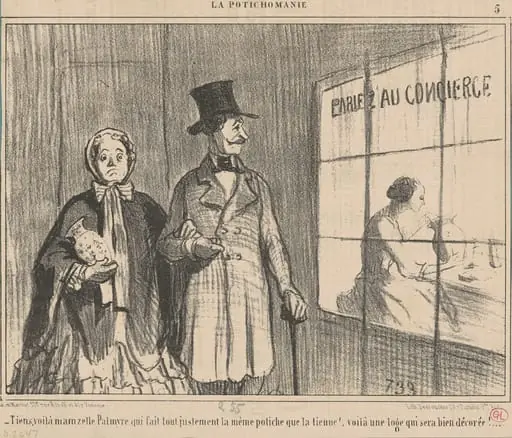 Tiens, voila mamzelle palmyre qui fait ...
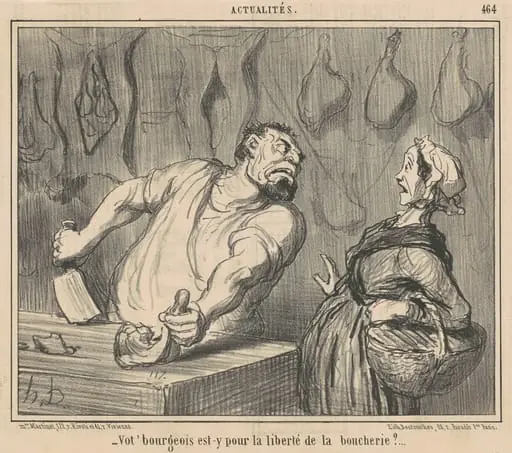 Vot' Bourgeois est-y pour liberté de la boucherie?
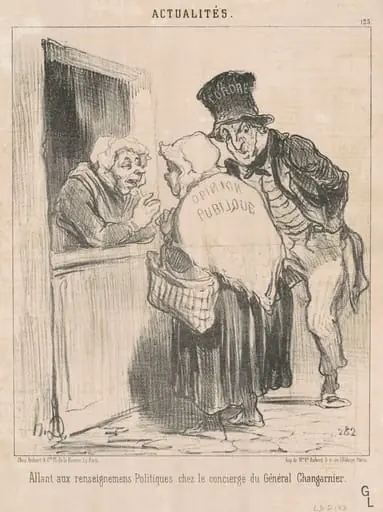 Allant aux renseignements politiques ...
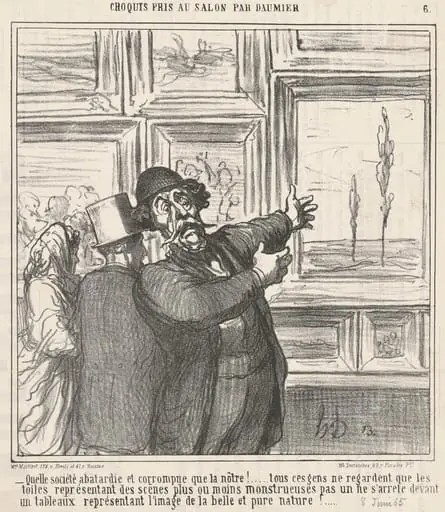 Quelle société abatarde et corrompue ...
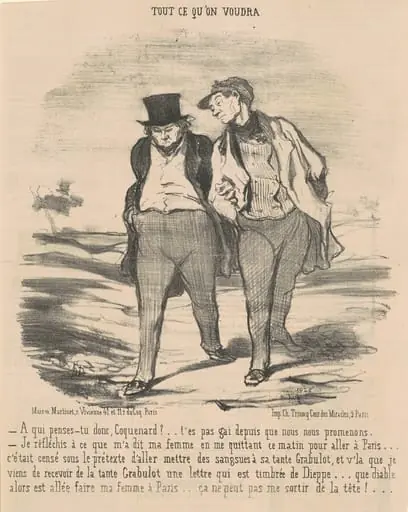 A qui penses-tu donc, coquenard? ...