Artwork
Vot' Bourgeois est-y pour liberté de la boucherie?
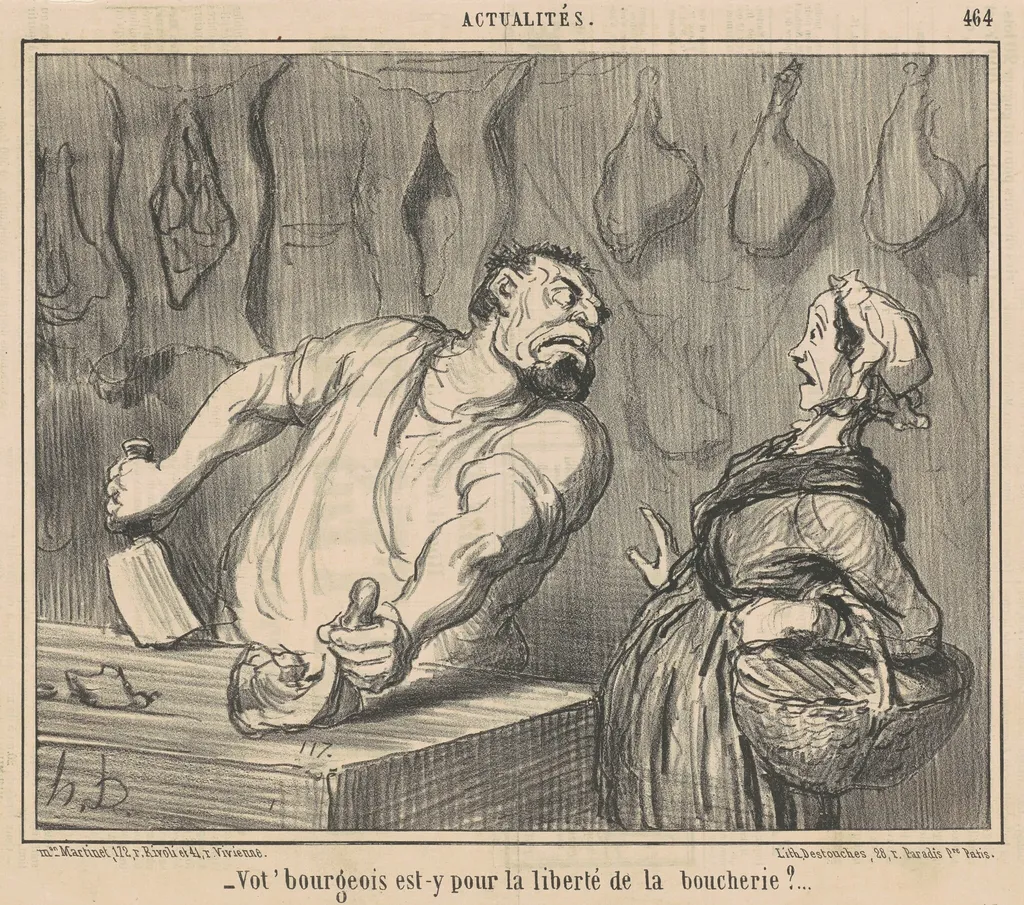
Vot' Bourgeois est-y pour liberté de la boucherie? is an ink print by the Impressionist artist Honoré Daumier. It dates from 1857 and is held in the collection of the National Gallery of Art.
About this work
Overview
Honoré Daumier’s lithograph titled *Vot’ Bourgeois est‑y pour liberté de la boucherie?* presents a lively interior of a meat‑shop. Central to the composition are a muscular butcher, cleaver in hand, and a woman standing at the counter, their interaction drawing the viewer’s eye amid the surrounding stalls and customers.
Subject & Meaning
The work captures a moment of everyday commerce, using the butcher’s robust posture and the woman’s attentive stance to suggest a dialogue about trade, consumption, and perhaps the social contracts that bind buyer and seller. Daumier’s subtle satire invites reflection on the roles of the bourgeois class within such market exchanges.
Technique & Style
Executed in lithography, the image relies on bold line work and exaggerated proportions to heighten the scene’s vigor. Daumier’s characteristic caricatural flair amplifies facial expressions and gestures, while the detailed background retains a sense of realism, balancing humor with a faithful record of the shop’s clutter.
Context
Created during Daumian’s prolific period of social commentary in the mid‑19th century, the print aligns with his broader interest in urban life and labor. Though specific ownership history is limited, the lithograph has been catalogued among his series of marketplace studies, illustrating his commitment to documenting contemporary French society.
Own this work as a print
Artist & collection
Artist
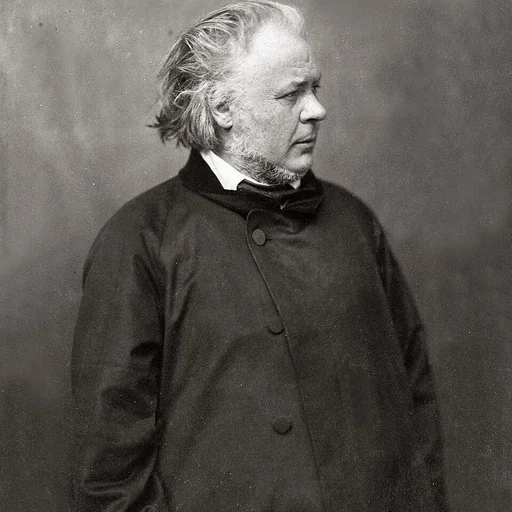
Honoré-Victorin Daumier was a French painter, sculptor, and printmaker, whose many works offer commentary on the social and political life in France, from the Revolution of 1830 to the fall of the Second French Empire in 1870.

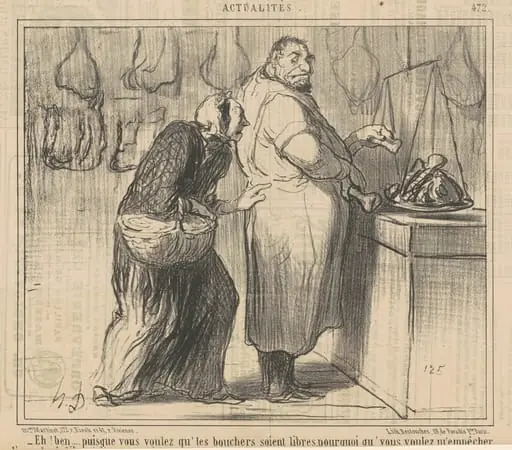 Eh! Ben ... puisque vous voulez qu' les bouchers ...
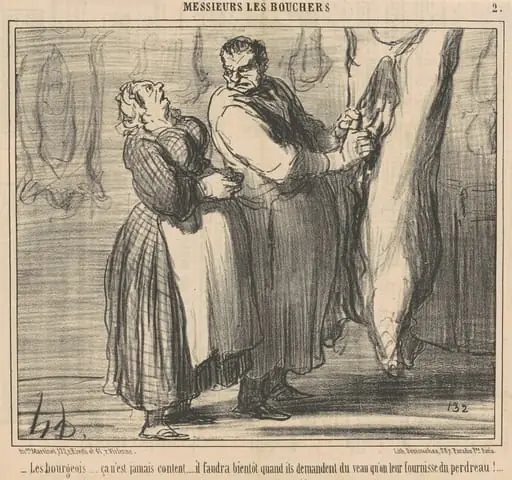 Les bourgeois ...
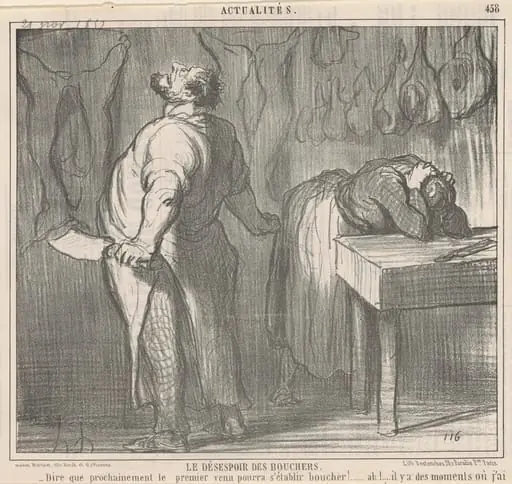 Le désespoir des bouchers
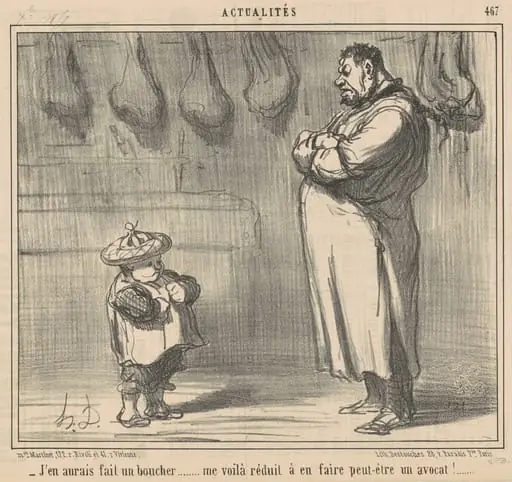 J'en aurais fait un boucher ...
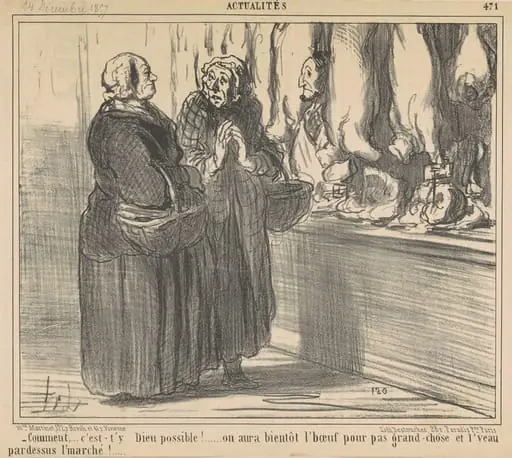 Comment ... c'est-t'y dieu possible! ...
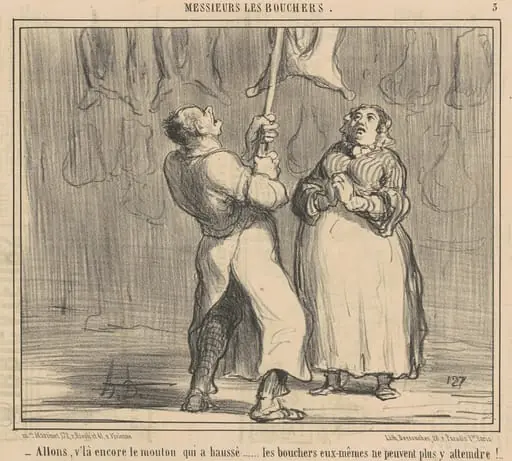 Allons, v'la encore le mouton qui a haussé
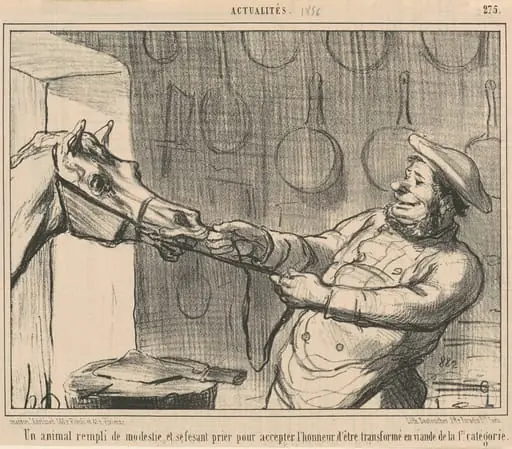 Un animal rempli de modestie...
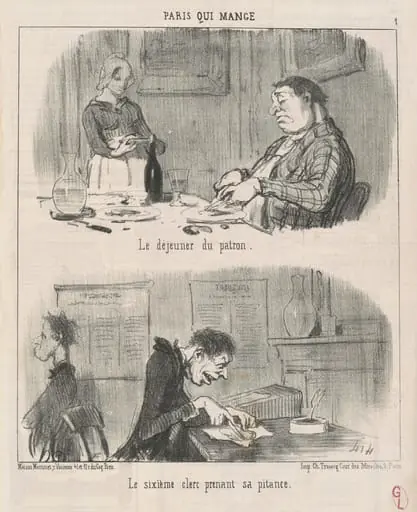 Le déjeuner du patron le sixiéme clerc ...
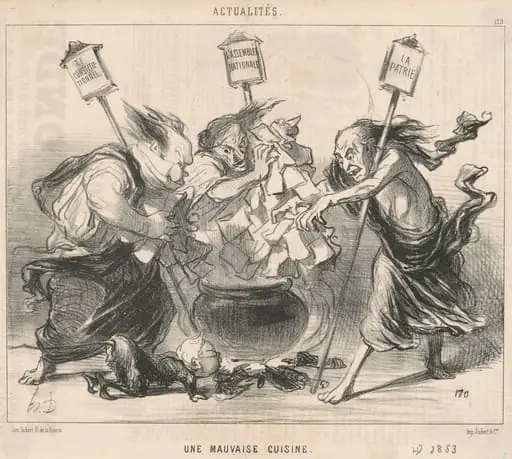 Une mauvaise cuisine