Artwork
Le Jour de sortie
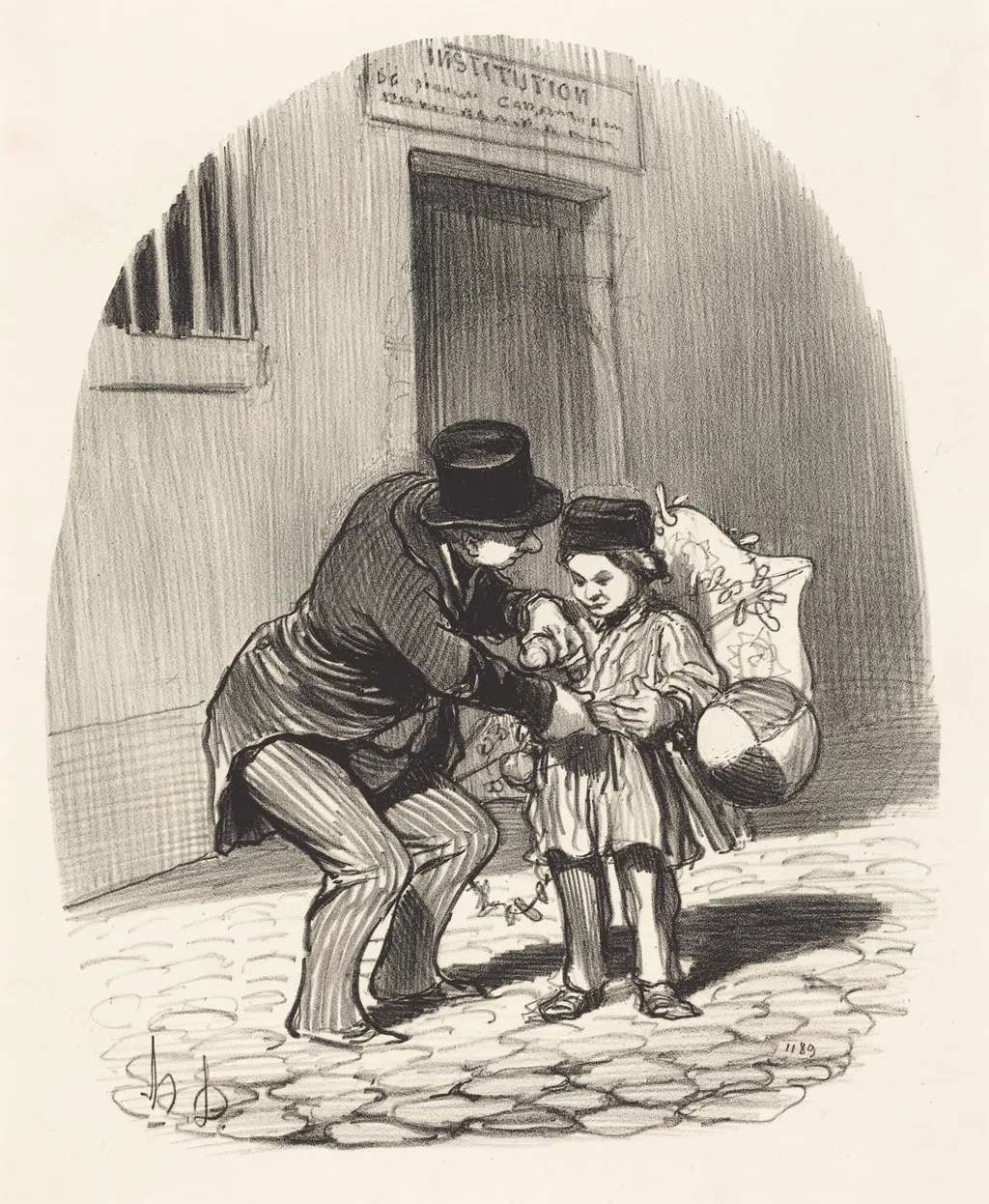
Le Jour de sortie is an ink print by the Romanticist artist Honoré Daumier. It dates from 1844 and is held in the collection of the National Gallery of Art.
About this work
Overview
Le Jour de sortie is a lithograph created by Honoré Daumier in 1844, part of a larger series of satirical prints produced during France’s July Monarchy.
Le Jour de sortie is a lithograph created by Honoré Daumier in 1844, part of a larger series of satirical prints produced during France’s July Monarchy. Unlike his more overtly political caricatures, this work focuses on a quiet domestic moment, using subtle observation to reflect on social norms. Daumier, primarily known for his contributions to periodicals like Le Charivari, employed lithography to reach a broad audience with incisive commentary on everyday life.
Subject & Meaning
The scene portrays a man, dressed in formal attire, kneeling to assist a young child in putting on shoes outside a building marked 'Institution.' The setting suggests a school or orphanage, and the man’s posture—gentle yet constrained—hints at a caregiver or authority figure. The contrast between his stiff clothing and the child’s simplicity underscores class distinctions, inviting quiet critique of institutional care and performative benevolence among the bourgeoisie.
Technique & Style
Daumier rendered the scene in lithography, a medium he mastered for its capacity to capture nuance and rapid reproduction. His lines are economical yet expressive, defining forms with minimal detail while preserving emotional texture. The composition is tightly framed, drawing attention to the interaction between figures. Shadows and tonal gradations suggest depth without elaborate modeling, characteristic of Daumier’s direct, unadorned approach to visual storytelling.
History & Provenance
Created during a period of political repression under Louis-Philippe, the print likely circulated in Le Charivari, where Daumier’s work often skirted censorship through allegory. Though not as overtly political as his depictions of judges or politicians, this image aligns with his broader project of exposing social pretensions. Its survival in public collections today reflects its enduring value as a document of 19th-century French urban life and class dynamics.
Context
In 1840s Paris, public institutions for children were expanding, often under the oversight of the middle class. Daumier’s depiction of a formal man assisting a child outside such a building reflects contemporary anxieties about education, morality, and social performance. The image avoids sentimentality, instead presenting a moment of routine care that reveals underlying hierarchies—between adult and child, dressed and undressed, observer and observed.
Legacy
Le Jour de sortie exemplifies Daumier’s ability to convey complex social observations through unassuming scenes. His influence extended beyond satire into the development of modern realism and early graphic narrative. Later artists, including those in the Impressionist and Expressionist movements, drew from his focus on ordinary life and his unflinching yet empathetic gaze. The print remains a quiet but potent record of how power and care intersect in daily routines.
Artist & collection
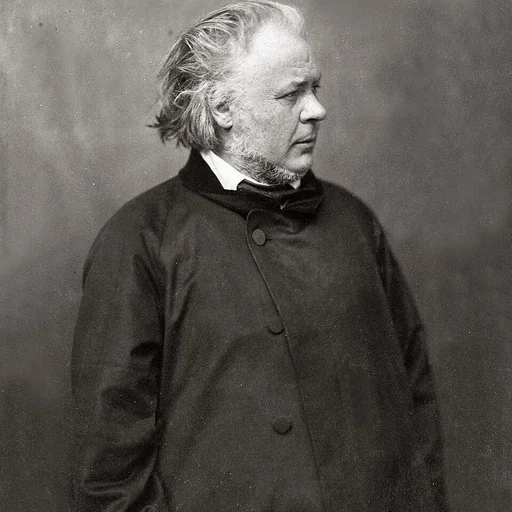
Artist
Honoré-Victorin Daumier was a French painter, sculptor, and printmaker, whose many works offer commentary on the social and political life in France, from the Revolution of 1830 to the fall of the Second French Empire in 1870.









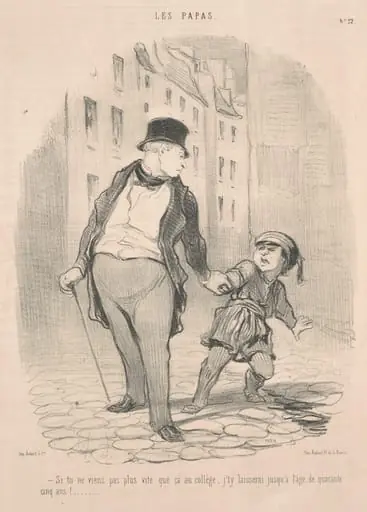 Si tu ne viens pas plus que ça au collège ...
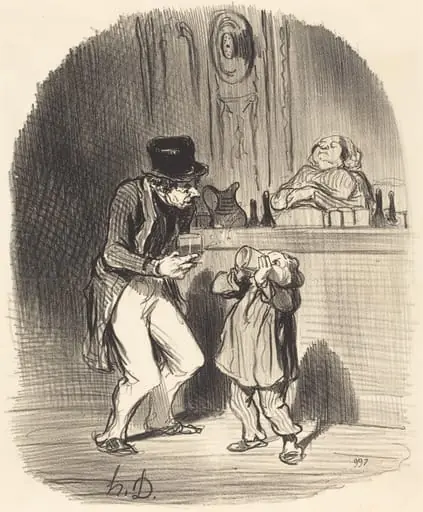 Un Père qui fait sucer à son fils...
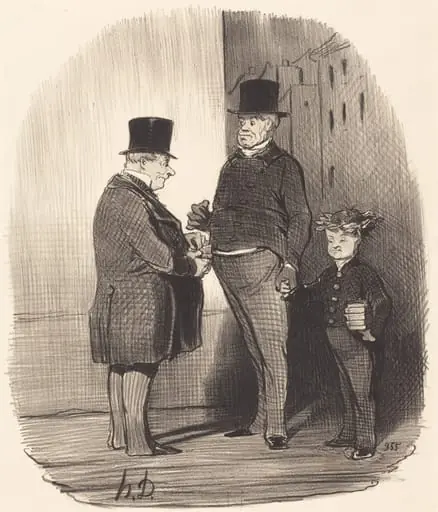 Ah! vous êtes fort en vers latins, jeune homme...
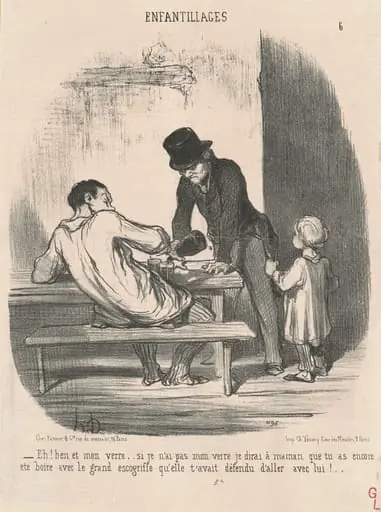 Eh! Ben et mon verre ... si je n'ai pas ...
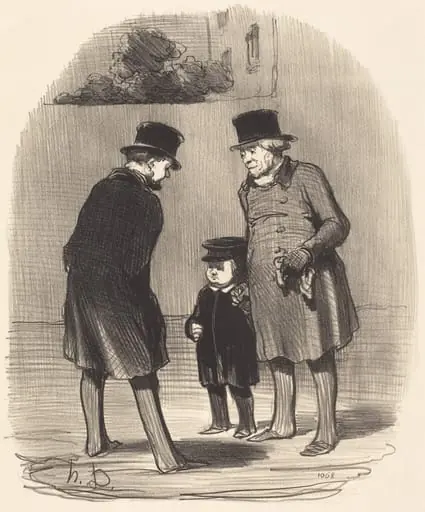 Oui, monsieur Chapuzot...
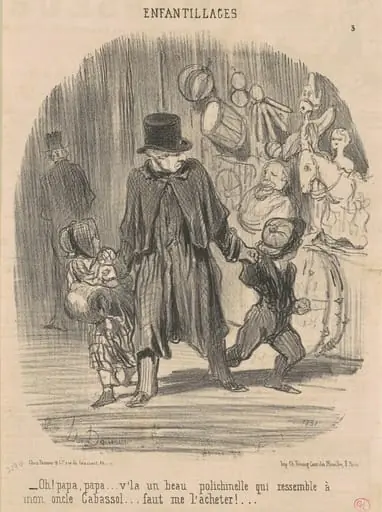 Oh! Papa, papa ...v'la un beau ...
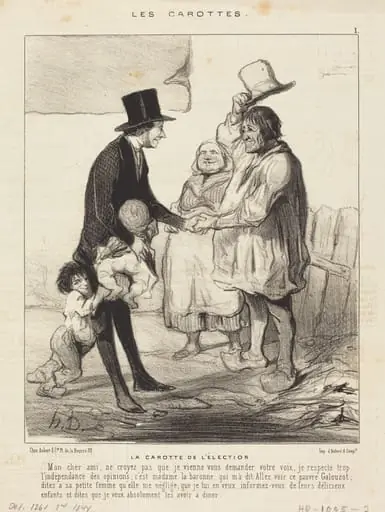 La Carotte de l'élection
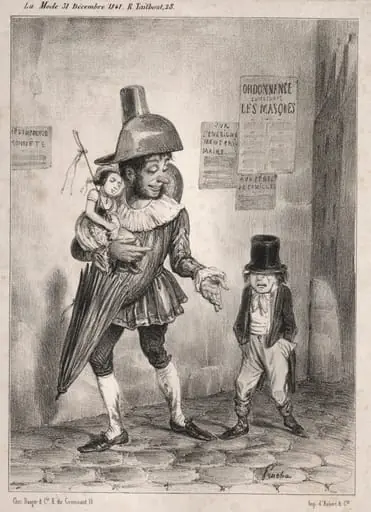 Pochades de carnaval: Vois-tu, si ton maître est bien content de toi et si tu as le prix de sagesse cette année! je te laisserai deguiser en paillasse! ...l'année prochaine!!
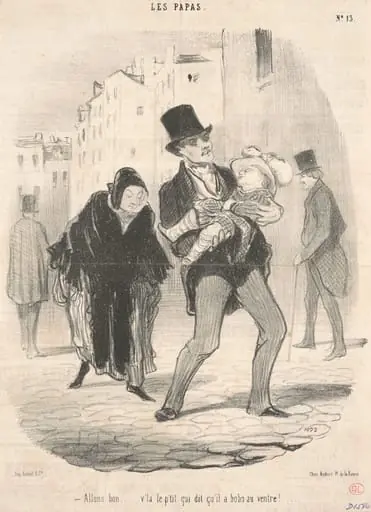 Allons bon ... v'la p'tit qui dit ...
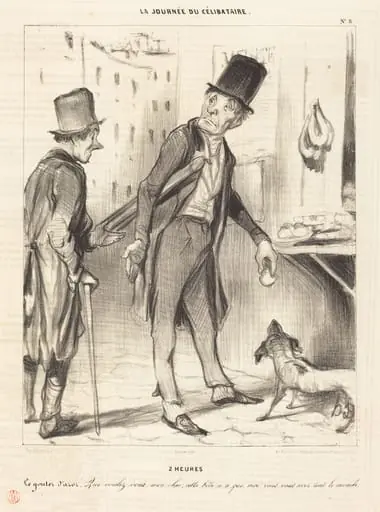 2 heures - Le gouter d'Azor