Artwork
Le peintre qui a eu un tableau refusé ...
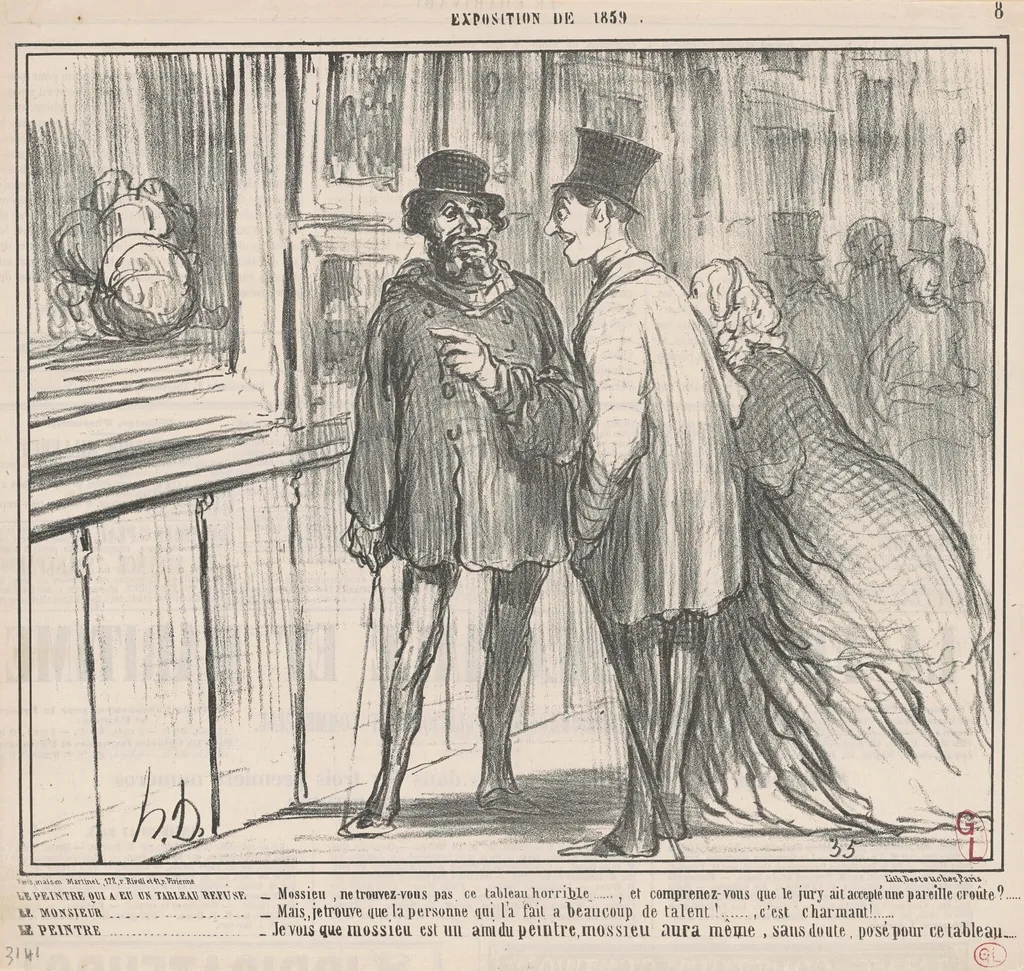
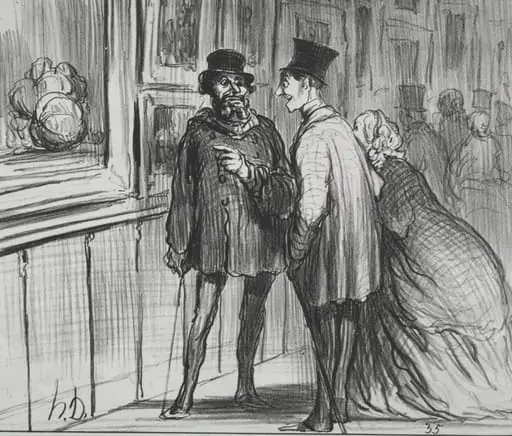
Le peintre qui a eu un tableau refusé ... is an ink print by the Impressionist artist Honoré Daumier. It dates from 1859 and is held in the collection of the National Gallery of Art.
About this work
Overview
Honoré Daumier’s lithograph titled *Le peintre qui a eu un tableau refusé* depicts a moment inside a 19th‑century art salon. Two men stand before a canvas, engaged in a serious exchange while a crowd moves in the background. The image captures the atmosphere of a public exhibition, emphasizing the social dynamics that surround the presentation and judgment of artworks.
Subject & Meaning
The central figures appear to be discussing the rejected painting, embodying the tension between artistic ambition and institutional approval. Their focused dialogue suggests a critique of the mechanisms that determine success or failure in the art world, while the surrounding spectators hint at the broader public’s role in shaping artistic reputation.
Technique & Style
Executed as a lithograph, the work employs Daumier’s characteristic bold line work and stark contrast to convey movement and expression. The medium allows for rapid reproduction, mirroring the spread of opinion in salons, while the simplified forms and exaggerated gestures highlight the emotional weight of the conversation.
Context
Created during a period when Parisian salons were gaining prominence, the print reflects contemporary debates about artistic merit and the growing influence of public exhibitions. Daumier, known for his satirical observations of society, uses this scene to comment on the shifting power dynamics between artists, critics, and audiences in the mid‑1800s.
Artist & collection

Artist
Honoré-Victorin Daumier was a French painter, sculptor, and printmaker, whose many works offer commentary on the social and political life in France, from the Revolution of 1830 to the fall of the Second French Empire in 1870.