Artwork
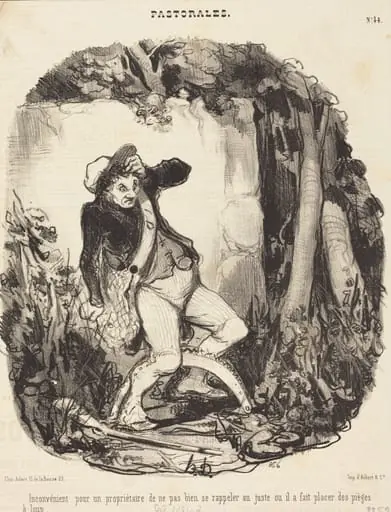
Les Curieux Punis
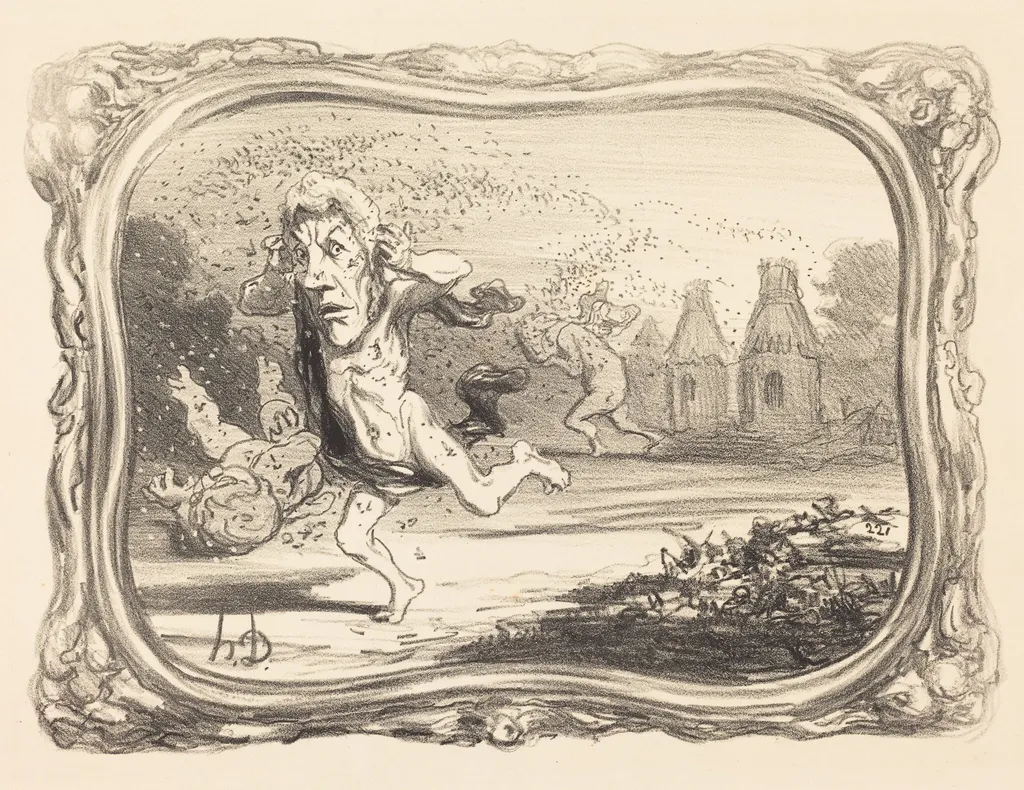
Les Curieux Punis is an ink print by the Impressionist artist Honoré Daumier. It dates from 1851 and is held in the collection of the National Gallery of Art.
About this work
Overview
The image depicts a disheveled figure crawling through a wild landscape, surrounded by unnatural vegetation and distant cliffs.
Created in 1851, *Les Curieux Punis* is a lithograph by Honoré Daumier that captures a moment of surreal punishment. The image depicts a disheveled figure crawling through a wild landscape, surrounded by unnatural vegetation and distant cliffs. Its rough, rapid linework suggests immediacy and unrest, aligning with Daumier’s broader practice of using printmaking to interrogate societal norms and political hypocrisy.
Subject & Meaning
The central figure, half-human, half-feral, appears to be a victim of retribution for intrusive behavior—perhaps a metaphor for the public’s obsession with power. The small creature watching from the shadows may symbolize the unseen forces of authority or moral judgment. Daumier uses grotesque imagery to imply that curiosity, when unchecked, leads to degradation, reflecting his skepticism toward both the ruling class and the gullible masses.
Technique & Style
Daumier employed lithography to achieve a spontaneous, almost sketch-like quality. His use of dense, irregular lines and stark contrasts evokes urgency and emotional turbulence. The lack of refined detail heightens the sense of chaos, while the textured background suggests an untamed, indifferent nature. This technique allowed him to produce images quickly for periodicals, reinforcing the immediacy of his social commentary.
History & Provenance
The print emerged during a period of political repression under Louis-Napoléon Bonaparte, following the 1851 coup. Daumier had been imprisoned the prior year for caricaturing the regime, and this work likely reflects his continued resistance through allegory. Though not published in a periodical, it circulated privately among republican circles, preserving its subversive intent beyond official censorship.
Context
In early 1850s France, satire was a dangerous tool. Daumier’s earlier work for *Le Charivari* had drawn state backlash, leading to tighter controls on the press. *Les Curieux Punis* operates in the shadows of this climate, using mythic imagery to evade direct political reference. Its ambiguity allowed it to function as both personal expression and coded critique within a repressive cultural environment.
Legacy
Though less known than Daumier’s courtroom or bourgeois scenes, this print exemplifies his capacity to merge fantasy with social critique. Its symbolic intensity influenced later artists exploring psychological and political allegory, particularly in Expressionist and Surrealist traditions. The work endures as a testament to the power of visual metaphor when direct speech is silenced.
Artist & collection
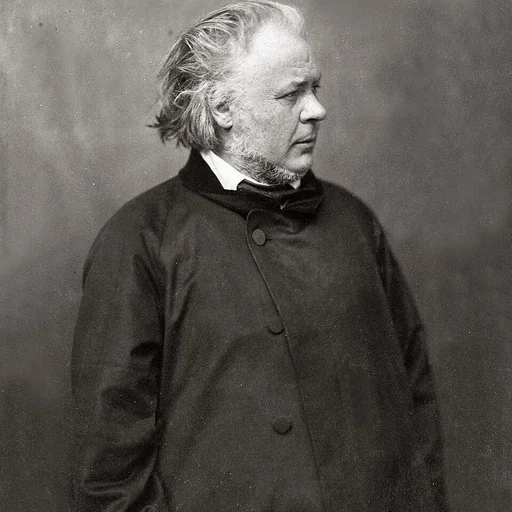
Artist
Honoré-Victorin Daumier was a French painter, sculptor, and printmaker, whose many works offer commentary on the social and political life in France, from the Revolution of 1830 to the fall of the Second French Empire in 1870.









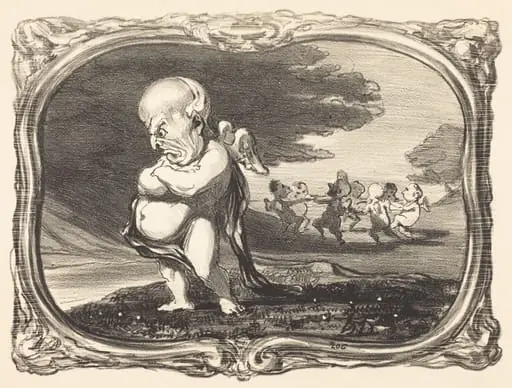 Grandeur et décadence d'O. Barrot
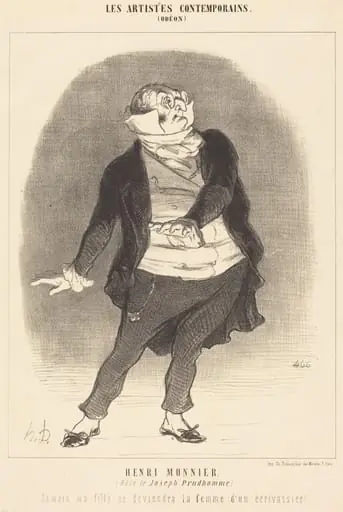 Henri Monnier (Rôle de Joseph Prudhomme)
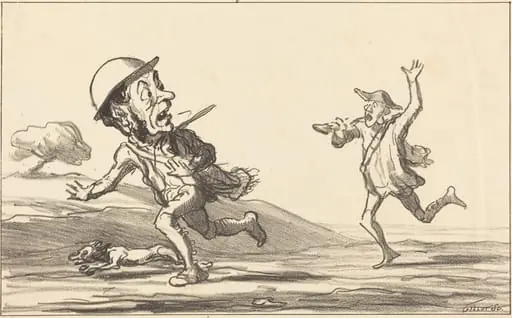 Allons bon!... il parait... chasse réservée
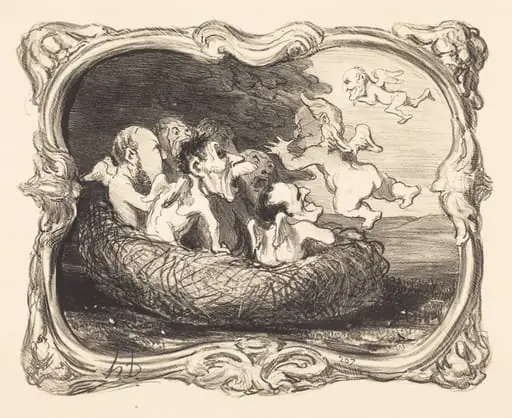 Le Nid abandonné
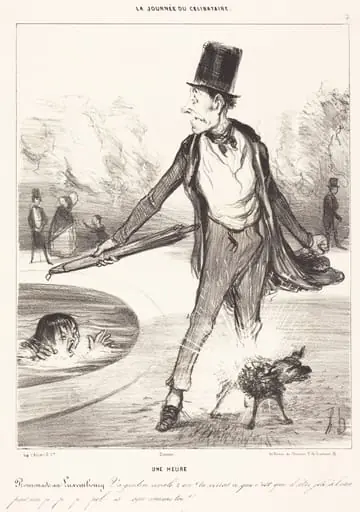 Une heure
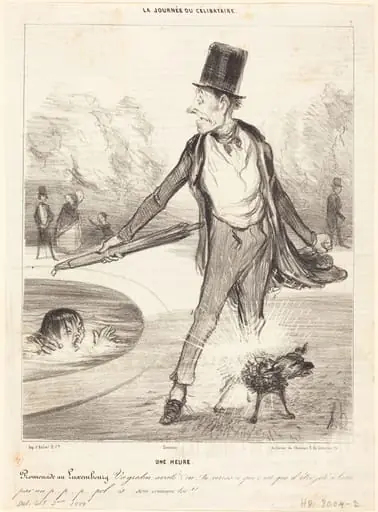 Une heure - Promenade au Luxembourg
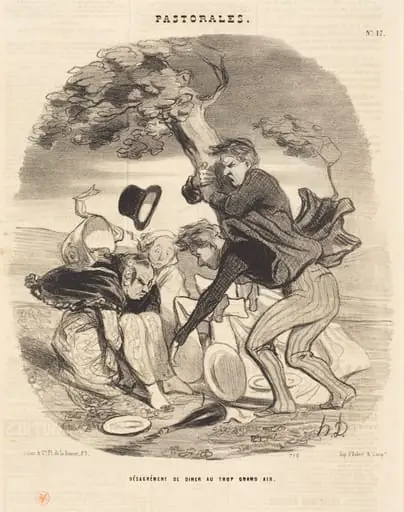 Désagrément de diner au trop grand air
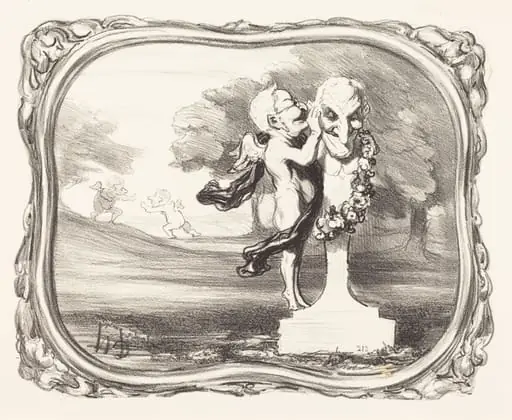 Le Secret confié au dieu faune
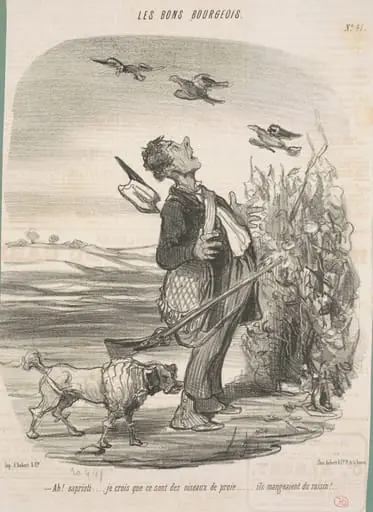 Ah! ... Je crois que ce sont des oiseaux de proie ...
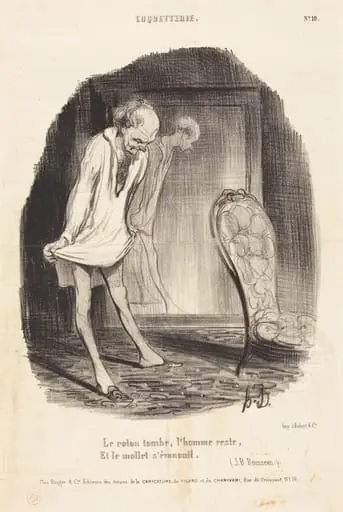 Le coton tombe, l'homme reste...
 Inconvénient pour un propriétaire de ne pas...
 Un monsieur qui voulu étudier ... les moeurs ... des abeilles