Artwork
Les facconnant les Moldo-Valaques ...
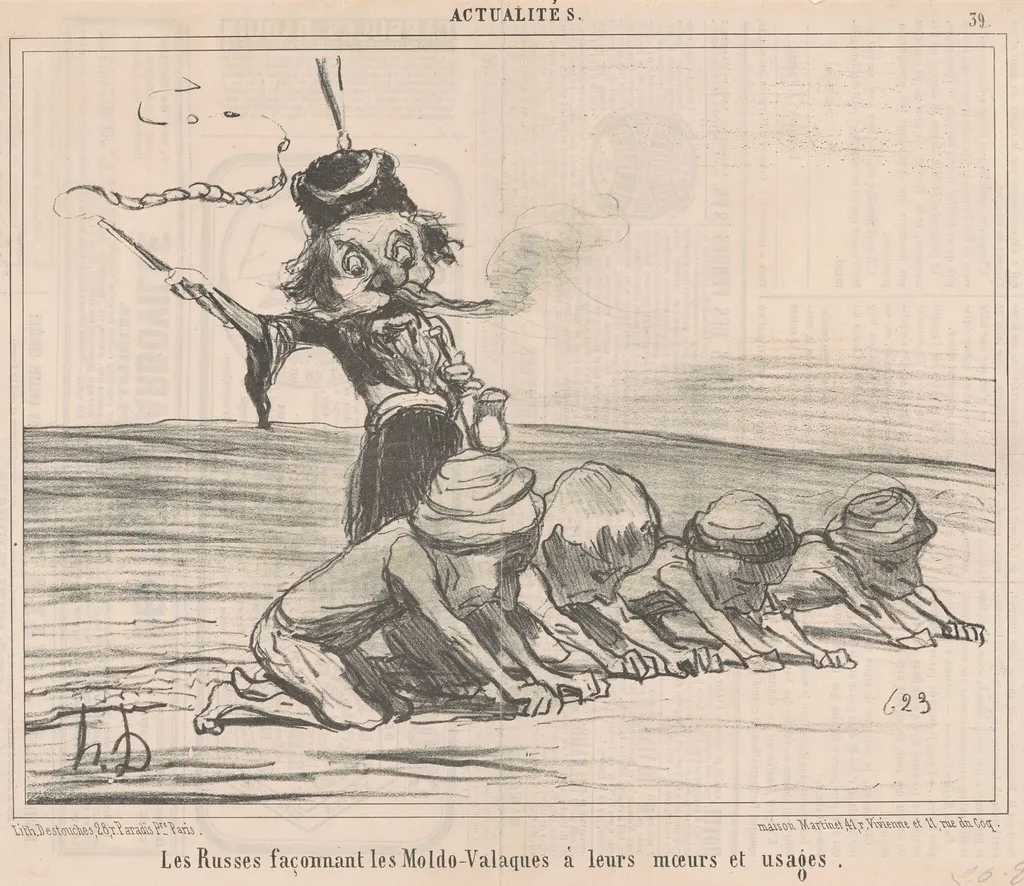
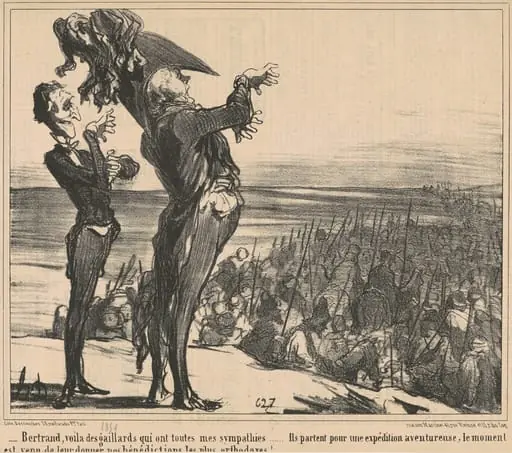
Les facconnant les Moldo-Valaques ... is an ink print by the Impressionist artist Honoré Daumier. It dates from 1854 and is held in the collection of the National Gallery of Art.
About this work
Overview
Honoré Daumier’s 1854 lithograph, titled Les Facconnant les Moldo‑Valaques, presents a single, oversized figure in formal attire dominating a cluster of kneeling, rag‑clad men. The central figure grasps the shoulders of the submissive group, whose heads are bowed, creating a stark visual hierarchy that emphasizes power and subjugation.
Subject & Meaning
The print employs exaggerated physiognomy and posture to satirize authority figures, portraying the dominant man as both comically grotesque and imposing. By juxtaposing his pompous attire with the destitute condition of the kneeling figures, Daumée critiques the arbitrary exercise of control and the humiliation of the powerless.
Technique & Style
Daumier utilizes the lithographic medium’s capacity for bold contrast, rendering sharp, twisting lines that accentuate distorted faces and bodies. The stark chiaroscuro achieved through deep blacks and crisp outlines intensifies the caricature, giving the composition a graphic, almost cartoon‑like quality while retaining a sophisticated draftsmanship.
Context
Created amid the political turbulence of mid‑nineteenth‑century France, the work reflects Daumier’s ongoing engagement with social commentary. The title references the Moldovan‑Wallachian region, hinting at contemporary geopolitical tensions and the broader European discourse on imperial domination.
Legacy
While not as widely reproduced as Daumier’s later series, this lithograph exemplifies his early mastery of satire through printmaking. It continues to be studied for its incisive visual rhetoric and as a precursor to the more overtly political cartoons that would define his prolific career.
Artist & collection
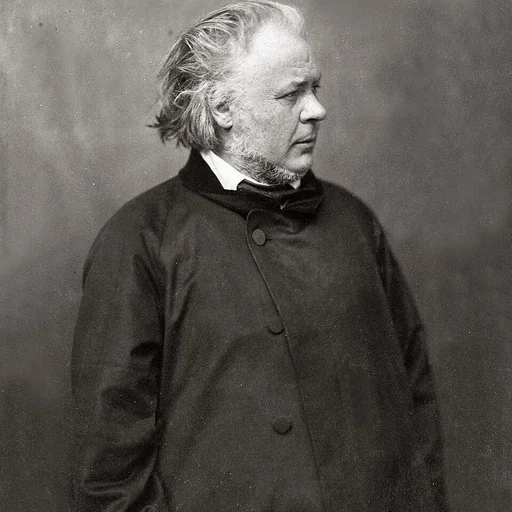
Artist
Honoré-Victorin Daumier was a French painter, sculptor, and printmaker, whose many works offer commentary on the social and political life in France, from the Revolution of 1830 to the fall of the Second French Empire in 1870.