Artwork
Les mandarins lettrés
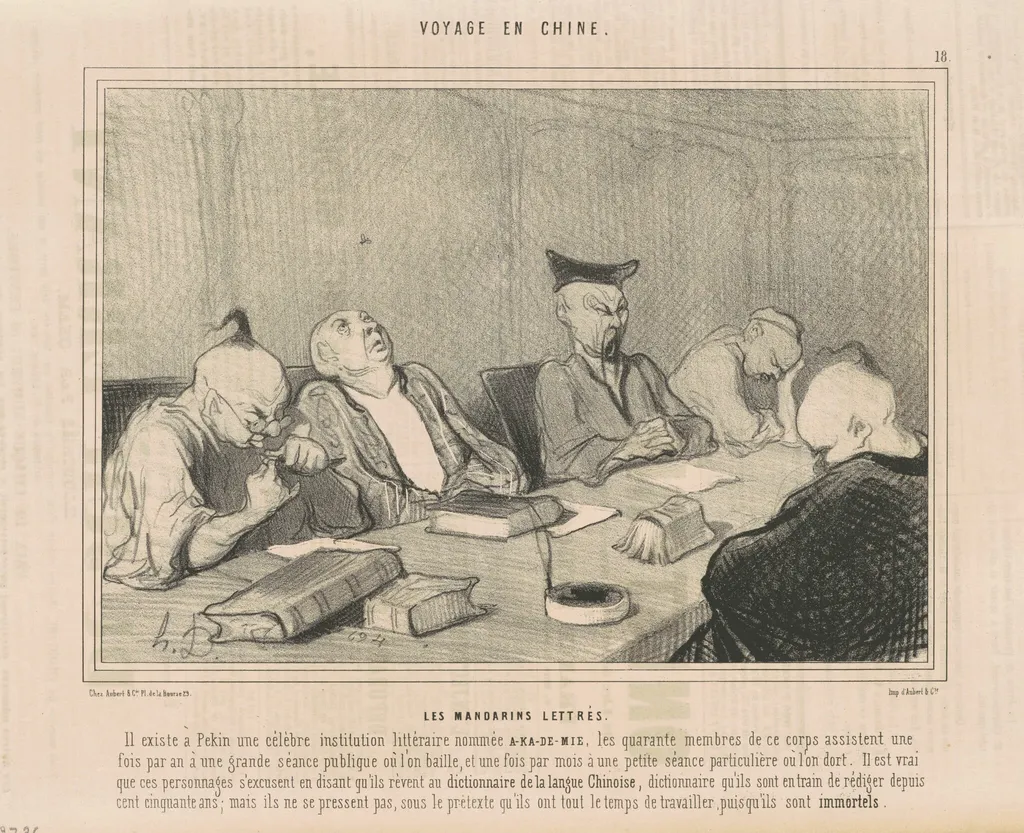
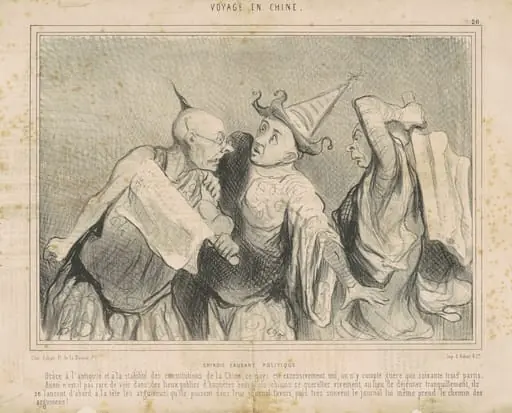
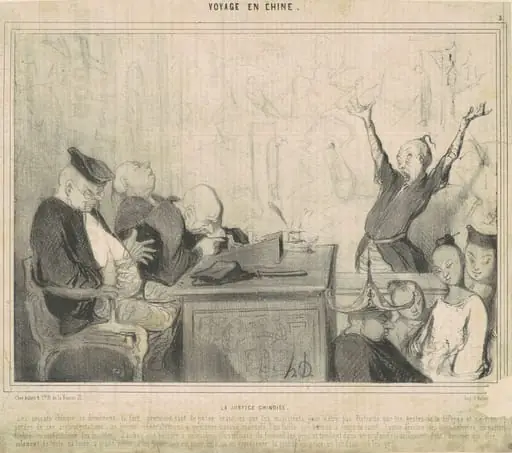
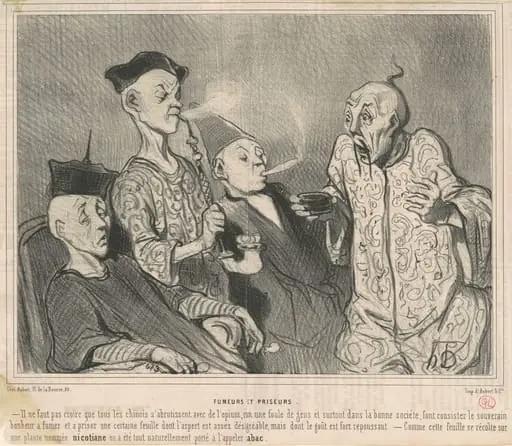
Les mandarins lettrés is an ink print by the Romanticist artist Honoré Daumier. It dates from 1844 and is held in the collection of the National Gallery of Art.
About this work
Overview
Honoré Daumier produced this lithograph in 1844 as part of his series critiquing French intellectual culture. The image captures six scholars seated around a table, rendered in the tonal range characteristic of lithographic printing. Their postures and faces convey a sense of exhaustion, suggesting the psychological toll of prolonged study and bureaucratic scholarship.
Subject & Meaning
The figures, dressed in flowing robes reminiscent of East Asian or historical Chinese attire, are not literal portraits but symbolic representations.
The figures, dressed in flowing robes reminiscent of East Asian or historical Chinese attire, are not literal portraits but symbolic representations. Daumier uses their slumped postures and hollow expressions to question the value and burden of academic tradition. The scattered books imply an overwhelming accumulation of knowledge without clarity or purpose, evoking a quiet satire of intellectualism detached from vitality.
Technique & Style
Daumier employed lithography to achieve subtle gradations of gray, using ink and stone to build texture through hatching and washes. The figures are rendered with loose, expressive lines that emphasize gesture over detail. The absence of sharp contours and the muted palette reinforce the somber mood, aligning the medium’s tactile qualities with the theme of mental fatigue.
History & Provenance
Created during Daumier’s prolific period contributing to the satirical journal La Caricature, this print was likely distributed among Parisian intellectuals and political circles. It was not commissioned but emerged from his broader critique of institutionalized learning. The work remained in private collections after its initial publication, with no known public exhibition record until the late 19th century.
Context
In 1840s France, the state-sponsored academic system faced growing criticism for rigidity and elitism. Daumier, himself a self-taught artist, often targeted the hypocrisy of learned elites. This print reflects contemporary debates about education, bureaucracy, and the alienation of intellectual labor—themes resonant in the wake of the 1830 Revolution and before the 1848 uprisings.
Legacy
Though not widely exhibited in Daumier’s lifetime, this lithograph later influenced modern artists exploring psychological depth through caricature. Its restrained irony and focus on institutional fatigue prefigured 20th-century critiques of academia. Today, it is studied as an early example of visual satire that equates intellectual labor with emotional depletion, rather than enlightenment.
Own this work as a print
Artist & collection

Artist
Honoré-Victorin Daumier was a French painter, sculptor, and printmaker, whose many works offer commentary on the social and political life in France, from the Revolution of 1830 to the fall of the Second French Empire in 1870.