Artwork
La justice chinoise
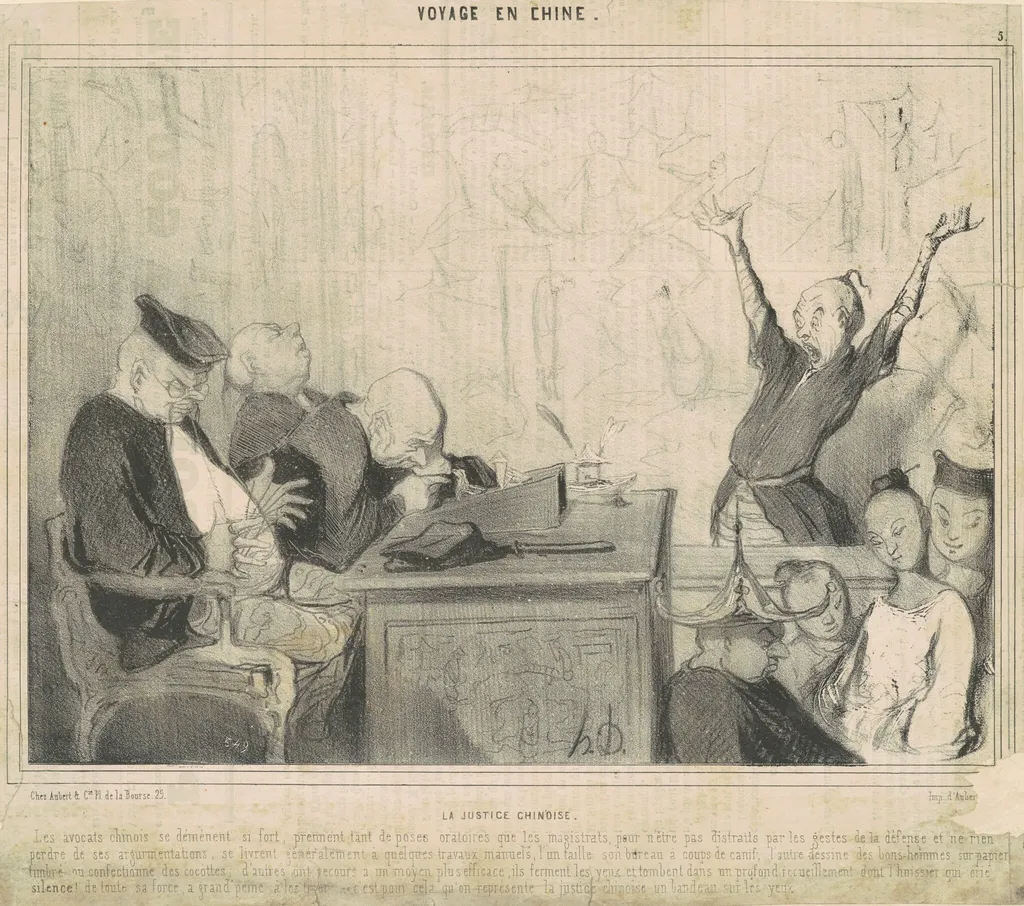
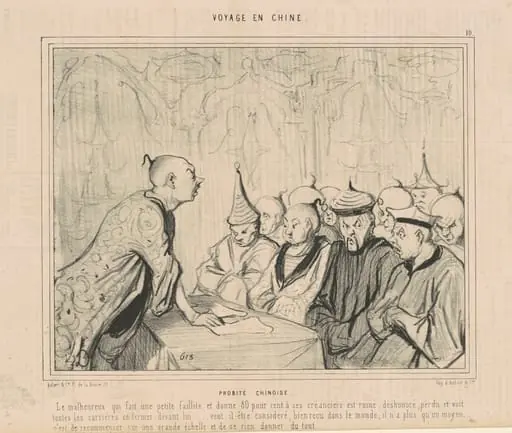
La justice chinoise is an ink print by the Romanticist artist Honoré Daumier. It dates from 1846 and is held in the collection of the National Gallery of Art.
About this work
Overview
The composition is crowded with numerous participants, while a lone figure at the centre raises his arms, creating a focal point of tension.
Honoré Daumier’s 1846 lithograph La justice chinoise portrays a bustling courtroom interior. The composition is crowded with numerous participants, while a lone figure at the centre raises his arms, creating a focal point of tension. The work’s simplified backdrop emphasizes the collective presence of the audience, underscoring the artist’s interest in public institutions and their theatrical qualities.
Subject & Meaning
The print depicts a legal proceeding, likely a trial, in which the central figure’s outstretched arms suggest a moment of accusation, testimony, or emotional outburst. By situating this drama within a dense assembly of onlookers, Daumier comments on the performative nature of justice and the societal pressures that surround judicial authority.
Technique & Style
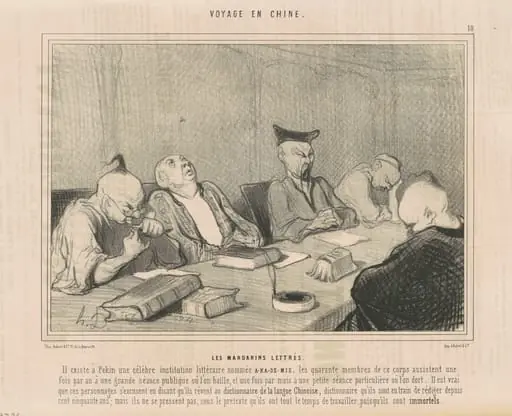
Executed in lithography, the image relies on the contrast of bold lines and tonal washes characteristic of Daumier’s printmaking. The medium allows for rapid production and a slightly rough, expressive quality, which enhances the sense of immediacy and crowd movement. The simplified background and exaggerated gestures reflect the artist’s satirical style.
History & Provenance
Created in 1846, during the height of Daumier’s engagement with social critique, the lithograph was part of a series addressing contemporary institutions. It circulated among the French press and print markets, reaching a broad audience and reinforcing Daumier’s reputation as a commentator on public life. Its provenance follows typical 19th‑century print collections, appearing in several museum holdings.
Artist & collection

Artist
Honoré-Victorin Daumier was a French painter, sculptor, and printmaker, whose many works offer commentary on the social and political life in France, from the Revolution of 1830 to the fall of the Second French Empire in 1870.