Artwork
Les Tritons de la Seine
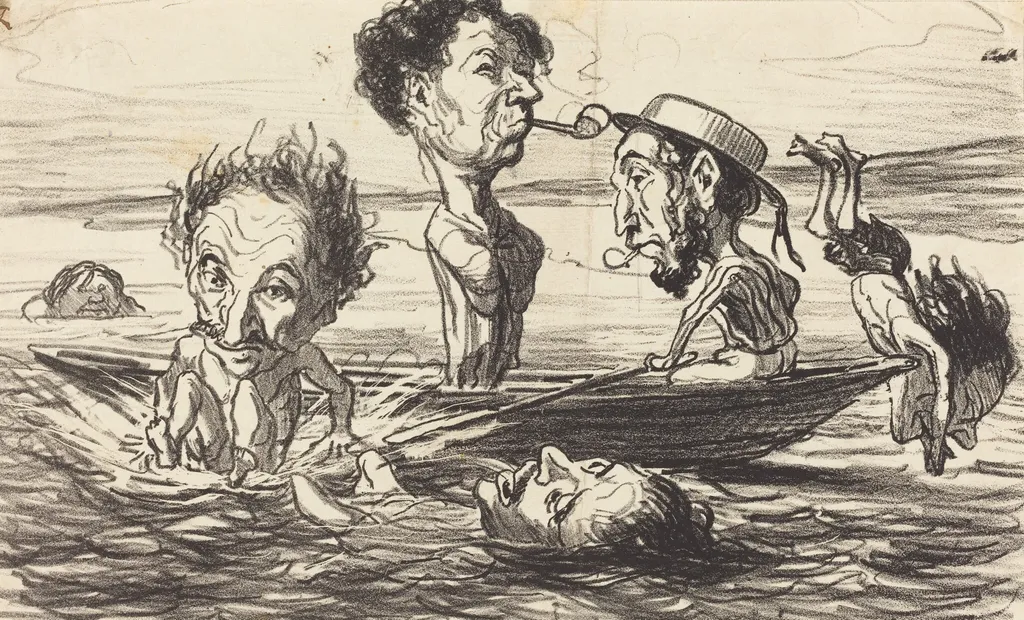
Les Tritons de la Seine is an ink print by the Impressionist artist Honoré Daumier. It dates from 1864 and is held in the collection of the National Gallery of Art.
About this work
Overview
Created in 1864, *Les Tritons de la Seine* is a lithographic print by Honoré Daumier. The image depicts a crowded boat battling turbulent water, with two men and two women cramped together, one man smoking a pipe and another clutching a hat. The composition is rendered in loose, sketch‑like lines that convey a sense of immediate disorder.
Subject & Meaning
Although the title invokes mythological sea‑creatures, the scene is grounded in a contemporary, chaotic river crossing. The cramped figures and threatening waves suggest a satirical commentary on the precariousness of everyday life, echoing Daumier’s habit of using exaggerated situations to critique social and political instability.
Technique & Style
Daumier employed lithography, drawing directly onto a stone surface to produce prints that retain the spontaneity of a sketch. The uneven, expressive lines and minimal shading give the work an urgent, almost improvised quality, a hallmark of the medium’s popularity for rapid, topical illustrations in 19th‑century French press.
History & Provenance
The print emerged from Daumier’s prolific period of producing satirical images for periodicals such as *La Caricature* and *Le Charivari*. While the work was not published as a newspaper illustration, it reflects the same republican, anti‑establishment stance that defined his output during the 1860s.
Context
In the mid‑19th century, France experienced political turbulence and social upheaval. Daumier’s prints often targeted the monarchy, aristocracy, and clergy, using humor and exaggeration to voice democratic ideals. *Les Tritons de la Seine* fits within this broader visual discourse, employing mythic reference as a veil for contemporary critique.
Artist & collection
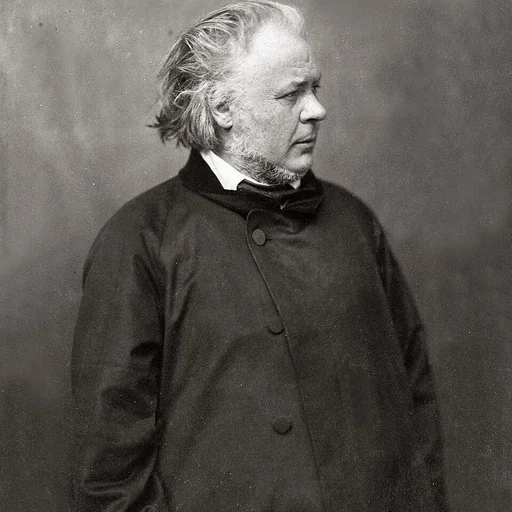
Artist
Honoré-Victorin Daumier was a French painter, sculptor, and printmaker, whose many works offer commentary on the social and political life in France, from the Revolution of 1830 to the fall of the Second French Empire in 1870.









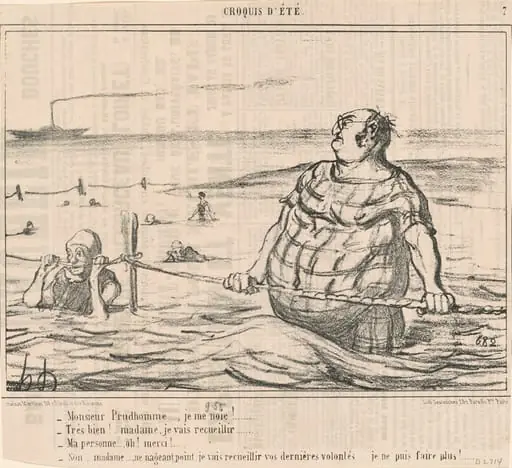 Monsieur Prudhomme ... Je me noie! ...
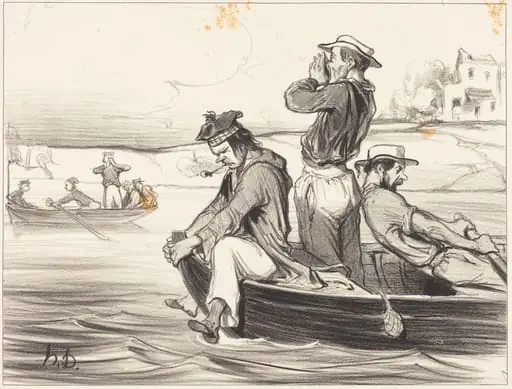 Une Rencontre en pleine eau
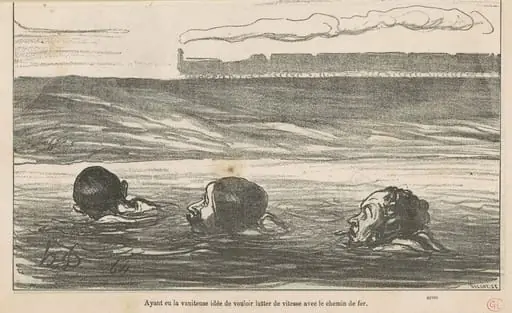 Ayant eu la vaniteuse idée de vouloir ...
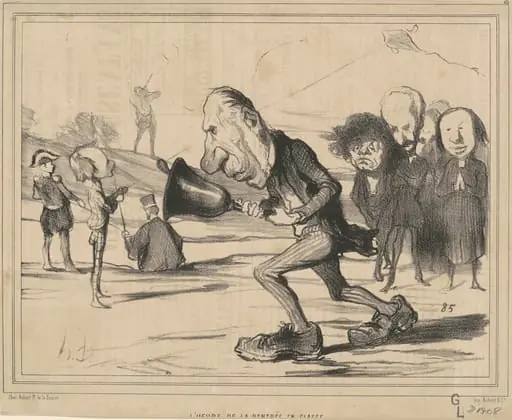 L'heure de la rentrée en classe
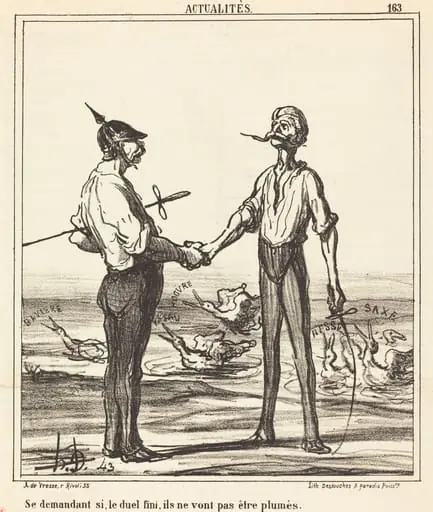 Se demandant si, le duel fini, ils ne vont pas etre plumes
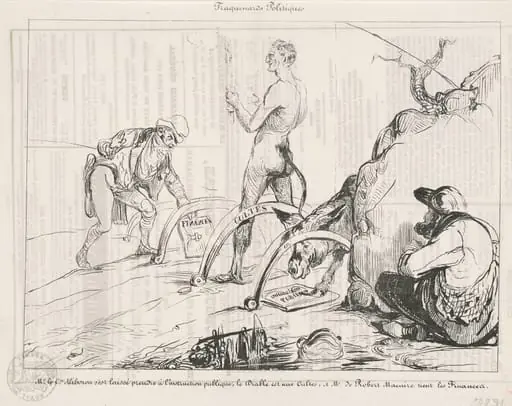 Traquenards politiques
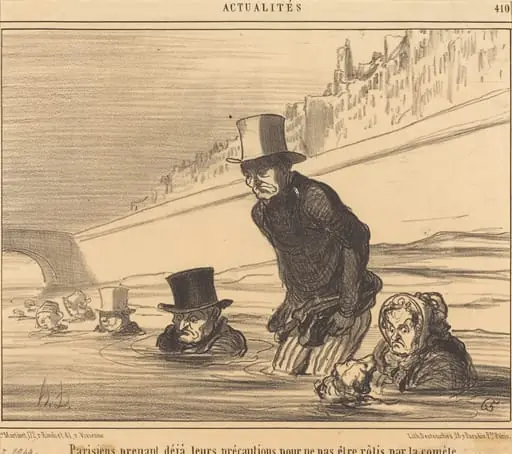 Parisiens prenant... leurs précautions...
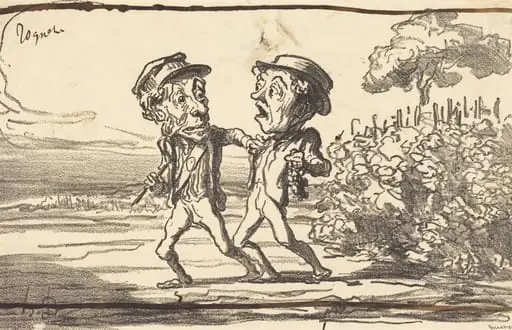 Un Criminel!
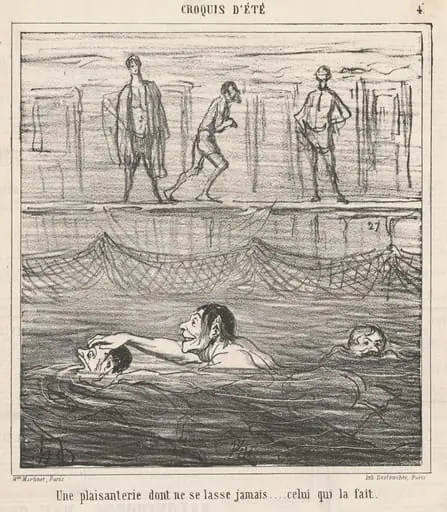 Une plaisanterie dont ne se lasse ...
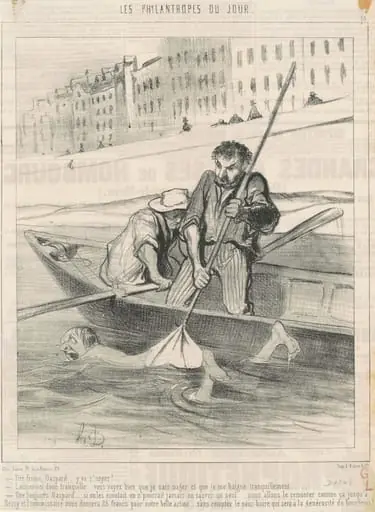 Tire ferme, Gaspard ... y va s'neyer ...
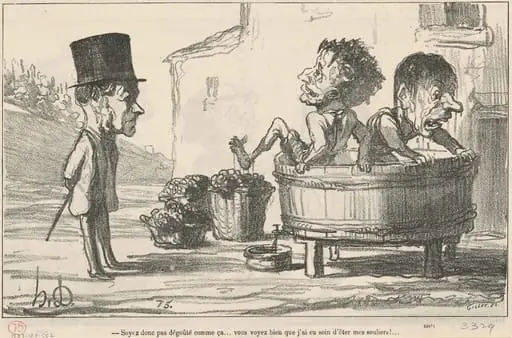 Soyez donc pas dégouté comme ca ...
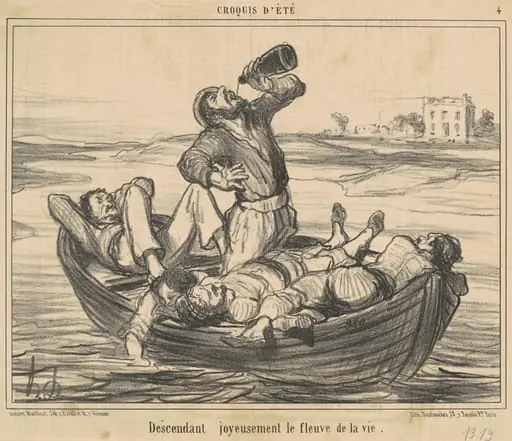 Descendant joyeusement le fleuve de la vie