Artwork
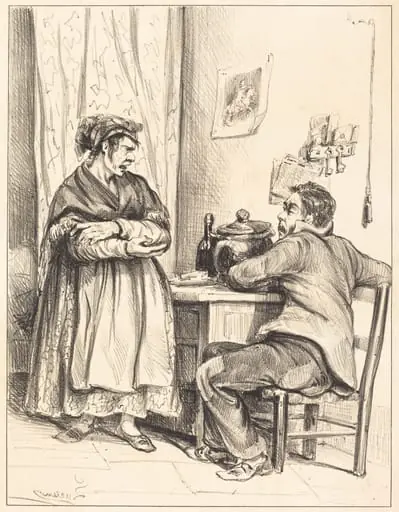
Ma femme, t'as tort de me blamer ...
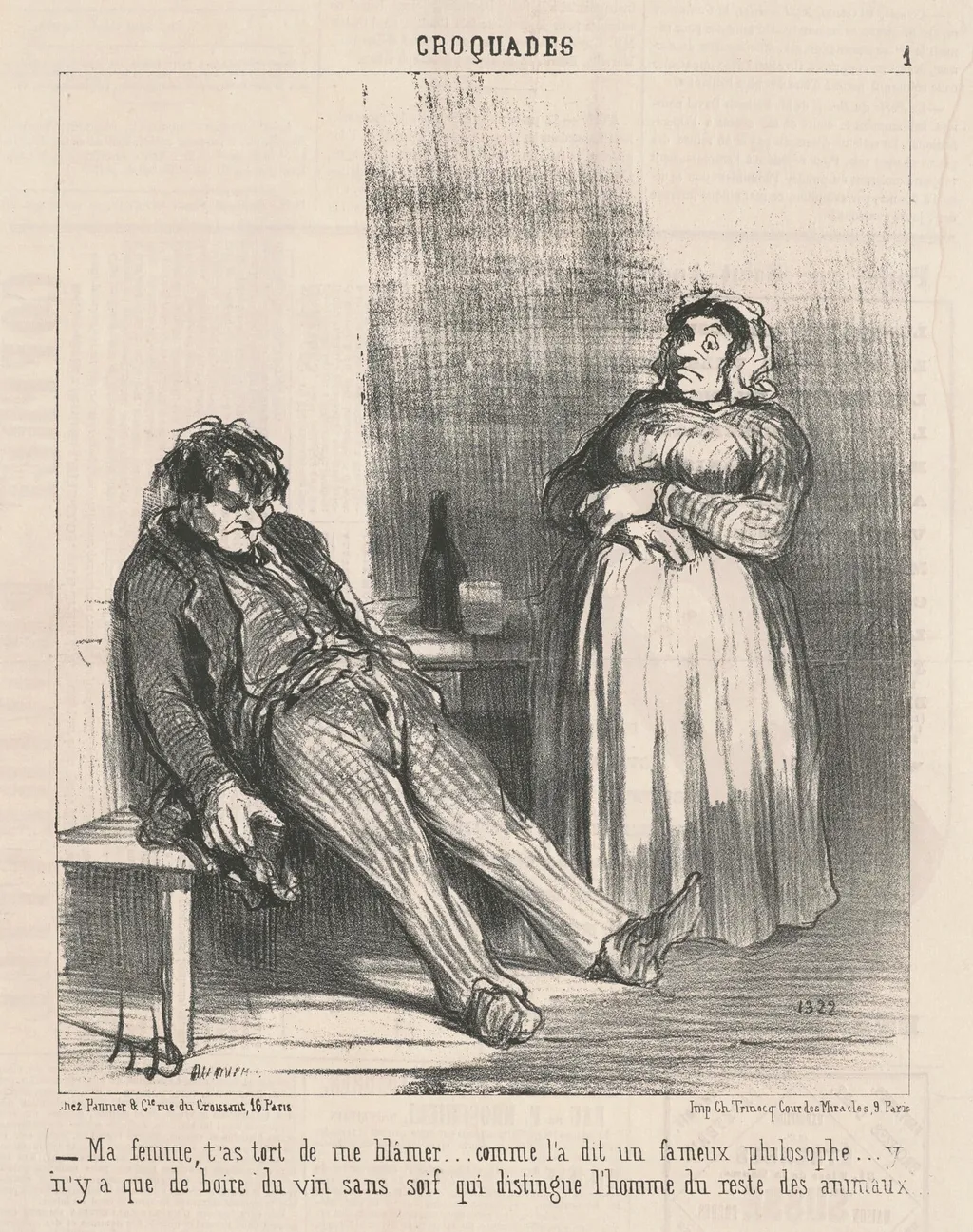
Ma femme, t'as tort de me blamer ... is an ink print by the Impressionist artist Honoré Daumier. It dates from 1851 and is held in the collection of the National Gallery of Art.
About this work
Overview
Honoré Daumier’s lithograph titled *Ma femme, t’as tort de me blamer* presents a domestic scene in which a seated man and a standing woman share a silent exchange. The composition is simple yet charged, highlighting the disparity between the man’s relaxed posture and the woman’s tense demeanor.
Subject & Meaning
The work captures a moment of interpersonal strain: the man sits with crossed arms, his expression calm, while the woman stands rigidly, her face drawn and serious. The lack of physical contact and the contrasting attitudes suggest underlying conflict or unspoken grievances within the couple.
Technique & Style
Daumier employed the lithographic process, drawing directly onto a flat stone with a greasy crayon. The stone retained the drawn areas when inked, allowing the image to be transferred onto paper through pressure. This method enabled the artist to reproduce the immediacy of a sketch while preserving fine line work.
History & Provenance
Created during Daumée’s prolific period of social observation, the print reflects his interest in everyday French life. While specific exhibition records are scarce, the lithograph has been catalogued among his works that critique domestic and societal interactions.
Context
In the mid‑19th century, lithography became a popular medium for artists to disseminate commentary on contemporary life. Daumier, known for his satirical caricatures, used this format to explore intimate, private moments as well as public scenes, extending his critique beyond the overtly political.
Legacy
The piece exemplifies Daumier’s capacity to convey psychological nuance through modest means, influencing later realist and impressionist artists who sought to depict the subtleties of ordinary encounters. Its stark portrayal of marital tension continues to be referenced in studies of gender dynamics in art.
Artist & collection

Artist
Honoré-Victorin Daumier was a French painter, sculptor, and printmaker, whose many works offer commentary on the social and political life in France, from the Revolution of 1830 to the fall of the Second French Empire in 1870.