Artwork
J'la croyais mieux qu'ça ...
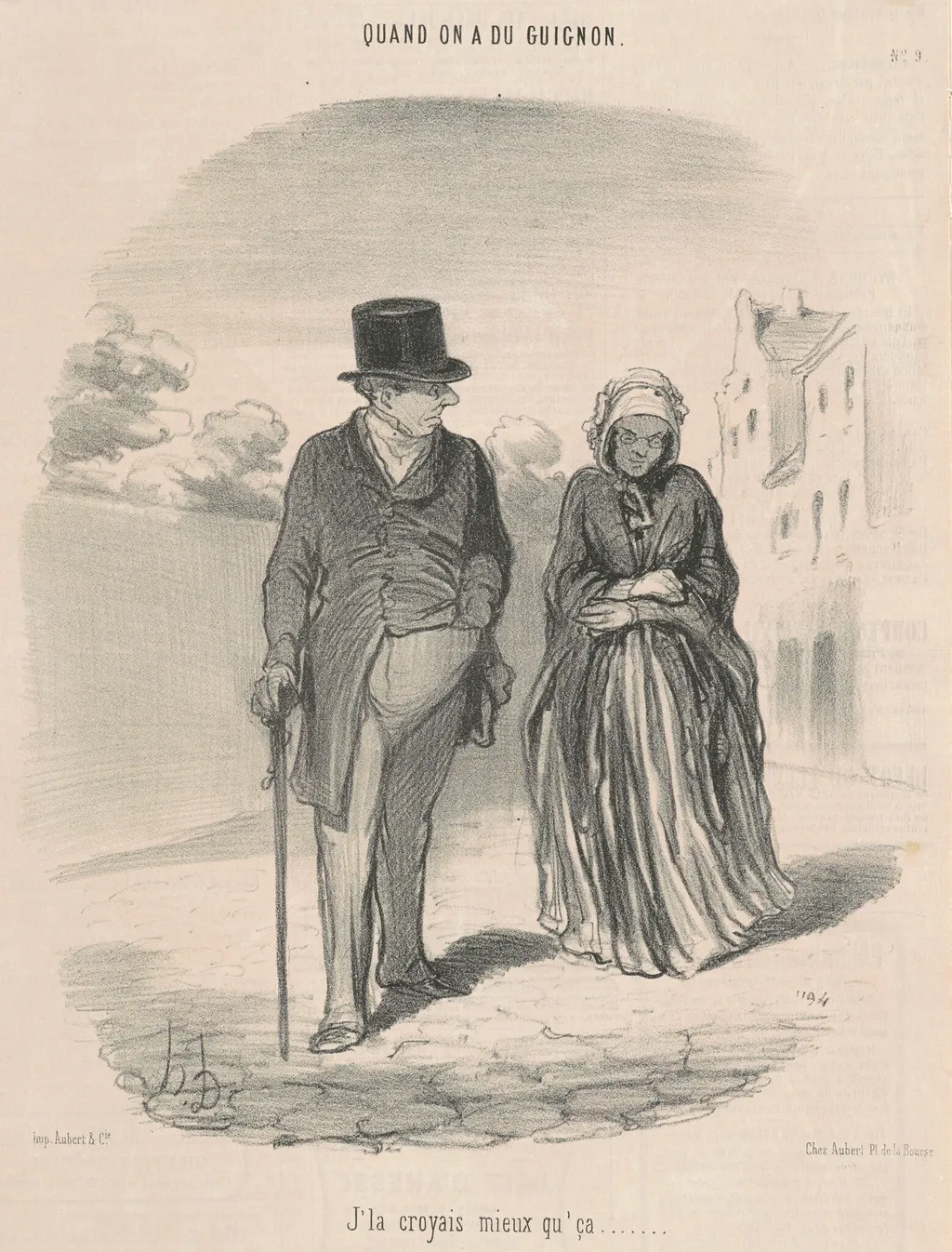
J'la croyais mieux qu'ça ... is an ink print by the Romanticist artist Honoré Daumier. It dates from 1849 and is held in the collection of the National Gallery of Art.
About this work
This 1849 lithograph shows a man and woman walking side by side. The man looks straight ahead with a serious face. The woman’s face is partly hidden by her arm. The background has clouds and some buildings.
Daumier made this during a time when artists mocked society’s flaws. Lithography let him print bold lines fast, which helped spread his sharp humor.
Look up Daumier, Honoré next.
Overview
Created in 1849, this lithograph by Honoré Daumier captures a quiet moment between two figures in an urban setting. Executed in the medium of lithography, it reflects Daumier’s skill in using rapid, expressive lines to convey social observation. The work belongs to a series of prints that critique the moral and emotional tensions of middle-class life in mid-19th century France.
Subject & Meaning
A man and woman walk in silence, their postures suggesting emotional distance.
A man and woman walk in silence, their postures suggesting emotional distance. The man’s rigid gaze and clenched jaw imply disappointment or disillusionment, while the woman’s face is partially veiled by her raised arm, hinting at withdrawal or concealment. The title, translating to 'I thought she was better than that,' frames the scene as a moment of personal betrayal, reflecting societal anxieties about trust and appearances.
Technique & Style
Daumier employed lithography to achieve bold, fluid contours and strong tonal contrasts. His use of simplified forms and minimal detail focuses attention on gesture and expression rather than environmental realism. The background, suggested by sparse architectural elements and cloud-like smudges, avoids literalism, reinforcing the psychological weight of the figures’ interaction.
History & Provenance
Produced during the early years of the French Second Republic, the print was likely published in a periodical such as Le Charivari, where Daumier regularly contributed satirical imagery. Its circulation among urban readers helped disseminate his critiques of bourgeois values. The work remains part of major institutional collections, preserved for its social commentary rather than aesthetic novelty.
Context
Daumier worked amid rising political instability and shifting class dynamics in France. His prints targeted hypocrisy, pretension, and emotional emptiness in domestic and public life. Lithography allowed him to produce images quickly and cheaply, making his critiques accessible to a broad audience. This piece aligns with his broader project of exposing the gap between social ideals and lived reality.
Legacy
Daumier’s lithographs, including this one, influenced later generations of realist and expressionist artists by demonstrating how everyday scenes could carry profound social critique. His ability to distill complex emotions into minimal visual forms set a precedent for modern graphic storytelling. Though not widely celebrated in his lifetime, his work is now recognized for its unflinching insight into human behavior.
Artist & collection
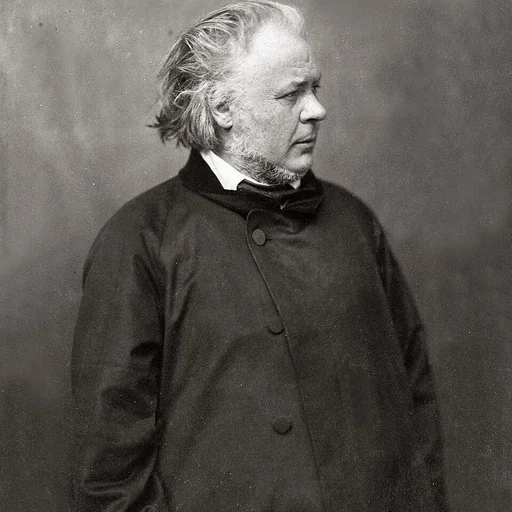
Artist
Honoré-Victorin Daumier was a French painter, sculptor, and printmaker, whose many works offer commentary on the social and political life in France, from the Revolution of 1830 to the fall of the Second French Empire in 1870.