Artwork
Oedipe chez le Sphinx
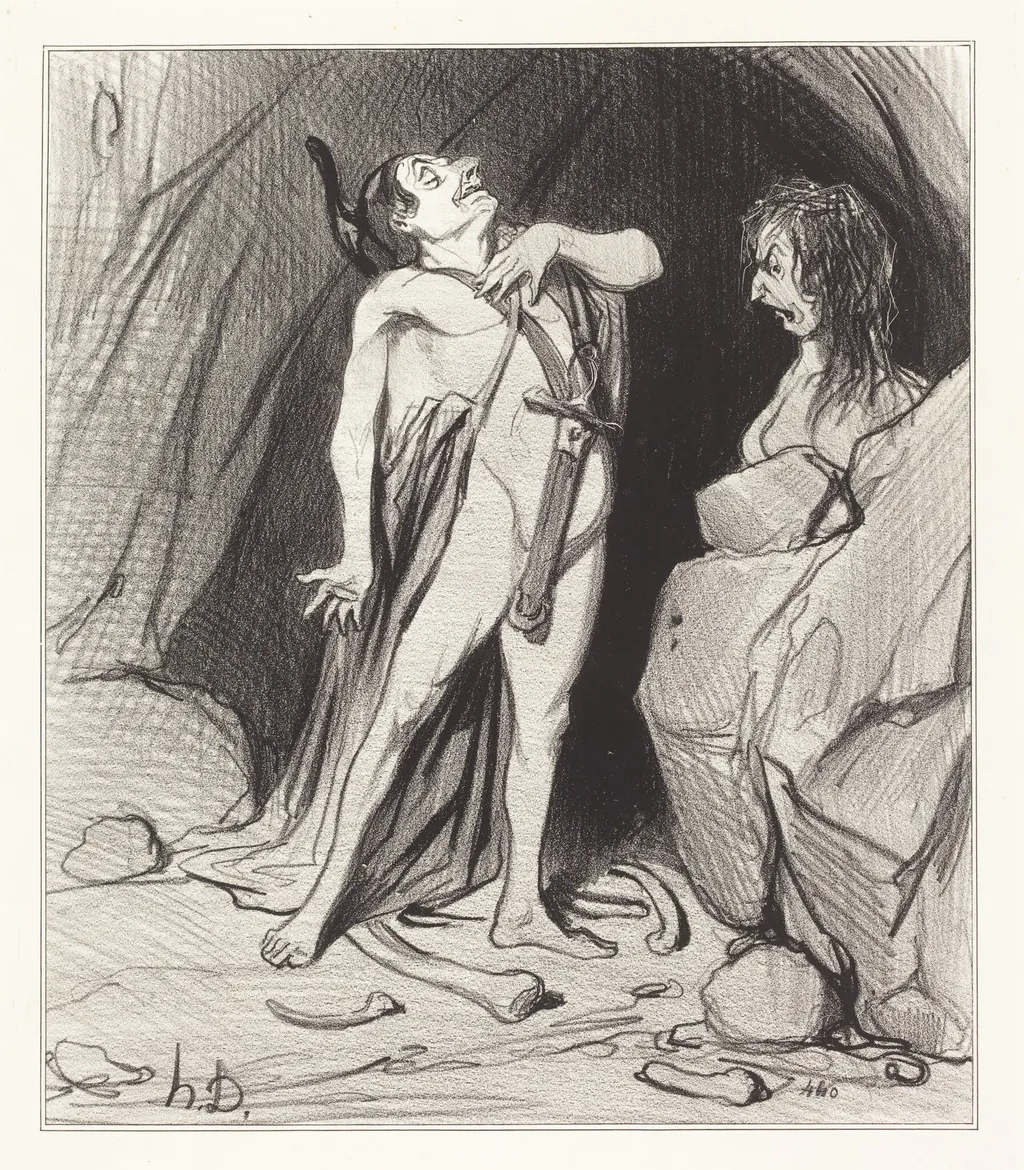
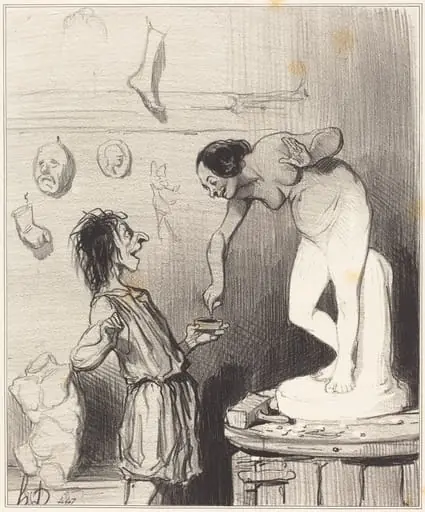
Oedipe chez le Sphinx is an ink print by the Romanticist artist Honoré Daumier. It dates from 1842 and is held in the collection of the National Gallery of Art.
About this work
Overview
Created in 1842, *Oedipe chez le Sphinx* is a lithographic print on wove paper by French artist Honoré Daumier. The image presents a mythic confrontation between the hero Oedipus and the Sphinx within a dim, rocky interior. Daumier’s treatment is brisk and expressive, emphasizing gesture and emotion over realistic detail.
Subject & Meaning
The composition draws on the ancient story in which Oedipus must answer the Sphinx’s riddle to pass. Daumier portrays Oedipus as a barefoot, loosely robed figure with raised arms, suggesting inquiry, while the Sphinx crouches, clutching a stone and crowned with foliage, embodying menace. The pairing invites reflection on the tension between reason and irrational power.
Technique & Style
Executed in lithography, the work relies on swift, sketch‑like lines that convey movement and immediacy. Daumier’s characteristic caricatural approach simplifies forms, allowing the figures to function as symbols rather than detailed portraits. The rough textures of the surrounding cavern and the stark contrast of light and shadow heighten the dramatic atmosphere.
History & Provenance
Daumier produced the print during a period of intense political engagement, when his republican sympathies found outlet in satirical journals such as *La Caricature* and *Le Charivari*. Though the subject is classical, the piece reflects his broader practice of using humor and exaggeration to comment on contemporary authority, linking antiquity with 19th‑century French discourse.
Artist & collection

Artist
Honoré-Victorin Daumier was a French painter, sculptor, and printmaker, whose many works offer commentary on the social and political life in France, from the Revolution of 1830 to the fall of the Second French Empire in 1870.