Artwork
Pygmalion
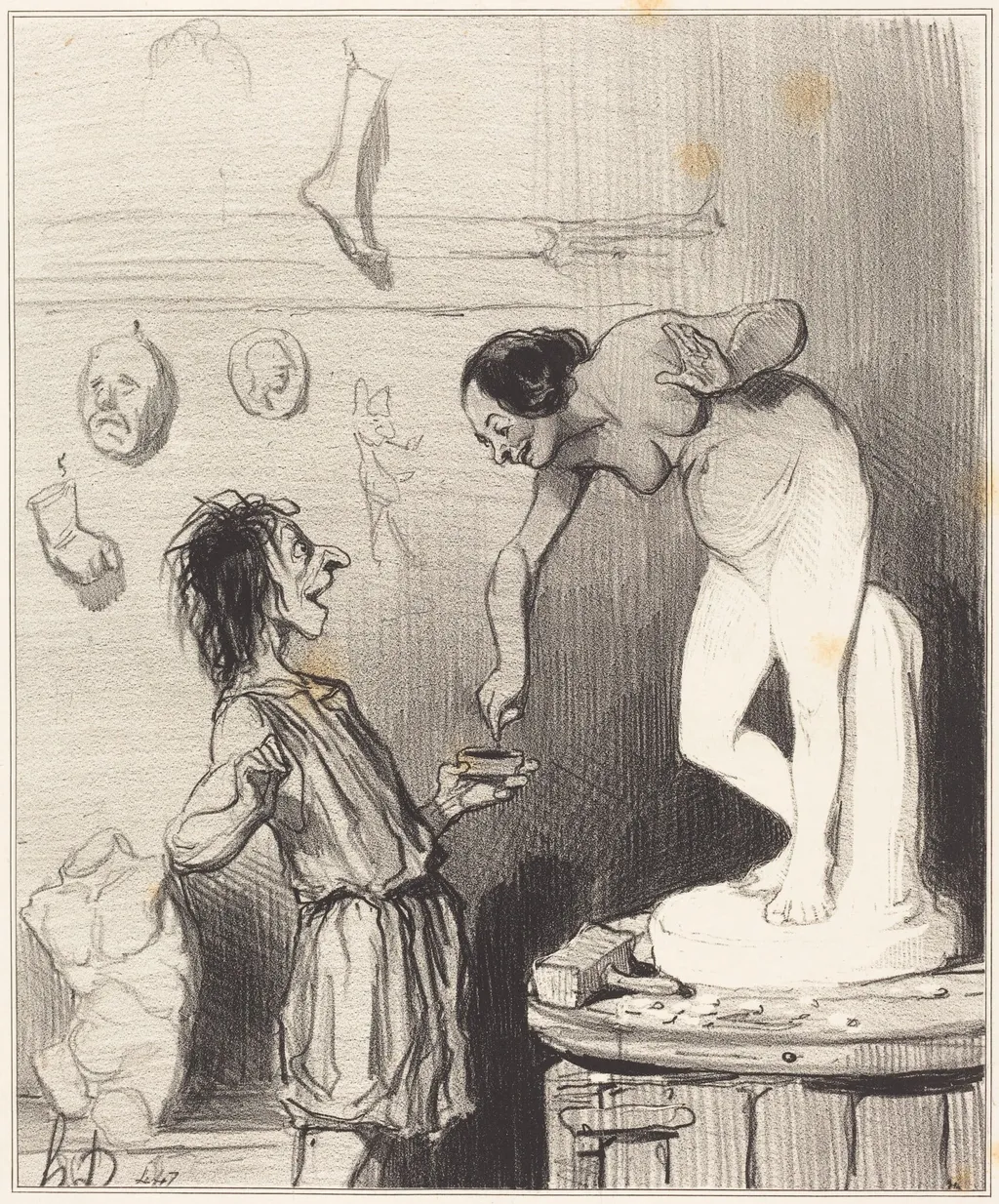
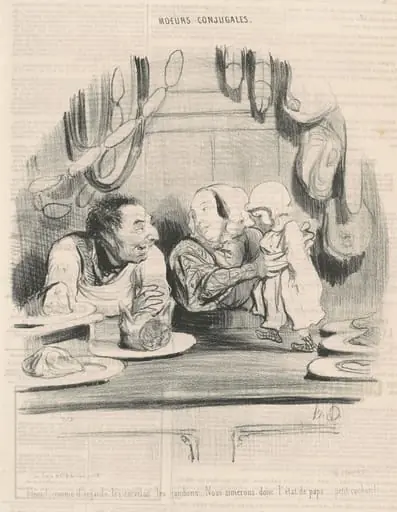
Pygmalion is an ink print by the Romanticist artist Honoré Daumier. It dates from 1842 and is held in the collection of the National Gallery of Art.
About this work
Overview
Created in 1842, this lithograph by Honoré Daumier belongs to his body of work that lampooned the social and political order of the July Monarchy and the early Second Republic. Executed as a single‑sheet print, it reinterprets the ancient tale of Pygmalon, using the myth as a vehicle for contemporary satire rather than a straightforward illustration.
Subject & Meaning
By juxtaposing the mythic act of creation with a cluttered studio, Daumier critiques both artistic pretension and the pretentiousness of those who wield power.
The image presents a sculptor bent over a workbench, chiseling a figure that seems on the verge of life, while a startled woman watches. Scattered around them are unfinished sketches of heads and hands, suggesting a chaotic creative process. By juxtaposing the mythic act of creation with a cluttered studio, Daumier critiques both artistic pretension and the pretentiousness of those who wield power.
Technique & Style
Daumier employed the lithographic method, drawing directly onto a limestone plate with greasy crayon before printing. The work’s loose, gestural lines and the presence of faint, provisional sketches convey a sense of immediacy, characteristic of his caricatural style. The contrast between the sharply rendered central figures and the softer, almost ghostly ancillary drawings emphasizes the tension between finished authority and underlying disorder.
History & Provenance
First published in the satirical journals of the period, the print circulated among readers of *La Caricature* and *Le Charivari*, venues where Daumier regularly contributed. It later entered private collections before being acquired by public institutions interested in 19th‑century French printmaking, reflecting its continued relevance as a document of political commentary.
Context
During the 1840s France experienced rapid political change, and Daumier’s output responded to the shifting power dynamics. His choice to recast a classical myth allowed him to veil criticism of contemporary elites while appealing to an audience familiar with both antiquity and current events. The work thus functions as a visual allegory, linking the artist’s studio to the broader arena of public discourse.
Artist & collection

Artist
Honoré-Victorin Daumier was a French painter, sculptor, and printmaker, whose many works offer commentary on the social and political life in France, from the Revolution of 1830 to the fall of the Second French Empire in 1870.









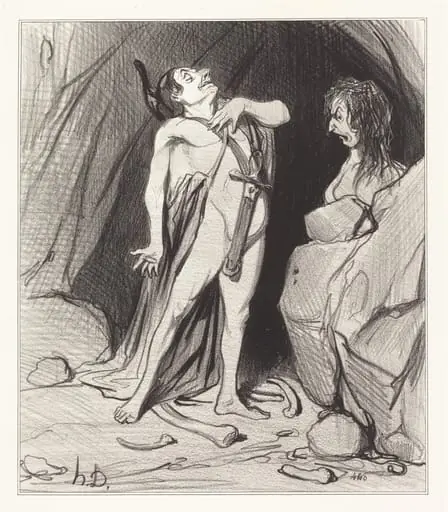 Oedipe chez le Sphinx
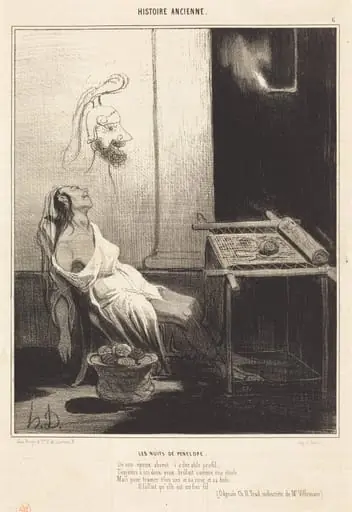 Les Nuits de Pénélope
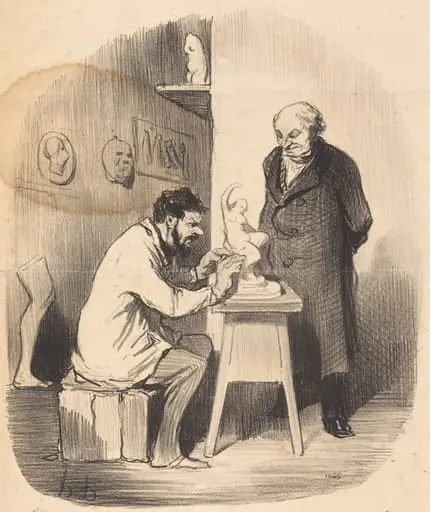 Faudra que je vous fasse faire un jour...
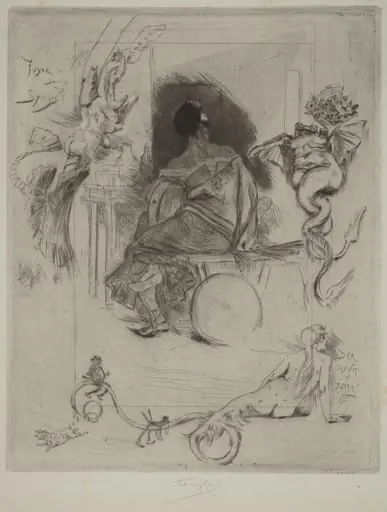 La Dernière Maja
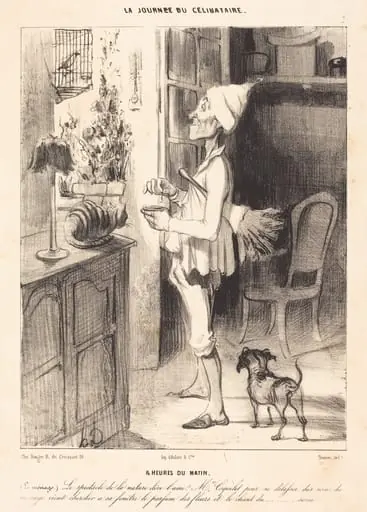 8 heures du matin
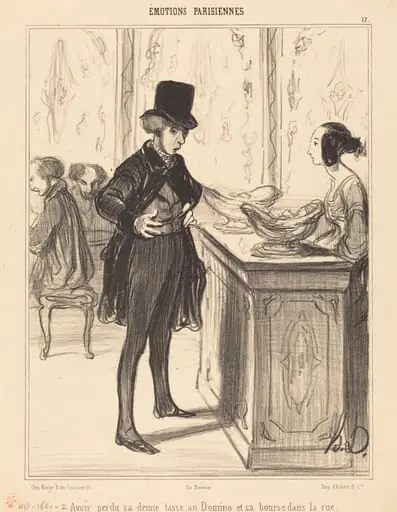 Avoir perdu sa demi-tasse au Domino et sa bourse dans la rue
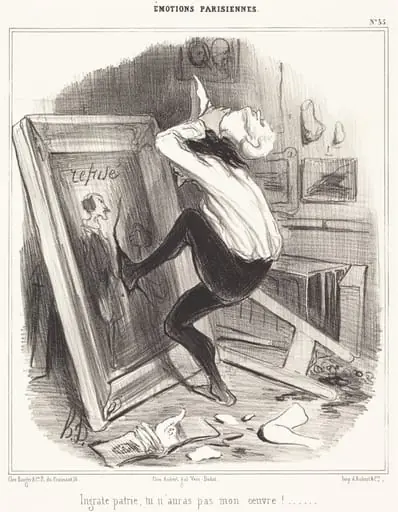 Ingrate patrie, tu n'auras pas mon oeuvre!...
 Mission pénible et délicate du professeur de dessin...
 At the Renaissance: Sarah Bernhardt in "Phedre" (A la Renaissance: Sarah Bernhardt dans "Phèdre")
 Femme de lettre humanitaire se livrant sur l'homme ...
 Une Femme comme moi... remettre un bouton?...
 Hein! comme il regarde les cervelas...