Artwork
Oui je viens, dans son temple...
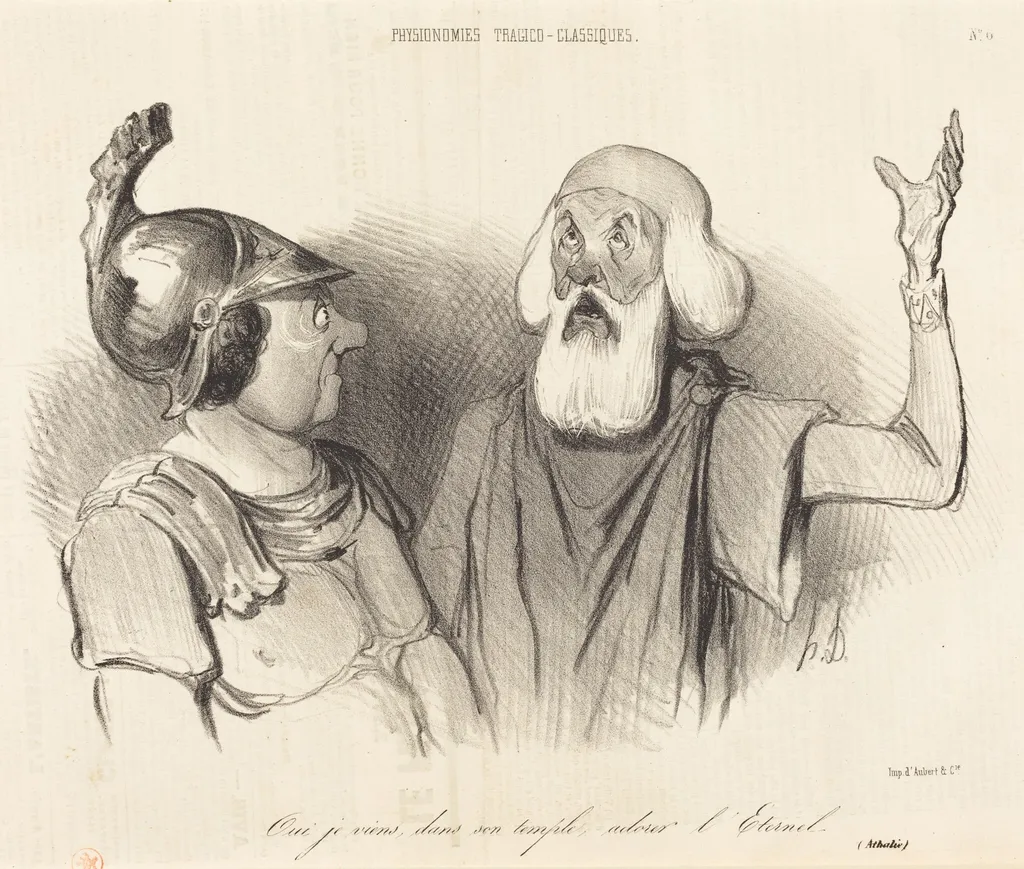
Oui je viens, dans son temple... is an ink print by the Romanticist artist Honoré Daumier. It dates from 1841 and is held in the collection of the National Gallery of Art.
About this work
Overview
Created in 1841, this lithograph on newsprint by Honoré Daumier was produced for a popular French political journal, likely *La Caricature* or *Le Charivari*.
Created in 1841, this lithograph on newsprint by Honoré Daumier was produced for a popular French political journal, likely *La Caricature* or *Le Charivari*. Its ephemeral medium underscores its function as timely social commentary rather than fine art. Daumier employed lithography to rapidly disseminate visual critiques of power structures during the July Monarchy, reaching a wide, literate public through affordable print runs.
Subject & Meaning
Two male figures in profile confront each other with heightened intensity—one in military helmet, the other with a long white beard. Their raised arms and direct gaze suggest a moment of solemn oath or confrontation, possibly symbolizing the clash between state authority and religious or intellectual tradition. The scene evokes ritualized tension, hinting at the fraught relationship between monarchy, church, and civic ideals in post-revolutionary France.
Technique & Style
Daumier used lithography to achieve bold contrasts and expressive line work, exploiting the medium’s capacity for rapid execution and tonal variation. The figures are rendered in sharp profile against a lightly shaded background, enhancing their sculptural presence. The rough texture of newsprint amplifies the raw, urgent quality of the image, aligning with the immediacy of journalistic satire rather than polished artistic finish.
History & Provenance
The print originated in Daumier’s prolific output for radical periodicals between 1830 and 1845, a period when political caricature was both popular and perilous. Censorship frequently targeted his work, leading to his brief imprisonment in 1832. This piece, like many others, was distributed widely but rarely preserved as a collectible at the time, making surviving examples historically significant as artifacts of dissent.
Context
Produced during the July Monarchy under Louis-Philippe, the image reflects rising tensions between secular governance and entrenched institutions. Daumier’s caricatures responded to public frustration over broken revolutionary promises and the monarchy’s perceived hypocrisy. His use of classical profile poses borrowed from historical painting, subverting their dignity to expose contemporary power dynamics in accessible, biting form.
Legacy
Daumier’s lithographs laid groundwork for modern political illustration and editorial cartooning. Though initially dismissed as ephemeral, his work gained recognition in the late 19th century for its psychological depth and formal innovation. Today, this print is studied as a key example of how print media could challenge authority, influencing generations of artists who used visual satire as a tool for social critique.
Own this work as a print
Artist & collection
Artist
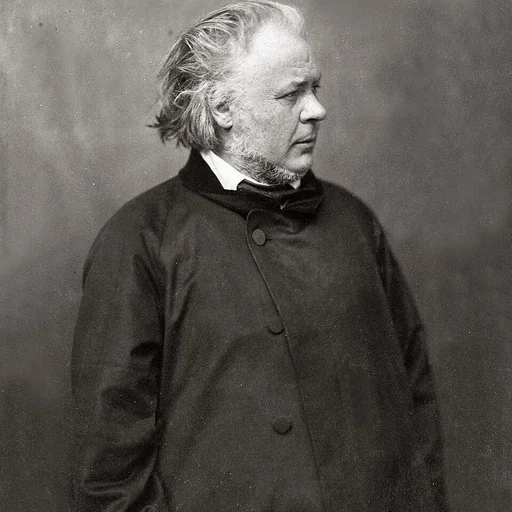
Honoré-Victorin Daumier was a French painter, sculptor, and printmaker, whose many works offer commentary on the social and political life in France, from the Revolution of 1830 to the fall of the Second French Empire in 1870.

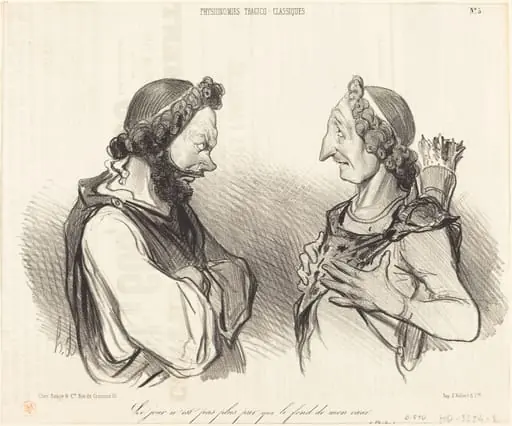 Le Jour n'est pas plus pur...
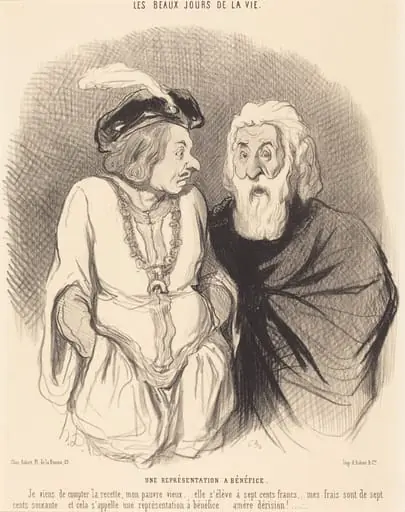 Une Représentation a bénéfice
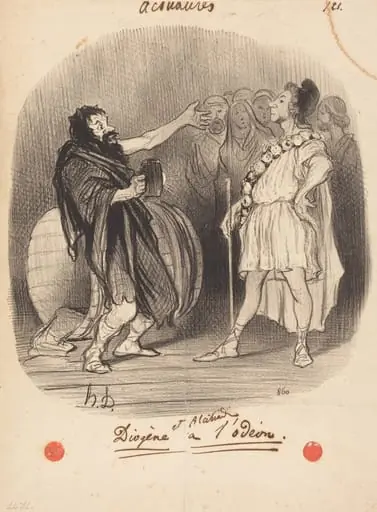 Diogène et Alcibiade a l'Odéon
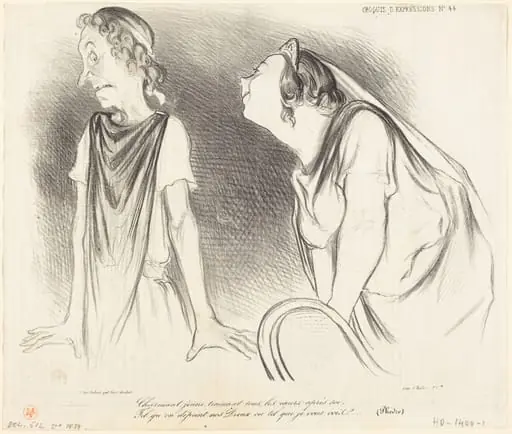 Charmant... trainant tous les coeurs après soi...
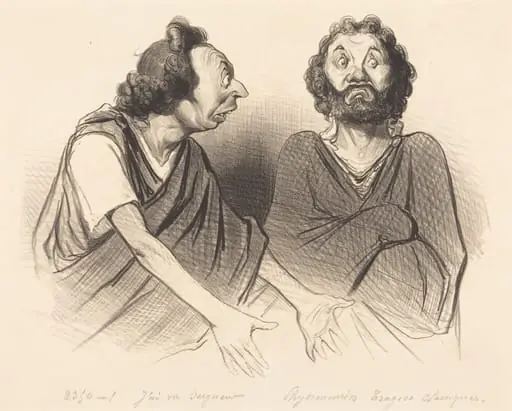 J'ai vu Seigneur... votre malheureux fils...
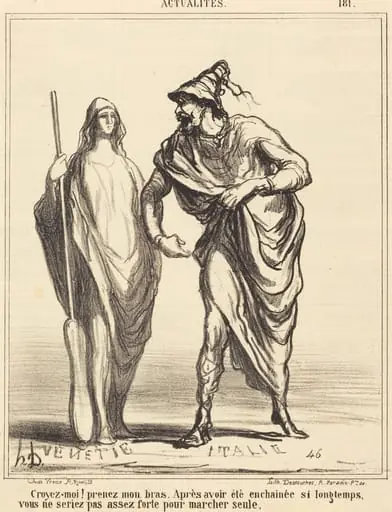 Croyez-moi! prenez mon bras...
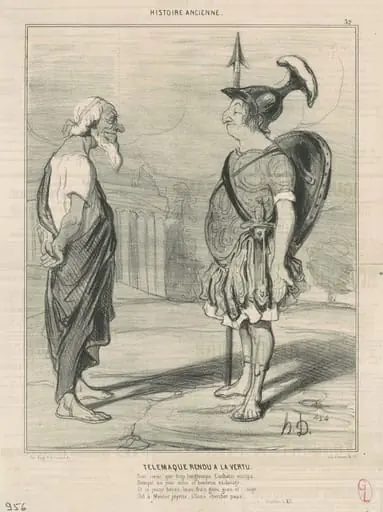 Télémaque rendu a la vertu
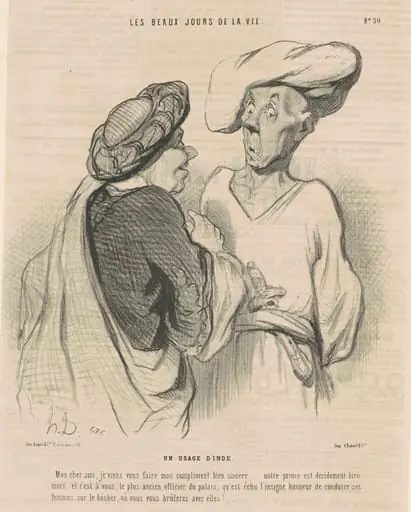 Un usage d'Inde
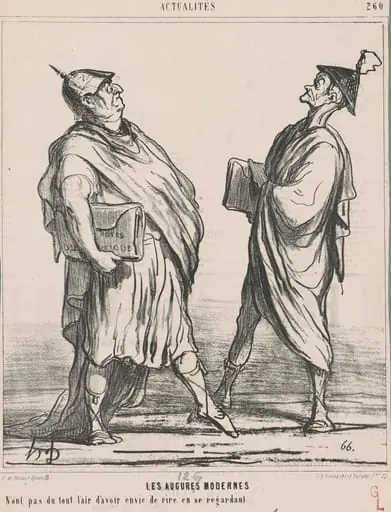 Les augures modernes ...
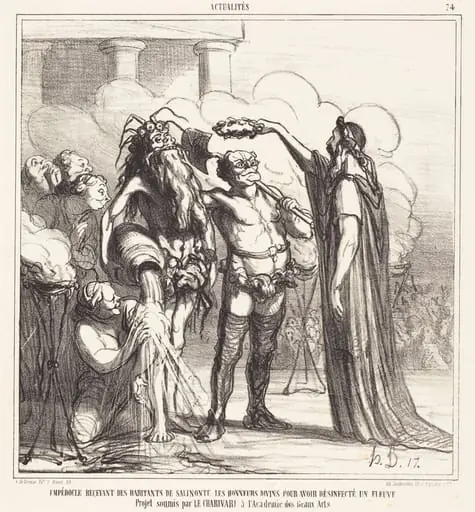 Empedocle recevant... les honneurs divins...