Artwork
Télémaque rendu a la vertu
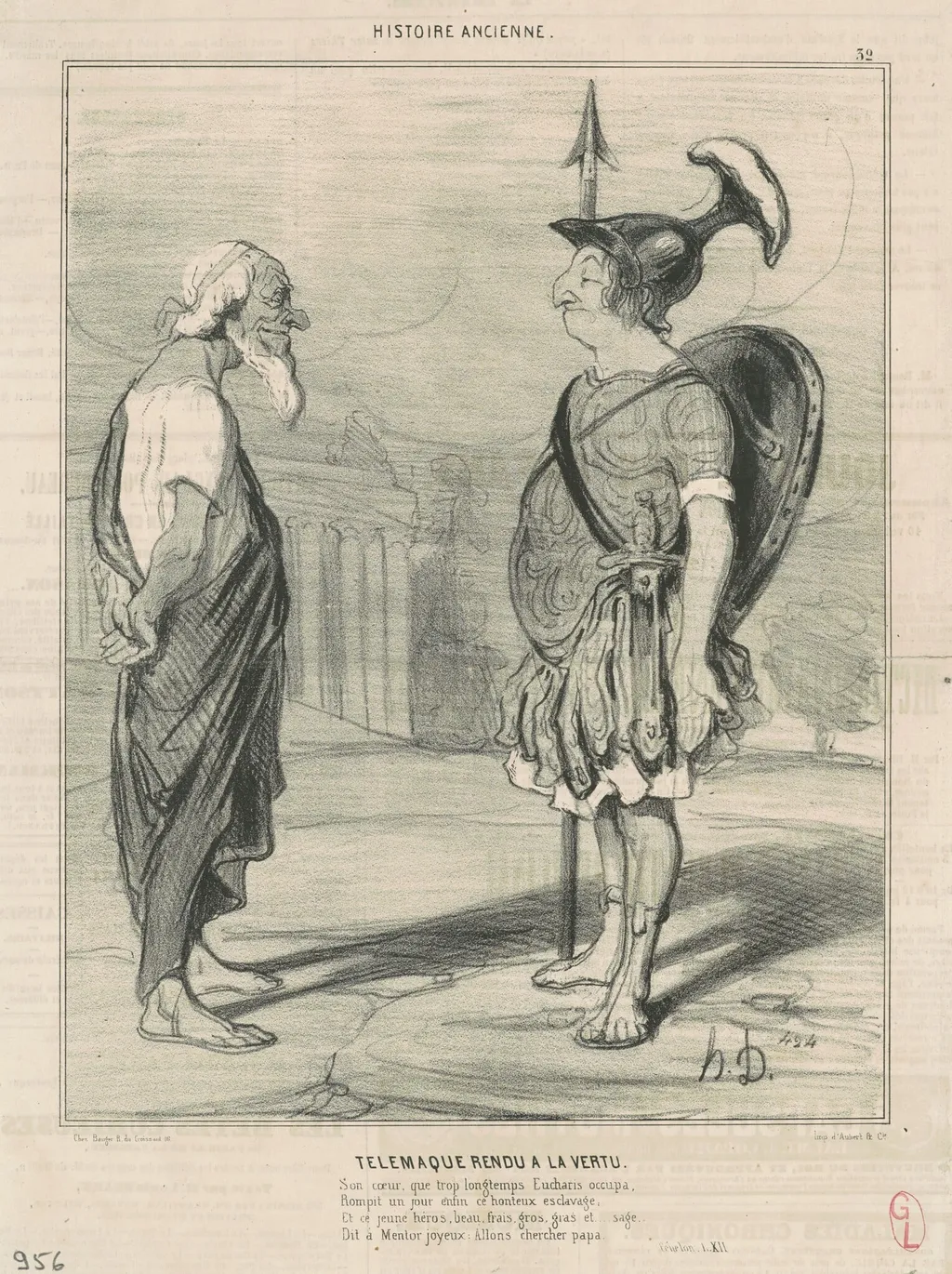
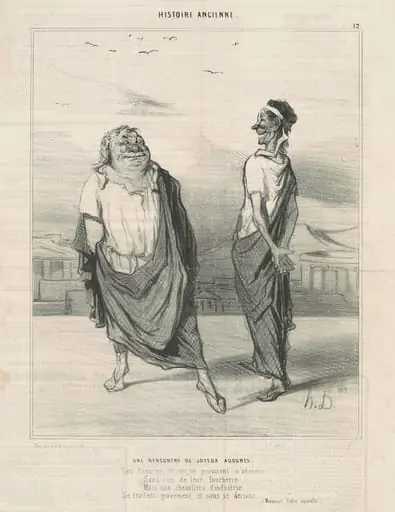
Télémaque rendu a la vertu is an ink print by the Romanticist artist Honoré Daumier. It dates from 1842 and is held in the collection of the National Gallery of Art.
About this work
Overview
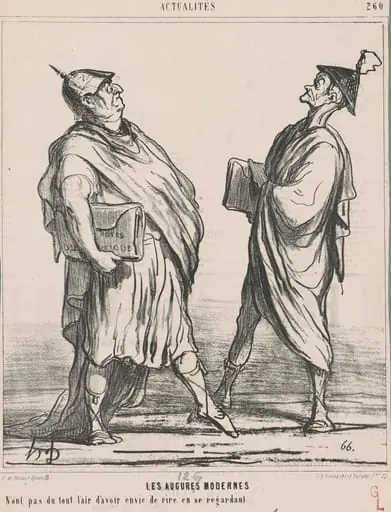
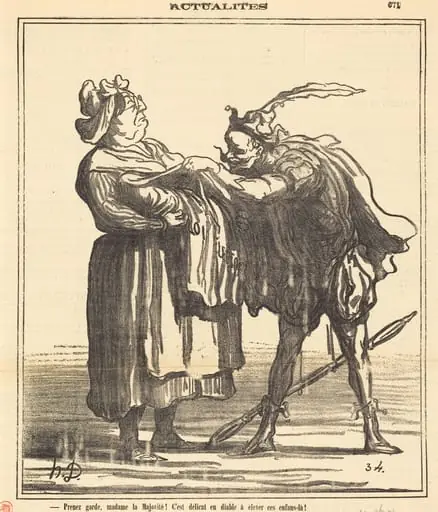
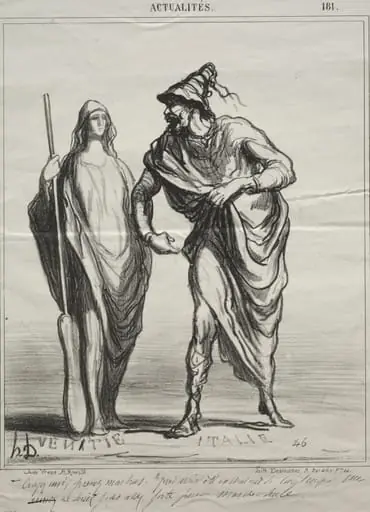
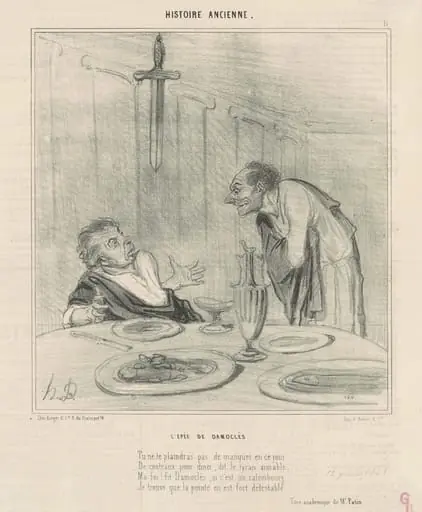
Created in 1842, this lithograph by Honoré Daumier presents a symbolic encounter between an aged figure and a young warrior. Rendered in the medium of lithography, the work belongs to a series of prints that engage with moral and civic themes. Daumier’s choice of technique allowed for wide circulation, aligning with his commitment to reaching public audiences through accessible imagery.
Subject & Meaning
The contrast between them evokes a classical ideal: the tempering of physical power by experience and moral insight.
The scene portrays an elderly man, draped in simple robes, guiding a youthful warrior clad in armor. The elder’s posture suggests counsel, while the warrior’s rigid stance implies unrefined vigor. The contrast between them evokes a classical ideal: the tempering of physical power by experience and moral insight. No narrative is drawn from myth, but the figures function as archetypes of wisdom and unbridled force.
Technique & Style
Daumier employed lithography to achieve sharp tonal contrasts and expressive line work. His brushwork on stone emphasizes texture—wrinkled fabric against polished metal—without excessive detail. The composition is tightly framed, focusing attention on the interaction between the two figures. The style is economical yet evocative, characteristic of Daumier’s ability to convey complex ideas with minimal means.
History & Provenance
The print was produced during Daumier’s most active period of social commentary, shortly after his imprisonment for caricaturing King Louis-Philippe. It was likely published in a periodical or as a standalone plate, intended for a middle-class readership. No early ownership records are widely documented, but its inclusion in later museum collections reflects its recognition as a representative work of 19th-century French graphic art.
Context
In the 1840s, France grappled with political instability and shifting ideals of leadership. Daumier’s imagery responded to public discourse on virtue, authority, and civic responsibility. While not overtly political, this print echoes contemporary philosophical debates about the role of experience in governance. It aligns with broader cultural currents that valued moral education over brute strength.
Legacy
The lithograph remains a key example of Daumier’s moral allegories, influencing later artists who used printmaking for ethical inquiry. Its restrained symbolism and focus on human interaction set it apart from overt satire. Scholars cite it as evidence of Daumier’s deeper engagement with classical themes, beyond his better-known political cartoons.
Artist & collection
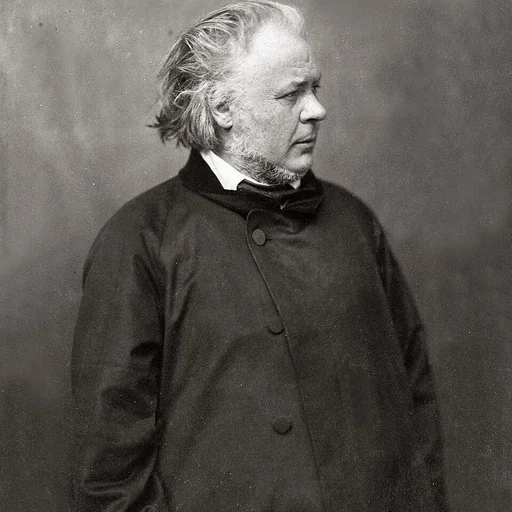
Artist
Honoré-Victorin Daumier was a French painter, sculptor, and printmaker, whose many works offer commentary on the social and political life in France, from the Revolution of 1830 to the fall of the Second French Empire in 1870.