Artwork
Oui, Madame Chaboulard ...
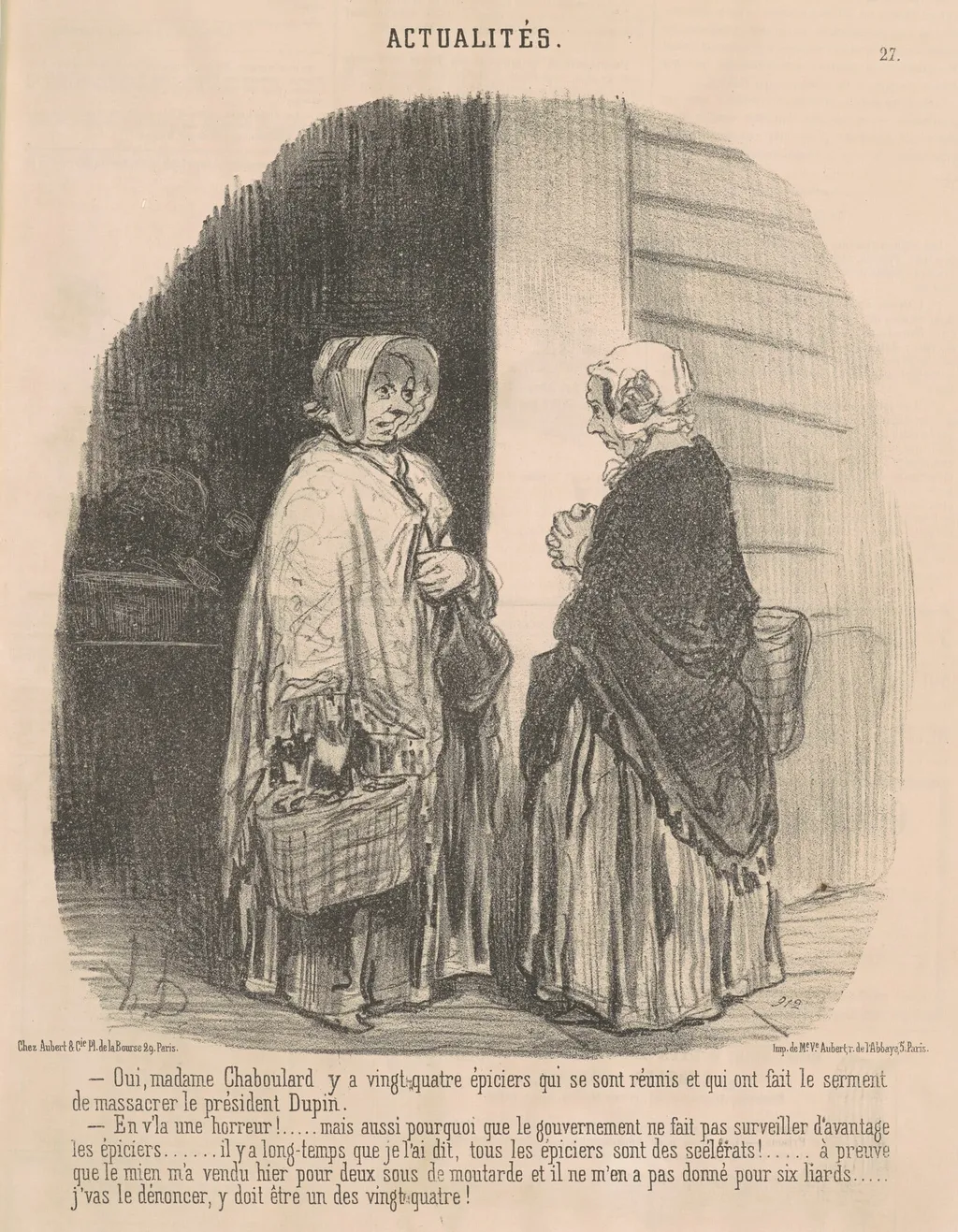
Oui, Madame Chaboulard ... is an ink print by the Impressionist artist Honoré Daumier. It dates from 1850 and is held in the collection of the National Gallery of Art.
About this work
Overview
The composition is confined to the figures, whose faces and garments are rendered with careful line work, emphasizing the immediacy of the exchange.
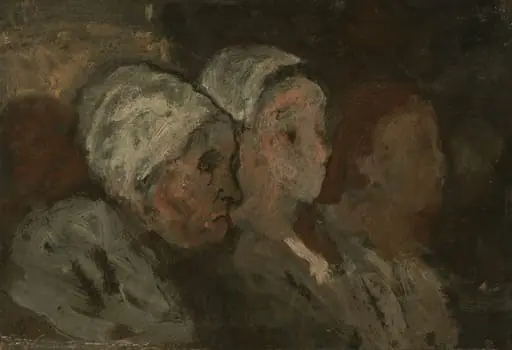
Honoré Daumier’s lithograph ‘Oui, Madame Chaboulard’ presents a quiet scene of two women standing close together, engaged in conversation. The composition is confined to the figures, whose faces and garments are rendered with careful line work, emphasizing the immediacy of the exchange. The work captures a fleeting moment of personal interaction, typical of Daumier’s interest in everyday social encounters.
Subject & Meaning
The print portrays a private dialogue between two women, their expressions ranging from curiosity to subtle amusement. Their posture and the slight turn of their heads suggest intimacy and mutual attention, inviting viewers to consider the nuances of female communication in a 19th‑century setting. The title, a polite greeting, reinforces the courteous tone of the encounter.
Technique & Style
Executed as a lithograph, Daumier employs bold, sketch‑like lines that convey both form and texture. The delicate hatching delineates the folds of the women’s period clothing, while the careful rendering of facial features highlights individual character. The medium allows for a rapid, spontaneous quality, aligning with Daumier’s broader practice of capturing life’s immediacy.
Context
Created during the mid‑1800s, the work reflects contemporary urban life in Paris, where public spaces often hosted brief, personal exchanges. Daumier’s focus on ordinary subjects aligns with his broader oeuvre of social commentary, documenting the manners and dress of the burgeoning middle class. The lithograph thus serves as a visual record of gendered interaction in its historical moment.
Artist & collection
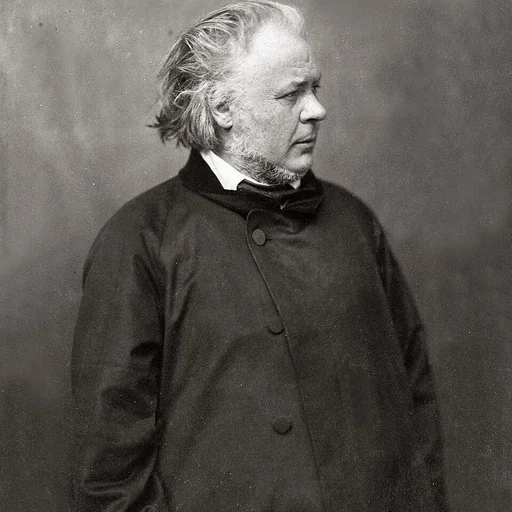
Artist
Honoré-Victorin Daumier was a French painter, sculptor, and printmaker, whose many works offer commentary on the social and political life in France, from the Revolution of 1830 to the fall of the Second French Empire in 1870.