Artwork
Oh! Mamechaboulard ... qu'est-ce qu'y va ... arriver ...
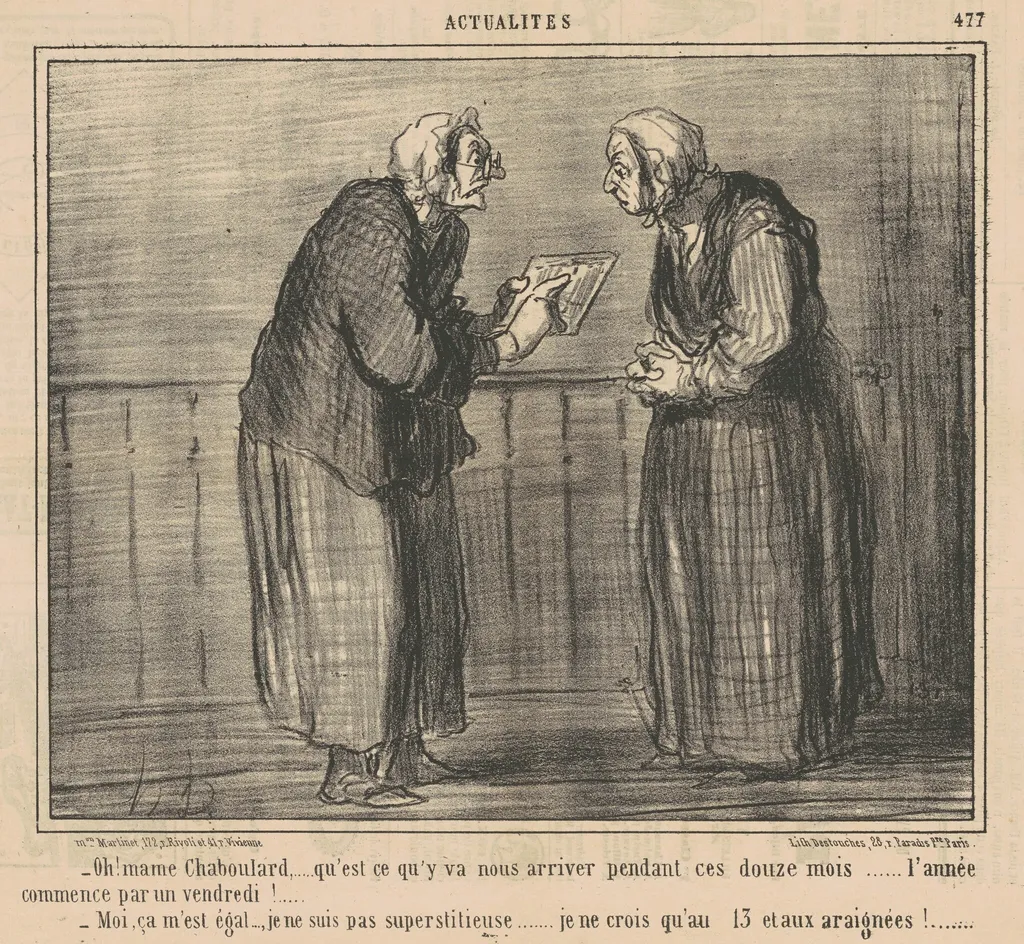
Oh! Mamechaboulard ... qu'est-ce qu'y va ... arriver ... is an ink print by the Impressionist artist Honoré Daumier. It dates from 1858 and is held in the collection of the National Gallery of Art.
About this work
You see two elderly women in a simple room, one reading to the other.
They're sitting close together, showing a warm connection.
The artist drew this scene by hand, which gives it a personal feel.
This personal touch highlights the everyday life of women in the 19th century.
The scene feels quiet and intimate, like a moment from real life.
Check out the work of artist: Daumier, Honoré.
Overview
Honoré Daumier’s lithograph titled “Oh! Mamechaboulard … qu’est‑ce qu’y va … arriver …” presents a quiet domestic interior where two elderly women sit together. One woman holds a book and appears to be reading aloud to her companion, creating a scene of shared attention and gentle companionship that captures a moment of everyday life.
Subject & Meaning
The work focuses on the intimate bond between the two figures, emphasizing the routine of reading as a social activity among women in the 19th century. By portraying an ordinary, private exchange rather than a public event, Daumier draws attention to the personal relationships and the quiet cultural practices that sustained women’s daily existence.
Technique & Style
Executed as a hand‑drawn lithograph, the image retains the slightly uneven lines and soft shading characteristic of the medium, lending it a spontaneous, almost sketch‑like quality. This tactile approach reinforces the sense of immediacy, as if the viewer is witnessing a candid moment rather than a staged composition.
Context
Created during the mid‑1800s, the print reflects Daumier’s broader interest in the lives of ordinary people, especially the working‑class and domestic sphere. The focus on elderly women reading together aligns with contemporary concerns about literacy, the spread of printed material, and the evolving role of women within the private sphere of the home.
Legacy
While not among Daumier’s most widely reproduced works, this lithograph contributes to the artist’s reputation for documenting everyday social interactions. It offers scholars a visual record of gendered domestic practices and adds depth to the understanding of 19th‑century French print culture.
Artist & collection

Artist
Honoré-Victorin Daumier was a French painter, sculptor, and printmaker, whose many works offer commentary on the social and political life in France, from the Revolution of 1830 to the fall of the Second French Empire in 1870.









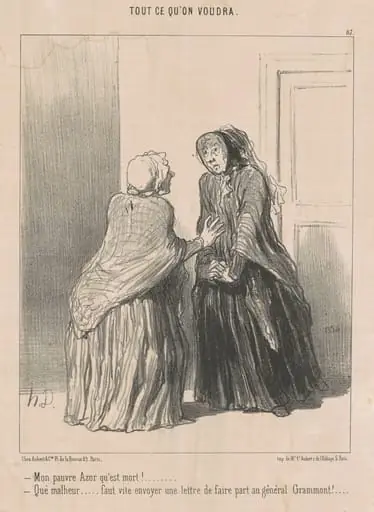 Mon pauvre azor qu'est mort! ...
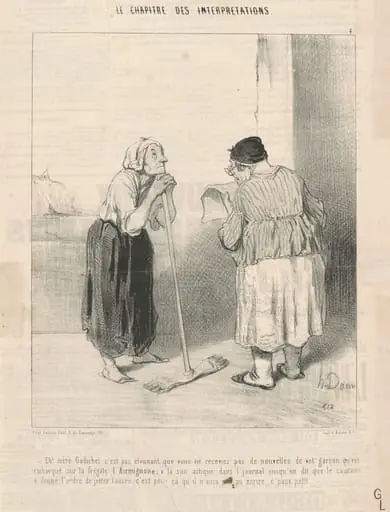 Eh! Mère Godichet c'est pas étonnant ...
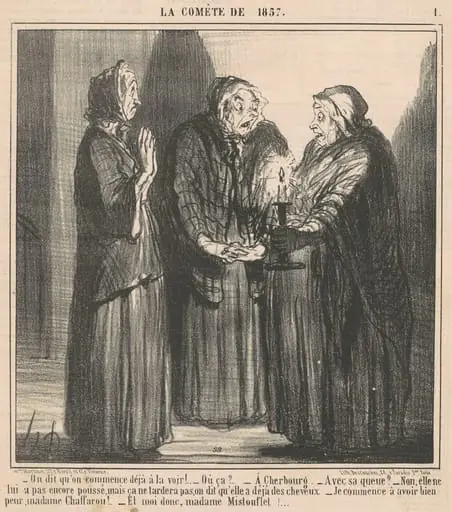 On dit qu'on commence déja a la voir ...
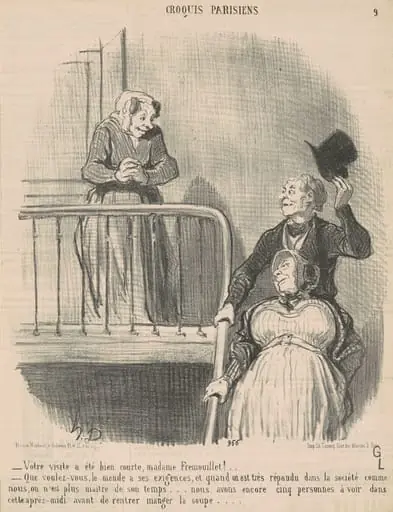 Votre visite a été bien courte ...
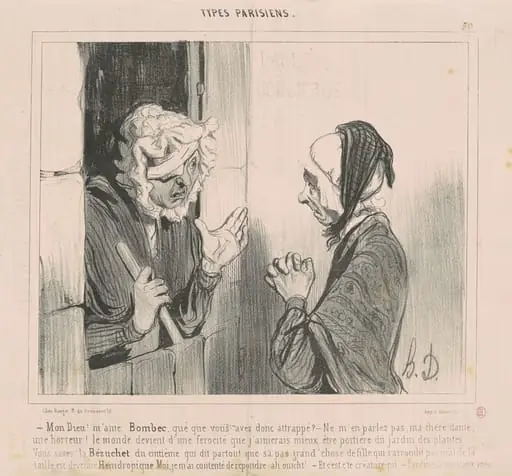 Mon dieu! M'ame Bombec qué que vous avez attrapé?
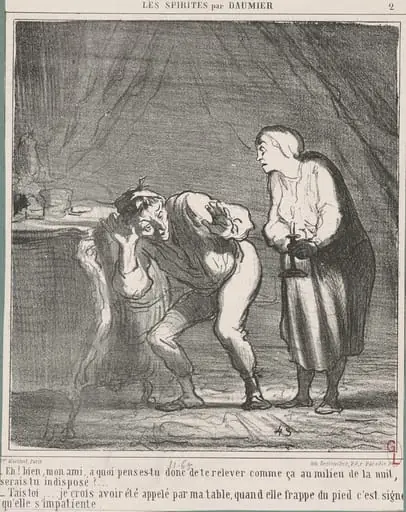 Eh! Bien ... mon ami, a quoi penses-tu? ...
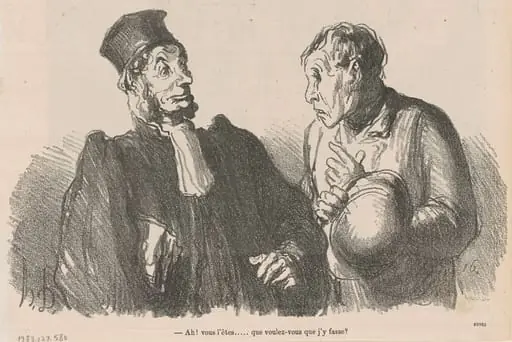 Ah! Vous l'êtes ... que voulez-vous que ...
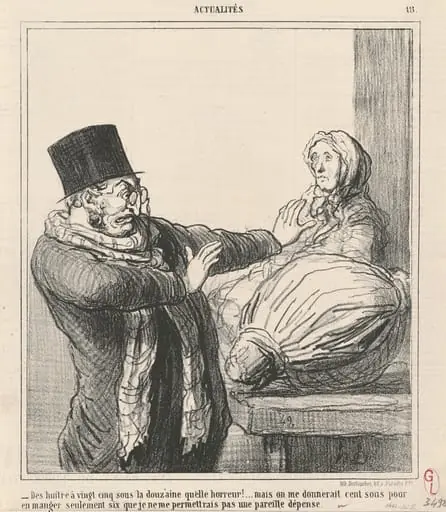 Des huitres a vingt-cinq sous la douzaine ... !
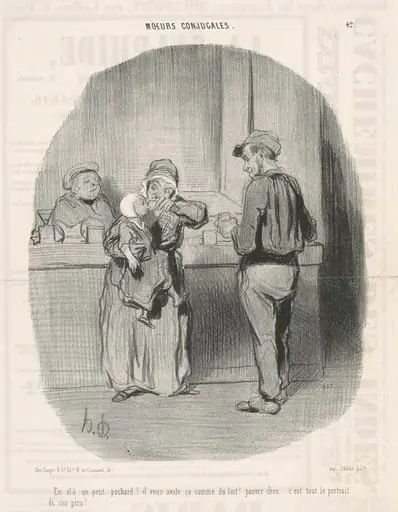 En v'là un petit pochard!