Artwork
Oui, monsieur, vous voyez en moi une victime
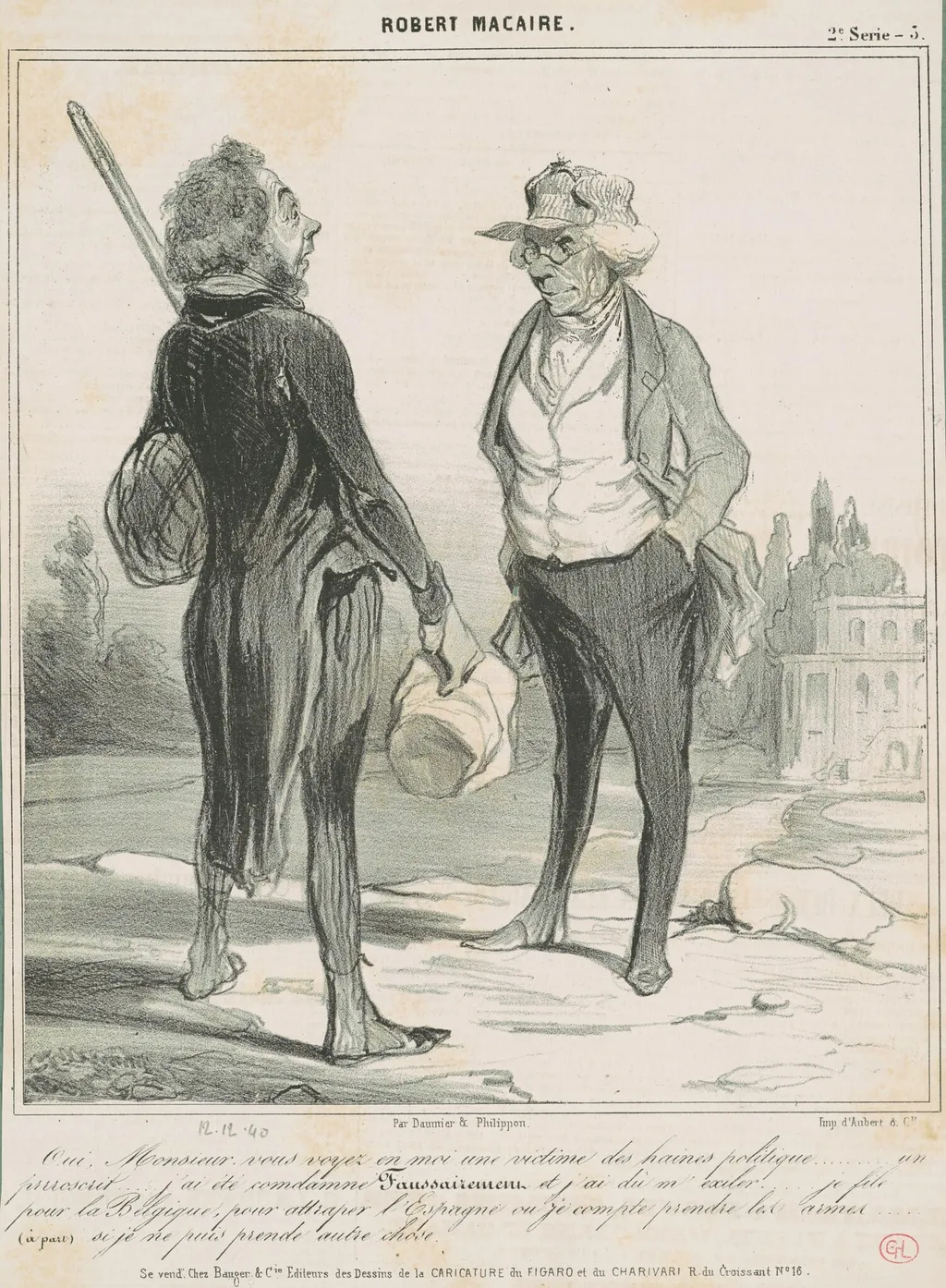
Oui, monsieur, vous voyez en moi une victime is an ink print by the Romanticist artist Honoré Daumier. It dates from 1842 and is held in the collection of the National Gallery of Art.
About this work
He worked in Paris where rich and poor lived close but didn’t mix.
This 1842 lithograph shows two men outdoors. One man, barefoot and hunched, clutches his hat. The other stands stiff in a suit, pointing at him. The first looks exhausted and poor. The second looks official or wealthy.
Daumier often drew scenes like this. He worked in Paris where rich and poor lived close but didn’t mix. This image shows how different their lives were.
Look up Daumier, Honoré next.
Overview
Honoré Daumée’s 1842 lithograph, titled “Oui, monsieur, vous voyez en moi une victime,” presents a stark outdoor scene with two male figures. The composition is divided between a barefoot, hunched man clutching his hat and a formally dressed, upright figure who points toward him. The work captures a moment of tension within a rural landscape, using contrast to draw attention to the disparity between the two subjects.
Subject & Meaning
The lithograph juxtaposes a weary, impoverished individual with a well‑dressed, authoritative counterpart. The poorer figure’s slumped posture and bare feet convey exhaustion and vulnerability, while the suited man’s rigid stance and pointing gesture suggest power, judgment, or officialdom. This visual opposition reflects Daumier’s recurring interest in social inequality, highlighting how wealth and status create a divide that isolates the destitute from the privileged.
Technique & Style
Executed in lithography, the image relies on bold lines and stark tonal contrasts typical of Daumier’s print work. The rough, sketch‑like rendering of the hunched figure emphasizes his dishevelment, whereas the cleaner, more precise strokes used for the suited man underscore his formality. The limited palette of black and white enhances the dramatic tension, allowing the viewer to focus on the figures’ gestures and the social commentary embedded in the scene.
Context
Created in 1842, the print emerges from a Paris where affluent and impoverished neighborhoods coexisted yet rarely intersected socially. Daumier, known for chronicling everyday life, often depicted such encounters to critique the stark class divisions of his time. This work exemplifies his engagement with contemporary urban realities, using a rural setting as a microcosm for the broader societal gaps present in early‑mid‑19th‑century France.
Artist & collection
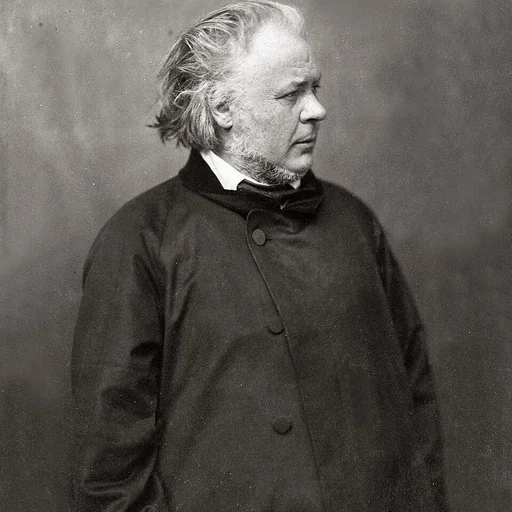
Artist
Honoré-Victorin Daumier was a French painter, sculptor, and printmaker, whose many works offer commentary on the social and political life in France, from the Revolution of 1830 to the fall of the Second French Empire in 1870.