Artwork
Les comédiens de province
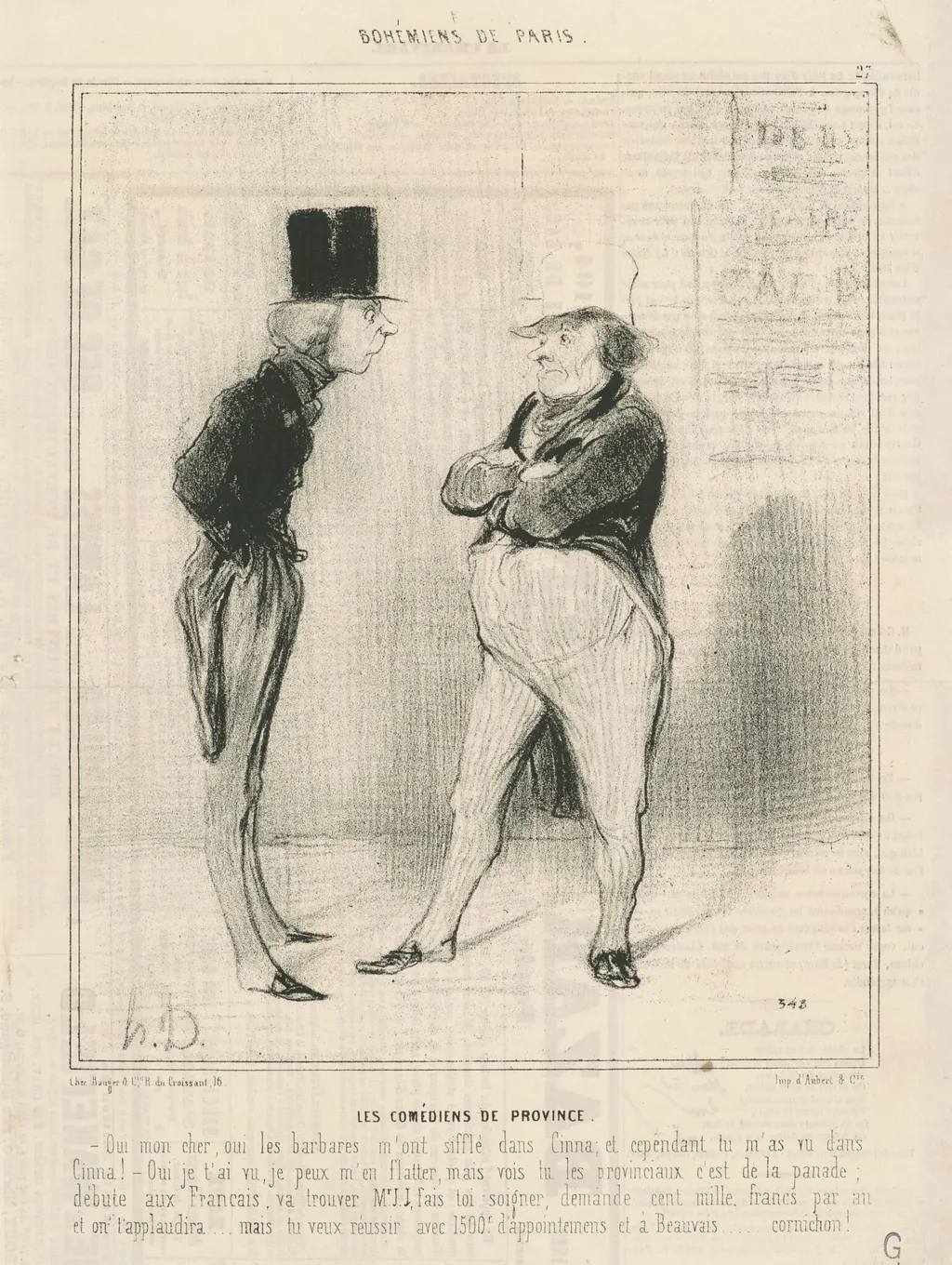
Les comédiens de province is an ink print by the Romanticist artist Honoré Daumier. It dates from 1842 and is held in the collection of the National Gallery of Art.
About this work
Overview
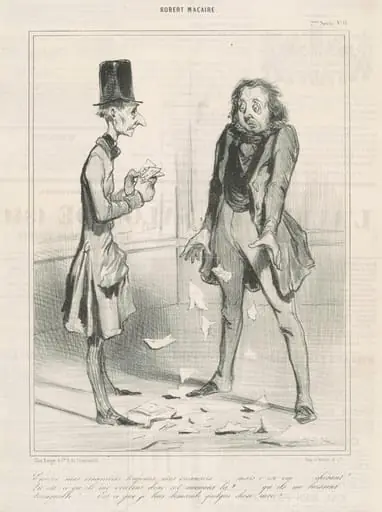
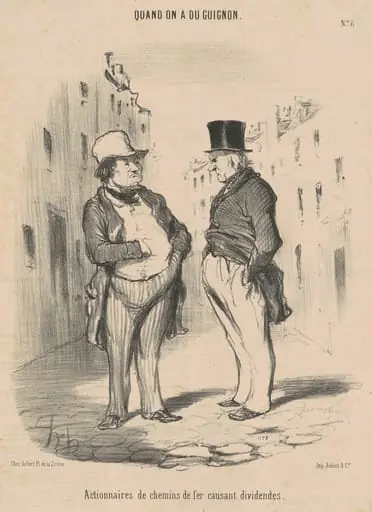
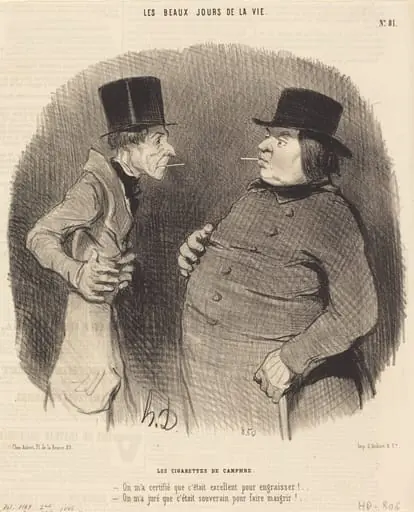
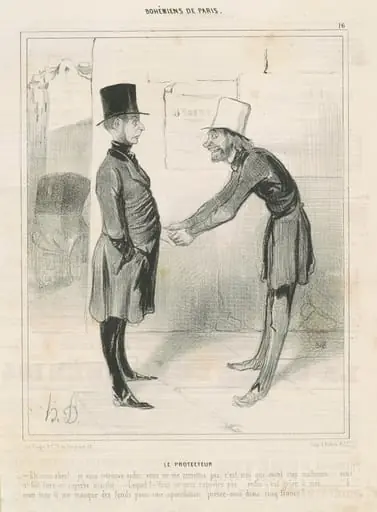
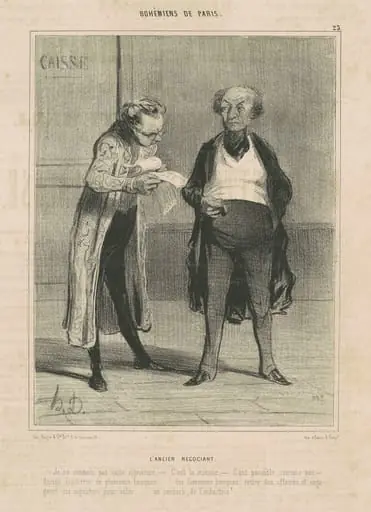
Les comédiens de province is a lithograph created by Honoré Daumier in the mid-19th century. It portrays two figures engaged in animated dialogue, rendered with bold, fluid lines characteristic of lithographic technique. The work belongs to a series of prints Daumier produced that observe everyday life with sharp observational wit, focusing on performers outside the Parisian elite.
Subject & Meaning
The two figures appear to be traveling actors, their exaggerated gestures and period costumes suggesting roles they perform rather than their private selves.
The two figures appear to be traveling actors, their exaggerated gestures and period costumes suggesting roles they perform rather than their private selves. Their intense interaction conveys the theatricality of provincial life, where performance was both livelihood and social currency. Daumier captures the tension between authenticity and role-playing, hinting at the fragility of social identity among itinerant performers.
Technique & Style
Daumier employed lithography to achieve rapid, expressive line work, exploiting the medium’s capacity for tonal contrast and spontaneity. His strokes are energetic and economical, defining form through contour and shadow rather than detail. The style leans into caricature without outright satire, emphasizing emotional presence over physical accuracy, a hallmark of his approach to social observation.
History & Provenance
Created around 1860, this print was likely published in a periodical or as part of a portfolio of Daumier’s social commentaries. It circulated among middle-class audiences who recognized the figures as archetypes of the era’s itinerant theater troupes. The work’s survival in museum collections reflects its early recognition as a significant example of 19th-century graphic art.
Context
During Daumier’s time, provincial theater flourished as a popular alternative to Parisian institutions, often staffed by actors with limited resources and training. These performers were both admired and mocked in public discourse. Daumier’s image situates itself within this cultural tension, documenting a world that was fading as urban entertainment expanded and standardized.
Legacy
The print contributed to Daumier’s reputation as a chronicler of ordinary life through graphic art. Its influence extended to later generations of illustrators and cartoonists who adopted his blend of empathy and formal economy. Les comédiens de province remains a reference point for how lithography could convey psychological depth with minimal means.
Own this work as a print
Artist & collection

Artist
Honoré-Victorin Daumier was a French painter, sculptor, and printmaker, whose many works offer commentary on the social and political life in France, from the Revolution of 1830 to the fall of the Second French Empire in 1870.