Artwork
Parisiens qui ne seront jamais ... sous la surveillance ...
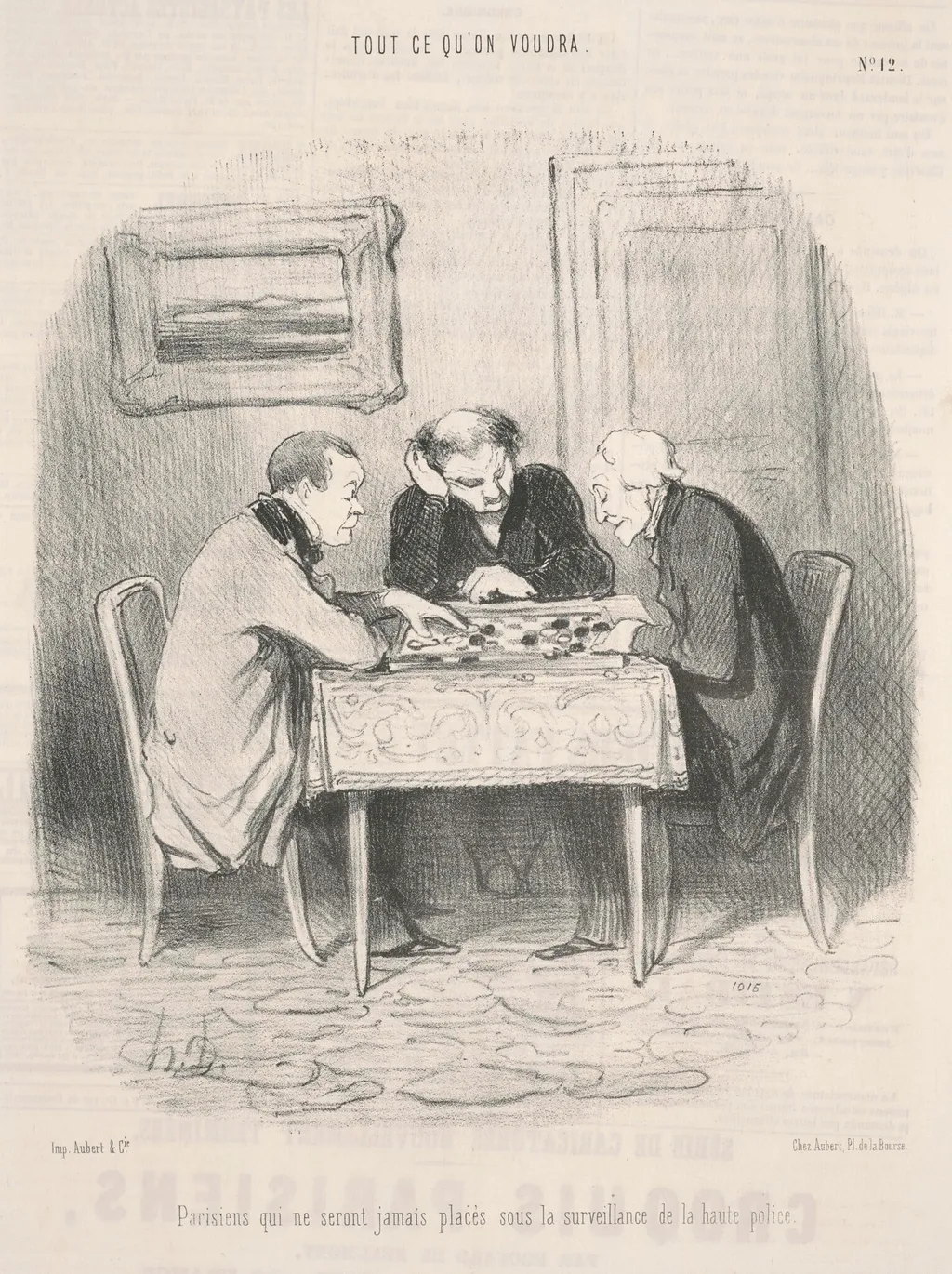
Parisiens qui ne seront jamais ... sous la surveillance ... is an ink print by the Romanticist artist Honoré Daumier. It dates from 1847 and is held in the collection of the National Gallery of Art.
About this work
Overview
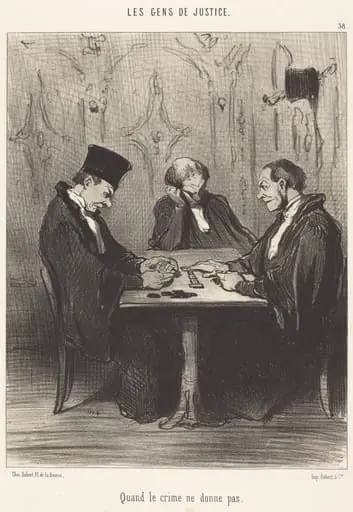
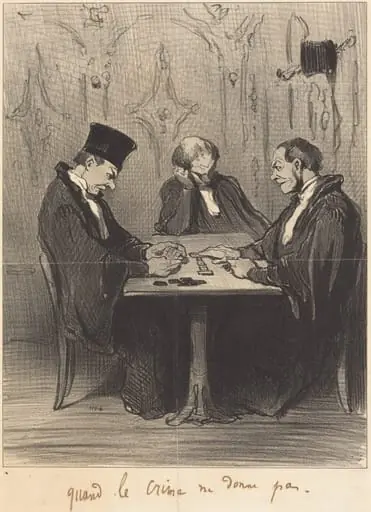
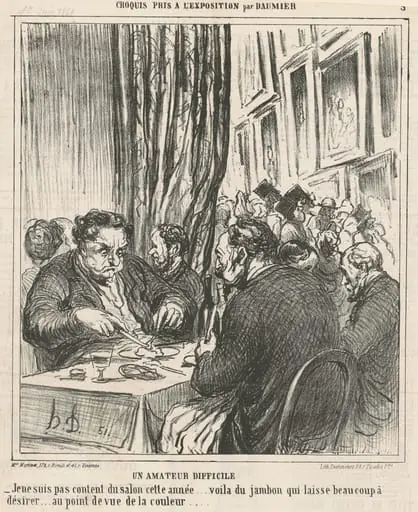
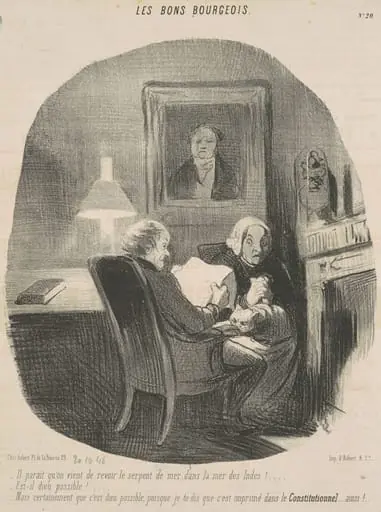
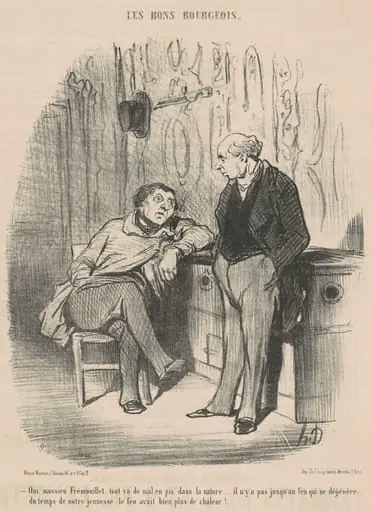
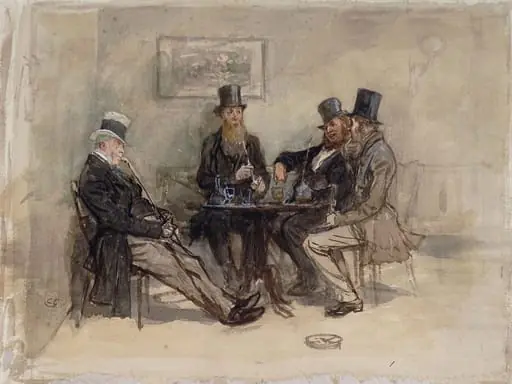
This lithograph by Honoré Daumier portrays three well-dressed men seated at a table, engaged in quiet conversation. Rendered in the medium of lithography, the work captures a moment of urban social life in mid-19th century Paris. Though seemingly casual, the scene invites reflection on the nature of public discourse and the unspoken boundaries between individuals in shared spaces.
Subject & Meaning
The title, suggesting exclusion from surveillance, hints at a critique of societal observation and the illusion of connection in crowded environments.
The three figures, each absorbed in their own thoughts despite their proximity, suggest a tension between social presence and inner solitude. Their formal attire and composed postures reflect bourgeois norms, yet their lack of overt interaction implies emotional distance. The title, suggesting exclusion from surveillance, hints at a critique of societal observation and the illusion of connection in crowded environments.
Technique & Style
Daumier employed lithography to achieve subtle tonal gradations and fluid line work, characteristic of his graphic style. The composition is tightly framed, focusing attention on the figures’ gestures and facial expressions. Minimal background detail directs the viewer’s gaze to the psychological dynamics between the men, emphasizing restraint over theatricality.
History & Provenance
Created during Daumier’s prolific period as a political and social satirist, this print likely circulated in periodicals or as part of a series addressing urban life. Though exact provenance is undocumented, its style aligns with his broader body of work published in journals like Le Charivari, where he regularly depicted Parisian society with incisive observation.
Context
In 1840s Paris, rapid urbanization and the rise of the bourgeoisie reshaped social rituals. Public spaces became arenas for performance as much as interaction. Daumier’s work reflects this shift, portraying individuals who, despite physical closeness, remain psychologically isolated — a quiet commentary on modernity’s alienating effects.
Legacy
Daumier’s lithographs, including this one, influenced later realist and modernist artists by demonstrating how everyday scenes could convey complex social truths. His use of understated expression and precise draftsmanship set a precedent for visual storytelling in print media, bridging satire and psychological insight without overt narration.
Artist & collection

Artist
Honoré-Victorin Daumier was a French painter, sculptor, and printmaker, whose many works offer commentary on the social and political life in France, from the Revolution of 1830 to the fall of the Second French Empire in 1870.