Artwork
Piétié Filiale
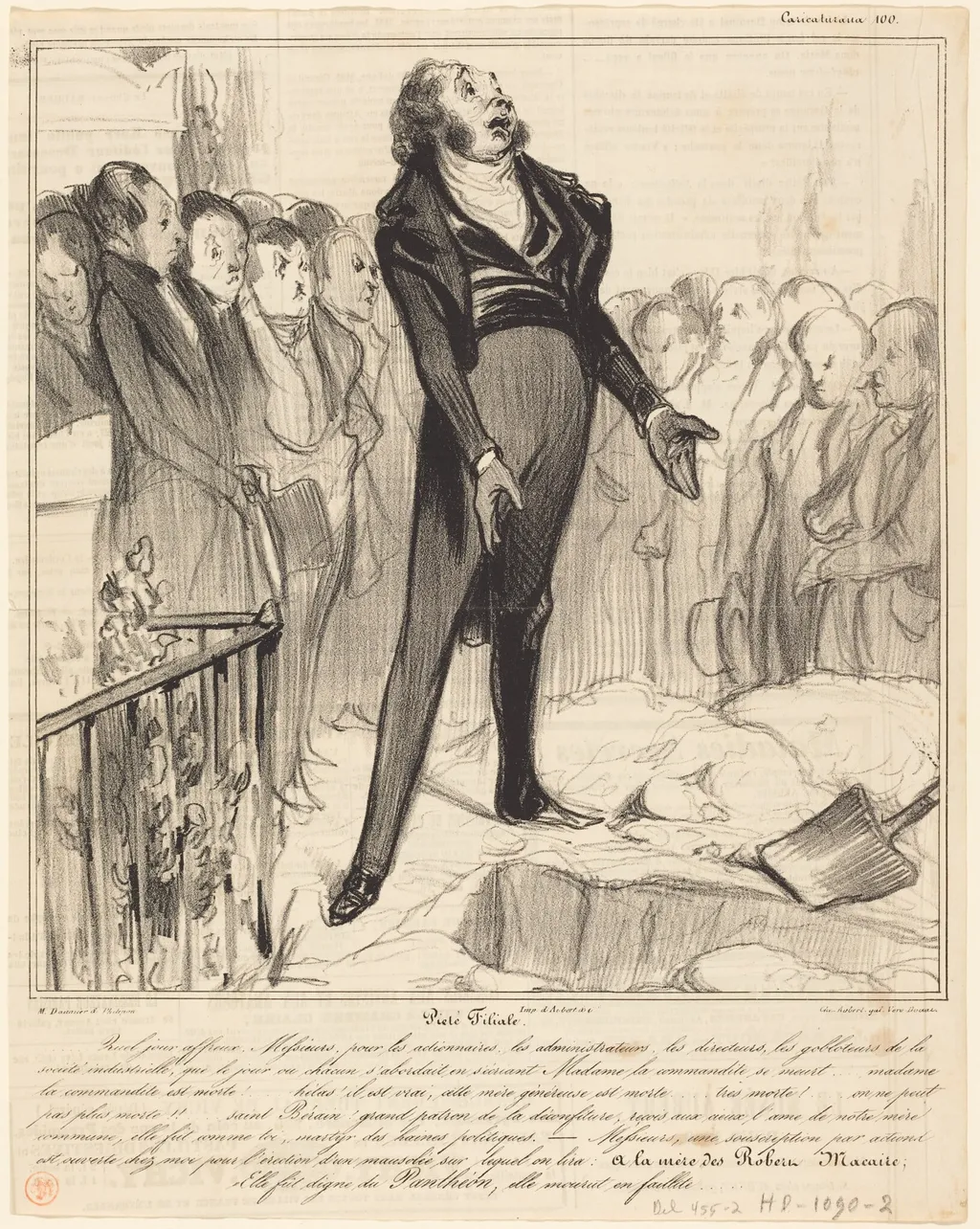
Piétié Filiale is an ink print by the Romanticist artist Honoré Daumier. It dates from 1838 and is held in the collection of the National Gallery of Art.
About this work
Overview
Piétié Filiale is a 1838 lithograph on newsprint by Honoré Daumier, depicting a son kneeling beside his mother's bed in a sparse, candle-lit room. The work showcases Daumier's expressive use of line and shadow to convey intimacy and solemnity.
Subject & Meaning
The scene embodies filial piety, with the son's devotion contrasted against the stark, bare surroundings. While the subject appears somber and personal, it reflects Daumier's broader critique of social conditions during a period of republican idealism in France.
Technique & Style
Executed in lithography on newsprint, the piece leverages the medium's capabilities for bold, expressive lines and economical production. Daumier's urgent, sketch-like drawing style, paired with the subtle play of light on the figures, achieves a sense of unposed realism.
History & Provenance
Created in 1838, Piétié Filiale was part of Daumier's prolific output for satirical journals like *La Caricature* and *Le Charivari*, though its subject differs from his more overtly political works of the time. Provenance details are not specified.
Context
The use of lithography on newsprint aligns with Daumier's role as a commentator on French political and social life, making art accessible to a broader audience through affordable, widely distributed prints.
Artist & collection
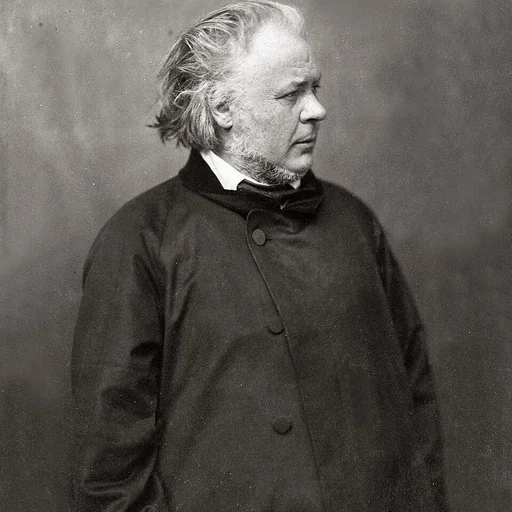
Artist
Honoré-Victorin Daumier was a French painter, sculptor, and printmaker, whose many works offer commentary on the social and political life in France, from the Revolution of 1830 to the fall of the Second French Empire in 1870.








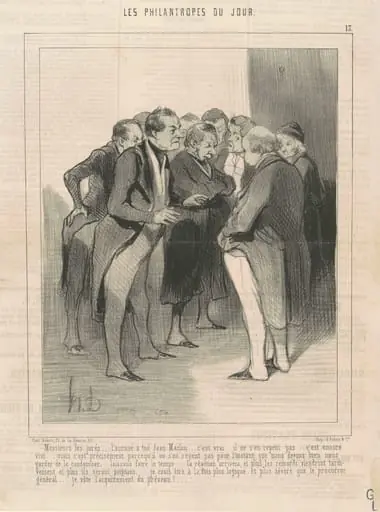 Messieurs les juré ... l'accusé a tué Jean Maclou ...
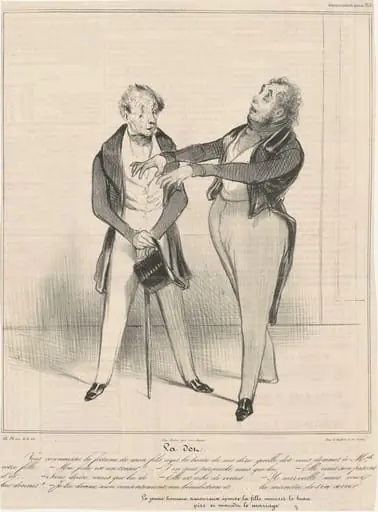 La Dot...vous connaissez la fortune...
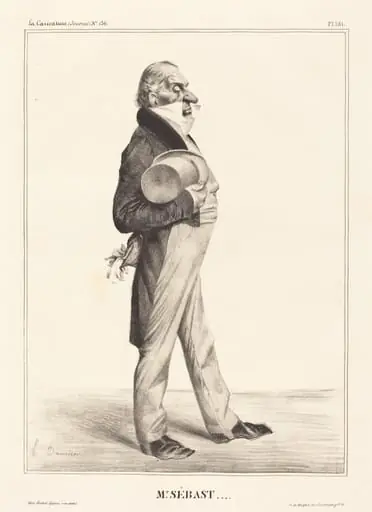 Comte Horace Sébastiani
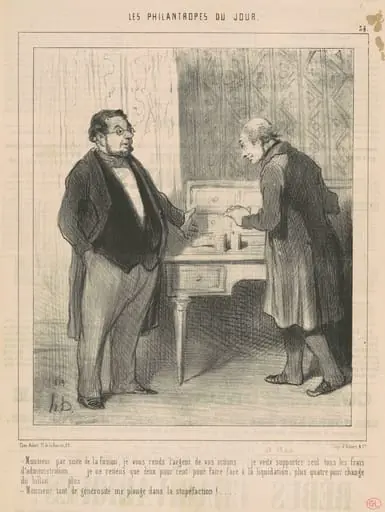 Monsieur par suite de la fusion
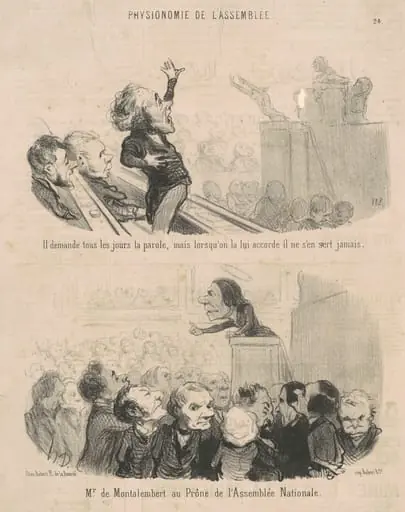 Il demande tous les jours la parole ...
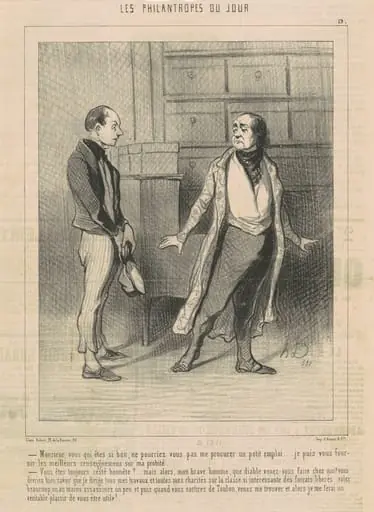 Monsieur vous qui êtes si bon ...
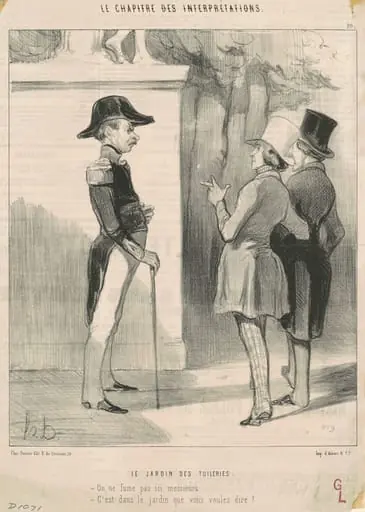 Le jardin des Tuileries
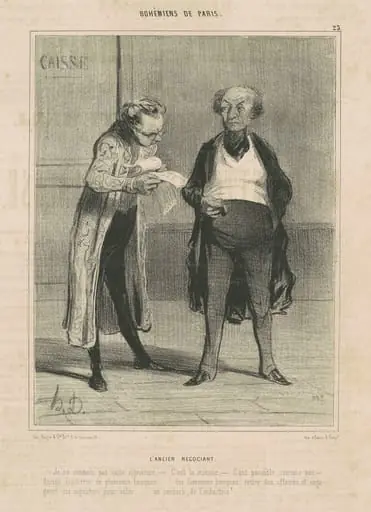 L'ancien négociant
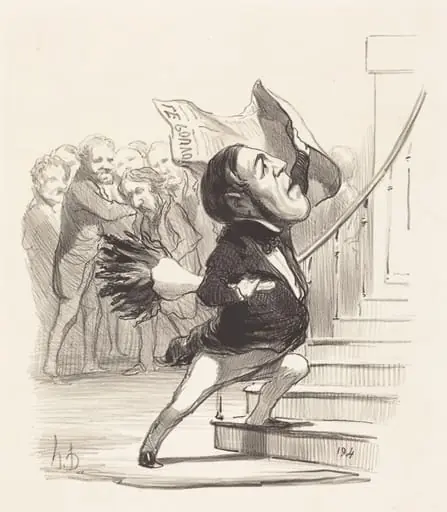 A. Granier de Cassagnac
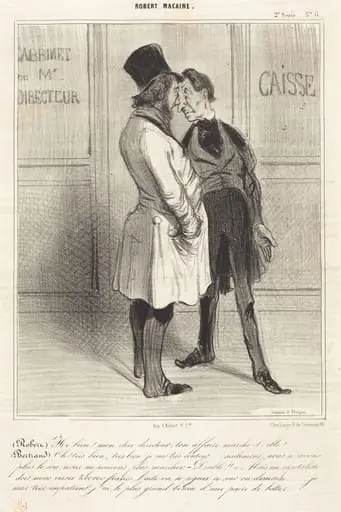 (Robert) Hé bien! mon cher directeur...
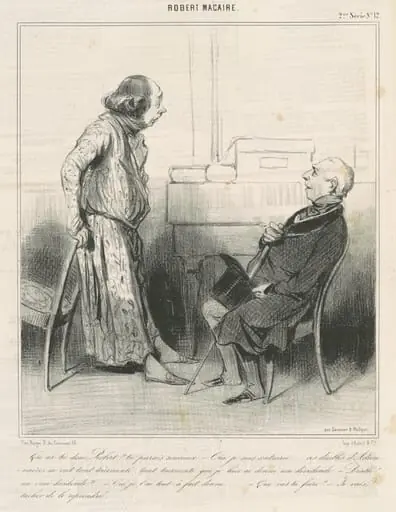 Qu'as-tu donc, Robert? ...
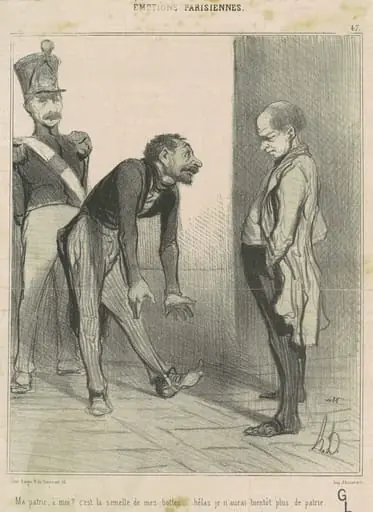 Ma patrie, a moi?...