Artwork
Ma patrie, a moi?...
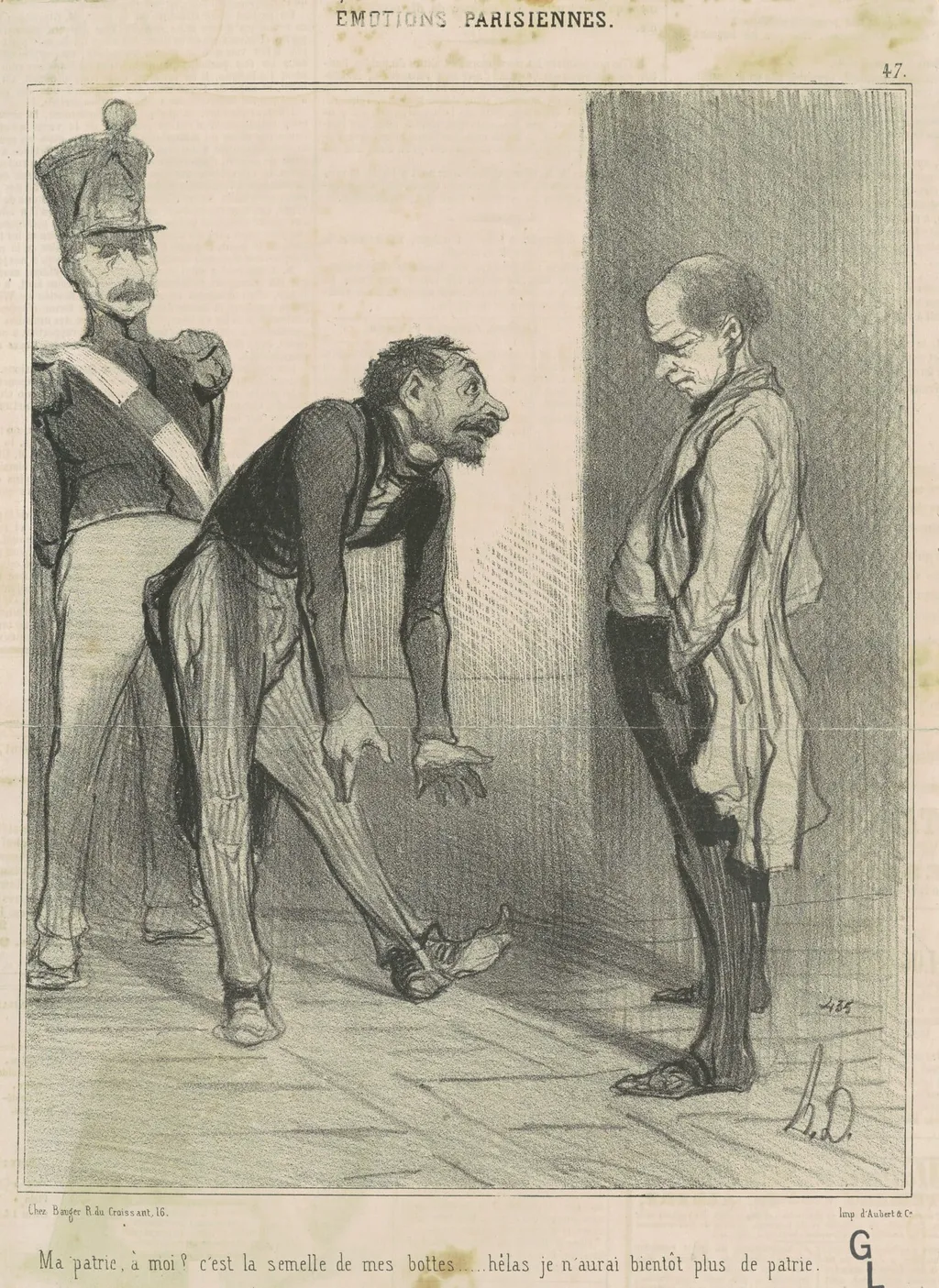
Ma patrie, a moi?... is an ink print by the Romanticist artist Honoré Daumier. It dates from 1842 and is held in the collection of the National Gallery of Art.
About this work
This 1842 lithograph shows three French figures: a soldier on the left, a jolly man in the center with a huge belly, and a quiet man on the right.
This 1842 lithograph shows three French figures: a soldier on the left, a jolly man in the center with a huge belly, and a quiet man on the right. The soldier looks serious while the others seem relaxed. Their clothes and poses hint at class differences.
Daumier made this during a time when France debated identity and power. The jolly man’s big belly pokes out—it’s not just funny. It makes you wonder who gets to speak for France.
This style comes from lithography, a printing method Daumier used often.
Overview
Created in 1842, this lithograph by Honoré Daumier presents three male figures in a sparse composition, each representing a distinct social type within France. The work emerged during a period of political tension under King Louis-Philippe, when questions of national identity and who truly represented the nation were fiercely contested in public discourse.
Subject & Meaning
The soldier on the left, rigid and uniformed, suggests state authority; the centrally positioned man, with a protruding belly and loose attire, embodies the complacent bourgeoisie; the quiet figure on the right, modestly dressed, may signify the ordinary citizen. Together, they form a silent dialogue about legitimacy, privilege, and who is permitted to claim ownership of the nation’s voice.
Technique & Style
Daumier employed lithography to achieve sharp contrasts and expressive line work, characteristic of his satirical prints. The figures are rendered with economical strokes, emphasizing posture and costume over detail. The flat background and cropped composition focus attention on the trio’s physical presence and social contrast, enhancing the work’s critical tone.
History & Provenance
Produced during Daumier’s tenure as a political cartoonist for the satirical journal La Caricature, the print was part of a series critiquing the July Monarchy. It was widely circulated among urban readers, though its subversive nature occasionally drew government scrutiny. The original stone was likely reused, as was common practice among printmakers of the era.
Context
In early 1840s France, censorship laws targeted caricatures seen as mocking authority. Daumier’s work navigated these restrictions by using allegory and exaggeration rather than direct portraiture. The image reflects broader anxieties about class, citizenship, and the gap between official symbols of power and the lived realities of ordinary people.
Legacy
The lithograph remains a key example of 19th-century social commentary in print. Daumier’s ability to distill complex societal tensions into a single, uncluttered image influenced later generations of political illustrators and cartoonists, establishing lithography as a vital medium for public critique beyond fine art circles.
Own this work as a print
Artist & collection

Artist
Honoré-Victorin Daumier was a French painter, sculptor, and printmaker, whose many works offer commentary on the social and political life in France, from the Revolution of 1830 to the fall of the Second French Empire in 1870.









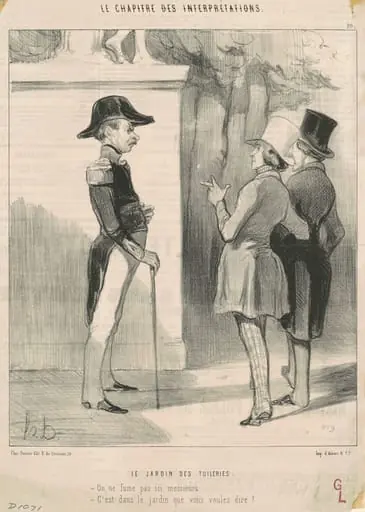 Le jardin des Tuileries
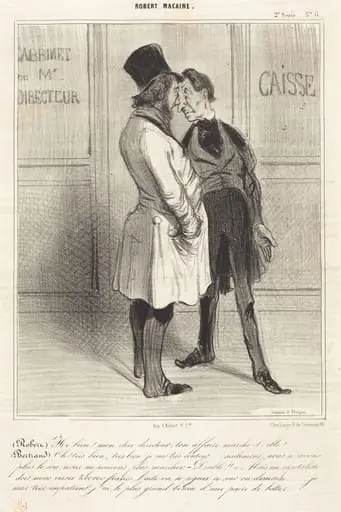 (Robert) Hé bien! mon cher directeur...
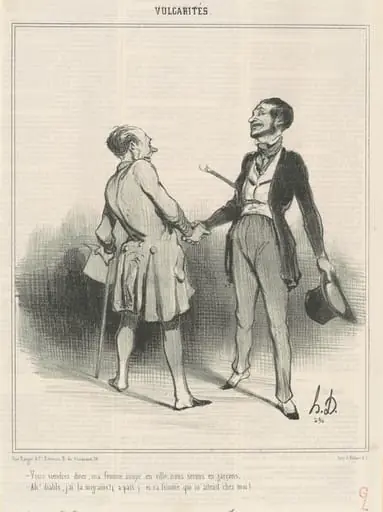 Vous viendrez diner, ma femme soupe en ville ...
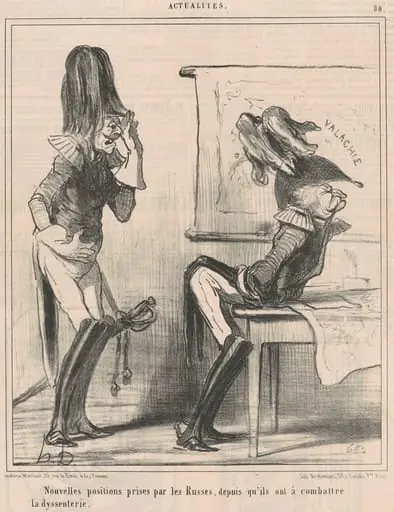 Nouvelles positions prises par les russes ...
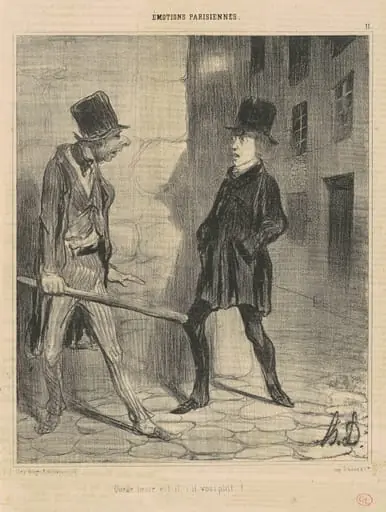 Quelle heure est'il, s'il vous plait?...
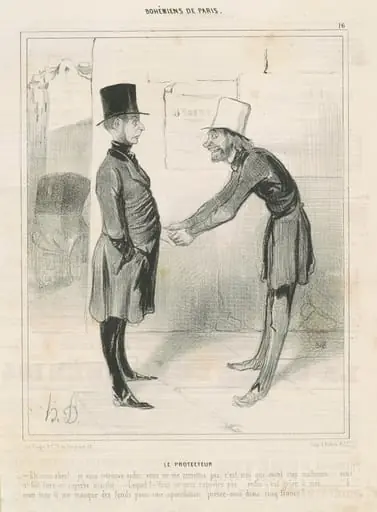 Le Protecteur
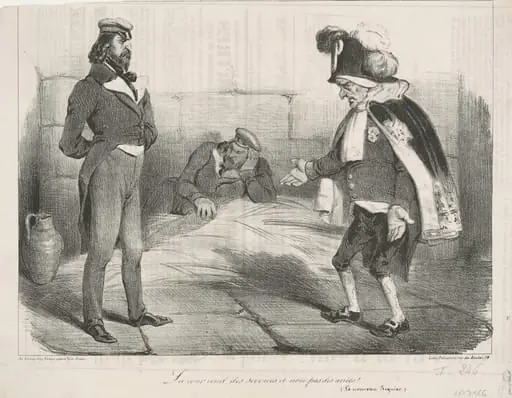 La cour rend des services et non pas des arrêts!
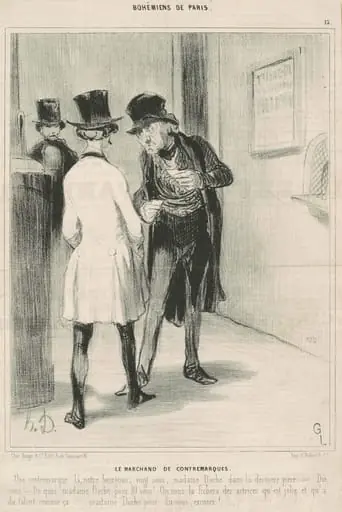 Le marchand de contremarques
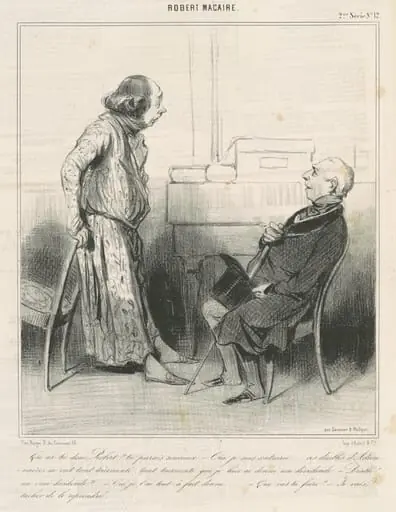 Qu'as-tu donc, Robert? ...
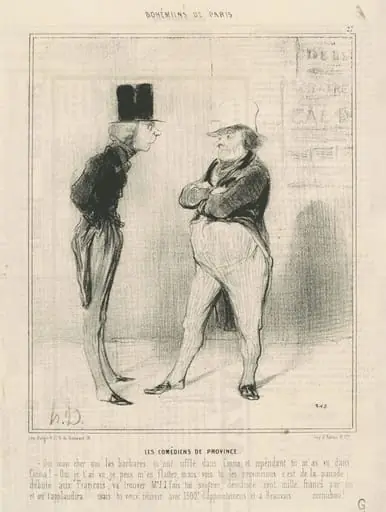 Les comédiens de province