Artwork
Plaidez... ça sera un bon tour a jouer...
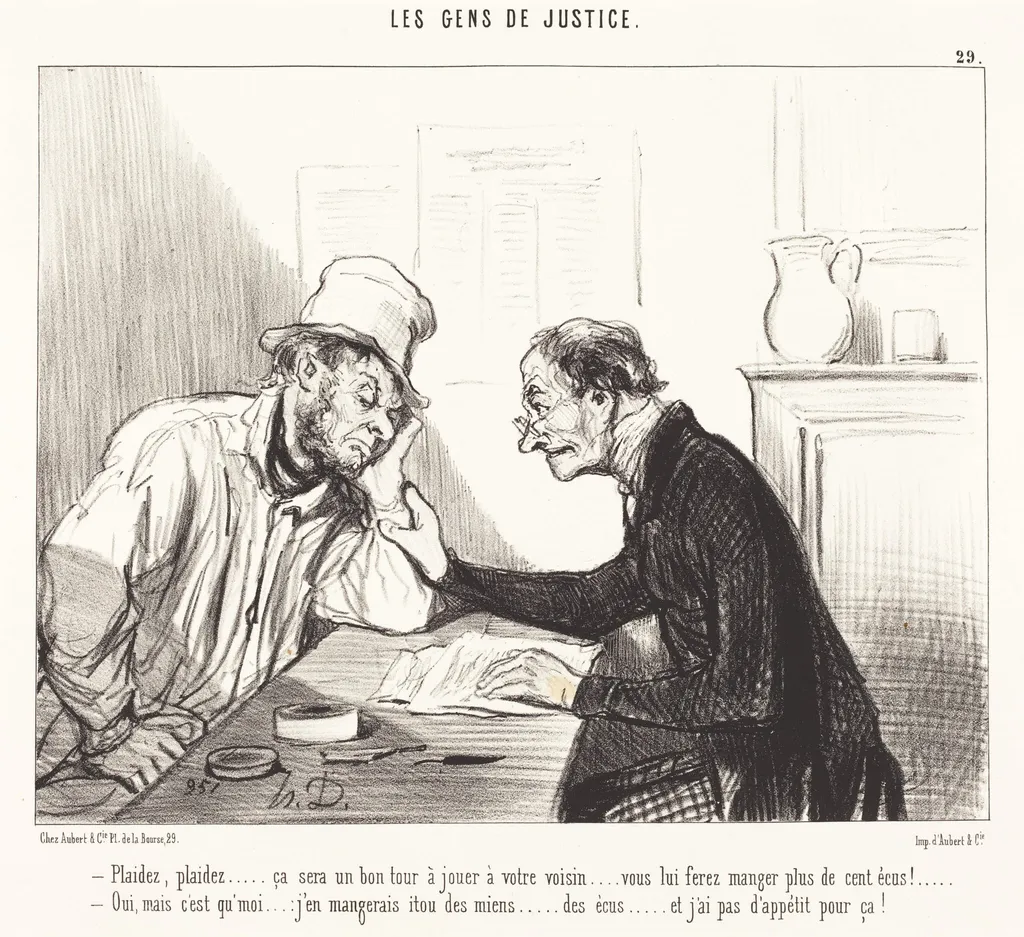
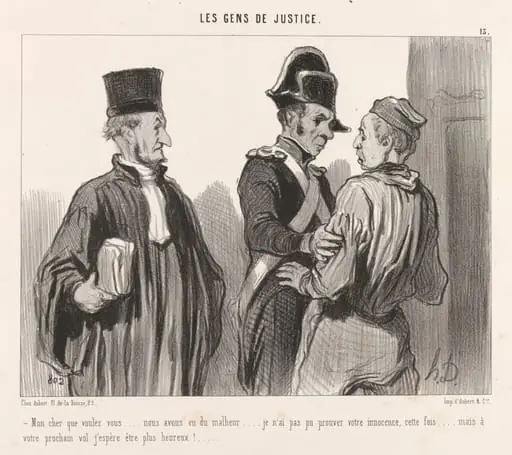
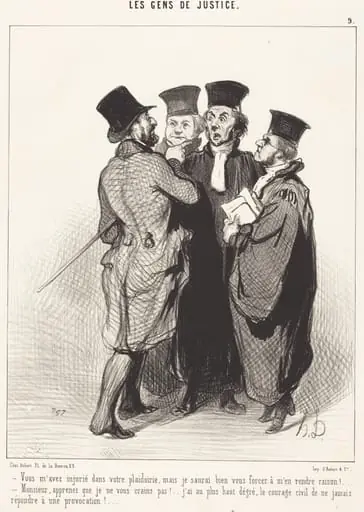
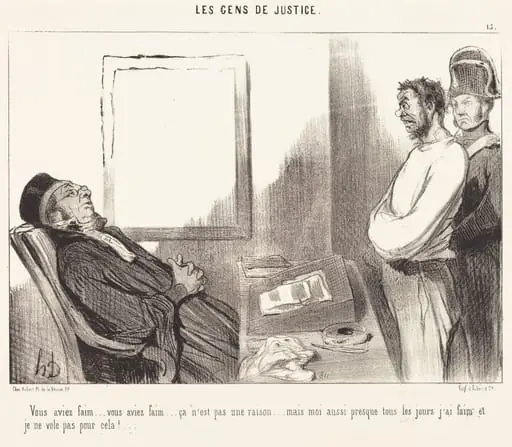
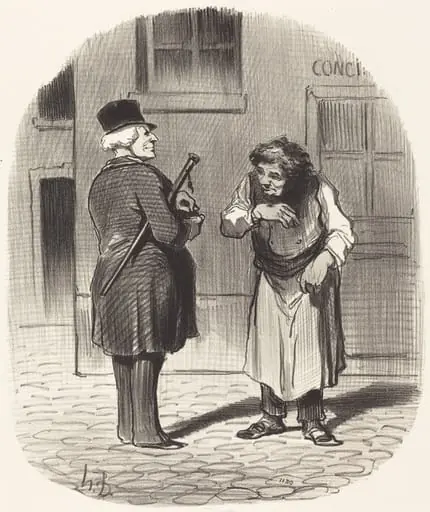
Plaidez... ça sera un bon tour a jouer... is an ink print by the Romanticist artist Honoré Daumier. It dates from 1846 and is held in the collection of the National Gallery of Art.
About this work
Overview
Executed in the medium of stone lithography, it reflects his broader practice as a social observer through print.
Created in 1846, this lithograph by Honoré Daumier captures a quiet, intimate moment of moral compromise. Executed in the medium of stone lithography, it reflects his broader practice as a social observer through print. Unlike grand historical scenes, Daumier focused on ordinary individuals caught in subtle ethical dilemmas, using the accessibility of lithography to reach a broad public audience during a turbulent era in French politics.
Subject & Meaning
Two men occupy a sparse interior: one slumps in exhaustion over a document, while the other, pipe in hand, leans in with a knowing smile. The title, suggesting a courtroom strategy as a 'good trick to play,' implies manipulation under the guise of legal aid. The objects on the table—a coin, a cup, a bottle—hint at transactional motives. Daumier critiques the corruption of justice, portraying legal counsel not as noble service but as a transactional exchange among the marginalized.
Technique & Style
Daumier employed lithography’s capacity for rapid, expressive line work to convey mood with minimal detail. The figures are rendered in loose, gestural strokes, their forms emerging from shadowy washes that emphasize atmosphere over precision. Background elements are reduced to suggestive outlines, focusing attention on the psychological tension between the two men. His style prioritizes emotional resonance over realism, using contrast and posture to communicate unspoken dynamics.
History & Provenance
Produced during the July Monarchy, the print likely appeared in *Le Charivari*, the satirical journal where Daumier regularly published. His work often drew government scrutiny, and lithographs like this one circulated widely among the urban middle and working classes. Though the original print’s early ownership is undocumented, its survival in museum collections reflects its enduring role as a document of public dissent and visual journalism in 19th-century France.
Context
In the 1840s, France oscillated between authoritarian rule and republican aspirations. Daumier’s prints responded to this instability, targeting the hypocrisy of institutions meant to serve justice. The courtroom setting, a recurring motif in his work, symbolized the fragility of law under political pressure. This image reflects a society where legal authority was increasingly seen as a tool for the powerful, not a safeguard for the vulnerable.
Legacy
Daumier’s lithographs laid groundwork for modern editorial illustration and social realism. His ability to distill complex societal tensions into single, evocative scenes influenced later artists and cartoonists, from George Grosz to David Levine. This print endures not for its technical brilliance alone, but for its unflinching portrayal of moral ambiguity in everyday power dynamics—a quiet but persistent critique of institutional trust.
Artist & collection
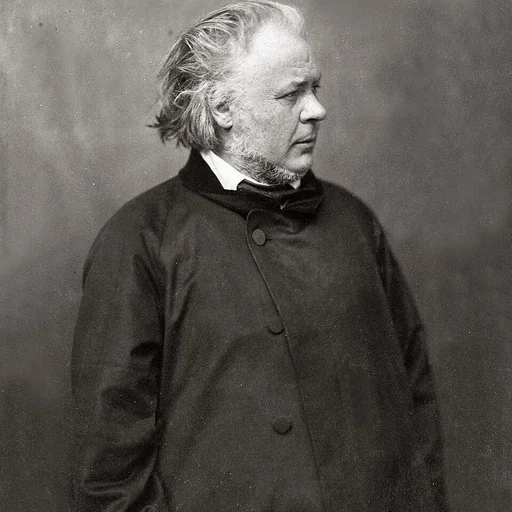
Artist
Honoré-Victorin Daumier was a French painter, sculptor, and printmaker, whose many works offer commentary on the social and political life in France, from the Revolution of 1830 to the fall of the Second French Empire in 1870.