Artwork
Vous aviez faim... ce n'est pas une raison...
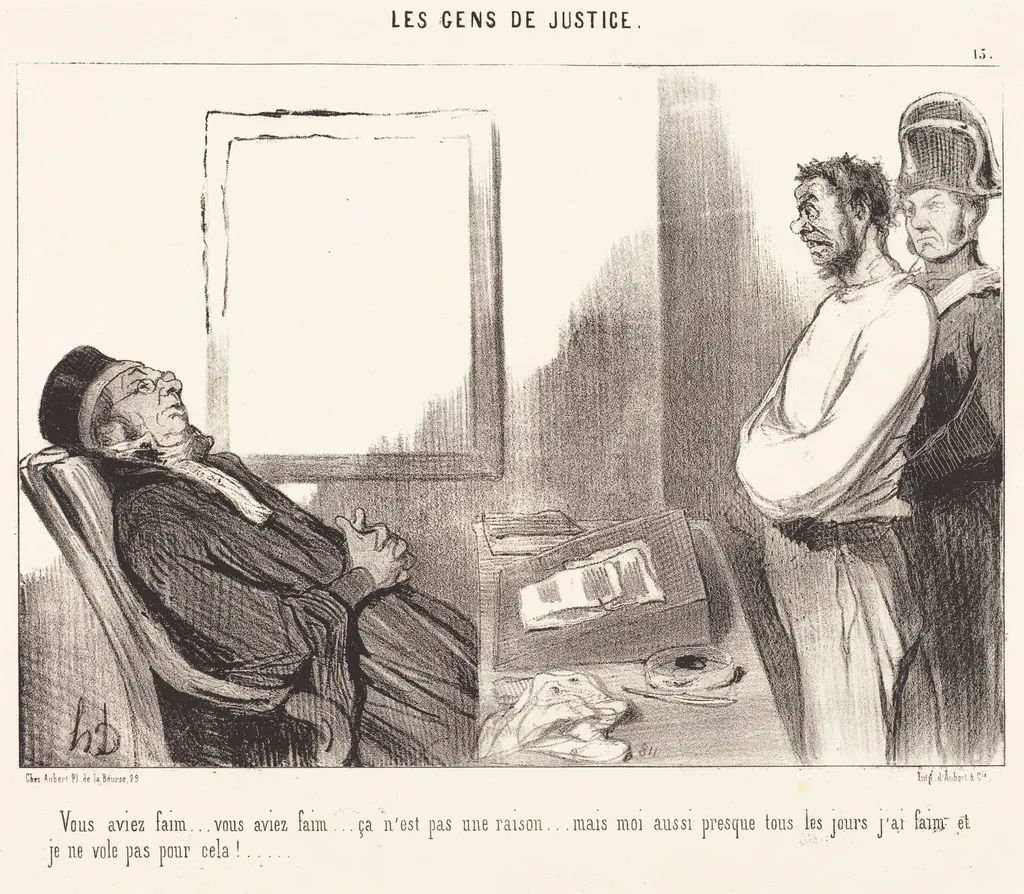
Vous aviez faim... ce n'est pas une raison... is an ink print by the Romanticist artist Honoré Daumier. It dates from 1845 and is held in the collection of the National Gallery of Art.
About this work
Overview
Created in 1845, this lithographic print by Honoré Daumier presents a domestic interior in which a weary woman reclines in a chair while two men stand nearby.
Created in 1845, this lithographic print by Honoré Daumier presents a domestic interior in which a weary woman reclines in a chair while two men stand nearby. The composition is simple yet charged, with a mirror reflecting the backs of the figures and a modest setting that includes a bed, a small table with a bowl, and a dimly lit window. The work’s title, rendered in French, translates to a reproachful statement about hunger and excuse.
Subject & Meaning
The image juxtaposes a fatigued female figure with two male observers, one distinguished by an elaborate hat, the other by a solemn expression. By foregrounding the woman's exhaustion and the men's imposing presence, Daumier underscores the disparity between those who suffer and those who pass judgment, echoing his broader critique of social indifference toward the impoverished.
Technique & Style
Executed as a lithograph, the work employs the medium’s capacity for bold line work and tonal variation to convey texture and atmosphere. Daumier’s sketch-like quality, evident in the loose contours and minimal shading, enhances the immediacy of the scene, while the mirror’s reflected backs add a subtle compositional depth without distracting from the central narrative.
History & Provenance
Daumier, an active contributor to satirical journals such as La Caricature and Le Charivari, produced this print amid his prolific period of political commentary. Although originally circulated as a single-sheet lithograph, the piece later entered public collections, reflecting its continued relevance as a document of mid‑19th‑century French social discourse.
Context
The lithograph emerges from a turbulent era in France marked by class tensions and republican agitation. Daumier, a self‑identified republican democrat, used his art to challenge the monarchy, aristocracy, and clergy, aligning his visual satire with contemporary debates over poverty, labor rights, and moral accountability.
Artist & collection

Artist
Honoré-Victorin Daumier was a French painter, sculptor, and printmaker, whose many works offer commentary on the social and political life in France, from the Revolution of 1830 to the fall of the Second French Empire in 1870.









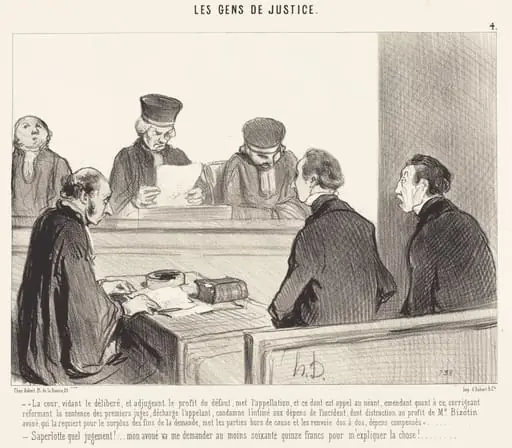 La Cour, vidant le délibéré...
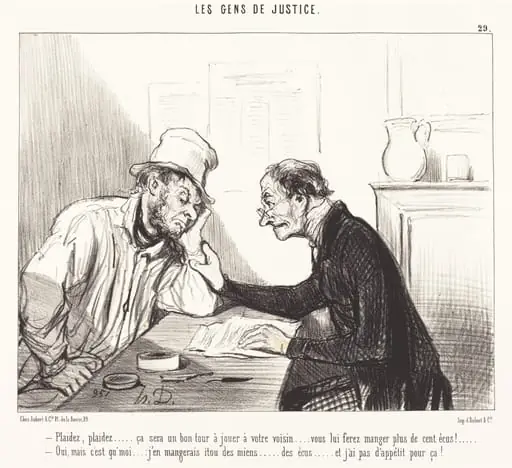 Plaidez... ça sera un bon tour a jouer...
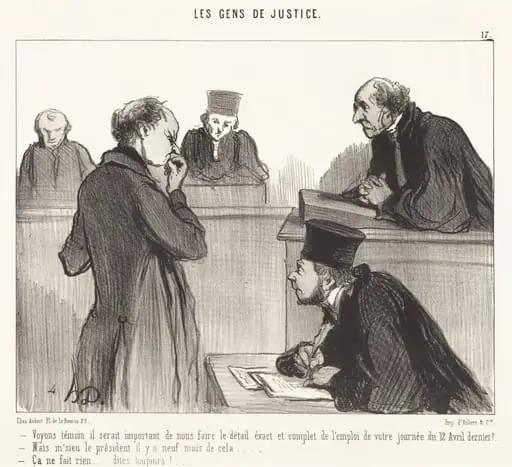 Voyons témoin il serait important de...
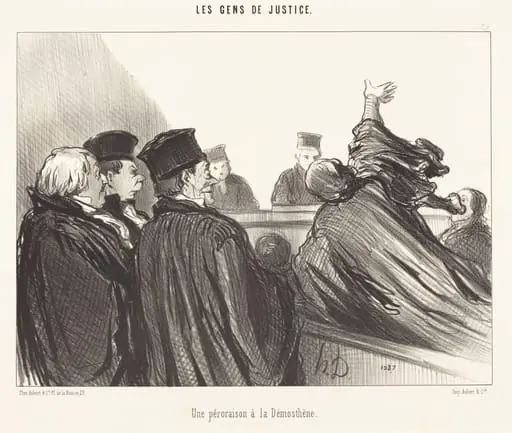 Une Péroraison a la Démosthène
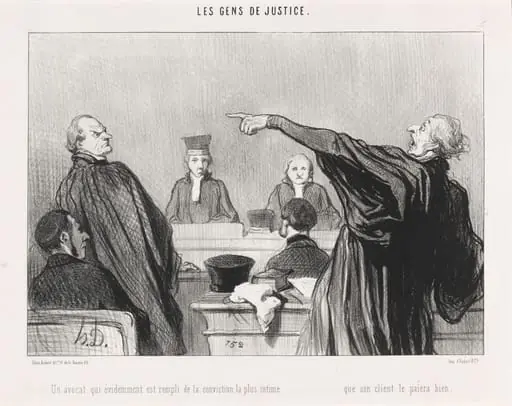 Un Avocat qui est... rempli de la conviction... intime...
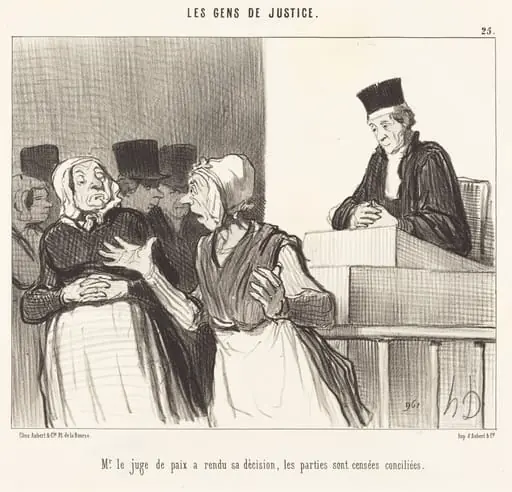 Mr. le Juge de paix a rendu sa décision...
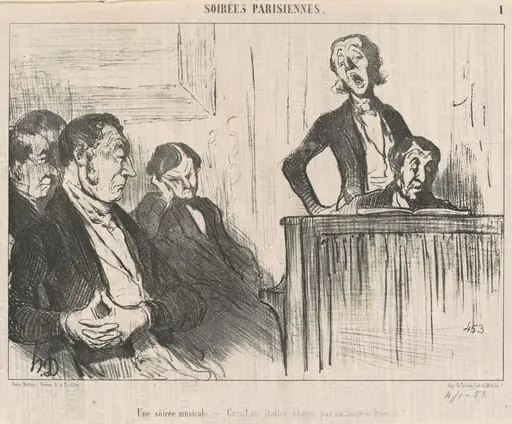 Une soirées musicale
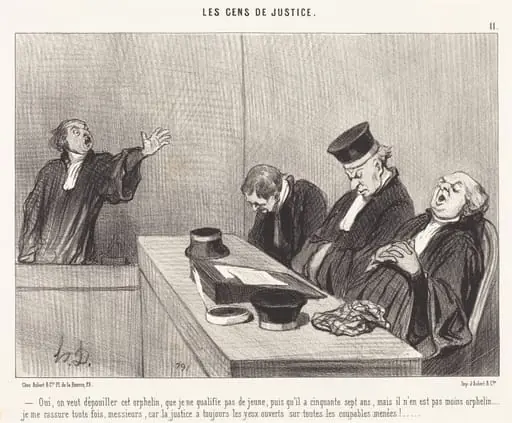 Oui, on veut dépouiller cet orphelin...
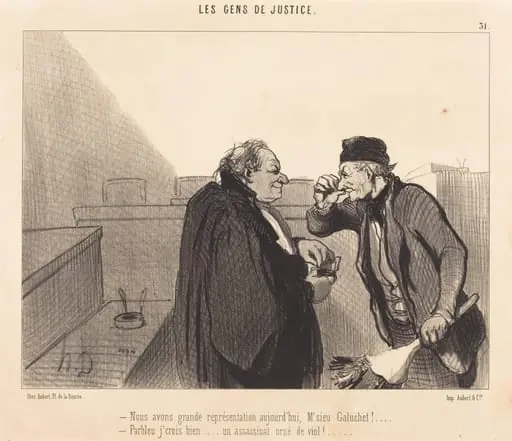 Nous avons grande représentation aujourd'hui
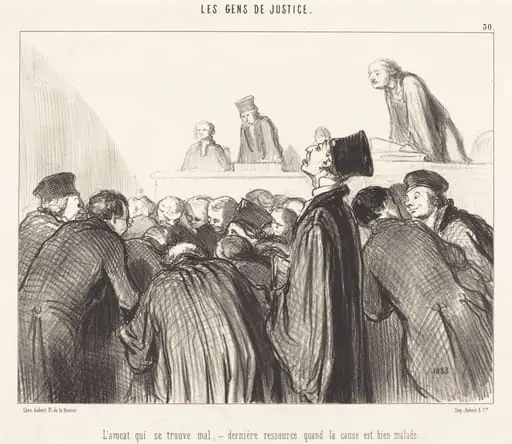 L'Avocat que se trouve mal