Artwork
Pourvu que l'aiguilleur ne fasse rien dérailler!
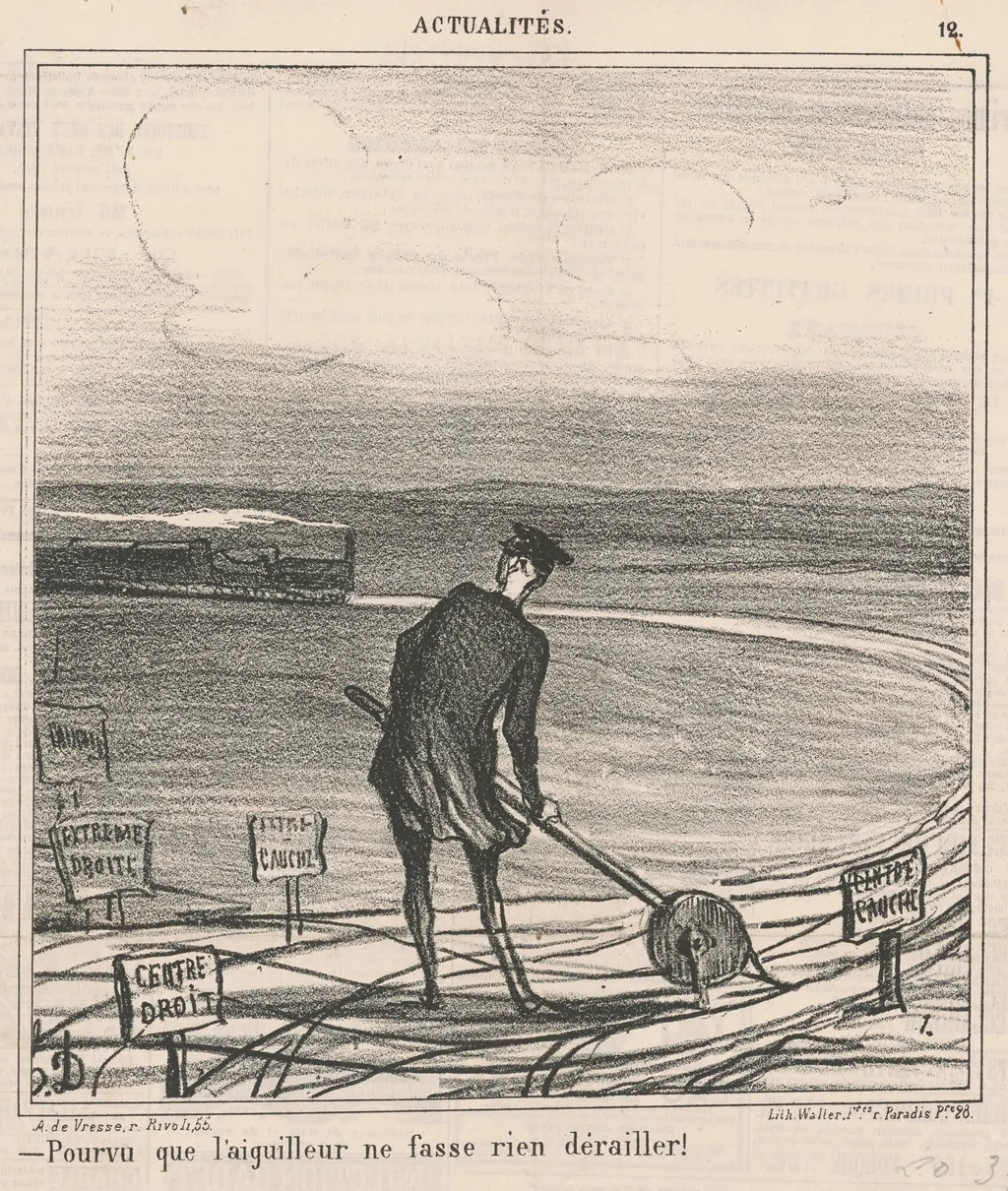
Pourvu que l'aiguilleur ne fasse rien dérailler! is an ink print by the Impressionist artist Honoré Daumier. It dates from 1870 and is held in the collection of the National Gallery of Art.
About this work
Overview
Rendered in stark black and white, the image captures a moment of quiet responsibility within a complex mechanical system.
Honoré Daumier’s lithograph depicts a railway switchman at work, isolated amid a tangle of tracks and signage. Rendered in stark black and white, the image captures a moment of quiet responsibility within a complex mechanical system. The artist employed lithography, a technique allowing direct drawing on stone, to produce a print with a textured, urgent quality that mirrors the tension of the scene.
Subject & Meaning
The central figure, a railway operator in worn clothing, grips a lever with focused attention. Surrounding him, a maze of signs and rails suggests the precariousness of human control over industrial systems. The title, translating to 'Provided the switchman does nothing to derail!', underscores the fragile balance between order and chaos, hinting at the weight of routine labor in an increasingly mechanized world.
Technique & Style
Daumier used lithography to draw directly onto a limestone plate with greasy ink, then printed the image in monochrome. His dense cross-hatching and rough, uneven lines create a sense of movement and shadow, emphasizing the grit of the environment. The grainy texture of the print enhances the immediacy of the scene, avoiding idealization in favor of raw, observational realism.
History & Provenance
Created in the mid-19th century, this print was likely published in a periodical, as was common for Daumier’s social commentaries. It circulated among urban readers familiar with the rapid expansion of rail networks. Though its exact first publication is unrecorded, it aligns with Daumier’s broader body of work critiquing and documenting the everyday realities of industrial France.
Context
During the 1850s and 60s, France’s railway system expanded rapidly, transforming travel, commerce, and labor. Switchmen, often overlooked workers, became vital nodes in this infrastructure. Daumier’s focus on such figures reflects a broader interest in the dignity and vulnerability of the working class amid technological change, a theme recurring in his prints of urban life.
Legacy
Daumier’s lithographs, including this one, helped redefine printmaking as a medium for social observation rather than mere illustration. His unembellished depictions of laborers influenced later realist and expressionist artists. The work endures as a quiet testament to the unseen hands that kept modern systems running, valued for its honesty and understated power.
Artist & collection
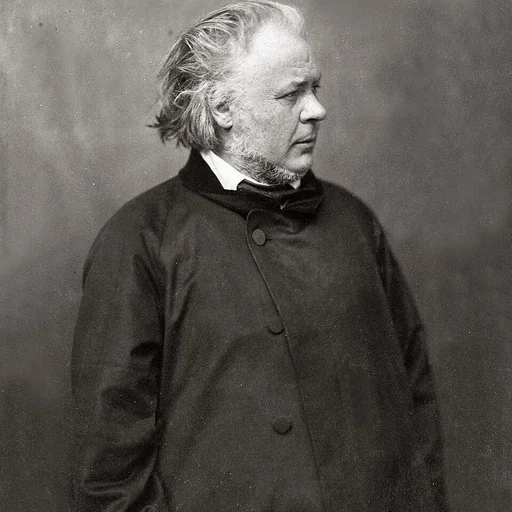
Artist
Honoré-Victorin Daumier was a French painter, sculptor, and printmaker, whose many works offer commentary on the social and political life in France, from the Revolution of 1830 to the fall of the Second French Empire in 1870.









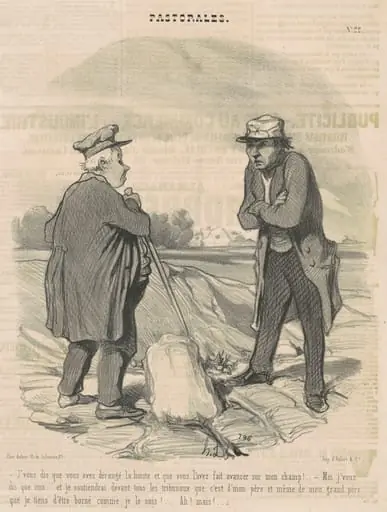 J'vous dis que vous avez dérangé la limite ...
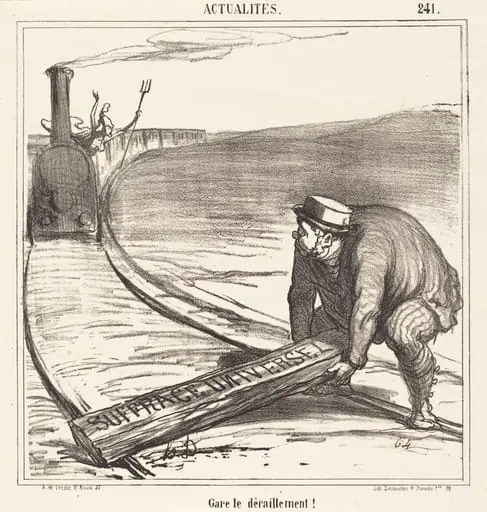 Gare le déraillement!
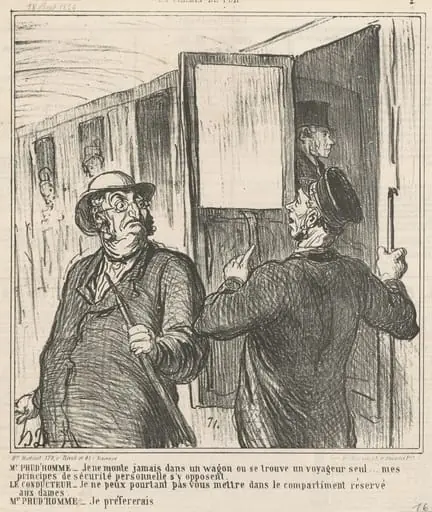 M. Prud'homme: Je ne monte jamais ...
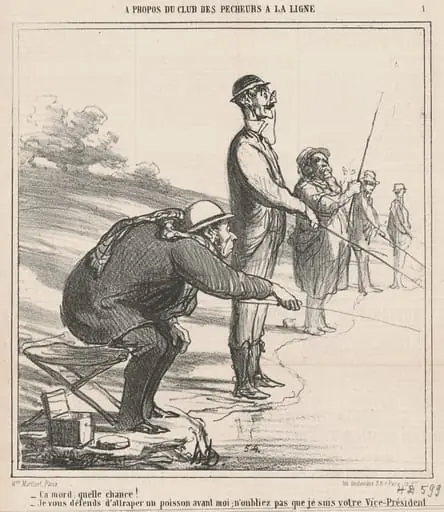 Ca mord, quelle chance! Je vous défends ...
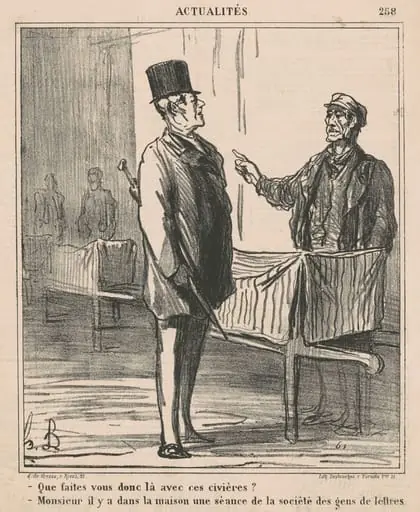 Que faites-vous donc la avec ces civières
![Aux Champs-Elysées, Ratapoil. Par suite d'une délibération philantropique [sic] du Comité du dix Décembre...à deux sous à club...deux sous..., by Honoré Daumier](https://artifactworldgallery.com/img/honore-daumier--aux-champs-elysees-ratapoil-par-suite-d-une-deliberation-phi--62ca0cc774af3945-w320.webp) Aux Champs-Elysées, Ratapoil. Par suite d'une délibération philantropique [sic] du Comité du dix Décembre...à deux sous à club...deux sous...
Aux Champs-Elysées, Ratapoil. Par suite d'une délibération philantropique [sic] du Comité du dix Décembre...à deux sous à club...deux sous...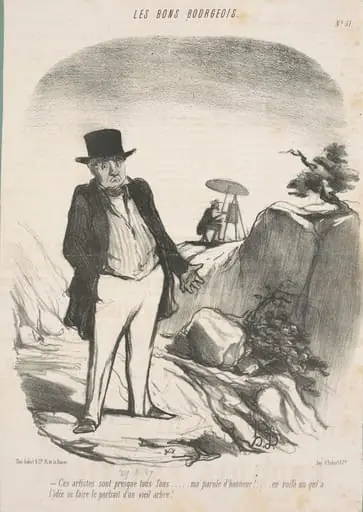 Ces artistes sont presque tous fous . . . Ma parole d'honneur! . . . En voilà un qui a l'idée de faire le portrait d'un vieil arbre!
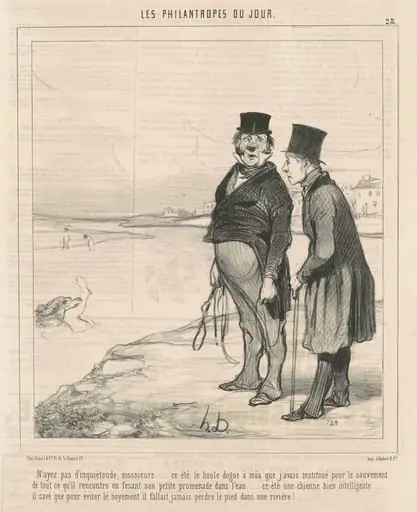 N'ayez pas d'inquiètoude ...
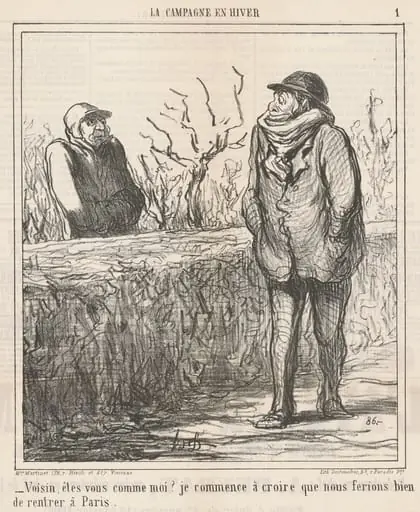 Voisin, êtes-vous comme moi? ...
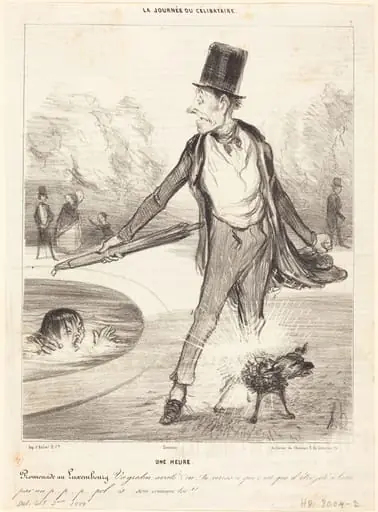 Une heure - Promenade au Luxembourg