Artwork
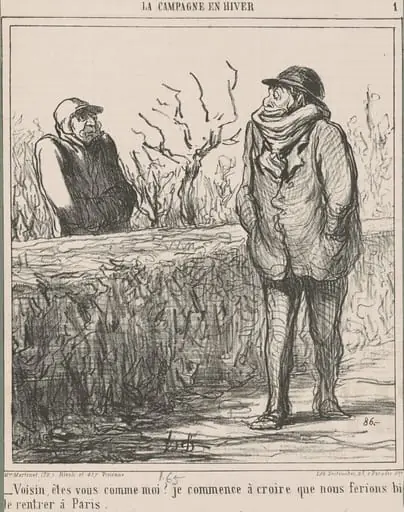
Voisin, êtes-vous comme moi? ...
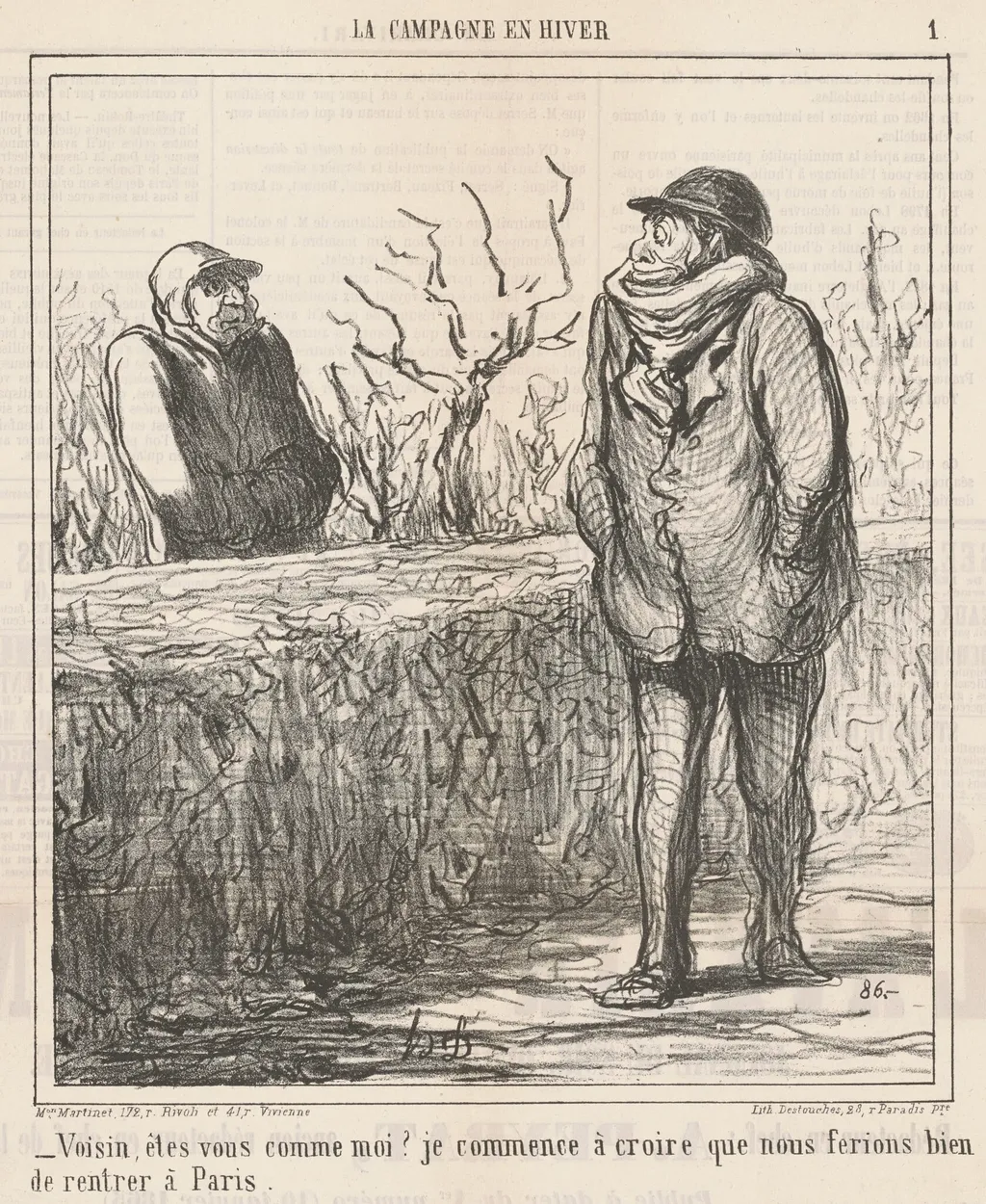
Voisin, êtes-vous comme moi? ... is an ink print by the Impressionist artist Honoré Daumier. It dates from 1865 and is held in the collection of the National Gallery of Art.
About this work
Overview
The work belongs to Daumier’s later series exploring solitude and human connection, using the accessibility of print to reach a broad audience.
Created in 1865, this lithograph by Honoré Daumier presents two figures in a muted winter scene, engaged in a quiet, unspoken exchange. Rendered in grayscale tones, the image captures a moment of stillness rather than action, emphasizing psychological presence over narrative. The work belongs to Daumier’s later series exploring solitude and human connection, using the accessibility of print to reach a broad audience.
Subject & Meaning
The two men, dressed in plain, rural attire, face each other with restrained gestures and introspective expressions. Their silence suggests an unarticulated question—perhaps about shared experience, isolation, or identity. Daumier avoids overt symbolism, instead inviting viewers to interpret the tension between proximity and emotional distance, reflecting broader 19th-century anxieties about social alienation.
Technique & Style
Daumier employed lithography to achieve subtle gradations of tone, using ink washes and hatching to model form without line. The monochromatic palette enhances the somber mood, while the simplified landscape recedes into abstraction, focusing attention on the figures’ postures and facial nuances. His loose, expressive marks convey immediacy, characteristic of his approach to social observation through print media.
History & Provenance
Produced during Daumier’s mature period, this print was likely issued as part of a portfolio of lithographs distributed to subscribers of French periodicals. It was not exhibited publicly in his lifetime but circulated privately among collectors. Its survival in institutional collections today reflects its quiet influence on later realist and expressionist printmakers.
Context
In mid-19th-century France, lithography enabled artists to critique society with speed and reach. Daumier, long known for satirical depictions of urban life, turned toward quieter themes as he aged. This work aligns with a broader shift in his output: away from political caricature toward meditations on ordinary human moments, shaped by personal hardship and a growing sense of melancholy.
Legacy
Though less celebrated than his political cartoons, this lithograph exemplifies Daumier’s capacity for emotional depth in minimal form. Its understated power influenced 20th-century artists exploring psychological realism in print, including George Grosz and Max Beckmann. The work remains a quiet testament to the dignity found in unremarkable human encounters.
Artist & collection
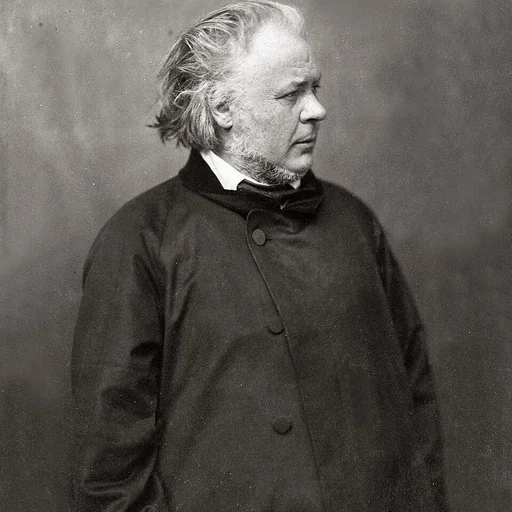
Artist
Honoré-Victorin Daumier was a French painter, sculptor, and printmaker, whose many works offer commentary on the social and political life in France, from the Revolution of 1830 to the fall of the Second French Empire in 1870.

 Voisin, êtres-vous comme moi? ...
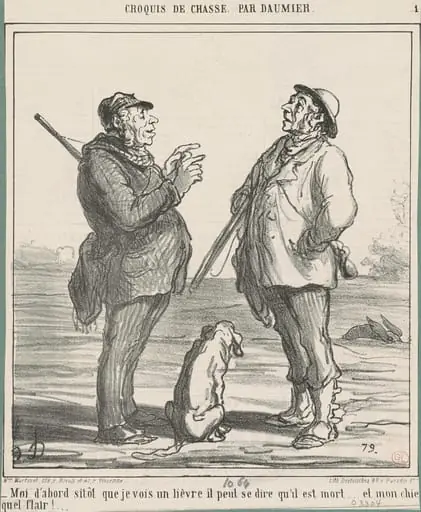 Moi d'abord sitot que je vois un lièvre ...
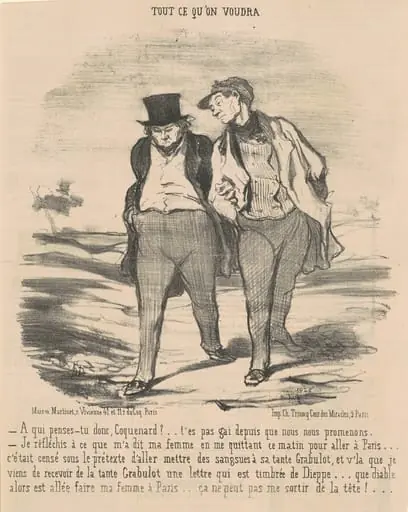 A qui penses-tu donc, coquenard? ...
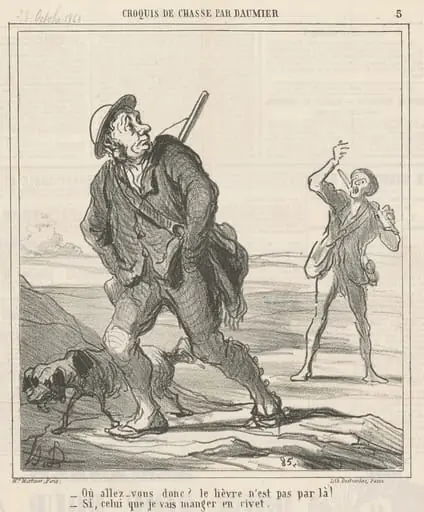 Ou allez-vous donc?
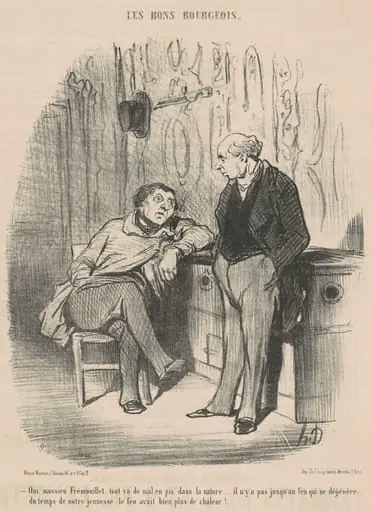 Oui, Mossieu Fremouillet, tout va de mal en pis ...
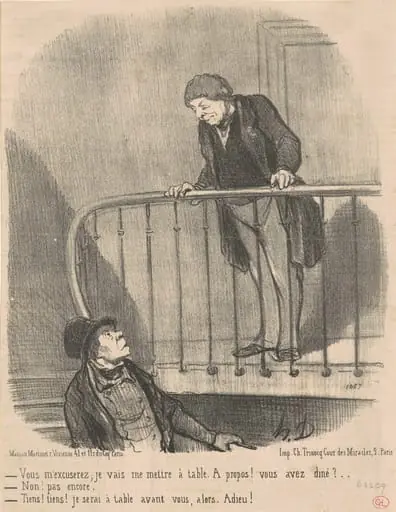 Vous m'excuserez: je vais me mettre a table ...
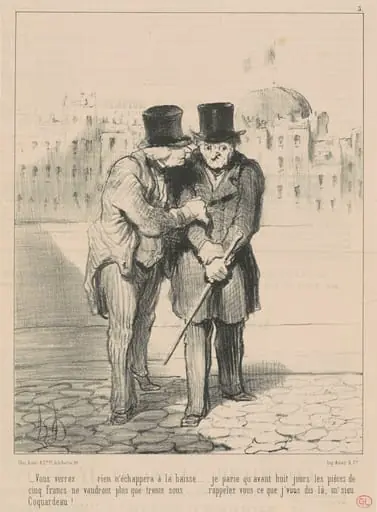 Vous verrez ... rien n'échappera a la baisse ...
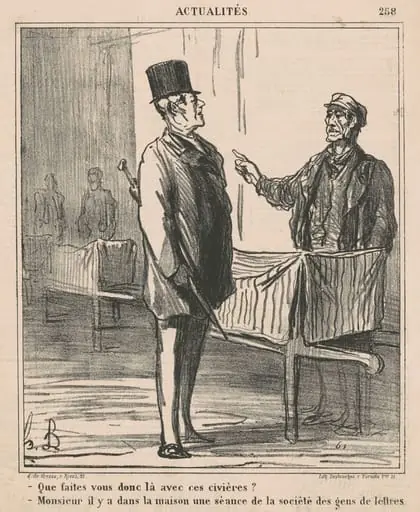 Que faites-vous donc la avec ces civières
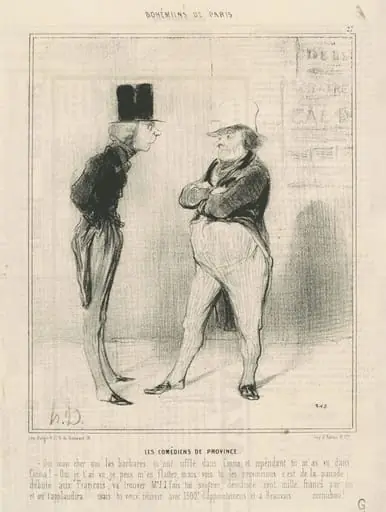 Les comédiens de province