Artwork
Quand le journal est trop intéressant
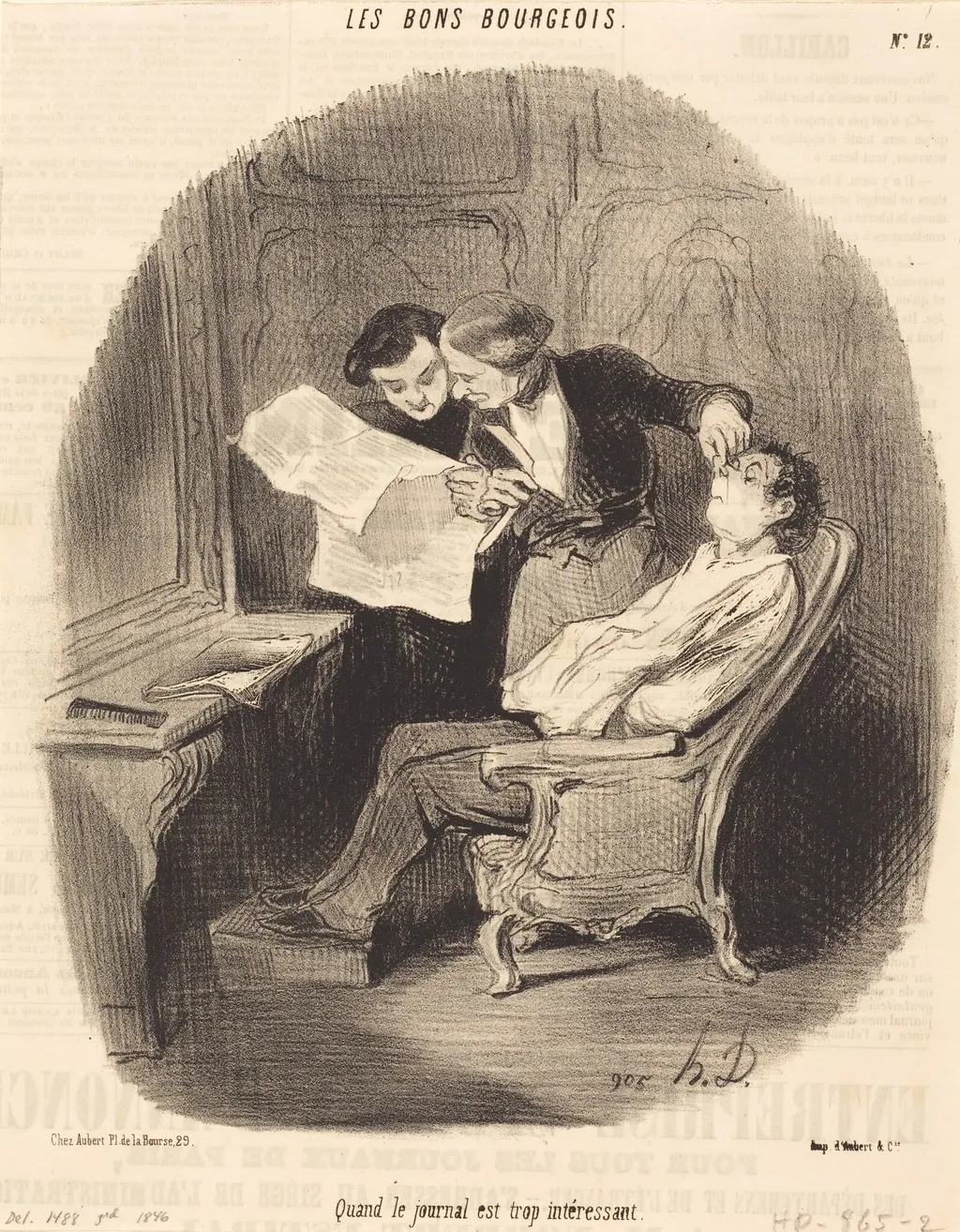
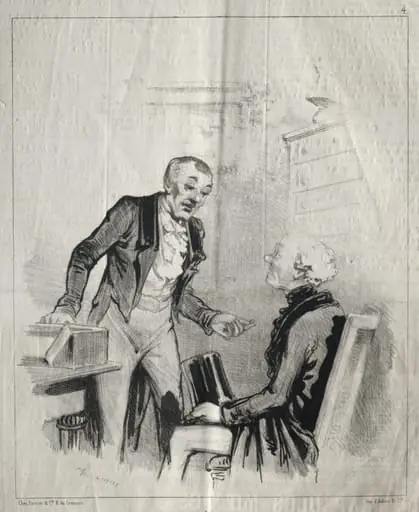
Quand le journal est trop intéressant is an ink print by the Romanticist artist Honoré Daumier. It dates from 1846 and is held in the collection of the National Gallery of Art.
About this work
Overview
Created in 1846, this lithograph on newsprint by Honoré Daumier captures a quiet, intimate moment of domestic absorption in print media.
Created in 1846, this lithograph on newsprint by Honoré Daumier captures a quiet, intimate moment of domestic absorption in print media. Executed with rapid, fluid lines, the image reflects Daumier’s frequent use of everyday scenes to convey social observation. Its medium—newsprint—echoes the subject matter, grounding the work in the material reality of 19th-century journalism and its widespread circulation among the public.
Subject & Meaning
The scene portrays three figures in a dim interior: two women lean over a man seated in a chair, engrossed in a newspaper. His head is thrown back, eyes shut, suggesting deep immersion or exhaustion. The title, 'When the newspaper is too interesting,' wryly frames the moment as both humorous and critical. It implies the overwhelming power of the press to consume attention, perhaps even to numb the reader to the world around him.
Technique & Style
Daumier employed lithography on newsprint to achieve a spontaneous, sketch-like quality. The lines are loose and urgent, avoiding detail in favor of expressive gesture. Shadows are suggested with minimal strokes, and the composition feels improvised, as if drawn in real time. This technique aligns with his work for satirical journals, where speed and immediacy were essential to capturing the pulse of current events.
History & Provenance
Produced during a period of political unrest in France, the print emerged from Daumier’s long association with publications like *Le Charivari*, where he regularly published political caricatures. Though the image avoids direct political figures, its critique of media saturation reflects broader anxieties about press influence under Louis-Philippe’s regime. The work was likely distributed as a standalone print or in periodicals, reaching a broad urban audience.
Context
In mid-19th century France, newspapers proliferated as literacy rose and censorship fluctuated. Daumier’s work responded to this environment, where the press became both a tool of public discourse and a source of distraction. His depiction of a man overwhelmed by reading mirrors contemporary concerns about information overload and the erosion of social interaction in the face of printed media.
Legacy
This print exemplifies Daumier’s enduring contribution to visual satire: transforming mundane moments into subtle social commentary. Its informal style and thematic focus on media consumption anticipate later critiques of mass communication. Though not widely exhibited in his lifetime, the work remains a key example of how printmaking could capture the rhythms and tensions of everyday life in modernizing society.
Artist & collection

Artist
Honoré-Victorin Daumier was a French painter, sculptor, and printmaker, whose many works offer commentary on the social and political life in France, from the Revolution of 1830 to the fall of the Second French Empire in 1870.









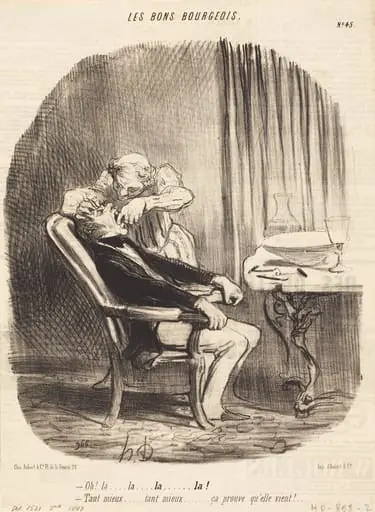 Oh! la... tant mieux... ça prouve qu'elle vient!
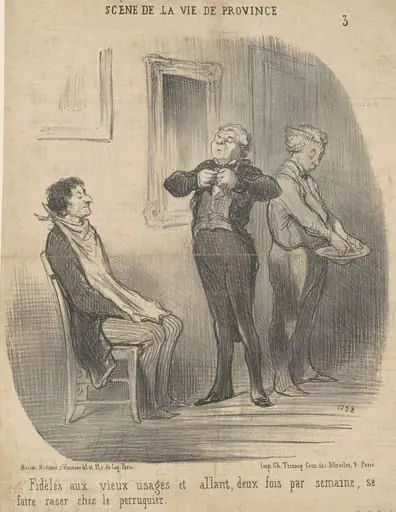 Fidèles aux vieux usages ...
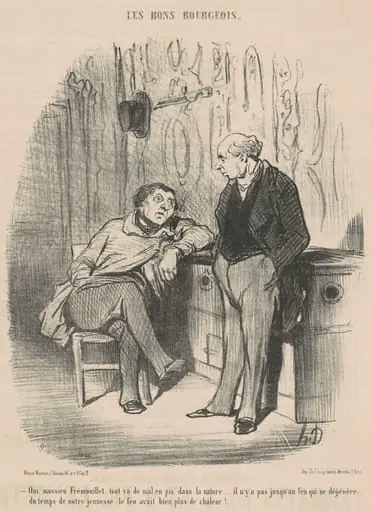 Oui, Mossieu Fremouillet, tout va de mal en pis ...
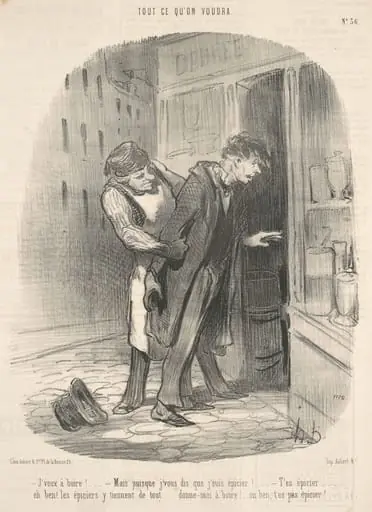 J'veux a boire! Mais puisque j'vous dis ...
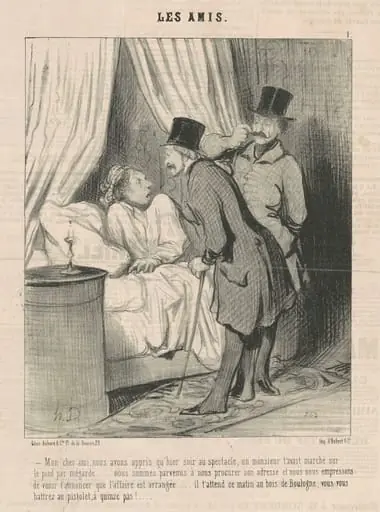 Mon cher ami, nous avons appris ...
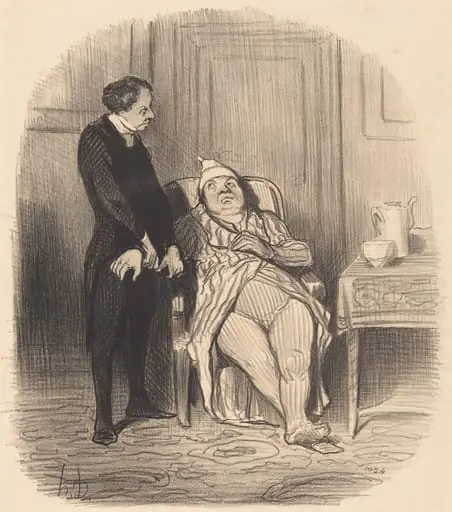 Ah! docteur... je crois... que j'suis poitrinaire!
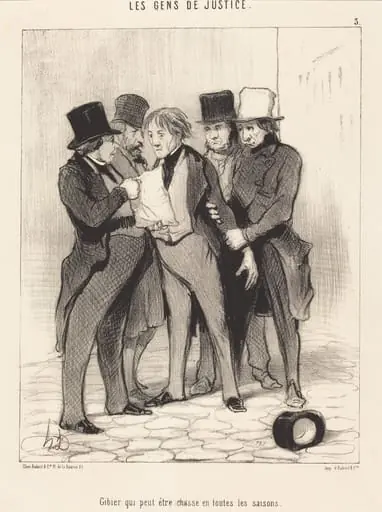 Gibier qui peut être chassé en toutes les saisons
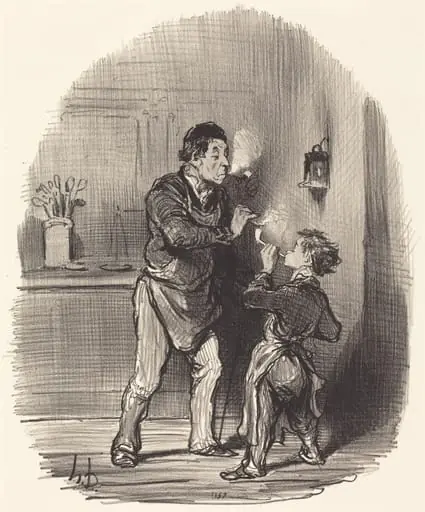 Le Chiffonnier philosophe
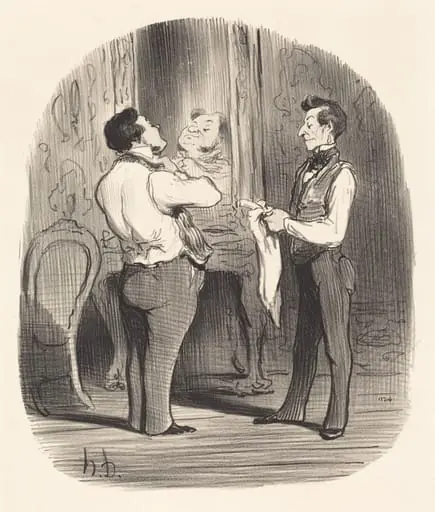 Le Jour ou il s'agit de faire une conquête
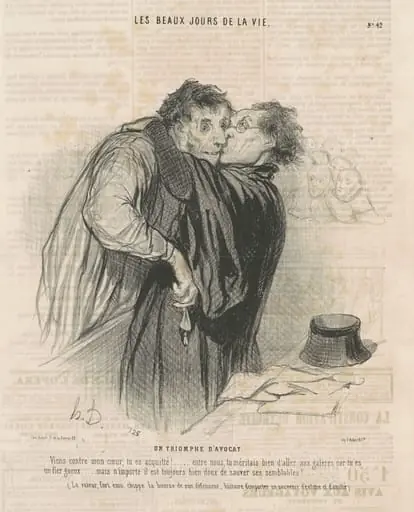 Un triomphe d'avocat
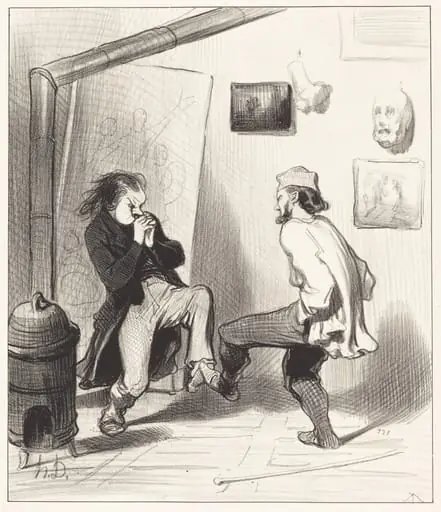 Quand on a brulé son dernier chevalet!
 Les Malades et les medicins: No. 4, Lew Homéopathes